Selecting the Perfect Stain for Your Exterior Doors
Master the art of choosing exterior door stains with expert guidance on opacity, color matching, and protection.
Your front door serves as both a functional entryway and a prominent design element of your home’s exterior. The finish you apply to it significantly influences not only its visual appeal but also its ability to withstand the elements. Unlike interior doors that face relatively stable conditions, exterior doors endure constant exposure to sunlight, moisture, temperature fluctuations, and weathering. Selecting an appropriate stain requires understanding multiple interconnected factors that work together to create a durable, beautiful result.
Understanding Your Wood’s Starting Point
Before you even consider color or finish type, you must evaluate the current state of your door. The wood’s existing condition will dramatically influence which stain products and application methods will deliver the best outcome. A newer door in pristine condition offers different possibilities than an older door showing signs of weathering, discoloration, or previous finish deterioration.
Begin by assessing whether your wood appears fresh and well-preserved or shows visible wear patterns. Look for areas where the finish may be peeling, faded, or water-damaged. Check for surface cracks, checking (the natural splitting pattern in wood), or areas where UV exposure has lightened the wood’s color. Additionally, examine whether the door has any previous stain or paint application that may need removal or special preparation before applying a new finish.
This assessment directly informs your next decisions. Heavily weathered wood requires different treatment than lightly aged wood. Wood with existing imperfections may benefit from stain formulations that provide better coverage and concealment. Understanding your starting point prevents costly mistakes and ensures the stain you choose can properly adhere to the wood surface and deliver lasting protection.
Clarifying Your Aesthetic Objectives
Stain selection fundamentally involves deciding what visual result you want to achieve. Are you attempting to preserve and enhance the wood’s natural character, or do you want to transform its appearance entirely? This distinction shapes every subsequent choice about opacity, color, and product type.
If your goal is enhancement, you’ll want the wood’s grain pattern and natural variation to remain visible through the stain. This approach works particularly well with attractive wood species or when the existing wood already displays appealing character. Conversely, if you’re seeking transformation, you may want to dramatically shift the door’s color or create a more uniform, refined appearance that reduces the visibility of natural wood characteristics.
Ask yourself whether you want a subtle color hint or a bold statement. Consider whether highlighting the wood’s texture and grain variation appeals to you or whether you prefer a smooth, consistent appearance. These preferences will guide you toward specific opacity levels and stain formulations that align with your vision.
Integrating Your Home’s Exterior Design Scheme
Your door doesn’t exist in isolation—it’s a visual component of your home’s overall exterior design. The stain color you choose should either harmonize with existing elements or intentionally contrast them as a deliberate design strategy. Successful color selection considers multiple factors including your home’s siding color, trim color, roofing material, landscaping, and architectural style.
If you prefer a cohesive, unified appearance, select a stain color that relates to your existing color palette. This might mean choosing a shade slightly lighter or darker than your home’s primary siding color, creating visual continuity while maintaining subtle distinction. Alternatively, if your design intention involves making the door a focal point, you might select a stain color that contrasts with your home’s primary colors while still coordinating with accent colors or trim.
Consider the surrounding landscape as well. Warm-toned stains may complement homes with earthy, natural landscaping, while cooler-toned stains might work better with contemporary designs or homes with more structured plantings. The goal is creating visual harmony that makes your door feel intentionally finished rather than randomly chosen.
Decoding Stain Opacity Levels and Their Impact
Opacity refers to how much the stain allows light to pass through, directly affecting how much the wood’s natural grain remains visible. This single characteristic dramatically influences both the aesthetic result and the protective qualities of your finish. Understanding the opacity spectrum enables you to select a product that matches your specific needs.
Translucent Formulations
Translucent stains represent the most transparent end of the spectrum. These formulations apply a light color wash that enhances the wood’s natural grain pattern, texture, and color variation. With translucent stains, you can still clearly see the wood’s individual characteristics—its striations, grain direction, and subtle color differences.
Translucent options work excellently for newer wood doors in good condition or wood with naturally attractive grain patterns you want to showcase. They deliver a natural, organic appearance that emphasizes the wood’s inherent beauty. However, they provide less coverage for imperfections and typically offer moderate UV protection, requiring more frequent reapplication than opaque alternatives.
Semi-Transparent Varieties
Semi-transparent stains occupy the middle ground, providing a moderate color statement while preserving some wood grain visibility. These stains add a noticeable hint of color while still allowing the wood’s character to show through. This option works well for wood doors in decent condition where some imperfections exist but aren’t severe enough to warrant complete concealment.
Solid Color Stains
Solid stains function similarly to paint, providing complete coverage that obscures the wood grain while still allowing the underlying wood texture to remain visible. These formulations deliver maximum color opacity and the highest level of UV protection, making them ideal for older, weathered doors or situations where you want to completely transform the door’s appearance.
Solid stains excel at hiding imperfections, discolorations, previous repairs, and stubborn stains that semi-transparent or translucent options would only emphasize. They provide the longest-lasting protection against UV degradation and moisture penetration, though they require eventual reapplication. For severely weathered exterior doors, solid stains often represent the most practical choice.
Comparing Stain Formulation Types
Beyond opacity levels, stains come in different chemical formulations, each offering distinct advantages and application characteristics.
Oil-Based Stains
Oil-based stains feature a long track record of performance on exterior wood. These products use natural oils and pigments that penetrate deep into the wood fibers, accentuating the grain while providing durable protection against moisture and UV damage. Oil-based formulations typically deliver rich, saturated colors and are available in extensive color ranges.
The penetrating nature of oil-based stains means they bond effectively with wood, generally resisting peeling and flaking better than surface coatings. They typically require longer drying times between coats and between application and exposure to weather, and cleanup requires solvents rather than water.
Gel Stains
Gel stains provide a user-friendly option, particularly for DIY enthusiasts. Their thick, viscous consistency makes them significantly easier to apply and control compared to thinner liquid stains. This consistency reduces dripping and running, resulting in more uniform color application and finish quality.
Gel stains allow for custom effects and enhanced color control during application. Their thicker formulation also means they’re less likely to pool or streak on vertical door surfaces. However, they may not penetrate as deeply as oil-based options, potentially affecting long-term durability in some applications.
The Critical Importance of Sample Testing
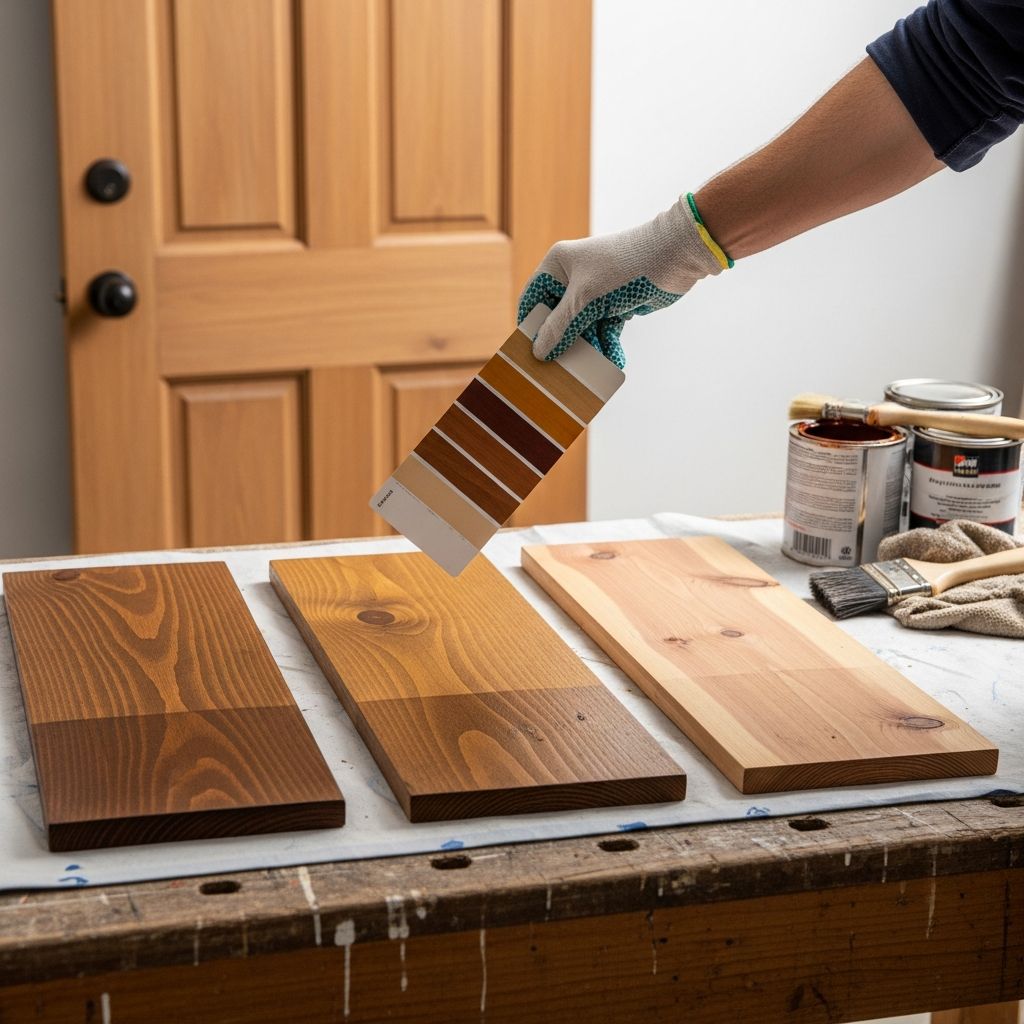
One of the most common mistakes in stain selection involves committing to a color based on small hardware store swatches without testing it on your actual door. The same stain color can appear dramatically different depending on the specific wood species, age, grain pattern, texture, and existing finish of your door.
Professional guidance emphasizes always purchasing small samples and testing them on a hidden area of your door, such as the back side or an edge that won’t be prominently visible. Apply the stain following product instructions and allow it to dry completely, as stain appearance can shift significantly during the drying process. Especially with lower opacity stains, remember that the color will display natural variations—some areas appearing lighter, others darker, mirroring the wood’s inherent grain and texture.
This simple testing step prevents costly and time-consuming regrets. A color that looked appealing on a hardware store swatch might appear too dark, too light, or simply misaligned with your home’s design scheme when applied to your actual door. Thorough testing ensures you make an informed decision.
Color Selection Strategies for Different Goals
Choosing a specific color depends on whether you’re enhancing or transforming the wood’s appearance. If enhancement is your goal, select a color close to the wood’s natural hue. Many homeowners pursuing this approach choose translucent formulations that preserve the wood’s grain visibility.
When seeking transformation, you have broader freedom to explore colors that significantly differ from the wood’s natural appearance. Darker stains create dramatic, formal statements, while lighter stains deliver a more subtle, refined look. Warm-toned stains (golds, oranges, reds) evoke traditional or rustic aesthetics, while cooler tones (grays, blues, greens) align with contemporary or modern design sensibilities.
Essential Pre-Staining Preparation
Beautiful stain results depend fundamentally on proper wood preparation. Applying stain over dirty, weathered, or improperly prepared wood results in poor adhesion, uneven color, and premature finish failure. Professional results require starting with thoroughly cleaned, properly prepared surfaces that allow stain to penetrate deeply and adhere correctly.
Remove all dirt, debris, and previous finish materials through appropriate cleaning and sanding. Address any mold, mildew, or discoloration with suitable cleaning solutions. Allow the wood to dry completely before stain application. This preparation foundation directly impacts how well the stain performs and how long it maintains its appearance and protective qualities.
Understanding Long-Term Maintenance and Durability
Your stain’s job extends beyond aesthetic appeal—it provides genuine protection for the wood against UV damage, moisture infiltration, and environmental degradation. The durability of your chosen stain depends on its formulation, opacity level, and the degree of UV protection it offers.
Solid stains generally provide the longest protection intervals before reapplication becomes necessary, particularly those formulated with robust UV-resistant pigments. Semi-transparent options require more frequent maintenance. Translucent stains typically need reapplication most frequently. Understanding these maintenance requirements helps you select a stain that fits your long-term willingness to maintain the finish.
Final Considerations and Decision Making
Selecting an exterior door stain requires balancing multiple factors: your wood’s current condition, your aesthetic objectives, your home’s design scheme, opacity preferences, formulation choice, color selection, and long-term maintenance expectations. Rather than making this decision quickly, take time to evaluate each factor thoughtfully.
Test samples on your actual door. Consider both the immediate visual result and the protective benefits you need. Think about your willingness to perform future maintenance. Consult with knowledgeable professionals at local building supply stores if you remain uncertain. This comprehensive approach to stain selection ensures you achieve both the beautiful, durable finish you envision and the long-term protection your exterior door deserves.
Frequently Asked Questions
What stain opacity should I choose for my weathered exterior door?
For heavily weathered doors showing significant age and wear, solid color stains provide the best results. They offer maximum coverage to hide imperfections and discolorations while providing superior UV protection compared to semi-transparent or translucent options.
How long should I allow stain samples to dry before making color decisions?
Always allow stain to dry completely before evaluating the final color, as stain appearance can change significantly during the drying process. Refer to product instructions for specific drying times, which vary by formulation.
Can oil-based and gel stains be used interchangeably on exterior doors?
While both can be used on exterior doors, they differ in application and penetration characteristics. Oil-based stains penetrate deeply into wood fibers, while gel stains offer easier application control due to their thicker consistency. Choose based on your skill level and the finish you want to achieve.
Should my door stain match my home’s siding color?
Not necessarily. For cohesive appearance, choose a stain that complements your siding—often a shade lighter or darker than your primary color. For a focal point door, you can select a contrasting color that still coordinates with your overall design scheme.
How often will I need to reapply exterior door stain?
Reapplication frequency depends on the stain type and opacity. Solid stains typically maintain protection longest, while translucent options require more frequent reapplication. Environmental factors like sun exposure and weather severity also affect maintenance intervals.
References
- How to Choose a Wood Stain | Benjamin Moore — Benjamin Moore. 2024. https://www.benjaminmoore.com/en-ca/interior-exterior-paints-stains/how-to-advice/exteriors/choose-wood-stain-colour
- A Guide to Wood Stains for Doors from Nick’s Building Supply — Nick’s Building Supply. 2025. https://www.nicksbuilding.com/blog/choosing-the-right-finish-a-guide-to-different-types-of-wood-stains-for-your-door/
- The Best Exterior Wood Stain Colors for Your Home — Allbright Painting. 2025-12. https://www.allbrightpainting.com/blog/2025/december/a-guide-to-the-best-exterior-wood-stain-colors/
Similar Articles







Read full bio of Sneha Tete