Faux Marble Concrete Floors Guide
Transform ordinary concrete into stunning faux marble with expert techniques, tools, and tips for durable, elegant results.
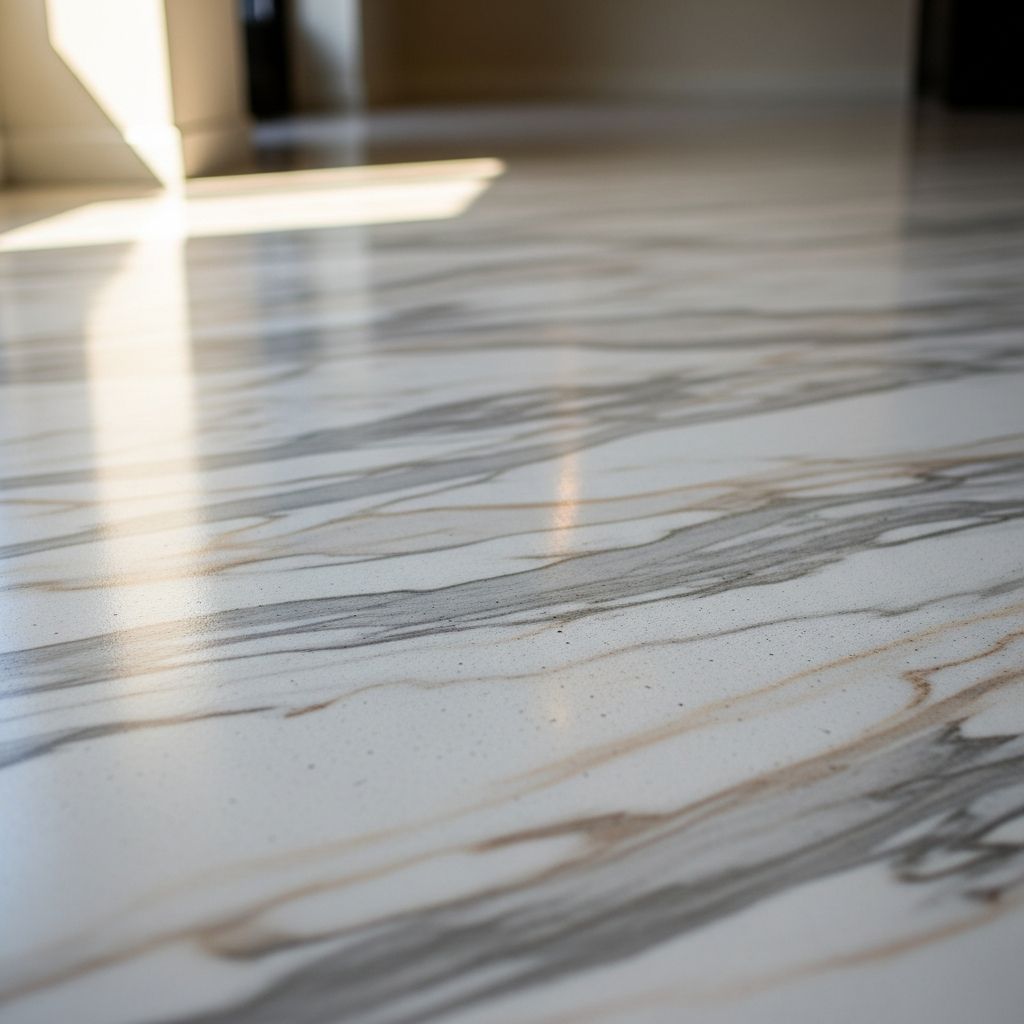
Creating a faux marble finish on concrete floors offers an affordable way to achieve the sophistication of natural stone without the high costs or installation challenges. This technique leverages chemical reactions, paints, and coatings to mimic marble’s veining and sheen on existing or new concrete surfaces.
Why Choose Faux Marble for Concrete?
Faux marble transformations elevate plain concrete into elegant, durable flooring suitable for homes, businesses, and high-traffic areas. Unlike real marble, which is prone to chipping and requires extensive upkeep, faux versions provide seamless, stain-resistant surfaces that withstand daily wear. Concrete’s inherent strength combined with decorative finishes results in a low-maintenance option that can replicate polished marble’s luster or honed stone’s subtlety.
Benefits include cost savings—often 70-80% less than authentic marble—customizable designs, and versatility for indoor or outdoor use. Professionals and DIY enthusiasts alike use these methods to refresh basements, garages, patios, or living spaces.
Popular Techniques for Marble-Like Effects
Several proven methods exist to faux-finish concrete, each suited to different skill levels, budgets, and surface conditions. Here’s an overview:
- Acid Staining: Chemically reacts with concrete for translucent, natural veining.
- Epoxy Coatings: Metallic or colored resins for glossy, three-dimensional marble illusions.
- Paint and Glaze: Layered applications for artistic, hand-painted veins.
- Overlays and Polishing: Thin cement toppings or ground surfaces for tile-like patterns.
Acid Staining: The Classic Chemical Approach
Acid stains penetrate concrete, creating permanent, variegated colors that evoke marble’s depth. Start with lighter base shades and layer darker tones for veining, as darker hues can overpower lighter ones. Blue-green stains often pop dramatically over bases.
Preparation Steps:
- Clean thoroughly to remove dirt, oils, or sealers.
- Grind uneven spots for smoothness.
- Ensure the surface is dry and etched if needed.
Apply stain via pump sprayer in sections, overlapping for uniformity. Use rags or sponges for faux effects like mottling. Allow 4-8 hours dwell time for reaction, then neutralize with a baking soda solution. Rinse and dry for 24-48 hours before sealing.
Multiple colors build complexity: a coffee base with ivory veins and slate accents mimics Carrara marble. Seal with acrylic or polyaspartic for protection and sheen enhancement.
Epoxy Metallic Marble: Modern High-Gloss Finish
Epoxy systems deliver a seamless, reflective surface resembling polished marble. Ideal for worn floors, they bond tightly after proper prep, hiding cracks and imperfections.
Key process:
- Grind concrete to open pores and remove contaminants.
- Patch cracks with epoxy gel.
- Apply moisture-sealing primer.
- Pour midcoat epoxy with metallic pigments; swirl for veins using tools or heat guns.
- Top with polyaspartic and non-skid additives for durability.
This yields a glassy, three-dimensional effect lasting years under heavy use. Colors blend wet-on-wet for organic patterns.
Painting and Glazing: Artistic DIY Method
For budget-friendly results, cement-based paints and glazes allow veining by hand. Contrast dark bases with light veins or vice versa for drama.
Steps include:
- Prime concrete with cement paint base (e.g., dark brown).
- Layer contrasting shade (e.g., khaki) while wet.
- Feather in black and white streaks with brushes or sea sponges.
- Apply glaze or dye for depth and unification.
Work in tiles or sections, varying grain direction. Dry between layers; seal for longevity. This technique shines on porches or patios.
Overlays and Polished Concrete: Professional Polish
Thin cement overlays (1/8-1/4 inch) scored into tiles provide a fresh canvas for staining or painting. Trowel in swirls for texture, then stain for marble simulation.
Polishing grinds concrete to expose aggregates, integrating stains for color. Degrees of polish range from matte to mirror-like, outperforming marble in hardness and slip resistance.
| Method | Best For | Durability | Skill Level | Cost per sq ft |
|---|---|---|---|---|
| Acid Stain | New/existing concrete | High | Intermediate | $2-5 |
| Epoxy | Worn floors | Very High | Advanced | $5-10 |
| Paint/Glaze | DIY projects | Medium | Beginner | $1-3 |
| Overlay/Polish | Custom patterns | High | Pro/DIY | $4-8 |
Essential Tools and Materials
Gather these for success:
- Grinders, sprayers, trowels.
- Stains, epoxies, paints from reputable brands.
- Neutralizers, sealers, PPE (gloves, respirators).
- Artists’ tools: brushes, sponges, veining combs.
Test on scraps to perfect color combos.
Surface Preparation: The Foundation of Success
Prep determines longevity. Degrease, etch, grind (80-200 grit), and repair. Moisture test to avoid failures. For old floors, overlays ensure evenness.
Application Best Practices
Work in 10×10 ft sections. Maintain even lighting to spot inconsistencies. For stains, mist lightly between colors. Epoxies require temperature control (60-80°F). Blend wet for seamless veins.
Sealing and Finishing for Longevity
Sealers lock in color and add protection. Options: solvent acrylics (low shine), polyureas (high traffic), waxes (polish). Apply 2-3 coats, buffing between. Reapply every 1-3 years.
Common Mistakes and Troubleshooting
- Uneven staining: Poor prep; always grind thoroughly.
- Blotchy epoxy: Insufficient mixing; stir pigments well.
- Peeling: Moisture issues; use vapor barriers.
- Fading: UV exposure outdoors; choose UV-stable products.
Practice scales up confidence.
Maintenance Tips for Lasting Beauty
Sweep daily, mop with pH-neutral cleaners. Avoid harsh chemicals. Re-wax polished surfaces quarterly. For stains, minimal upkeep suffices due to penetration.
Design Inspirations and Color Palettes
Emulate classics: white Carrara (ivory base, gray veins), green malachite (emerald tones, black accents), or modern metallics (gold veins on charcoal). Experiment responsibly.
Cost Analysis and ROI
DIY projects run $1-10/sq ft; pros add labor ($3-15/sq ft). Boosts property value by mimicking luxury flooring.
FAQs
Can I do this on a garage floor?
Yes, epoxy excels here for durability against vehicles and chemicals.
How long does it last?
10-20+ years with proper install and maintenance.
Is it slippery?
No, add grit to topcoats; polished options are slip-resistant.
Outdoor suitable?
Select UV-stable products; acid stains and paints work well.
Differences from real marble?
Faux is cheaper, stronger, seamless, and customizable.
References
- Marble Effect on Concrete Floors with Acid Staining — Direct Colors. Accessed 2026. https://directcolors.com/diy/marbled-granite-look-acid-stain/
- Three Ways To Make Your Concrete Floors Look Like Marble — Concrete Craft. Accessed 2026. https://www.concretecraft.com/blog/three-ways-to-make-your-concrete-floors-look-like-marble/
- How to Coat over Concrete Floors with Metallic Marble Epoxy — Stone Coat Countertops (YouTube). Accessed 2026. https://www.youtube.com/watch?v=CQdEnTAcAJE
- Faux Marble Painting On Concrete Floor — YouTube. 2012. https://www.youtube.com/watch?v=JDiUi3zKHQU
- How We Painted our Concrete Porch to Look Like Green Marble — Stephie McCarthy. Accessed 2026. http://www.stephiemccarthy.com/contents/Archives/SMWWOldHouseAndGardens/ConcreteFauxFinishGreenMarble.html
- How to Make Concrete Floors Look Like Marble — Concrete Network. Accessed 2026. https://www.concretenetwork.com/concrete/interiorfloors/marble.html
Similar Articles








Read full bio of Sneha Tete