Fix a Garage Door That Won’t Close: Complete Guide
Troubleshoot and repair your garage door with expert tips and step-by-step solutions.
A garage door that refuses to close is more than just an inconvenience—it’s a security concern and a safety hazard. Whether you’re facing a complete failure or the door stops before reaching the ground, understanding the underlying causes can help you determine whether a quick fix is possible or if professional intervention is necessary. This comprehensive guide walks you through the most common reasons your garage door won’t close and provides practical solutions to get it working again.
Understanding Your Garage Door System
Before diving into troubleshooting, it’s important to understand the basic components of your garage door system. Your garage door operates through a coordinated effort of several key parts working together. The garage door opener is the motorized unit that controls the opening and closing action. Safety sensors, also known as photo eyes, are positioned at the bottom of the door opening and send an invisible beam across the entrance. If this beam is interrupted, the door automatically stops and reverses for safety reasons.
The springs are perhaps the most critical components—they counterbalance the weight of the door, making it possible for the opener to lift and lower it smoothly. The tracks guide the door’s rollers as it moves up and down, and the cables and pulleys work together with the springs to manage the door’s movement. Understanding these components will help you identify what’s going wrong when your door won’t close.
Most Common Reasons Your Garage Door Won’t Close
Misaligned or Dirty Safety Sensors
One of the most frequently reported issues is malfunctioning safety sensors. These infrared photo eyes are incredibly sensitive and serve as your door’s safety mechanism. Even minor misalignment or dirt accumulation can prevent your garage door from closing completely.
The sensors work by sending an invisible beam from one side of the door opening to the other. If anything interrupts this beam—whether it’s dust, a toy, a car, or even a cobweb—the door will stop and reverse as a safety precaution. Small bumps from lawn mowers, children’s toys, or vehicles can easily knock these sensors out of alignment.
Troubleshooting steps:
- Locate both sensor units at the bottom corners of your garage door opening
- Gently wipe the sensor lenses with a soft, clean cloth to remove dust and debris
- Check that both sensors are pointing directly at each other and are perfectly level
- Look for indicator lights—if they’re blinking or not illuminated, realignment is needed
- Adjust the sensors carefully until they’re properly aligned and the indicator lights show a solid connection
Obstructions in the Track
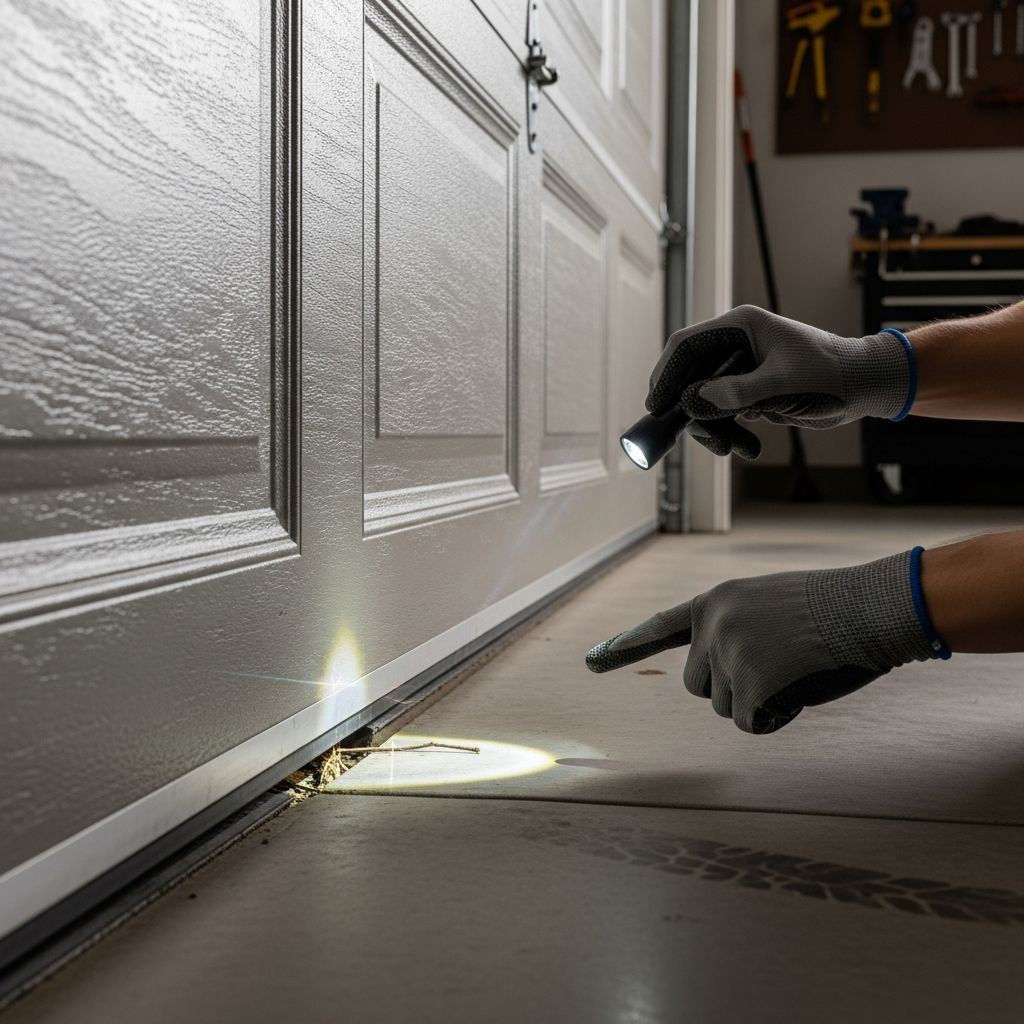
Sometimes the solution is as simple as removing an obstruction. Your garage door travels along metal tracks, and even small objects can block the rollers and prevent the door from closing completely. Common culprits include small rocks, toys, accumulated dirt, or debris that’s fallen into the track during normal use.
How to check for obstructions:
- Visually inspect both sides of the track from top to bottom
- Look for debris, dirt buildup, bent sections, or loose hardware
- Use a flashlight to see into hard-to-reach areas of the track
- Carefully remove any debris you find, taking care not to damage the track itself
If you notice dents or significant bends in the track, resist the urge to force the door down. Attempting to close the door with a damaged track can cause further damage to the entire system and may result in expensive repairs.
Broken or Worn Garage Door Springs
Garage door springs are under tremendous tension and do the heavy lifting every time you operate your door. When a spring breaks, it’s one of the most serious issues you can face. A broken spring will cause the door to feel extremely heavy, may cause it to close unevenly, or could result in the door slamming shut unexpectedly.
Signs of broken springs include:
- A loud snapping or popping sound before the door stopped working
- Visible gaps or breaks in the spring coil
- The door appearing crooked or uneven when closing
- The door feeling extraordinarily heavy when attempting manual operation
- The door refusing to move at all despite the opener running
Important safety note: Never attempt to repair or replace garage door springs yourself. This is one of the most dangerous DIY garage door repairs because the springs are under extreme tension. Even a slight miscalculation can result in serious injury or death. This is definitely a job for trained professionals with the proper tools and experience.
Garage Door Opener Issues
Your garage door opener can develop various problems that prevent the door from closing properly. These issues might include worn-out gears, electrical malfunctions, or a failing motor. Sometimes the problem is simpler, such as incorrect limit settings or dead batteries in your remote control.
Quick troubleshooting for opener problems:
- Replace the batteries in your remote control first—this solves many apparent opener failures
- Check the limit settings on your opener (usually found on the side of the unit)
- Listen for unusual sounds like grinding or humming without door movement
- Try using the manual button on the opener itself to see if the remote is the issue
If the opener is older and these basic steps don’t resolve the problem, it may be time to consider upgrading to a new smart garage door opener that offers better reliability and modern features.
Track Misalignment or Damage
Your garage door tracks must be perfectly aligned for smooth operation. Over time, tracks can become bent, misaligned, or develop loose hardware. When tracks are compromised, the door may jam, move unevenly, or refuse to close completely.
Signs of track problems:
- The door appears uneven or crooked when closing
- Grinding, scraping, or squeaking noises during operation
- Visible gaps between the rollers and the track
- The door sticking or catching at certain points
Professional technicians have specialized tools to safely realign or replace damaged tracks. Attempting to force a door with misaligned tracks can lead to more extensive and expensive damage.
Step-by-Step Troubleshooting Process
Step 1: Start with the Simplest Solutions
Before assuming there’s a major problem, eliminate the simple possibilities. Check that the remote has fresh batteries, and try using the wall-mounted button on your opener. Make sure there are no visible obstructions in front of the door opening that might trigger the sensors.
Step 2: Inspect and Clean the Safety Sensors
Clean both sensor lenses with a soft cloth and verify they’re properly aligned. This single step solves the problem in many cases. Ensure the indicator lights are working correctly—typically a solid light means the sensors are properly aligned, while a blinking light indicates a problem.
Step 3: Check the Door Tracks
Examine the tracks on both sides of the door for debris, dirt, or damage. Remove any obstructions carefully. Apply a silicone-based lubricant to the tracks and rollers to ensure smooth movement.
Step 4: Test the Door Balance
Disconnect the opener by pulling the red emergency release cord. Manually try to lift the door halfway open. It should stay in position without falling or rising on its own. If it drops or rises, the springs may be worn or broken, indicating a need for professional repair.
Step 5: Listen for Unusual Sounds
Pay attention to how your door sounds during operation. Grinding noises might indicate track problems, while clicking sounds could suggest issues with the opener. Silence when the opener is running but the door doesn’t move often points to electrical or gearing problems.
Maintenance Tips to Prevent Future Problems
Regular maintenance is the best way to prevent garage door issues from developing in the first place. A well-maintained door operates smoothly and safely for years.
- Monthly: Wipe the sensor lenses and visually inspect the door for any visible damage or wear
- Quarterly: Apply silicone-based lubricant to all moving parts including tracks, rollers, hinges, and springs
- Annually: Have a professional inspect your springs, opener, and overall door balance
- As needed: Clear debris from the tracks and test the door balance by manual operation
When to Call a Professional
Some garage door issues are safe to troubleshoot yourself, but others absolutely require professional intervention. Call a professional technician if you encounter:
- Broken or damaged springs—never attempt this repair yourself
- Severely bent or damaged tracks that can’t be cleared of obstructions
- A door that feels unusually heavy during manual operation
- The opener making grinding noises or running without moving the door
- A door that closes unevenly or slams shut unexpectedly
- Electrical issues or persistent problems after basic troubleshooting
- Broken or dangling cables
Manual Closure During Emergencies
If your garage door opener fails completely, you may need to close the door manually. In this situation, the emergency release cord becomes essential. This red cord is typically located near the center of the garage door opener trolley.
To manually close your garage door safely, first locate and gently pull the emergency release cord downward to disconnect the opener. Once disconnected, slowly lower the door by hand using both hands to maintain control. Never force the door or lower it too quickly, as this can cause injury or damage. Secure the door at the bottom by ensuring it’s flush with the ground and locked if your door has a lock mechanism.
Frequently Asked Questions
Why won’t my garage door close but opens fine?
This is typically a sensor issue or an obstruction in the closing path. The door won’t close when the safety sensors detect something blocking the beam. Check for dirt on the sensors, obstructions in the track, or misaligned photo eyes. If the door opens without problems, the opener itself is usually functioning correctly, so focus your attention on the closing mechanism and sensors.
Is it safe to manually close my garage door if the springs are broken?
No, it is not safe to manually close a garage door with broken springs. A broken spring causes the door to become extremely heavy and unbalanced, making it difficult or impossible to control manually. Attempting to close it could result in the door slamming shut and causing serious injury. Contact a professional for immediate repair.
What should I do if my garage door won’t respond to the remote?
First, replace the batteries in your remote control. If that doesn’t work, try using the wall-mounted button on the opener to see if the problem is with the remote’s battery or signal. Check for obstructions in the garage and ensure the sensors are clean and properly aligned. If basic troubleshooting doesn’t restore function, the opener or remote may need professional repair or replacement.
How often should I maintain my garage door?
Perform basic visual inspections and sensor cleaning monthly. Apply lubrication to moving parts quarterly. Schedule a professional inspection at least once yearly to check spring condition, opener function, and overall door balance. Regular maintenance prevents most common problems from developing.
Can I repair my garage door opener myself?
Simple troubleshooting like replacing batteries or checking remote batteries can be done by homeowners. However, repairs involving electrical components, gearing, or the motor should be handled by professionals. Spring replacement should never be attempted as a DIY project due to the extreme danger involved. When in doubt, call a professional.
What does it mean if my garage door closes unevenly?
Uneven closing typically indicates broken springs, misaligned tracks, or imbalanced door problems. The door may be listing to one side, with one side going down faster than the other. This is a sign that professional service is needed, as forcing the door can cause further damage and safety hazards.
References
- How To Manually Close Garage Door (Beginner’s Guide 2025) — Brentwood Garage Door. 2025. https://brentwoodgaragedoor.com/how-to-manually-close-garage-door/
- Why Won’t My Garage Door Close All the Way? Causes and Fixes — Precision Garage Door. https://www.precision-door.com/why-wont-my-garage-door-close-all-the-way-causes-and-fixes/
- Fix Your Garage Door’s Closing Issues — Chamberlain Support. https://support.chamberlaingroup.com/s/closing-issues
Similar Articles


Read full bio of Sneha Tete