Fix Hardwood Floor Scratches with Wood Filler
Master the art of repairing scratches on hardwood floors using wood filler for a seamless, professional finish at home.
Hardwood floors add timeless elegance to any home, but daily wear from furniture, pets, and foot traffic inevitably leads to scratches. Fortunately, wood filler offers a reliable DIY solution to restore their appearance without professional help. This comprehensive guide covers everything from assessing damage to achieving a flawless finish, empowering homeowners to tackle repairs confidently.
Understanding Hardwood Floor Damage
Scratches on hardwood floors vary in depth and impact. Surface-level marks affect only the protective finish, while deeper gouges penetrate the wood itself. Identifying the type of damage is crucial for selecting the appropriate repair method. Minor scuffs can often be addressed with wax-based fillers, whereas deeper issues demand solvent-based or epoxy options that bond securely.
Regular maintenance prevents escalation. Vacuum frequently to remove grit, use felt pads under furniture, and apply protective mats in high-traffic areas. Early intervention with wood filler preserves the floor’s value and extends its lifespan.
Choosing the Right Wood Filler for Your Floors
Not all fillers are equal; matching the product to the damage ensures durability and aesthetics. For finished hardwood floors, opt for wood putty, which remains flexible and matches pre-existing stains. Standard wood filler suits unfinished surfaces but hardens rigidly, ideal for structural fills before finishing.
| Damage Type | Recommended Filler | Key Features |
|---|---|---|
| Surface scratches | Wax sticks or markers | No drying time, easy wipe-off |
| Moderate scratches | Pre-colored putty | Flexible, stain-resistant |
| Deep gouges | Epoxy or solvent-based filler | Hardens strong, sandable |
Consider color matching: many kits offer shades from light oak to dark walnut. Test on an inconspicuous area first, as wood tones shift with lighting and age. For extensive damage, fillers provide cosmetic fixes but may not replace full refinishing.
Essential Tools and Materials
Gathering supplies streamlines the process. Core items include:
- Wood filler or putty kit
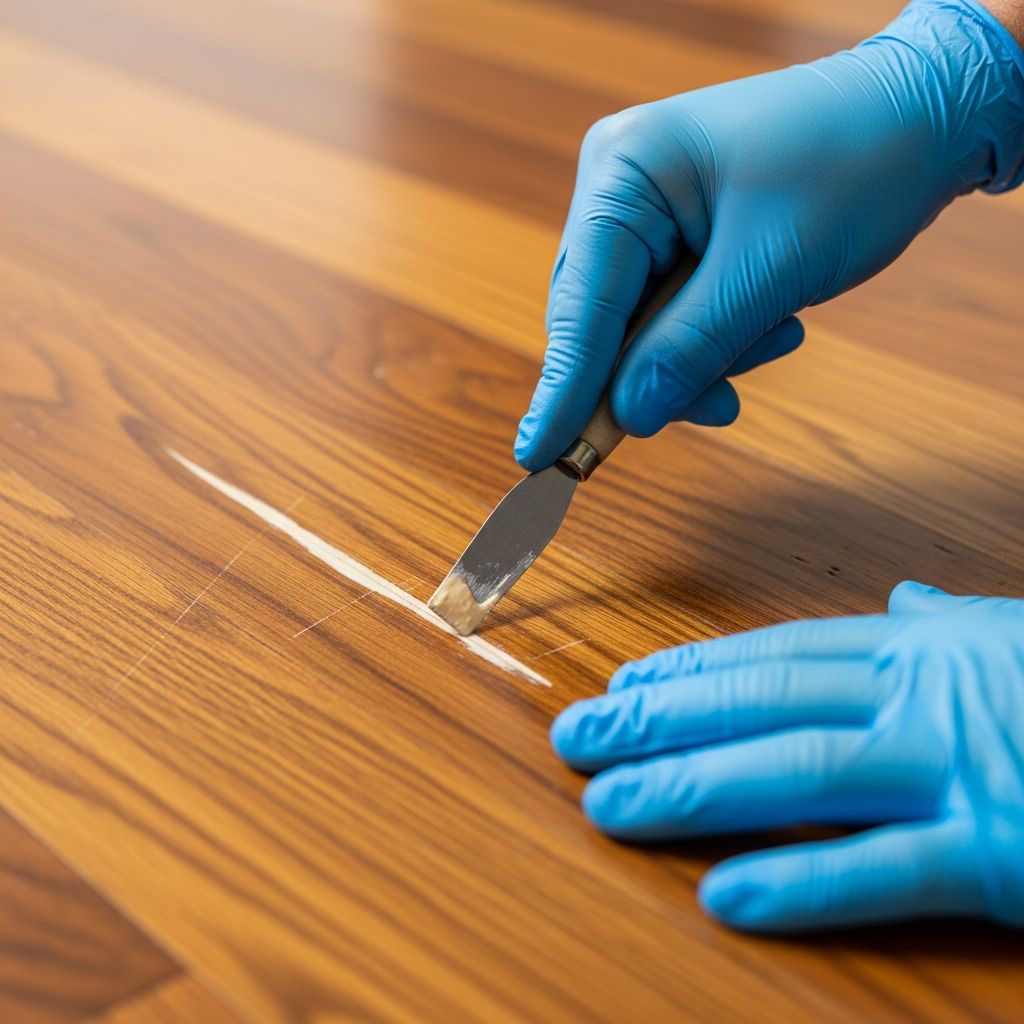
- Plastic putty knife or scraper
- Fine-grit sandpaper (120-220 grit)
- Clean cloths or tack cloths
- Mineral spirits or wood cleaner
- Painter’s tape
- Stain marker or matching polyurethane
Optional enhancements: vacuum with brush attachment for debris removal and a buffing pad for polishing. Invest in quality tools to avoid further damage—metal knives can gouge softwoods.
Step-by-Step Preparation Process
Success starts with a clean workspace. Begin by clearing the area and vacuuming thoroughly to eliminate dust and particles that could compromise adhesion.
- Assess and Clean: Wipe the scratch with mineral spirits on a lint-free cloth. This removes oils and reveals true depth—darkened fibers indicate deeper penetration. Allow full drying.
- Protect Surroundings: Apply painter’s tape around the damage to shield adjacent boards. This prevents filler spread and simplifies cleanup.
- Test Fit: Rub a small amount of filler over the area to check color match under normal lighting.
Work in a well-ventilated space, especially with solvent-based products, and wear gloves to protect skin.
Applying Wood Filler to Surface Scratches
For shallow marks, wax sticks provide the quickest fix. Hold the stick like a crayon and rub perpendicular to the scratch grain, applying firm pressure to fill the groove completely. Excess material should mound slightly above the surface.
Immediately scrape away surplus with a plastic card edge, following the wood grain. Buff gently with a soft cloth to blend seamlessly. This method requires no drying time, yielding instant results on polyurethane-finished floors.
Repairing Deeper Gouges and Scratches
Deeper damage demands more precision. Press filler into the void using a flexible putty knife, overfilling by 1/8 inch to account for shrinkage. For very deep spots, apply in layers, drying between coats.
Once cured (15 minutes to hours, per instructions), sand flush starting with 120-grit, progressing to 220-grit for smoothness. Feather edges to avoid visible lines. Vacuum residue frequently to prevent grit scratches.
Sanding and Smoothing Techniques
Sanding is where repairs shine or fail. Always sand with the grain to mimic natural texture. Use a sanding block for even pressure, checking progress every few strokes.
- Coarse grit (120): Level filler
- Medium grit (180): Refine surface
- Fine grit (220): Polish for finish
Avoid over-sanding, which thins the wood. Wipe with a tack cloth between grits for a dust-free base.
Color Matching and Staining
Filler rarely matches perfectly initially. Use a stain pen or marker to tint the area, layering lightly and blending outward. Test combinations on scrap wood first.
For best results, apply a thin coat of matching polyurethane. This seals the repair and unifies sheen. Multiple thin coats outperform one heavy layer, drying fully between applications.
Sealing and Protecting the Repair
Final protection ensures longevity. Choose a topcoat matching the floor’s existing finish—satin, semi-gloss, or gloss. Apply with a lambswool applicator or microfiber cloth, feathering edges.
Allow 24-48 hours curing before heavy use. Reapply protective pads and limit moisture exposure to maintain the fix.
Common Mistakes to Avoid
Even seasoned DIYers err. Top pitfalls include:
- Skipping cleaning: Leads to poor adhesion.
- Underfilling: Causes cracking upon drying.
- Sanding against grain: Creates visible scratches.
- Poor color match: Makes repairs obvious.
- Rushing dry times: Results in soft spots.
Patience yields professional outcomes. For widespread damage, consult pros for sanding and refinishing.
Alternative Repair Methods
Beyond filler, consider these options:
| Method | Best For | Pros | Cons |
|---|---|---|---|
| Wax Sticks | Surface scuffs | Instant, mess-free | Not for deep damage |
| Epoxy Filler | Gouges | Ultra-durable | Longer cure time |
| Screen Refinishing | Multiple scratches | Even finish | Requires equipment |
Household hacks like nuts or markers work temporarily but lack permanence.
When to Call a Professional
DIY suits isolated scratches, but extensive wear, warping, or cupping demands experts. Pros use drum sanders for uniform results and assess subfloor issues. Costly but preserves investment.
Maintenance Tips for Scratch-Free Floors
Prevent recurrence:
- Sweep daily with soft broom.
- Use pH-neutral cleaners.
- Humidity control: 40-60% RH.
- Annual topcoat refresh.
These habits minimize future repairs.
Frequently Asked Questions
Can wood filler be used on all hardwood floors?
Yes, for engineered and solid hardwoods, but test compatibility. Avoid on waxed or oiled finishes.
How long does the repair last?
With proper sealing, 5-10 years under normal traffic.
Is sanding always necessary?
For wax fillers, no; for putty/epoxy, yes for flush results.
Will repairs show over time?
Minimal if color-matched and sealed well; traffic fades differences naturally.
What’s the cost of DIY vs. pro?
DIY: $20-50; Pro: $2-5 per sq ft for refinishing.
References
- Wood Filler for Scratches: Flawless Repair 2025 — Buff and Coat Virginia. 2025. https://buffandcoatvirginia.com/blog/wood-filler-for-scratches/
- Filling Deep Scratches in Wood: Easy DIY 2025 — Romero Hardwood Floor. 2025. https://romerohardwoodfloor.com/filling-deep-scratches-in-wood/
- How to Repair Scratched Hardwood Floors — A Plus Hardwoods. N/A. https://www.aplushardwoods.com/blog/articles/how-to-repair-scratched-hardwood-floors
- A Very Bossy Article About Using Woodfiller on Hardwood Floors — Pete’s Hardwood Floors. N/A. https://www.peteshardwoodfloors.com/a-very-bossy-article-about-using-woodfiller-on-hardwood-floors/
Similar Articles



Read full bio of Sneha Tete