Stihl Chainsaw Bar Oil Issues: 4-Step Inspection Guide
Comprehensive guide to diagnosing and resolving lubrication failures in Stihl chainsaw guide bars for optimal performance and longevity.
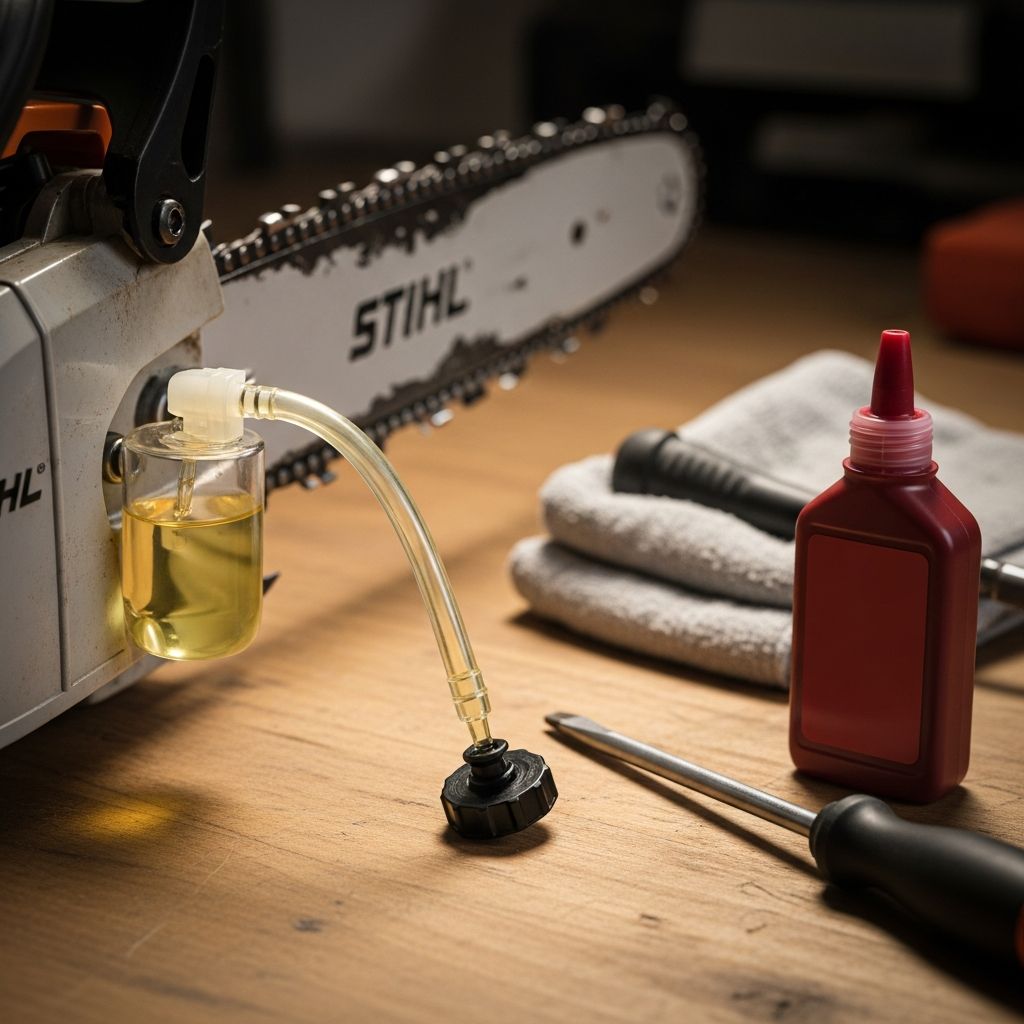
Fixing Stihl Chainsaw Bar Oil Issues
Stihl chainsaws are renowned for their durability and cutting power, but lubrication problems with the guide bar can lead to excessive wear, overheating, and potential safety hazards. When the oil pump fails to deliver lubricant properly, the chain and bar suffer rapid deterioration. This guide provides a thorough approach to identifying causes, performing repairs, and implementing maintenance routines based on manufacturer recommendations.
Recognizing Lubrication Failure Symptoms
Early detection of oil delivery issues prevents costly replacements. Common signs include a dry chain that produces fine sawdust instead of thick chips during cuts, visible bar wear such as burrs or uneven rails, and a bar that turns blue from heat friction. The chain may also bind or run roughly, indicating insufficient lubrication reaching the groove.
- Dry operation: Chain lacks oil sheen and feels hot to touch after use.
- Excessive wear: Groove depth reduces below minimum specifications, rails develop burrs.
- Poor cutting: Fine dust rather than coarse chips signals inadequate oil flow.
Addressing these promptly extends the life of the cutting attachment, following the 4-2-1 rule: rotate four chains, two sprockets, and one bar.
Essential Tools for Diagnosis and Repair
Gather these items before starting: safety gloves, file gauge with groove cleaner, flat file or Stihl bar dressing tool, resin solvent, compressed air or brush, torque wrench, and replacement o-rings or oil lines if needed. STIHL official maintenance guides emphasize using specialized tools to avoid further damage.
| Tool | Purpose | Why Essential |
|---|---|---|
| File gauge | Clean grooves, measure depth | Ensures precise clearance for drive links |
| Bar dressing tool | Deburr rails | Levels uneven wear without excessive material removal |
| Resin solvent | Remove buildup | Clears oil channels blocked by hardened residue |
| Torque wrench | Secure bar nuts | Prevents loose fittings causing misalignment |
Step-by-Step Inspection Process
Begin with the saw powered off and cooled. Remove the chain and bar for thorough examination.
- Visual check: Inspect oil tank for sufficient bar oil; ensure cap seals tightly. Look for leaks around pump housing.
- Oil line verification: Trace the small oil feed line from pump to bar groove inlet. Squeeze gently to check for clogs or cracks.
- Bar examination: Hold bar to light; verify groove depth matches minimum marks (typically 0.02-0.05 inches depending on model). Check rails for burrs, chipping, or battering.
- Pump test: Reinstall temporarily, run at low RPM over cardboard. Oil spots confirm function; absence indicates pump or line issue.
If no oil appears, proceed to cleaning; persistent failure may require pump disassembly or dealer service.
Thorough Cleaning Procedures
Residue buildup is the primary culprit in oil starvation. STIHL advises cleaning after every use, especially the groove, inlet holes, and outlet channels.
Use a file gauge’s cleaner slot to scrape bar groove while rotating. Spray resin solvent into inlet hole, flush with compressed air. For stubborn deposits, soak bar tip in solvent 10-15 minutes. Wipe sprocket nose and deburr rails with a flat file, maintaining 90-degree angle. Re-clean oil tank by emptying, rinsing with solvent, and refilling with fresh bar oil.
Pro Tip: Turn bar over after each chain sharpen to promote even wear.
Addressing Common Blockages and Wear
Clogged Oil Inlet and Groove
Oil inlet holes at bar base often clog first. Probe gently with thin wire; avoid enlarging. Groove debris pulls fine dust into cuts, accelerating wear. Clean bi-weekly or per use hours.
Burrs and Uneven Rails
Burrs form from chain friction; file smooth immediately to prevent chain bounce. If rails worn unevenly (e.g., from dull chain), use dressing tool but verify post-level groove depth exceeds minimum. Severe cases: replace bar.
Nose Sprocket Problems
Worn nose bearings cause chain drag against bar tip. Check clearance by pulling chain; no gap means replacement. Blue discoloration signals overheating from oil lack.
| Wear Type | Cause | Solution |
|---|---|---|
| Battered rails | Loose chain tension | Level rails or replace attachment |
| Chipped edges | Untreated burrs | Deburr promptly; dealer for advanced wear |
| Shallow groove | Prolonged use | Measure and replace bar |
Oil Pump Troubleshooting and Fixes
If cleaning fails, inspect pump. Accessible on most Stihl models via side cover removal. Check worm gear drive; worn teeth reduce output. Replace o-rings on pump plunger if leaking. For integrated pumps, test output pressure per manual specs.
DIY oil line replacement: Cut old line square, insert new barbed fitting. Secure with zip tie if needed. Always use genuine Stihl parts for compatibility.
Post-repair: Run test cuts on scrap wood, monitoring oil spray and chip quality.
Preventive Maintenance Schedule
Proactive care averts 90% of failures. Follow STIHL’s intervals:
- Daily: Clean bar groove, check tension, lube test.
- Weekly: Deburr rails, inspect groove depth, rotate bar.
- Monthly: Deep clean pump area, check sprocket wear (replace every two chains).
- Seasonal: Full disassembly, oil tank flush, store dry with scabbard.
Adhere to 4-2-1 rotation; never pair new chain with worn sprocket/bar. Use only Stihl bar oil for proper viscosity.
Safety Considerations During Repairs
Disconnect spark plug before any work. Wear gloves handling chain; edges are sharp. Ensure stable workbench. Test in controlled area away from flammables, as oil solvents are combustible. Professional service recommended for pump internals if inexperienced.
Advanced Bar Care Techniques
For heavy use, employ bar rail grinders for precision leveling, maintaining exact tolerances. Monitor sprocket wear marks; exceed 0.5mm, replace. Store bars oiled and separated to prevent groove damage.
Electric/cordless Stihl models follow similar steps but add battery slot cleaning.
Frequently Asked Questions (FAQs)
Why isn’t oil coming out of my Stihl chainsaw bar?
Common causes: clogged inlet/groove, empty tank, faulty pump, or cracked line. Start with cleaning and visual checks.
How often should I clean the guide bar?
After every use for residue removal; deep clean weekly or 5-10 hours.
Can I fix a worn Stihl bar myself?
Minor burrs and cleaning yes; severe rail/groove wear requires replacement or dealer leveling.
What oil for Stihl chainsaw bar?
Use bio- or standard bar oil; avoid motor oil for proper adhesion at speed.
Bar turns blue: what to do?
Indicates overheating from poor lube. Clean thoroughly, check pump, rotate bar.
References
- Stihl Chainsaw Guide Bar Maintenance — L&S Engineers. 2023. https://www.lsengineers.co.uk/advice-centre/stihl-guide-bar-maintenace
- STIHL Sharp Advice Saw Chain & Guide Bars — STIHL USA. 2021-09. https://www.stihlusa.com/content/dam/stihl/vu/us/en/download-files/pdf-files/STIHL-Sharp-Advice-Saw-Chain-Guide-Bars_VU_D_2021-9.pdf
- Expert Advice on Chainsaw Maintenance — STIHL USA. 2024. https://www.stihlusa.com/en/guides-projects/arbeitstechnik-und-geraetepflege/chainsaw-tips/chainsaw-maintenance
- How to Clean a Chainsaw — STIHL USA. 2024. https://www.stihlusa.com/en/guides-projects/maintenance-safety/how-to-clean-a-chainsaw
- Chainsaw Guide Bar Maintenance Video — YouTube (STIHL-related). 2022. https://www.youtube.com/watch?v=-WgkU70nFxg
Similar Articles


Read full bio of medha deb