Fix Toilet Tank Gasket Leaks: 30-60 Min Diy Guide
Master the DIY repair of your toilet tank gasket to stop leaks and save on plumber bills with this detailed guide.
Fix Toilet Tank Gasket Leaks: Complete DIY Guide
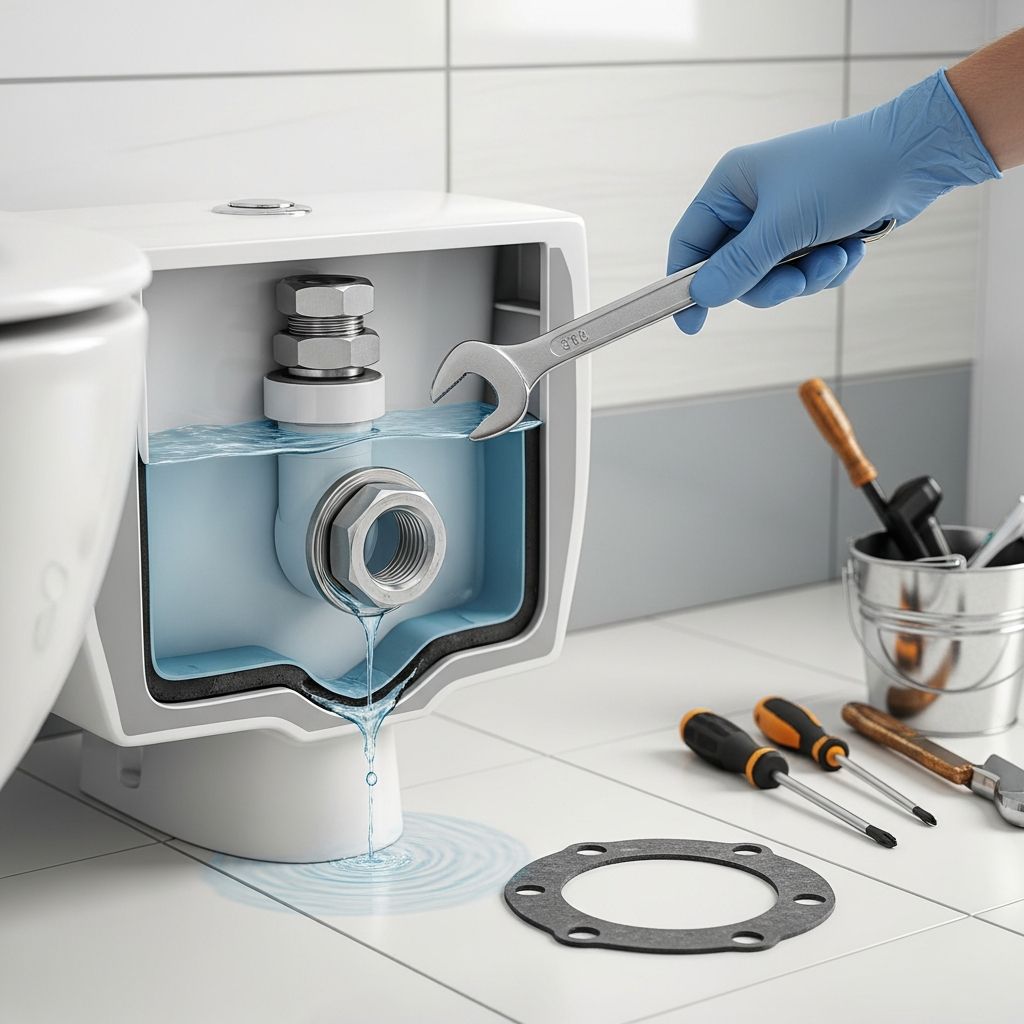
A leaking toilet tank gasket can waste hundreds of gallons of water yearly, lead to floor damage, and inflate utility bills. This seal, positioned between the tank and bowl, often degrades from age, mineral buildup, or poor installation. Replacing it yourself requires basic tools and about 30-60 minutes, empowering homeowners to handle this common plumbing issue without professional help.
Recognizing When Your Toilet Needs Gasket Replacement
Spot early signs to prevent escalation. Water pooling around the toilet base after flushes indicates a compromised gasket. Listen for hissing or dripping sounds from the tank-bowl junction, or feel for moisture on the floor or cabinet underside. Persistent low water levels in the tank or unexplained humidity suggest seal failure. Regular checks during cleaning reveal hardened, cracked, or compressed rubber, signaling immediate action.
- Visual cues: Yellowish stains or mineral deposits at the tank base.
- Performance issues: Tank refills slowly or overflows intermittently.
- Odor problems: Musty smells from trapped moisture.
Addressing these promptly avoids porcelain cracks from uneven pressure or mold growth in hidden areas.
Essential Tools and Materials for the Job
Gather items beforehand to streamline the process. A standard toolkit suffices for most setups.
| Item | Purpose | Notes |
|---|---|---|
| Adjustable wrench or pliers | Loosening bolts and nuts | Locking pliers ideal for corroded parts |
| Screwdriver set | Removing flush lever components | Flathead and Phillips for versatility |
| Hacksaw or chisel | Cutting seized bolts | Use if hardware won’t budge |
| Sponge, towels, bucket | Drying and cleanup | Prevent slips and mess |
| New tank-to-bowl gasket kit | Core replacement | Universal 3-inch size fits most; includes bolts/washers |
| Rubber gloves and flashlight | Safety and visibility | Protect hands from sharp edges |
Optional silicone caulk seals floor edges post-repair, enhancing longevity. Purchase brass or stainless bolts for corrosion resistance.
Preparing Your Workspace Safely
Safety first: shut off water at the supply valve behind the toilet, turning clockwise until tight. Flush repeatedly to drain the tank, then sponge out remnants. Disconnect the flexible supply hose by unscrewing the coupling nut counterclockwise; place a bucket underneath to catch drips. Lay old towels or cardboard to protect floors from scratches or spills. Position the tank on a stable, padded surface like a rug to avoid chipping porcelain.
Work in good lighting, wearing gloves to handle grimy parts. If dealing with an older unit, note float arm position with tape for reassembly.
Detailed Step-by-Step Replacement Process
Follow these sequentially for success.
- Detach tank hardware: Access bolts inside the tank at the bottom. Hold nuts underneath with a wrench while unscrewing bolts from above using a screwdriver. Inspect rubber washers under nuts—if brittle, replace the full bolt kit.
- Lift tank carefully: Grip sides evenly and pull straight up, avoiding wobbling. Set aside gently.
- Remove old gasket: Peel the conical rubber seal from the bowl’s central opening or tank outlet. Clean residue with a plastic scraper and paper towels for a smooth surface.
- Install new gasket: Slide the fresh gasket onto the tank’s spud pipe, ensuring it seats fully without twists. Press firmly to adhere.
- Optional overflow tube check: If leaking there too, loosen the nut with a pipe wrench, replace the assembly, and retighten.
- Realign and lower tank: Position bolts through tank and bowl holes, starting with rubber washers against porcelain, then metal washers and nuts. Tighten alternately in a cross pattern to 10-15 ft-lbs—snug, not overtight to prevent cracks.
- Reconnect supply: Screw hose back onto tank shank hand-tight, then quarter-turn with wrench.
Level the tank using shims if uneven; wing nuts simplify future access.
Troubleshooting Common Challenges During Repair
Corroded bolts resist turning—apply penetrating oil, wait 10 minutes, or cut with a hacksaw. Stuck gaskets yield to gentle prying with a putty knife; avoid metal tools on porcelain. If the tank won’t align, verify gasket orientation and clear debris. Post-assembly leaks often stem from loose nuts—retighten incrementally while checking.
- Mineral buildup: Soak with vinegar solution before removal.
- Uneven tightening: Causes rocking; use a level.
- Supply line drips: Replace washer inside coupling.
Testing and Finalizing the Repair
Turn water on slowly, observing for immediate leaks. Flush several times, monitoring the tank-bowl seam for 5-10 minutes. Wipe dry and recheck after an hour. Adjust fill valve if water overruns. Apply caulk around base-to-floor contact for extra protection. Run the toilet daily for a week to confirm seal integrity.
Preventive Maintenance for Long-Lasting Seals
Extend gasket life through habits: Clean tank monthly with non-abrasive cleaners. Inspect bolts yearly for rust. Use softened water to minimize deposits. Avoid harsh chemicals eroding rubber. For high-use households, replace proactively every 5-7 years.
Cost Analysis: DIY vs. Professional Service
| Option | Cost Range | Time | Benefits |
|---|---|---|---|
| DIY | $10-30 (kit) | 30-60 min | Immediate, skill-building |
| Plumber | $150-300 | 1-2 hours | Warranty, no hassle |
DIY saves significantly, ideal for straightforward two-piece toilets.
Frequently Asked Questions (FAQs)
Can I reuse the old bolts and washers?
No—replace them to ensure a reliable seal, as corrosion compromises performance.
What if my toilet is one-piece?
One-piece units lack this gasket; leaks indicate flange or wax ring issues—consult specialized guides.
Is special plumber’s putty needed?
Not typically; modern gaskets self-seal. Use sparingly if specified by manufacturer.
How do I know the gasket size?
Most are 3-inch universal; measure old one or check model compatibility.
Will this fix a rocking toilet?
Possibly, if gasket wear caused instability; add closet bolts if persistent.
References
- Replacing the Toilet-Tank Gasket and Overflow Pipe — Fine Homebuilding. 2023. https://www.finehomebuilding.com/project-guides/plumbing/replacing-the-toilet-tank-gasket-and-overflow-pipe
- A Step-by-Step Guide to Replacing Your Toilet Tank-to-Bowl Gasket — OreaTe AI Blog. 2024. https://www.oreateai.com/blog/a-stepbystep-guide-to-replacing-your-toilet-tanktobowl-gasket/c4a0be4ebb3b7e8415a08937185865bd
- How to Replace Toilet Bolts and Gasket – Fix a Leaky Toilet — House in Progress (YouTube). 2023-02-15. https://www.youtube.com/watch?v=LVGQc7qTods
- Toilet Tank to Bowl Gasket Replacement — iFixit. 2022. https://www.ifixit.com/Guide/Toilet+Tank+to+Bowl+Gasket+Replacement/44141
- Toilet Tank to Bowl Gasket Repair — YouTube. 2023. https://www.youtube.com/watch?v=qJEgvssCNSE
- How to Replace a Toilet Tank to Bowl Gasket or Seal — YouTube. 2024. https://www.youtube.com/watch?v=9dAo900ntmI
- VIDEO – Two-Piece Toilet Tank and Gasket Installation — Kohler Assist. 2024. https://assist.kohler.com/en/toilets-and-seats/VIDEO-Two-Piece-Toilet-Tank-and-Gasket-Installation
Similar Articles








Read full bio of medha deb