Fixing Blinds Pull Cords: Complete Step-By-Step DIY Guide
Master the art of repairing blinds pull cords at home with our detailed DIY guide, saving time and money on replacements.
Fixing Blinds Pull Cords: DIY Guide
Window blinds enhance privacy, light control, and home aesthetics, but a faulty pull cord can render them unusable. Whether frayed, broken, or tangled, pull cords are common failure points in horizontal, vertical, and roller blinds. This guide provides a complete roadmap for diagnosing issues, gathering tools, executing repairs, and preventing future problems. With basic supplies and patience, most homeowners can restore functionality without professional help.
Understanding Pull Cord Mechanics in Window Blinds
Pull cords, also known as lift strings or drawstrings, operate via a headrail mechanism including cord locks, drums, and pulleys. In horizontal blinds like venetians, cords thread through slats and ladder tapes to raise or lower the stack. Vertical blinds use cords for tilting or traversing panels, while roller shades rely on continuous loops or beaded chains. Breakage often occurs from wear at friction points, pet chewing, or excessive force. Knowing your blind type—check the headrail for model stamps—aids precise repairs.
Common cord materials include polyester, nylon, or braided strings, typically 1.8-2.5mm thick. Measure existing cords for replacements: length from headrail to bottom rail plus 20% extra for knots and threading.
Essential Tools and Materials for Cord Repairs
Stock up before starting to avoid mid-project delays. Core items include:
- Replacement cord: Match diameter and color; kite string or blind-specific polyester works well.
- Cutting tools: Sharp scissors or utility knife for clean cuts.
- Sealing tools: Lighter or heat source to melt frayed ends.
- Threading aids: Paperclips bent into hooks, toothpicks, or thin wire for navigating tight spaces.
- Gripping tools: Needle-nose pliers, channel locks, or flathead screwdriver for disassembly.
- Fasteners: Wooden beads, plastic caps, or cord stops for securing ends.
- Workspace essentials: Flat surface, masking tape to bundle slats, and safety glasses.
Budget under $15 for most kits. Source cords from hardware stores or online blind parts suppliers.
Step-by-Step Guide to Replacing a Broken Lift Cord
Focus first on lift cords, which raise/lower blinds. This process suits horizontal faux wood, aluminum, or fabric slats.
- Disassemble the blind: Release brackets (often Phillips screws) and lower to a table. Flip upside down for access.
- Remove bottom stops: Twist off plastic or metal plugs with pliers. Untie and clip old knots, then extract worn cord fully.
- Prepare new cord: Cut to length (open blind fully, add knot space). Seal one end with lighter flame to prevent fraying.
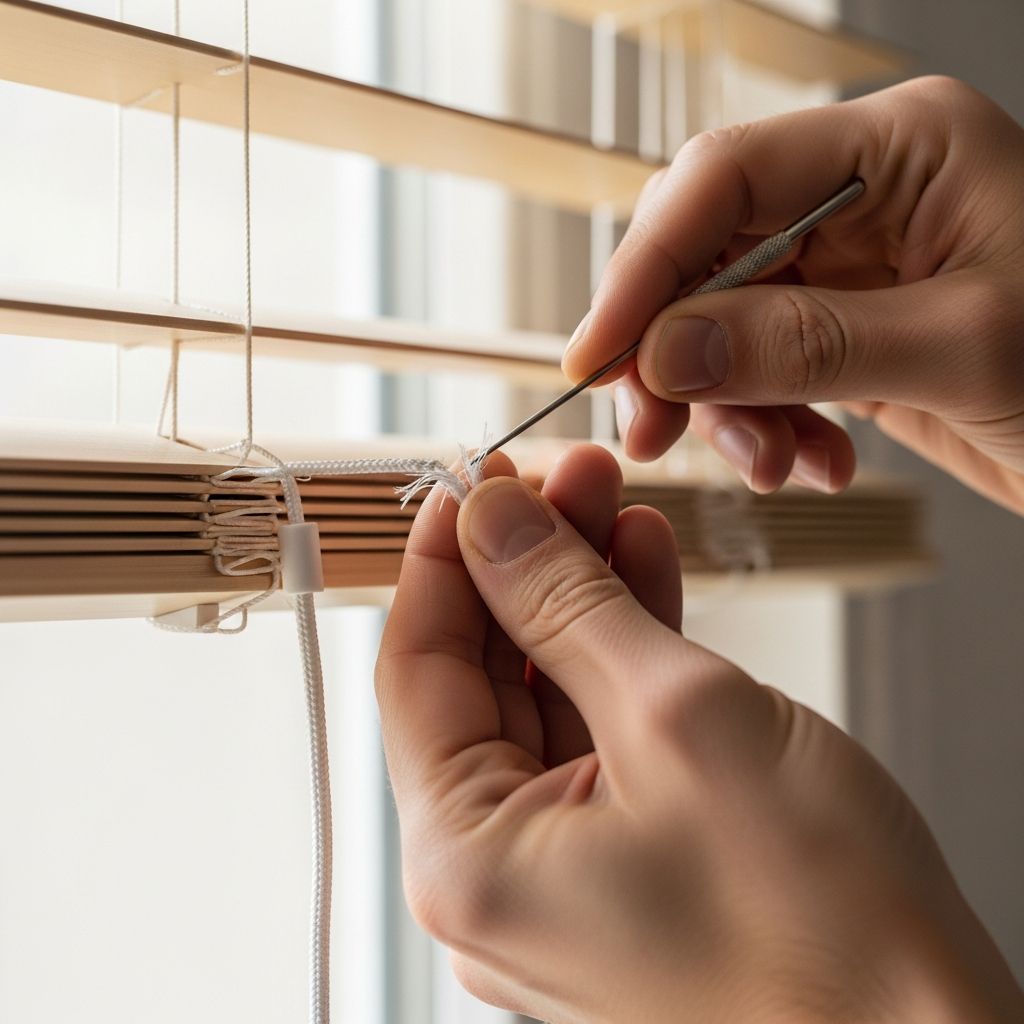
- Thread through slats: Start at farthest cord run from lock. Align slats with tape or hook; bunch 5-10 slats for efficiency. Keep cord inside ladder tape for neatness.
- Navigate headrail: Tie a small loop (bowline knot ideal). Insert paperclip hook above metal separator bar, snare loop, and pull through to cordlock.
- Secure bottom: Lift blind to measure tail; tie oversized square knot. Reinsert excess tape/cord, snap plug back.
- Reinstall and test: Remount, raise/lower multiple times. Adjust tension via cordlock screw if sticky.
Time: 20-45 minutes per blind. Repeat for multi-cord setups, matching lengths visually.
Repairing Tilt Cords and Continuous Loops
Tilt cords adjust slat angles; continuous loops suit rollers or cellular shades. Symptoms: loose tilting or endless spinning.
For tilt mechanisms:
- Unthread old cord from spool/guide holes.
- Knot new cord midpoint, thread opposite directions around spool.
- Secure through bottom guides, trim/seal ends.
For loops: Cut loop, remove from channel lock. Rethread new loop identically, reform by knotting or crimping. Test wand operation post-repair.
Troubleshooting Common Pull Cord Problems
| Issue | Symptoms | Solution |
|---|---|---|
| Cord Jammed | Blinds won’t raise evenly | Untangle knots; lubricate pulleys with silicone spray. Realign slats. |
| Frayed Ends | Slipping through stops | Melt ends; add beads or crimps for grip. |
| Tension Off | Slats sag or hard to lift | Turn cordlock screw clockwise (tighten) or counterclockwise (loosen). |
| Missing Stopper | Cord pulls through bottom | Loop paperclip or buy plastic acorn. |
| Uneven Lift | One side higher | Shorten longer cords incrementally. |
Use pliers sparingly to avoid damaging plastic parts. If headrail internals fail, consider full mechanism replacement ($10-30).
Safety Considerations and Childproofing
Cords pose strangulation risks, especially loops longer than 7 inches. Post-repair:
- Install tension devices anchoring cords to walls.
- Shorten pulls to floor level.
- Opt for wand-only or motorized upgrades for homes with kids/pets.
Work with blinds down; secure headrail to prevent falls. Unplug power tools nearby.
Preventive Maintenance for Long-Lasting Cords
Extend cord life with habits:
- Gentle operation: Avoid yanking; guide smoothly.
- Regular inspections: Check monthly for frays.
- Cleaning: Dust slats weekly; vacuum cords gently.
- Pet-proofing: Spray bitter apple on cords.
- Upgrades: Switch to braided or UV-resistant cords.
Annual full disassembly cleans pulleys, reducing 50% of jams.
Advanced Repairs: When DIY Isn’t Enough
For multi-layer pleated shades or smart blinds, consult manufacturer guides. If cords tangle internally or mechanisms strip, replacement parts from sites like FixMyBlinds cost $20-50. Motorized conversions ($100+) eliminate cords entirely.
Vertical blind carriers often seize; lubricate with graphite powder.
Frequently Asked Questions (FAQs)
What if my cord is stuck in the headrail?
Use a toothpick or wire to fish it out. Apply soapy water for lubrication, then dry thoroughly.
Can I use fishing line as replacement?
No—too slippery for locks. Stick to braided polyester matching original gauge.
How do I fix a roller shade clutch?
Open fully, rotate spring counterclockwise 3-5 times inside tube, then re-pin.
Why won’t my blinds stay up?
Cordlock worn; replace or add friction tape to cords.
Are repairs cheaper than new blinds?
Yes—$10-30 vs. $50-200. DIY saves labor fees.
Pro Tips from Experts
– Bundle slats with tape for straight threading.
– Practice on scrap cord.
– Photograph disassembly for reassembly.
– Match cord color to slats for invisibility.
References
- Repair Damaged Pull Cords on Horizontal Blinds — Instructables. Accessed 2026. https://www.instructables.com/Repair-damaged-Cull-Cords-on-Horizontal-Blinds/
- A Quick Repair: How to Fix Blinds String — Factory Direct Blinds. Accessed 2026. https://www.factorydirectblinds.com/blogs/articles/a-quick-repair-how-to-fix-blinds-string
- How to Fix a Broken Pull Cord — YouTube (Video Transcript). Accessed 2026. https://www.youtube.com/watch?v=NW0e00mdfn4
- DIY Blind Repair: A Complete Guide — The Blind Factory Ohio. Accessed 2026. https://theblindfactoryohio.com/diy-blind-repair-a-complete-guide/
Similar Articles







Read full bio of medha deb