Fixing Couch Webbing Straps: Complete Guide
Restore your sagging couch with expert techniques for repairing or replacing webbing straps, saving time and money on reupholstery.
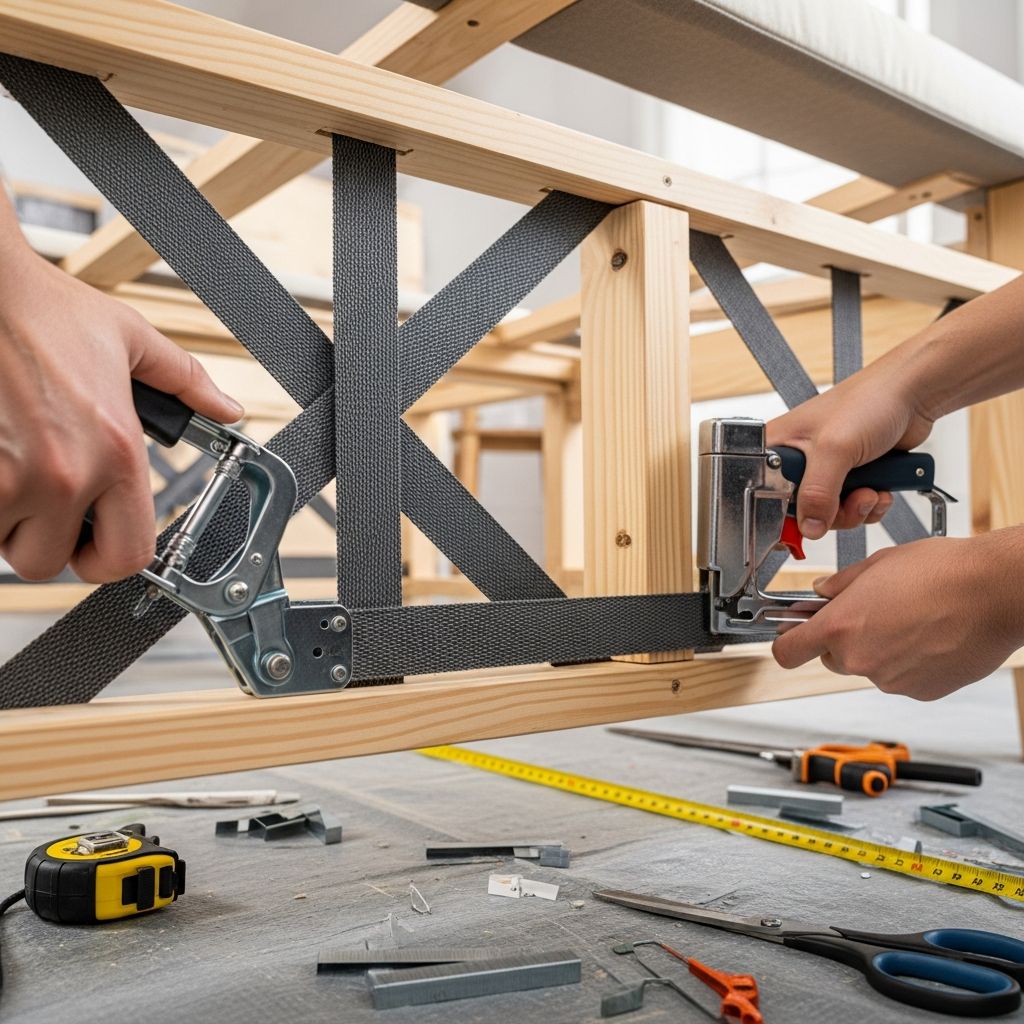
Webbing straps provide the foundational support in couches, bearing the weight of cushions and users while preventing sagging. Over time, these straps can fray, snap, or stretch, leading to discomfort and an unsightly dip in seating areas. Repairing them yourself extends furniture life, cuts costs compared to professional services, and allows customization for better durability.
Understanding Couch Support Systems
Couches rely on a hidden framework of straps or webbing stretched across the frame to cradle foam cushions and springs. Common types include rubber webbing for modern pieces with grooved frames, jute webbing for traditional or antique styles often paired with springs, and synthetic straps like vinyl or polypropylene for outdoor or high-traffic indoor use. Each material offers unique benefits: rubber resists stretching and grips padding well, jute provides natural flexibility for heirloom pieces, and synthetics withstand moisture and UV exposure.
Recognizing the type in your couch is crucial. Flip the piece upside down or remove the underside cambric dust cover—a thin fabric barrier—to inspect. Grooved rails suggest rubber webbing, while tack-secured strips indicate jute. Loose or broken straps manifest as visible gaps, uneven cushion settling, or creaking under load.
Essential Tools and Materials for Repairs
Gathering supplies upfront ensures smooth progress. Basic toolkit includes:
- Staple gun or hammer with upholstery tacks
- Pliers, vice grips, or webbing stretcher for tensioning
- Utility knife for cutting
- Measuring tape
- Screwdriver for frame access
Materials vary by strap type:
| Strap Type | Best For | Key Accessories |
|---|---|---|
| Rubber Webbing | Grooved modern frames | Metal clips, pliers |
| Jute Webbing | Antique sprung seats | Tacks, stretcher tool |
| Vinyl/Poly Straps | Outdoor or wet areas | Heat gun for wrapping ends |
Source quality matters; opt for UV-resistant synthetics for sunlit rooms and heavy-duty jute (red-striped for load-bearing) for bottom layers. Budget $20–50 for a standard couch set.
Diagnosing Webbing Damage
Before repairs, evaluate extent. Minor issues like one loose strap might need spot fixes, while widespread breakage demands full replacement. Signs include:
- Cushions bottoming out or shifting
- Visible tears or stretched fabric under cambric
- Springs poking through if present
- Frame groaning from unsupported weight
Remove cushions and flip the couch. Count existing straps—typically 5–8 per direction, spaced 1–2 inches apart. Test tension by pressing; good webbing rebounds firmly. Note weave pattern: perpendicular crossing mimics lawn chair design for even distribution. If over half are compromised, replace all for uniformity.
Step-by-Step Rubber Webbing Replacement
Ideal for mid-century couches with frame grooves. This method uses clips for secure, tool-free insertion.
- Prep the Frame: Clear debris from grooves. Remove old webbing by prying clips with pliers.
- Measure Precisely: Gauge inside groove edges across multiple points. Account for weave by adding 1–2 inches per end. Cut at 90-degree angles for clean fits.
- Orient and Clip: Textured side up grips cushions; smooth side faces clip lip to shield from wood abrasion. Squeeze clips with vice grips until teeth indent holes without piercing.
- Install Lengthwise: Hook clips into grooves, pushing firmly. Use pliers for leverage; an assistant helps.
- Weave Crosswise: Thread under/over alternating lengthwise straps. Match original count and spacing (e.g., ½-inch gaps).
- Tension Check: Sit-test for bounce; readjust if slack.
Completion time: 1–2 hours. Pro tip: Install bottom layer first in multi-groove frames.
Repairing Jute Webbing on Traditional Couches
Jute suits sprung or antique frames, tacked directly without grooves. Red-striped variants handle heavier loads on undersides.
- Remove Old Material: Pull tacks holding loose ends. Leave intact straps to reinforce.
- Plan Layout: Run primary strips widthwise (load-bearing), then interweave lengthwise.
- Attach First End: Staple or tack center of frame side, leaving tail for tension.
- Stretch Taut: Use a DIY stretcher—screw teeth into a wood block—or commercial tool. Pull until drum-tight, tack in triangle pattern: center, then sides.
- Repeat and Weave: Overlap good sections; weave perpendicular strips. Trim excess post-tacking.
- Secure Edges: Cover with cambric to protect from dust and springs.
For sprung seats, position webbing atop frame; backrests go below. This preserves historical authenticity while boosting support.
Handling Synthetic and Vinyl Straps
Common in recliners or patios, these wrap ends for anchoring.
- Cut and Prep: Measure full span plus 6 inches for doubles. Heat ends if pre-wrapped.
- Anchor One Side: Staple looped ends to frame underside.
- Pull and Secure: Stretch across, double-wrap opposite side, staple firmly.
- Even Tension: Use pliers on staples; weave as needed.
Vinyl excels in damp areas but requires heat gun for pliability.
Advanced Tips for Long-Lasting Results
Avoid premature failure by matching strap count and spacing to frame size—heavier couches need denser grids. Layer materials: jute base with poly overlay for hybrids. Post-install, add plywood bridges over weak frames for extra rigidity. Maintenance involves annual cambric checks and avoiding sharp drags on edges. For sagging foam above, pair with denser inserts. Custom tools like padded stretchers prevent scratches.
Safety first: Work on stable surfaces, wear gloves against sharp tacks, and enlist help for flips.
Common Mistakes and How to Avoid Them
- Insufficient Tension: Causes quick sag; always over-stretch slightly.
- Wrong Orientation: Textured up for rubber; prevents slips.
- Mismatched Materials: Jute on grooves fails; stick to frame design.
- Poor Spacing: Uneven support leads to lumps—measure consistently.
Frequently Asked Questions (FAQs)
Q: How often should I check couch webbing?
A: Inspect yearly or after moving; replace if more than 30% damaged for proactive comfort.
Q: Can I mix webbing types?
A: Possible for hybrids, but uniform materials ensure even wear—test small areas first.
Q: What’s the cost of professional vs. DIY repair?
A: DIY under $50; pros charge $200–500 depending on size and labor.
Q: Is this fix suitable for leather couches?
A: Yes, as webbing is hidden; just protect leather during access.
Q: How do I handle springs with webbing?
A: Install webbing first to cradle springs; use burlap layer above for stability.
Extending Your Couch’s Life Post-Repair
After webbing fixes, rotate cushions quarterly, use arm covers for friction reduction, and vacuum under cambric. These steps, combined with quality materials, can add 5–10 years to your investment. For heirlooms, document before/after for value tracking.
References
- How to Replace Rubber Webbing — OnlineFabricStore Maker’s Mill. Accessed 2026. https://www.onlinefabricstore.com/makersmill/how-to-replace-rubber-webbing/
- Repairing the webbing on an antique couch — YouTube (Video). Accessed 2026. https://www.youtube.com/watch?v=5chJU0SufAA
- How to: Webbing — The Accidental Upholsterer. Accessed 2026. https://theaccidentalupholsterer.com/how-to-webbing/
- How To Install A Single Wrap Vinyl Strap — Sunniland Patio (YouTube). 2018-08-17. https://www.youtube.com/watch?v=-osTk60qBko
Similar Articles




Read full bio of Sneha Tete