Fixing Leaking PEX Connectors: Complete Repair Guide
Learn proven methods to identify, assess, and repair leaking PEX connectors effectively.
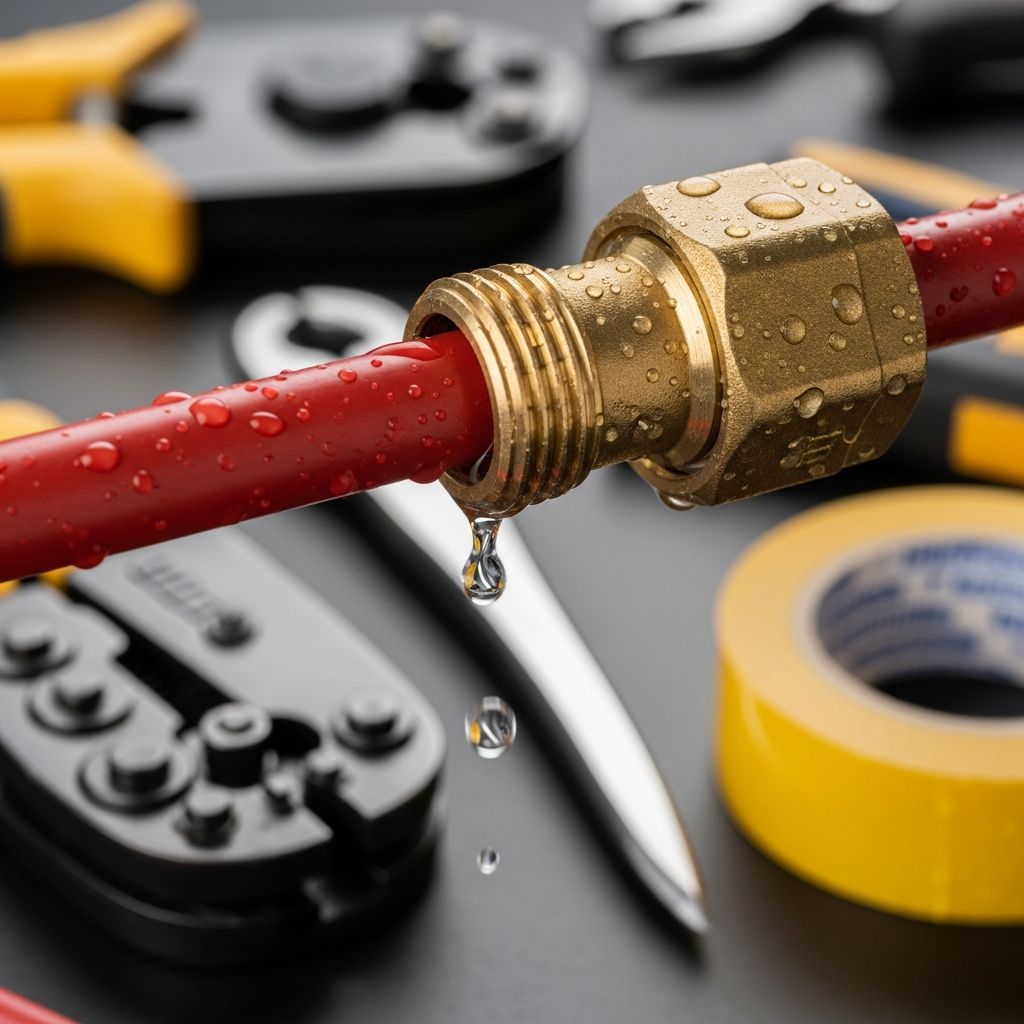
Fixing Leaking PEX Connectors: A Homeowner’s Complete Repair Guide
PEX (cross-linked polyethylene) piping systems have become increasingly popular in modern plumbing installations due to their flexibility, durability, and cost-effectiveness. However, like any plumbing system, PEX connections can develop leaks over time. Understanding how to identify, diagnose, and repair these leaks can save homeowners significant money and prevent water damage to their properties. This comprehensive guide walks you through the essential repair techniques and best practices for addressing leaking PEX connectors.
Understanding PEX Connector Leaks and Their Causes
Before attempting any repair, it’s important to understand why PEX connectors leak in the first place. Unlike traditional copper piping that can corrode from the inside, PEX pipes are resistant to mineral buildup and corrosion. However, the connectors themselves—the points where the flexible tubing meets fittings—are vulnerable to several issues.
Common causes of PEX connector leaks include improper initial installation, where crimped rings weren’t secured tightly enough or press-fit connections weren’t completed correctly. Over time, vibration from water pressure changes or thermal expansion and contraction can loosen connections. Additionally, mechanical damage from accidental punctures, kinks, or crushing near connector areas can compromise the seal. In some cases, manufacturing defects in fittings or rings can also contribute to leaks.
Assessing Leak Severity and Location
The first step in any repair process involves accurately identifying where the leak originates and how severe it is. Small weeping leaks that produce occasional drips may be managed differently than steady streams or multiple leak points along a connector.
To locate the leak precisely:
- Turn off the water supply to isolate the affected section
- Dry the area completely using towels or a hairdryer to eliminate surface moisture
- Turn the water back on briefly and observe where water emerges
- Mark the exact leak location with tape or a marker for reference
- Evaluate whether the leak originates from the connection point itself or from the pipe body
Understanding the leak’s location determines which repair method will be most effective. Leaks at the crimp ring suggest that the connection wasn’t properly secured, while leaks from the fitting body may indicate defective components.
The Quick Clamp Method for Minor Leaks
For small leaks and minor drips, a PEX repair clamp offers a quick temporary or permanent solution without cutting the pipe. This method is ideal for minor weeping leaks where water seeps slowly from a connection point.
Steps to apply a repair clamp:
- Shut off the main water supply to the affected area
- Allow the pipe to depressurize completely—wait several minutes to ensure all water pressure has dissipated
- Thoroughly dry the leaking area using cloths or compressed air
- Position the rubber gasket on the clamp directly over the leak source, ensuring complete coverage of the damaged area
- Slide the clamp around the pipe, centering it over the gasket
- Tighten the mounting bolts gradually and evenly using an appropriate wrench—do not over-tighten, as this can damage the rubber gasket
- Restore water pressure and monitor the area for several hours to confirm the leak has stopped
The repair clamp method works by compressing a rubber gasket against the leak point, creating a watertight seal. This approach is non-invasive and doesn’t require pipe cutting, making it accessible for most homeowners. However, clamps are generally best suited for small leaks; larger leaks or damaged connectors typically require more permanent solutions.
Epoxy-Based Repair for Hairline Cracks
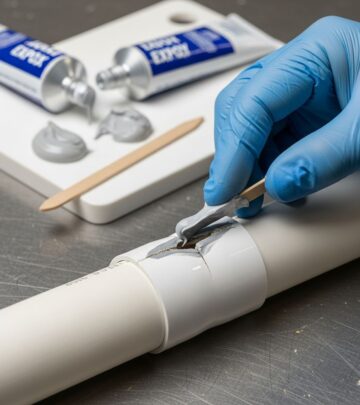
For hairline cracks in PEX pipes or small fissures in connector areas, two-part epoxy putty provides an effective seal. This method works well when the structural integrity of the pipe remains intact but a small breach allows water to escape.
Applying epoxy for pipe crack repairs:
- Turn off the water supply and allow the system to depressurize for at least five minutes
- Dry the cracked area thoroughly—use a cloth, then apply a hairdryer on low heat to remove all moisture
- Clean the surface gently with fine sandpaper or an abrasive pad to help the epoxy adhere better
- Knead the two-part epoxy putty thoroughly according to manufacturer instructions until the color becomes uniform
- Press the epoxy firmly into and around the crack, overfilling slightly to ensure complete coverage
- Smooth the epoxy surface with a tool or wet finger to match the pipe’s contour
- Allow the epoxy to cure for the full time specified on the product packaging—typically 4 to 24 hours depending on the formulation
- Turn the water back on and observe the repair area for leaks over the next several hours
Epoxy repairs cure through chemical reaction and create a hardened seal that can withstand normal water pressure. However, this method is temporary in many cases and works best on small cracks rather than large breaches. For significant structural damage, complete connector replacement provides a more reliable long-term solution.
Crimp Ring Replacement: The Permanent Solution
When minor repairs aren’t sufficient, replacing the crimp ring and reconnecting the pipe provides a permanent, professional-quality fix. This method involves cutting out the damaged section and installing new crimp connections.
Tools and materials needed:
- PEX pipe cutter (for clean, square cuts)
- Crimping tool (calibrated to manufacturer specifications)
- New crimp rings (matching the pipe diameter)
- New PEX fitting or connector compatible with your system
- Go/no-go gauge to verify connection quality
- Adjustable wrenches (for supporting fittings during work)
Steps for crimp ring replacement:
- Shut off water supply and drain the affected section completely
- Use the PEX pipe cutter to make a clean, square cut on both sides of the damaged connector—ensure cuts are perpendicular to the pipe
- Remove the old crimp rings carefully using a ring removal tool or small flathead screwdriver
- Discard the damaged connector and old crimp rings
- Inspect the newly cut pipe ends for burrs or debris and clean if necessary
- Slide new crimp rings onto each pipe end, positioning them approximately 1/2 inch from the end
- Push the new fitting or connector onto the first pipe end until it seats fully
- Slide the first crimp ring toward the fitting and use the calibrated crimping tool to compress it firmly
- Repeat the process for the opposite pipe end and fitting
- Use the go/no-go gauge to verify that both crimped connections meet size specifications
- Restore water pressure and monitor connections for 24 hours before considering the repair complete
This method creates a permanent, code-compliant repair that restores the plumbing system to its original integrity. The key to success is ensuring absolutely clean, square cuts and proper positioning of crimp rings before crimping.
Press-Fit Connector Repair Alternative
For PEX-A systems or PEX-AL-PEX (composite) tubing, press-fit connectors offer an alternative repair approach. These fittings use stainless steel sleeves and specialized press tools rather than traditional crimp rings.
Press-fit repair process:
- Shut off water supply and depressurize the system
- Cut the tubing with a pipe cutter, making a square cut at the damaged section
- Slide the stainless steel press sleeve onto the tubing until it seats at the bottom—ensure the tubing is visible in the witness hole of the sleeve
- Push the tubing and sleeve onto the fitting until resistance is felt at the stop
- Position the press tool’s jaw directly against the fitting shoulder
- Activate the press tool (manual or battery-powered) to compress the sleeve and create the permanent seal
- Verify proper seating and wrap the coupling with foam insulation if it will be buried
- Perform a pressure test before covering or concealing the repair
Press-fit connections eliminate the concern of improper crimping because the press tool creates uniform compression. This method is particularly reliable for systems subject to significant temperature fluctuations, as the sleeve design accommodates minor expansion and contraction.
Compression Coupling Repairs
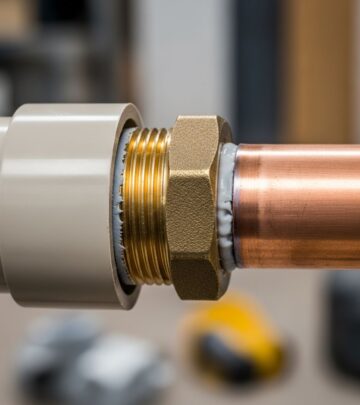
Compression couplings provide another repair option, particularly useful when you need a flexible connection point. These fittings don’t require special tools beyond basic wrenches.
Using compression couplings for repairs:
- Turn off water and drain the system
- Cut out the damaged section with a pipe cutter, ensuring square cuts
- Slide the compression nut onto each tubing end
- Slide the compression ring (ferrule) onto each tubing end behind the nut
- Push the compression inserts into the tubing ends until they stop
- Push both tubing ends onto the coupling nipple until contact is made
- Using two wrenches (one to hold the nipple, one to tighten the nut), tighten each compression nut firmly but not excessively
- Turn water back on and inspect for leaks immediately
- Wrap buried couplings with foam insulation to prevent direct contact with soil
Compression fittings are mechanical connectors that require no special tools and can be disassembled if needed. However, they may eventually loosen over time with water pressure fluctuations, necessitating periodic retightening.
Post-Repair Testing and Verification
Regardless of which repair method you choose, proper testing ensures the repair’s success and prevents future water damage. Testing should occur in two phases: immediate pressure testing and extended observation.
Immediate pressure testing (within one hour of repair):
- Restore water pressure slowly, watching the repaired connection continuously
- Look for any water seepage, weeping, or dripping from the repair area
- If water appears, shut off the supply immediately and reassess the connection
- Inspect crimp rings to confirm they’re seated properly or verify fitting seating
Extended observation (24-48 hours after repair):
- Monitor the repaired area periodically throughout the day
- Check for moisture or water marks indicating slow leaks
- Use the go/no-go gauge one final time to confirm connection specifications
- Once the repair has proven successful, cover any exposed connections appropriately
Preventive Measures for Future Leaks
While PEX systems are generally reliable, several preventive measures can reduce the likelihood of future connector leaks:
- Maintain proper water pressure: Keep system pressure between 40 and 60 PSI—excessive pressure accelerates wear on connections
- Install expansion tanks: These accommodate thermal expansion from heating and cooling cycles, reducing stress on connectors
- Use quality fittings: Invest in brass or high-quality plastic fittings from reputable manufacturers rather than the cheapest options
- Ensure proper installation: If you’re installing new PEX, double-check that all crimp rings are properly seated and crimped
- Protect from damage: Avoid running PEX through areas where it might be punctured, kinked, or crushed
- Insulate buried connections: Foam insulation protects fittings from direct soil contact and UV exposure
When to Call a Professional Plumber
While many PEX connector repairs are well within the scope of homeowner maintenance, certain situations warrant professional assistance. If you lack the necessary tools (particularly a calibrated crimping tool), if the leak is part of a larger plumbing issue, if multiple connectors are failing, or if you’re uncomfortable working on your plumbing system, contacting a licensed plumber ensures the repair meets all building codes and provides a warranty.
Professional plumbers also have access to specialized diagnostic tools that can identify hidden leaks or systemic pressure problems that might indicate broader issues within your plumbing system.
Frequently Asked Questions
Can I repair a PEX connector without turning off the water?
No. Attempting repairs with water pressure present creates safety hazards and prevents you from properly assessing the leak or applying most repair methods. Always shut off the main water supply before beginning any connector repair work.
How long do epoxy repairs last on PEX pipes?
Epoxy repairs typically last 5-10 years depending on water pressure, temperature fluctuations, and the size of the crack being repaired. For a permanent solution, crimp ring or press-fit replacement is recommended.
What’s the difference between PEX-A, PEX-B, and PEX-C?
These designations refer to different manufacturing methods that affect flexibility and memory (ability to return to original shape). PEX-A is the most flexible and has the best shape-memory properties, while PEX-B and PEX-C are progressively less flexible. Use replacement tubing that matches your existing system type.
Is it necessary to drain the entire system for repairs?
Ideally, yes. Draining prevents water from spraying out when you cut the pipe and makes it easier to work with connectors. However, if only the affected section can be isolated with shut-off valves, you may drain just that portion to minimize water loss.
Can repair clamps be left permanently in place?
Yes. Quality PEX repair clamps with rubber gaskets are designed for permanent installation on minor leaks. However, they’re better suited as temporary solutions while you plan a more permanent repair like crimp ring replacement.
References
- Repairing and Replacing PEX Crimp Connectors — Plastic Pipe Factory/IFAN. 2024. https://www.ifan-plast.com/info/repairing-and-replacing-pex-crimp-connectors-89110024.html
- Repairing Damaged PEX — MrPEX Systems. 2016. https://mrpexsystems.com/wp-content/uploads/2016/08/13-Repairing-Damaged-PEX.pdf
- PEX Pipe Repair: A DIY Guide for Homeowners — Outdoor Boiler. 2024. https://outdoorboiler.com/blogs/news/pex-pipe-repair-a-diy-guide-for-homeowners
Similar Articles


Read full bio of medha deb