Fixing Peeling Wallpaper: Complete Guide
Restore your walls effortlessly with proven techniques to mend peeling wallpaper and prevent future issues for a flawless finish.
Peeling wallpaper can detract from your home’s aesthetics and signal underlying adhesion problems. This guide provides detailed, actionable steps to diagnose, repair, and prevent wallpaper detachment, empowering homeowners to achieve professional results without extensive replacement.
Understanding Why Wallpaper Peels
Wallpaper detachment often stems from environmental factors, installation flaws, or material mismatches. High humidity causes adhesives to weaken, leading edges or seams to lift over time. Poor initial surface prep, like unclean or uneven walls, prevents proper bonding. Using incompatible glues for specific paper types exacerbates issues, especially with delicate or thick textures.
- Humidity and Moisture: Excess dampness softens glue, common in bathrooms or kitchens.
- Installation Shortcuts: Skipping primers or uneven paste application traps air or creates weak spots.
- Adhesive Mismatch: Not all papers pair with every glue; thicker vinyl needs heavy-duty formulas.
- Age and Wear: Older installations dry out, causing bubbles or curls.
Identifying the root cause guides effective fixes. For instance, textured papers demand stronger bonds due to surface irregularities.
Essential Tools and Materials for Repairs
Gather these items before starting to ensure smooth, efficient work:
| Tool/Material | Purpose | Tips |
|---|---|---|
| Utility knife or scraper | Cut and lift damaged sections precisely | Use sharp blades to avoid tearing paper |
| Wallpaper adhesive or seam glue | Rebond loose areas | Choose type-specific; clear-drying for seams |
| Smoothing tool or roller | Eliminate bubbles and press flat | Plastic prevents scratches on delicate surfaces |
| Damp sponge or cloth | Clean excess paste and smooth | Wrung out to avoid over-wetting |
| Paintbrush (small) | Apply glue under edges | Artist brushes for fine seams |
| Double-sided tape (heavy-duty) | Quick fix for peel-and-stick types | Clear, thin for invisibility |
| Isopropyl alcohol mix (70/30 with water) | Clean walls pre-repair | For stubborn residue on non-porous surfaces |
Low-VOC primers enhance future adhesion if repasting large areas.
Step-by-Step Repair for Minor Edge Lifts
Minor peeling at corners or tops responds well to targeted fixes, preserving most of the installation.
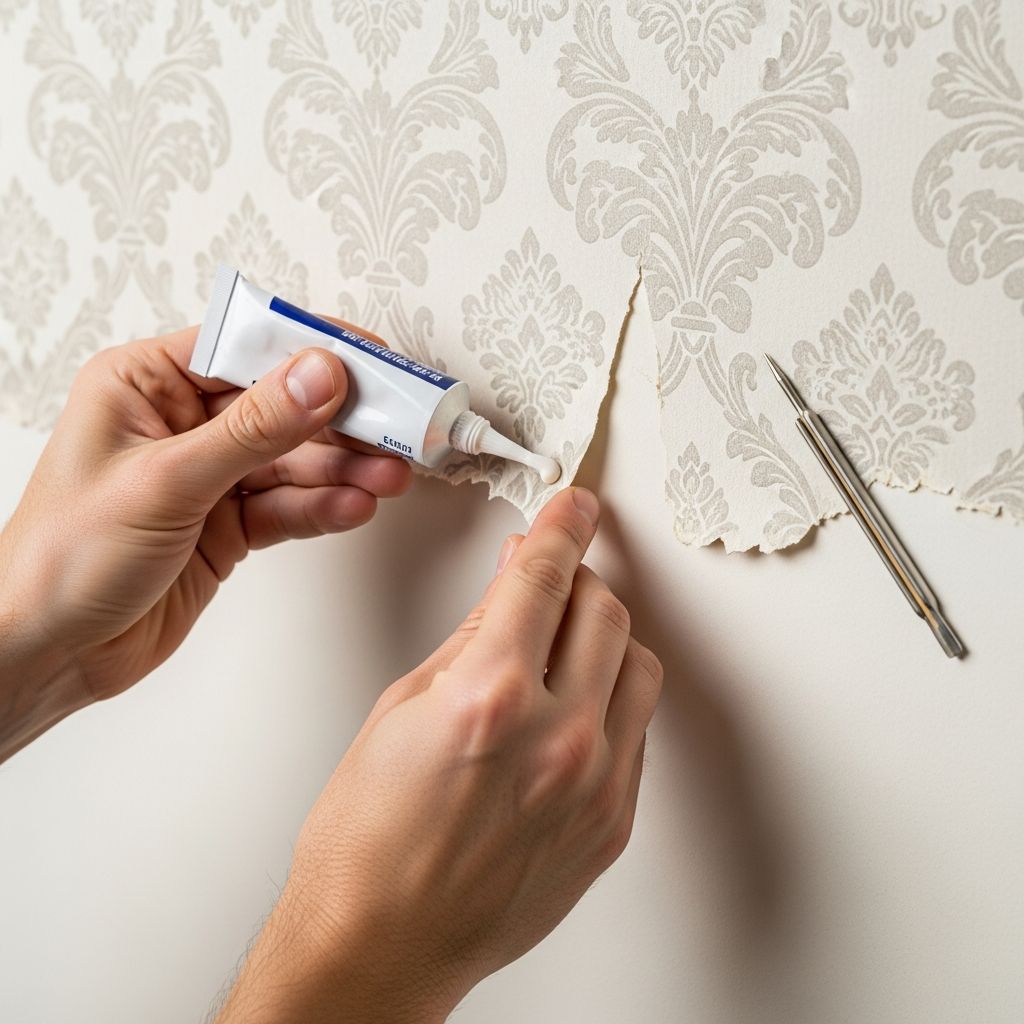
- Locate and Gently Lift: Pinpoint lifted spots without pulling entire panels. Lift only the loose flap to expose the wall.
- Clean Thoroughly: Wipe the wall and paper back with isopropyl alcohol solution (70% alcohol, 30% water). Repeat 2-3 times, then dry fully for optimal stick.
- Apply Adhesive: Brush thin glue layer on the wall. For peel-and-stick, cut heavy-duty double-sided tape strips, adhere to paper’s sticky side near edge (not over), peel liner, and reposition.
- Press and Smooth: Align paper, start center-out with smoothing tool to expel air. Use seam roller on edges.
- Clean Up: Dab excess with damp sponge immediately.
- Secure and Dry: Tape seams if needed; allow 24 hours undisturbed.
This method works for early-stage lifts, buying time before full intervention.
Handling Seams That Have Lifted
Seams are vulnerable due to repeated stress. Act promptly to avoid gaps widening.
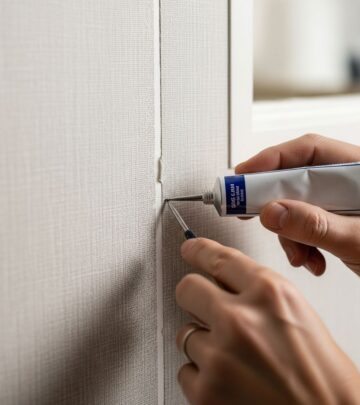
Gently peel back lifted edges until reaching adhered sections. Clean both surfaces. Use a fine brush to inject seam adhesive underneath, applying sparingly to dodge bubbles. Reposition, roll firmly with a seam tool, and wipe squeeze-out. For stubborn seams, warm with a hairdryer on low to reactivate glue, then smooth. Painters tape holds during 24-hour cure.
If bubbling occurs mid-panel, slice an X with a utility knife, peel flaps, glue, and smooth similarly. Test bubbles first: pop if air-filled, or strip if debris-laden.
Advanced Techniques for Severe Damage
When large sections bubble or curl irreparably, assess salvageability. Minor damage allows patching; extensive requires partial removal.
- Assess Scope: Probe gently; if paper tears easily, replace the strip.
- Remove Damaged Parts: Score with knife, peel away, scrape residue.
- Prep Wall: Sand smooth, prime if needed.
- Match and Paste: Cut matching paper from spare roll, align pattern, apply heavy adhesive, hang, and trim overlaps.
- Blend Seams: Feather edges with extra paste for invisibility.
For textured or delicate papers, use soft brushes, mild adhesives, and minimal handling to prevent tears.
Special Considerations for Peel-and-Stick Wallpaper
Removable types lift from dust or oils, not moisture usually. Clean walls rigorously with alcohol mix, test adhesion. For repairs, double-sided tape excels: lift minimally, tape internally, repress. Avoid over edges to stay hidden. This temporary hold prevents progression until full reapplication.
Prevention Strategies for Long-Lasting Wallpaper
Proactive measures extend wallpaper life:
- Use primers on new installs for superior grip.
- Select adhesives matching paper weight and room humidity.
- Maintain moderate humidity with dehumidifiers.
- Avoid direct water contact; use splatter guards in kitchens.
- Inspect seams yearly, repairing early.
Thicker papers resist peeling better; follow manufacturer specs strictly during hanging.
Frequently Asked Questions (FAQs)
What causes wallpaper to peel suddenly?
Sudden peeling often ties to humidity spikes, adhesive failure, or poor prep. Check for leaks or vents issues.
Can I paint over repaired wallpaper?
Yes, after full dry and seam sealing, but test a spot; textured papers take paint best.
How long do repairs last?
Properly done, years; use quality adhesives and prevent moisture for best duration.
Is professional help needed for bubbles?
DIY small ones; large or patterned mismatches warrant pros for matching.
Best adhesive for vinyl wallpaper?
Heavy-duty, clear-drying seam glues formulated for vinyl ensure strong, invisible bonds.
Troubleshooting Common Repair Pitfalls
Avoid these errors for success:
- Over-gluing causes bubbles; use thin layers.
- Skipping cleaning leads to poor adhesion.
- Rushing dry time risks re-peeling; wait 24+ hours.
- Wrong tools tear paper; opt for plastics over metals.
If repairs fail repeatedly, underlying wall issues like plaster cracks may need addressing first.
References
- Repairing Peeling Wallpaper — ROMAN Products. 2023. https://romandecoratingproducts.com/blogs/how-to/repair-peeling-wallpaper
- How to Repair Peel and Stick Wallpaper — Koko Art Shop. 2023. https://www.kokoartshop.com/blogs/advice-tips-tricks/how-to-repair-peel-and-stick-wallpaper
- Tips on Fixing Peeling Wallpaper — Monarch Paints. 2023. https://www.monarchpaints.ca/blogs/paint-blog/tips-on-fixing-peeling-wallpaper
- What to Do When Your Wallpaper Seams Start to Lift — Wallhub. 2023. https://www.wallhub.com.sg/what-to-do-when-your-wallpaper-seams-start-to-lift/
- How to Repair Loose Wallpaper Seams — ROMAN Products (YouTube). 2023. https://www.youtube.com/watch?v=5FoMZ__et1E
Similar Articles



Read full bio of Sneha Tete