Fixing Scratched Porcelain Tiles: A Step-By-Step Guide
Restore your porcelain floor tiles to pristine condition with proven DIY techniques for scratches, chips, and cracks that save time and money.
Fixing Scratched Porcelain Tiles
Porcelain tiles offer exceptional durability and aesthetic appeal for flooring, but everyday wear like scratches from furniture or chips from dropped objects can mar their surface. Fortunately, most minor to moderate damage can be addressed through targeted repair methods, avoiding the expense and disruption of complete replacement. This guide details comprehensive approaches to assess, prepare, and restore porcelain tiles, drawing on practical techniques suitable for homeowners.
Understanding Porcelain Tile Damage
Porcelain, a dense ceramic material fired at high temperatures, resists stains and moisture better than many alternatives, yet its relatively soft surface compared to stone makes it prone to superficial scratches. Deeper gouges, chips from impacts, or cracks from heavy loads require different interventions. Identifying the damage type is crucial: light scratches affect only the glaze layer, while chips expose the underlying body, potentially leading to further deterioration if untreated.
Common causes include dragging heavy items without pads, high-heeled shoes, or pet claws. Early intervention prevents widening cracks and maintains waterproof integrity, essential in kitchens or bathrooms.
Essential Tools and Materials for Repairs
Gathering the right supplies ensures efficient work. Basic kits handle most jobs under $30 and a few hours.
- Cleaning agents: Acetone, dish soap, or tile cleaner for degreasing.
- Abrasives: 120-grit and 400-grit sandpaper for smoothing.
- Fillers: Porcelain touch-up glaze, two-part epoxy, or spot epoxy for chips.
- Application tools: Applicator brushes, toothpicks, putty knives, painter’s tape.
- Finishing: Matching paint, urethane sealer, fine-grit sandpaper.
- Safety gear: Gloves, goggles, especially for grout removal.
For larger repairs, add grout saws, chisels, thin-set mortar, and rubber floats. Specialized tile repair kits with colorants provide pro-level matching.
Step-by-Step Guide to Repairing Light Scratches
Superficial scratches respond well to polishing and glazing techniques.
- Prepare the surface: Wipe the area with acetone and a lint-free rag to remove oils and debris. Dry thoroughly.
- Tape boundaries: Apply painter’s tape around the scratch to protect adjacent tiles.
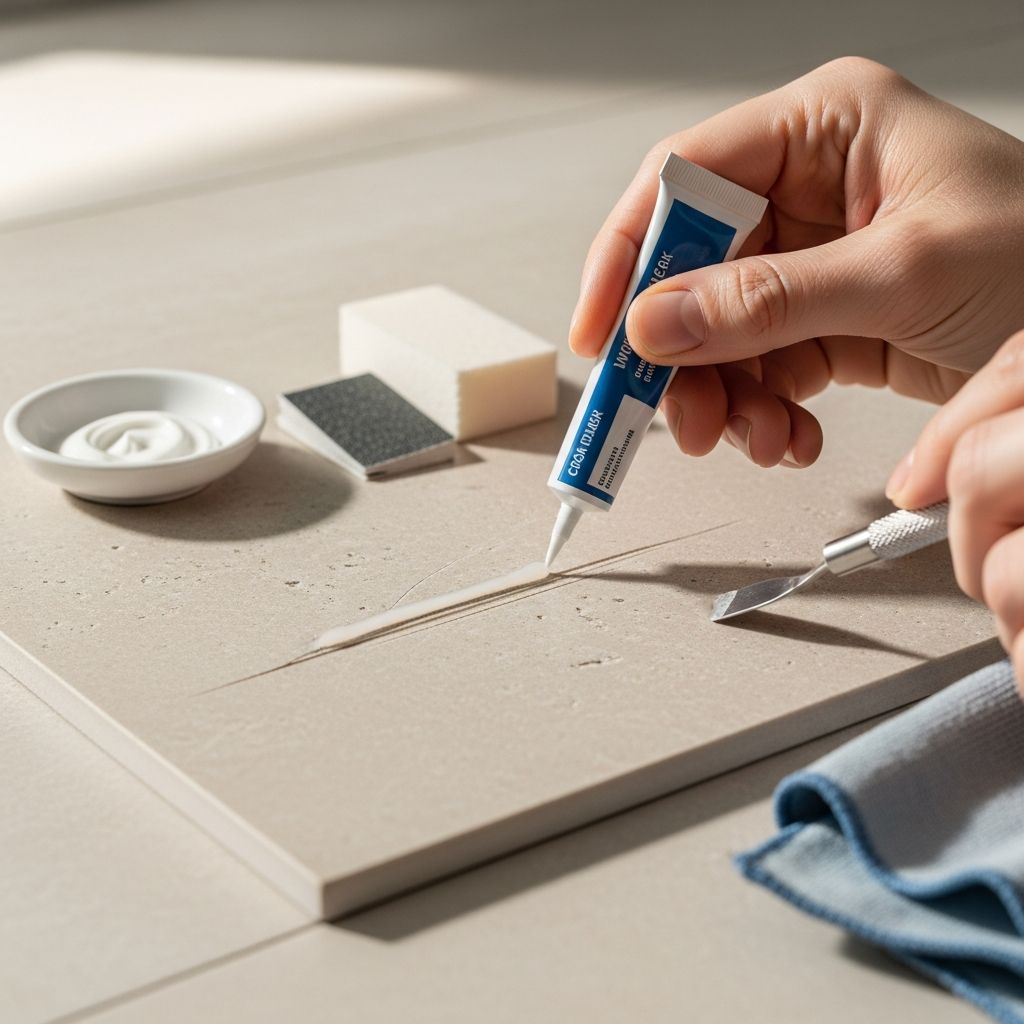
- Apply touch-up glaze: Mix the glaze per instructions and brush it into the scratch. Use thin layers for even coverage.
- Dry and sand: Allow 24 hours to cure, then lightly sand with 120-grit paper until flush. Buff with finer grit for gloss.
- Seal if needed: Apply clear urethane for protection.
This method blends seamlessly on glossy finishes, restoring shine without visible patches.
Addressing Chips and Deeper Gouges
Chips demand structural filling to prevent cracking propagation.
| Damage Type | Best Filler | Drying Time | Sanding Grit |
|---|---|---|---|
| Small chip (<1/4 inch) | Nail polish or glaze | 1-24 hours | 400-grit |
| Medium chip (1/4-1/2 inch) | Two-part epoxy | 24-48 hours | 220-400 grit |
| Deep gouge | Spot epoxy + paint | 5 days full cure | 120-grit initial |
Repair Process:
- Clean and sand the chip edges with 400-grit to create a rough bond surface.
- Tape precisely around the damage, leaving a slight overhang for feathering.
- Mix epoxy thoroughly; apply sparingly with toothpick to avoid overflow.
- Build in layers if deep, drying 30 minutes between.
- Sand smooth once cured, then paint to match tile color in two coats.
- Finish with three urethane layers for durability.
Pro tip: Test paint on an inconspicuous area first. For beige tones, select matching nail polish as a budget alternative.
Handling Cracks and Fractures
Cracks often stem from subfloor movement. For stable hairline cracks, use epoxy injection; wider ones may need replacement.
- Sand crack edges lightly.
- Fill with clear epoxy, pressing deep.
- Tape and level after partial dry.
- Sand and glaze over for camouflage.
If unstable, opt for full tile swap detailed below.
When to Replace the Tile Entirely
Replacement suits severe damage like large cracks or loose tiles.
- Remove grout: Use oscillating tool with grout blade and safety goggles.
- Extract tile: Drill holes, chisel from center out.
- Clean substrate: Scrape old adhesive smooth.
- Install new: Spread thin-set on back and floor, position evenly, grout after 2 hours cure.
- Protect with tape during setting; avoid traffic for 24 hours.
Match tile exactly; source spares from original install if possible.
Advanced Tips for Professional Results
- Feather edges: Blend repairs gradually for invisibility.
- Color matching: Mix epoxy with tile dust from sanding for authenticity.
- Prevent recurrence: Use furniture pads, rugs in high-traffic zones.
- Whole-floor refresh: Regrout all joints post-repair for uniformity.
For glossy porcelain, buff entire area post-repair with polishing compound.
FAQs
Can I use superglue for tile chips?
No, superglue lacks flexibility and durability; opt for epoxy formulated for ceramics.
How long do repairs last?
Properly sealed epoxy fills endure years under normal use, outperforming quick fixes like polish.
Is porcelain tile repair DIY-friendly?
Yes for minor issues; difficulty 1/5, completable in 3 hours.
What if the scratch won’t buff out?
Deeper damage needs filling; consult pros for structural concerns.
Does repair affect resale value?
Quality fixes maintain aesthetics; disclose major prior damage.
Preventive Maintenance Strategies
Prolong tile life with routine care: Sweep debris, mop with pH-neutral cleaner, reseal annually. Avoid harsh abrasives. These habits minimize repairs significantly.
References
- How to Fix Cracked and Chipped Porcelain Tile | Ask This Old House — This Old House. 2023. https://www.youtube.com/watch?v=b7aks3k5RYA
- Pro Tips for Damaged Tile Repair and Replacement — Mr. Handyman. 2020-09-01. https://www.mrhandyman.com/midwest-collin-county/about-us/ask-a-pro/2020/september/pro-tips-for-damaged-tile-repair-and-replacement/
- How to Fix Chipped Tile: A Guide for Pros — Rubi Blog USA. 2023. https://www.rubi.com/us/blog/how-to-fix-chipped-tile/
- How to Fix Chipped or Cracked Tile — The Tile Shop. 2023. https://www.youtube.com/watch?v=879obfYId_g
- Tile Repair: The Guide You Need — East Coast Flooring & Interiors. 2023. https://eastcoastfl.com/blog/tile-repair-the-guide-you-need-now/
Similar Articles








Read full bio of Sneha Tete