Fixing Textured Ceilings: Complete Guide
Master the art of repairing popcorn and knockdown ceilings with proven DIY techniques that save time and money on full resurfacing.
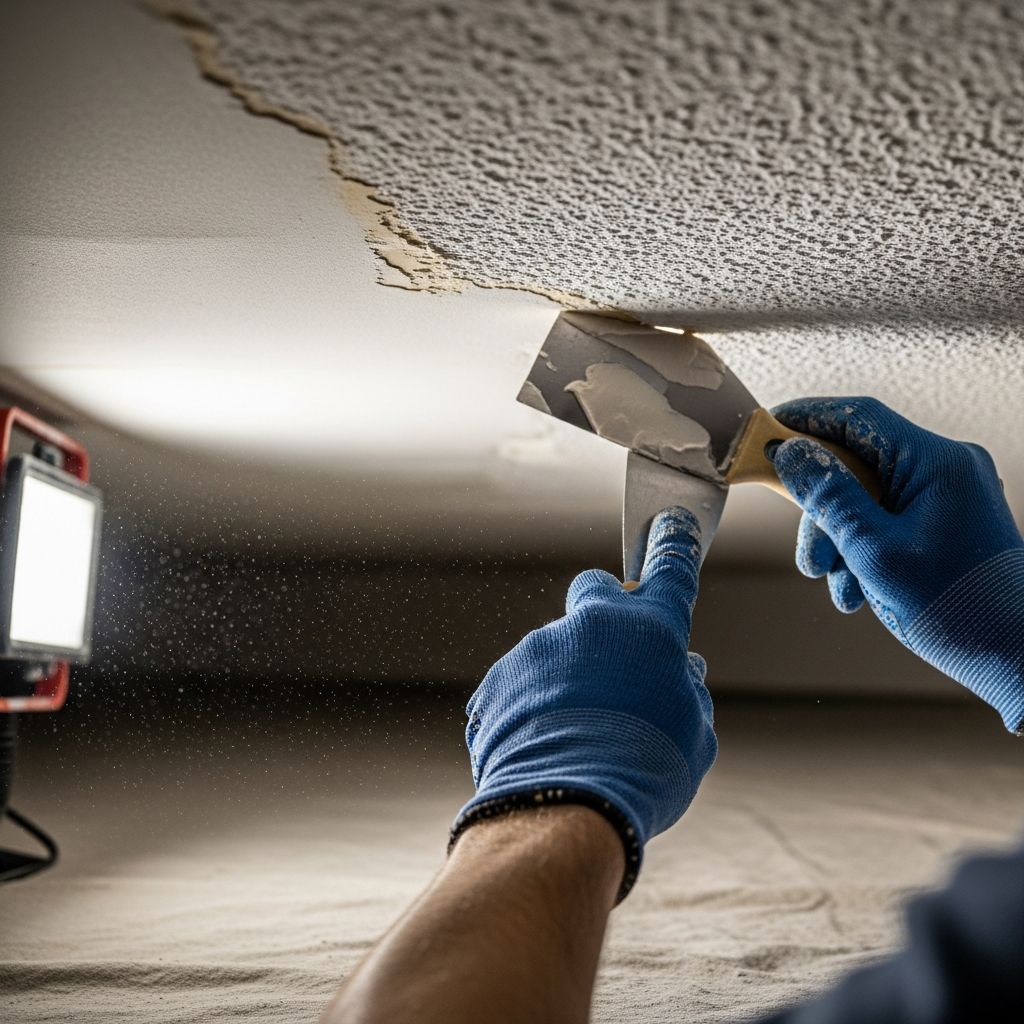
Textured ceilings, popular in homes from the mid-20th century, add character but often suffer damage from leaks, impacts, or age. Repairing them requires matching the existing pattern—whether popcorn, knockdown, or skip trowel—without redoing the entire surface. This guide provides detailed, original strategies drawn from professional techniques to handle common issues like holes, cracks, and water stains effectively.
Understanding Ceiling Texture Types
Before starting repairs, identify your ceiling’s texture.
Popcorn texture
features a bumpy, cottage-cheese appearance created by spraying a thick mix.Knockdown texture
involves spraying then flattening with a trowel for a mottled look.Skip trowel
skips the spray, applying compound directly for irregular peaks. Each demands specific matching methods to avoid visible patches.- Popcorn: Heavy, acoustic style; common in 1950s-1980s homes.
- Knockdown: Softer, modern alternative; easier to replicate.
- Skip trowel: Hand-applied, Southwest-style; uses sand additives.
Matching prevents a “bullseye” effect where repairs stand out. Test small areas first.
Safety Precautions and Preparation
Protect yourself and test for hazards. Homes built 1950s-1980s may contain asbestos in popcorn textures. Use EPA-approved test kits or hire professionals before disturbing material.
- Wear a
dust mask
(N95 or better), goggles, and gloves. - Address leaks first: Fix roofs or plumbing to prevent recurrence.
- Clear the room: Cover floors, furniture with drop cloths.
- Ventilate: Use fans to direct dust away.
Gather tools: putty knives (various sizes), sanding block, joint compound, mesh tape, texture spray or sponge, primer, paint, and scrapers.
Assessing and Preparing the Damage
Inspect for extent. Small holes (under 6 inches) suit patching; larger areas may need drywall replacement. For water damage, remove blistered texture 6-12 inches beyond the stain.
- Cut out damaged drywall with a utility knife or hole saw for clean edges.
- Scrape loose texture, sand edges smooth.
- Check for mold: Treat with bleach solution if present.
Use a flashlight to reveal hidden cracks. Mark repair zones with painter’s tape.
Step-by-Step Patching for Holes
For holes, create a stable base before texturing.
Installing a Backing Support
Screw a wood strapping (1×3) across the hole from above if accessible, or use adhesive-backed mesh for tension.
| Tool | Purpose | Tip |
|---|---|---|
| Screw gun | Secure strapping | Avoid over-tightening to prevent cracks. |
| 1/2-inch drywall patch | Fill hole | Match existing thickness. |
| Mesh tape | Reinforce seams | Self-adhesive for quick hold. |
Applying Base Coats
1. Screw patch into place.
2. Apply thin joint compound layer over seams; let dry 4-6 hours.
3. Add 2-3 skim coats, feathering edges 12 inches out. Sand lightly between coats for level surface.
This builds a smooth base blending into textured surroundings.
Matching Textures Perfectly
The challenge: replicating patterns. Practice on cardboard.
Popcorn Texture Repair
Mix joint compound with water and pre-mixed popcorn texture additive. Spray lightly over patch using a hopper gun, or stipple with a stiff brush. Avoid buildup; thin layers mimic originals.
Knockdown Texture Technique
Spray or roll thinned compound, wait 10-15 minutes, then knock down with a 12-inch trowel or sea sponge. For small areas, use a texture sponge dragged at angles. Add sand for grit if needed.
- Thin compound: 1 part water to 4 parts mud.
- Blend edges: Overlap onto existing texture 2-4 inches.
- Sand discrepancies: Wet sponge for subtle feathering.
Skip Trowel Matching
Mix all-purpose compound with coarse sand (not plaster). Trowel in random skips, mimicking peaks. Dry 6-8 hours before priming.
Priming, Painting, and Finishing
Prime with stain-blocking primer (e.g., latex oil-based) to seal textures and hide patches. Two coats recommended.
Match ceiling paint; flat finish hides imperfections best. Roll with 1/2-inch nap roller for even coverage.
- Sand final texture lightly.
- Vacuum dust thoroughly.
- Prime: One coat, dry 2 hours.
- Paint: Two coats, 4 hours apart.
Advanced Repairs: Water Damage and Large Areas
For stains, cut out 12 inches beyond; replace drywall. Float seams wide (18 inches) before texturing. Use fiber mesh for strength on sagging areas.
Large sections: Consider skim-coating entire ceiling with thinned compound, then re-texturing uniformly. This ensures seamless integration but increases labor.
Common Mistakes and Troubleshooting
| Mistake | Solution |
|---|---|
| Texture too heavy | Thin mix; apply multiple light coats. |
| Poor blend | Feather wider; use sponge sanding. |
| Cracking | Too thick; add mesh tape. |
| Visible patch | Practice matching; extend repair zone. |
Tools and Materials Checklist
- Joint compound (all-purpose)
- Mesh/paper tape
- Putty knives (4″, 6″, 12″)
- Sanding block/sponge
- Texture tools (sprayer, sponge, trowel)
- Primer and paint
- Drop cloths, mask
Cost and Time Estimates
Small patch: Under $30, 4-6 hours including drying. Large repair: $100+, 1-2 days. DIY saves 50-70% vs. pros.
FAQs
Can I repair asbestos ceilings myself?
No. Test first; professional abatement required if positive.
How do I match old popcorn texture?
Buy aerosol cans or mix with cellulose; spray lightly and dry quickly.
What’s the best compound for texturing?
All-purpose joint compound thinned with water and sand for knockdown/skip trowel.
Will paint alone hide patches?
No; texture must match first for invisibility.
How long until full use?
24-48 hours post-painting.
With patience, DIY textured ceiling repairs yield professional results. Start small to build confidence.
References
- Tips on Ceiling Repair — Fine Homebuilding. 2024-01-11. https://www.finehomebuilding.com/2024/01/11/tips-on-ceiling-repair
- How to Patch a Hole in a Textured Ceiling — This Old House. 2023. https://www.youtube.com/watch?v=32B31SBlnoU
- How to repair texture on a water damaged drywall ceiling step by step — Paul Peck DrywallTube (YouTube). 2023. https://www.youtube.com/watch?v=5jtgSkfzYH8
- Amazing trick to match knockdown texture on a ceiling repair! — Paul Peck DrywallTube (YouTube). 2023. https://www.youtube.com/watch?v=5oelBlZbOR4
Similar Articles




Read full bio of medha deb