Fixing Torn Area Rugs: Step-By-Step DIY Guide
Restore your area rugs with proven DIY techniques for tears, frays, burns, and more to save money and extend their life.
Fixing Torn Area Rugs: DIY Guide
Area rugs endure heavy daily use, leading to tears, fraying, burns, and other wear that can compromise their appearance and longevity. With the right approach, many of these issues can be addressed at home using simple tools and techniques, preventing minor problems from worsening and avoiding expensive replacements. This guide provides detailed, actionable steps for common rug damages, drawing from established home repair practices to help you restore your rugs effectively.
Understanding Common Rug Damages and Their Causes
Rugs face various stresses from foot traffic, furniture, pets, and accidents.
Tears
often occur at edges or high-traffic spots due to pulling or snags.Frayed edges
result from abrasion against doors or furniture.Burns
come from cigarettes, hot objects, or sparks, whilefringe damage
arises from unraveling or detachment. Identifying the cause early allows targeted fixes. For instance, pet claws or vacuum mishaps contribute to holes, and improper cleaning leads to fiber weakening.Regular assessment prevents escalation. Inspect rugs monthly by lifting edges and checking undersides for early signs of wear. Addressing causes like high-traffic repositioning or using pads reduces recurrence.
Essential Tools and Materials for Rug Repairs
Gathering supplies beforehand ensures smooth repairs. Focus on durable, rug-compatible items to avoid further damage.
- Sharp scissors or utility knife: For precise trimming of loose threads or damaged sections.
- Heavy-duty needles and upholstery thread: Matches rug fibers for strong stitching; select color-coordinated options.
- Fabric or fiber glue: Secures patches and edges; choose flexible, non-toxic formulas safe for rugs.
- Double-sided carpet tape or rug binding tape: Ideal for backing reinforcements and quick fixes.
- Bristle brush and vacuum: Cleans debris post-repair; use low-suction settings.
- Rug pad or extra matching rug pieces: Provides slip resistance and donor material for patches.
- Optional: Fringe repair kits, sandpaper for burns, hot iron for tape activation.
These items are available at hardware stores and support fixes for most area rugs, including wool, synthetic, or jute varieties.
Step-by-Step: Repairing Small Tears and Holes
Small tears under 3 inches can be mended DIY-style to maintain rug integrity.
- Prepare the area: Vacuum thoroughly and trim ragged edges with scissors, avoiding pulling threads.
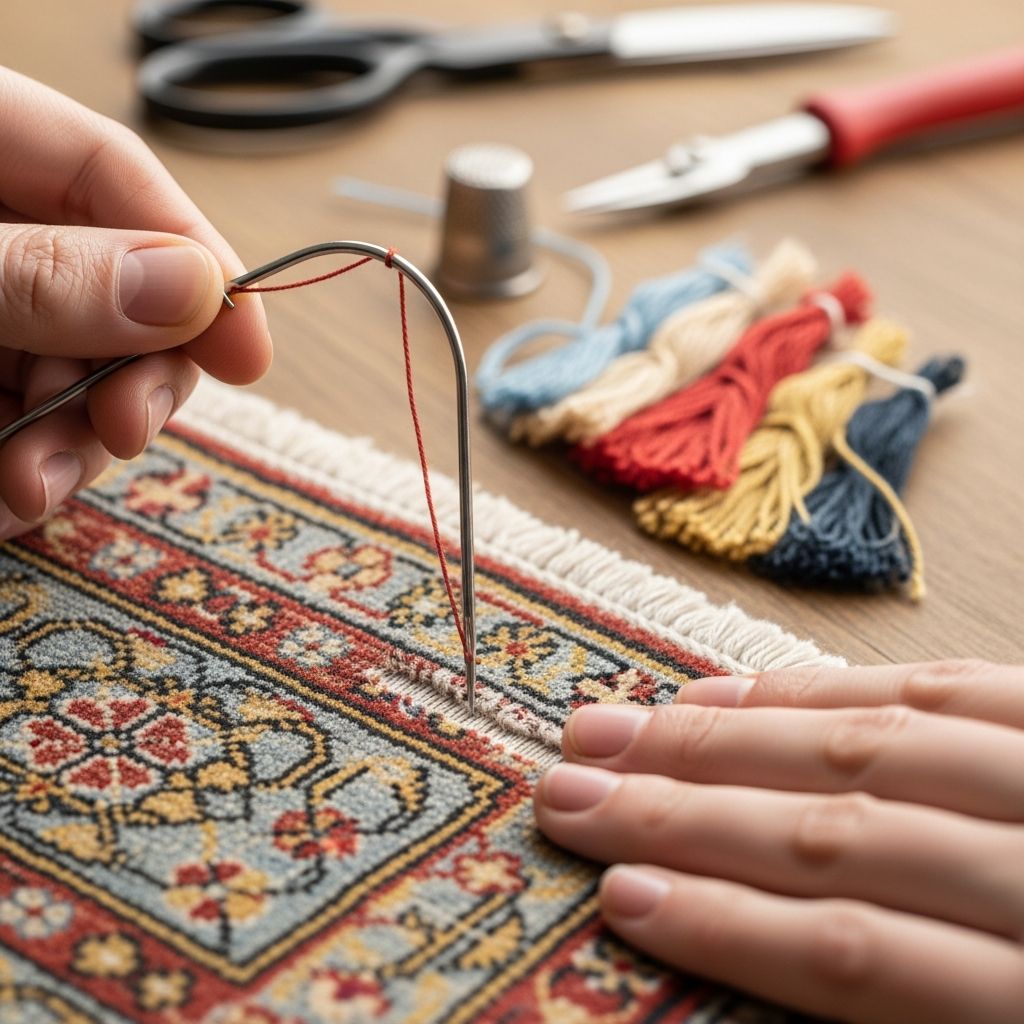
- Sew the tear: Thread a curved heavy-duty needle with matching strong thread. Use a whip or ladder stitch, pulling edges together tightly for invisibility.
- Reinforce with adhesive: Apply thin fiber glue along the seam underside; press flat with a heavy book for 24 hours.
- Patch larger holes: Cut a donor piece from an inconspicuous underside spot. Secure with double-sided tape or glue, blending fibers with a brush.
For burns, trim charred fibers, sand lightly if needed, clean with mild detergent, and patch similarly. Test glue on a hidden spot first.
Addressing Frayed Edges and Torn Corners
Edges fray from friction, especially corners catching on doors. Prevention starts with trimming, but repairs stabilize them.
| Issue | Method | Tools Needed | Drying Time |
|---|---|---|---|
| Frayed straight edges | Trim, glue, or tape | Scissors, glue/tape | 24 hours |
| Torn corners | Sew and bind | Needle/thread, tape | 24-48 hours |
| Heavy wear | Overcast stitch + tape | Heavy needle, iron | 48 hours |
Steps for corners: Lift the corner, clean, sew loose areas with overcasting (looping stitches around edge), then apply binding tape heated with an iron for adhesion. This mimics professional selvage restoration. Avoid cutting healthy fringe during trims.
Restoring Rug Fringe and Tassels
Fringe enhances oriental or traditional rugs but tangles easily.
- Untangle gently: Use a wide-tooth comb; trim only damaged ends evenly.
- Reattach loose sections: Match thread color, sew securely to the rug body with small stitches.
- Full replacement: Use a repair kit with pre-made fringe; glue and stitch base, trimming to match.
Braid severely damaged fringe before sewing for neatness. This preserves aesthetics without full reweaving.
Advanced Fixes: Burns, Bumps, and Pet Damage
Burns require excision: Cut out damaged spot precisely, insert matching patch glued or taped underneath, then brush to blend. For pet urine or scratches, clean first with enzymatic cleaner, patch holes as above.
Bumpy rugs from buckling: Steam underside, apply tape along bumps, press flat. Pet damages like claws demand reinforced stitching to prevent repeats.
Preventive Maintenance for Long-Lasting Rugs
Proactive care minimizes repairs.
- Place rug pads to reduce slipping and wear.
- Rotate quarterly for even traffic distribution.
- Vacuum weekly with beater bar off; blot spills immediately.
- Professional cleaning annually for deep soils.
- Address moisture and pests promptly.
These habits extend rug life by years, especially for heirloom pieces.
When to Seek Professional Help
DIY suits minor issues, but pros handle intricate damages like moth holes requiring reweaving, color fading, or structural resizing. Signs include tears over 6 inches, valuable antiques, or uneven patterns post-DIY. Costs vary but save rugs long-term.
Frequently Asked Questions (FAQs)
What is the best glue for rug repairs?
Fiber glue or flexible fabric adhesives work best; avoid stiff craft glues that crack.
Can I repair a synthetic vs. wool rug differently?
Synthetics use more glue; wool needs matching threads to prevent shrinkage.
How long do DIY repairs last?
With proper technique, 2-5 years in moderate traffic; reinforce high-use areas.
Is hot iron safe for tape application?
Yes, on low heat with cloth barrier; test first to avoid melting fibers.
How to match patch colors perfectly?
Source from rug underside or buy similar scraps; blend with brushing.
References
- DIY Rug Repair: How to Fix Small Tears & Fraying Edges at Home — NP Rugs. 2023. https://nprugs.com/diy-rug-repair-tips/
- How to Repair a Rug — Lowe’s. 2024-01-15. https://www.lowes.com/n/how-to/how-to-repair-a-rug
- The Rug Repair Process: Step-by-Step Guide — Thomas Rug Cleaning. 2023-05-10. https://thomasrugcleaning.com/blog/how-the-rug-repair-process-works-from-assessing-damage-to-finding-solutions/
- Interior Rug Repairs: How to Fix a Tear in a Rug — Bond Products Inc. 2022-11-20. https://www.bondproducts.com/how-to-fix-a-tear-in-a-rug/
- Rug Repair Part 6: Torn Corners and How to Repair the Problem — Master Rug Cleaner. 2023. https://masterrugcleaner.net/rug-repair-part-6-torn-corners-and-how-to-repair-the-problem/
Similar Articles



Read full bio of medha deb