Free Printable Pantry Labels for Kitchen Organization
Organize your kitchen with customizable printable pantry labels that bring order and style to your storage.
A well-organized pantry is the foundation of an efficient kitchen. One of the most effective ways to achieve pantry perfection is through the use of printable labels. These simple yet transformative tools help you identify contents at a glance, maintain consistency in your storage system, and create a polished, intentional look throughout your kitchen. Whether you’re storing dry goods in containers, organizing spice jars, or labeling baskets and bins, printable pantry labels offer a customizable, affordable solution that works with any kitchen aesthetic.
Why Pantry Labels Matter
Pantry labels serve far more than a decorative purpose. They are organizational tools that provide multiple practical benefits. Labels eliminate confusion about what’s stored where, reduce food waste by making expiration dates visible, and streamline meal planning by giving you a clear inventory of available ingredients. When family members can easily identify what items are stored in which containers, everyone can help maintain the organization system. Additionally, a well-labeled pantry creates a visually cohesive, magazine-worthy space that makes you want to keep it organized.
Types of Printable Pantry Labels Available
Modern printable pantry labels come in several formats to suit different organizational needs and preferences:
Pre-Formatted PDFs
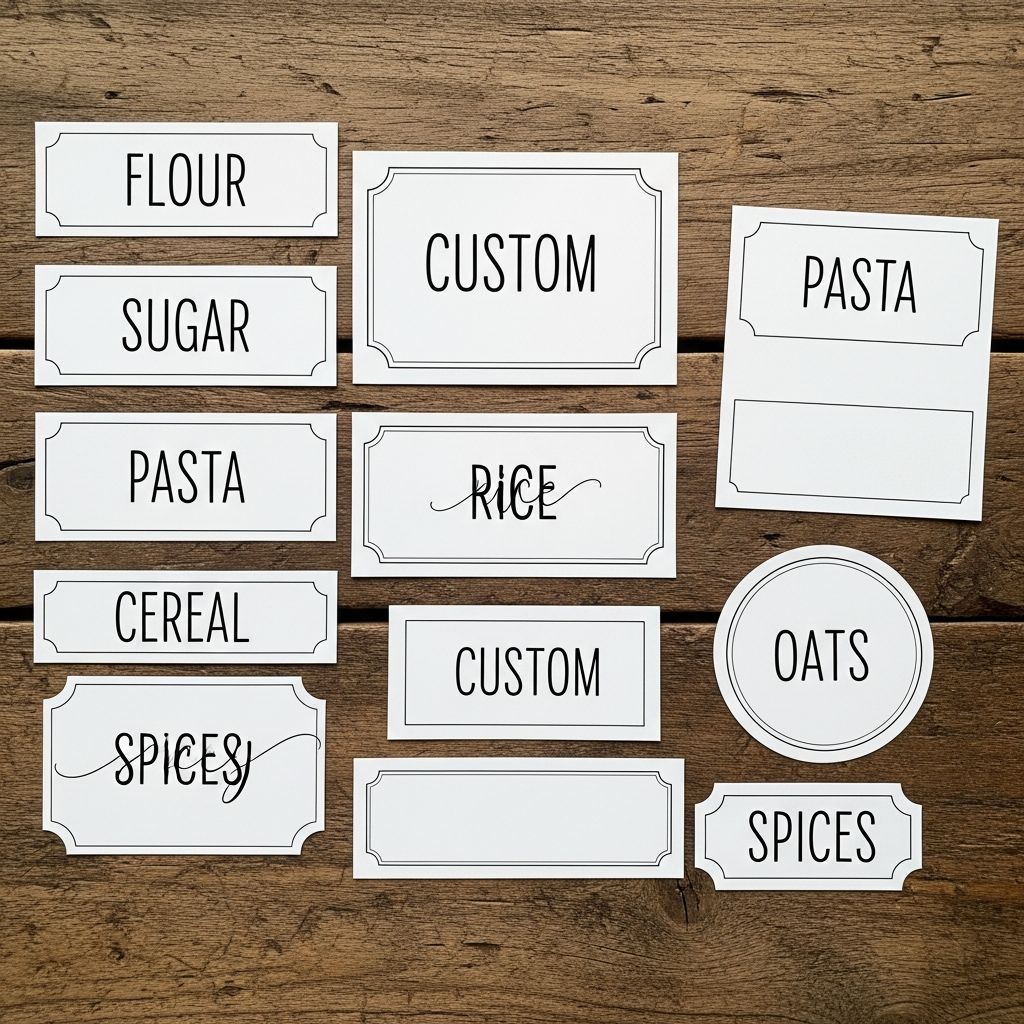
Pre-formatted PDF labels represent the quickest and easiest option for those who want immediate results. These files come with 8 labels per page, ready to print directly onto adhesive label sheets. Popular formats include AVERY 22822 clear glossy labels (2×3 inches), which are specifically designed for this purpose. Simply download, edit if needed, print, and apply. This method requires minimal technical skill and produces professional-looking results in minutes.
Editable Canva Templates
Canva templates offer flexibility for those who want to customize colors, fonts, or create additional labels beyond standard options. These user-friendly templates allow you to drag, drop, and edit text without any design experience. You can match existing colors in your kitchen, adjust sizing, and create a completely personalized labeling system that reflects your style.
PNG and SVG Files
For maximum versatility, PNG and SVG files allow you to use labels in multiple ways. PNG files can be uploaded into various label templates or design software, while SVG files work with cutting machines like Cricut, enabling you to cut labels from vinyl, sticker paper, or other materials. These formats are ideal for those who want complete control over label size, color, and material.
Common Pantry Items to Label
A comprehensive pantry labeling system should cover all your dry goods and staple ingredients. Here are the categories you’ll typically want to organize:
Dry Goods and Staples
These foundation items form the core of most pantries. Common labels include flour (all-purpose, whole wheat, coconut), sugar (granulated, brown, powdered), baking essentials (baking powder, baking soda, yeast), and salt varieties. Many pantry label sets include pre-made options for these items, as they represent the most frequently used storage categories.
Grains, Pasta, and Rice
Different types of grains require clear identification. You might need labels for white rice, brown rice, jasmine rice, pasta varieties (penne, spaghetti, fusilli), barley, oats, and other grain products. Separate labels for each type prevent confusion and ensure you grab the right ingredient for specific recipes.
Beans and Legumes
Beans and legumes are nutritious pantry staples that benefit from clear labeling. Consider labels for navy beans, kidney beans, black beans, pinto beans, chickpeas, lentils, and other varieties you regularly use. Clear identification prevents mixing similar-looking beans and helps you track inventory.
Nuts, Seeds, and Dried Fruits
These items are often stored in similar-sized containers, making labels essential. Common options include peanuts, walnuts, pecans, almonds, sunflower seeds, pumpkin seeds, and various dried fruits. Labels ensure family members know which containers hold allergen-containing items and help prevent accidental mix-ups.
Baking Supplies and Extracts
Beyond basic flour and sugar, many kitchens contain numerous baking ingredients. Labels for chocolate chips, cocoa powder, vanilla extract, almond extract, food coloring, sprinkles, and baking chocolate help organize these specialized items and make them easy to locate during baking projects.
Vinegars and Oils
If you store cooking oils and vinegars in matching containers rather than original packaging, labels are crucial. Identify white vinegar, apple cider vinegar, balsamic vinegar, olive oil, coconut oil, and sesame oil to prevent using the wrong ingredient in recipes.
Methods for Creating Printable Pantry Labels
Using Pre-Made Label Templates
The simplest approach involves downloading pre-designed label templates from reputable sources. These templates typically include 15-30 of the most common pantry items with professional fonts and designs. To use this method: download the PDF file, print it on adhesive label sheets, trim if necessary, and apply labels to your containers. No editing or design work is required, making this ideal for busy individuals who want results quickly.
Customizing in Canva
For those wanting personalization without complexity, Canva offers intuitive label customization. Open a Canva template, click on text areas to edit labels, adjust colors to match your kitchen decor, resize elements, and download the final design. Canva templates often include design elements that make labels look professionally designed while remaining fully customizable.
Using Design Software
Advanced users can create labels in Adobe Illustrator, InDesign, or similar software, providing complete design control. This method requires more technical knowledge but offers unlimited customization possibilities, including custom fonts, graphics, and layouts.
Step-by-Step Guide to Printing Pantry Labels
Supplies You’ll Need
- Printable pantry label file (PDF, Canva template, or design file)
- Adhesive label sheets (if using sticker method)
- Cardstock paper (if making non-adhesive labels)
- Home printer (inkjet or laser)
- Scissors or paper trimmer
- Label holders or bin clips (optional)
Printing Process
Step 1: Download and Edit — Download your chosen label file and open it in the appropriate program. Edit any labels as needed to match your specific pantry contents. If using a PDF with pre-formatted labels, you may skip this step if the included labels work for you.
Step 2: Select Paper — Choose between adhesive label sheets for direct application or cardstock for labels that go into holders or bin clips. Waterproof, tear-resistant label paper works best for kitchen use and prevents damage from moisture and handling.
Step 3: Print — Feed your chosen paper into your printer and print according to the template specifications. Use standard print settings for best results, and ensure your printer has adequate ink or toner.
Step 4: Trim (if necessary) — If you’re not using pre-cut label sheets, trim labels to size using scissors or a paper trimmer. Pre-cut adhesive sheets skip this step entirely.
Step 5: Apply — Peel labels from the backing and apply to clean, dry containers. For adhesive labels on glass jars or plastic containers, smooth out air bubbles by pressing firmly. For paper labels in holders, insert into designated slots.
Alternative Labeling Methods
Peel-and-Stick Labels on Containers
The most common method involves printing on adhesive label sheets and sticking them directly onto storage containers. This works well for glass jars, plastic bins, and metal canisters. Choose clear glossy labels for a professional appearance, and ensure containers are clean and dry before application for maximum adhesion.
Labels in Bin Clips and Holders
For a removable option, print labels on cardstock and insert them into label holders or bin clips. This method allows easy label changes when you reorganize your pantry, making it ideal for households with frequently changing storage needs. Coordinating metallic clips add visual appeal while maintaining functionality.
Labels for Spice Jars
Coordinate your pantry labels with matching spice jar labels for a cohesive look. Many printable label sets include 98 or more spice jar labels covering common varieties like cinnamon, cumin, oregano, paprika, and others. Smaller labels fit standard spice jar sizes perfectly and create a unified aesthetic throughout your kitchen.
Custom Cuts with Cricut Machines
Advanced crafters can use SVG files with Cricut machines to cut custom label shapes from vinyl, cardstock, or specialty materials. This method allows unlimited shape options—circles, squares, hexagons, or custom designs—and the ability to change colors and sizing. While requiring more equipment and skill, this approach offers unmatched customization.
Tips for Successful Pantry Labeling
Keep Labels Consistent — Use the same font, color scheme, and label size throughout your pantry for a cohesive, organized appearance. Consistency makes your pantry look intentional and professionally organized.
Choose Waterproof Labels — Kitchen environments involve moisture from washing, cooking, and humidity. Waterproof label stock resists peeling, fading, and water damage, ensuring your labels last long-term.
Include Key Information — Beyond item names, consider including expiration dates, usage instructions, or quantity information on labels. This additional detail maximizes label functionality.
Create a Custom Category — Most label sets include a “Type Your Own” category for items not covered by pre-made options. Use this flexibility to label specialty ingredients, opened package contents, or future additions to your pantry.
Maintain Your System — Regularly review and update labels as your pantry contents change. Replace worn or damaged labels promptly to maintain your organized system.
Design Considerations for Pantry Labels
Effective pantry labels combine functionality with aesthetic appeal. Consider your kitchen’s overall design when selecting or creating labels. Minimalist kitchens benefit from simple, clean designs with limited color palettes. Farmhouse or rustic kitchens work well with kraft paper labels and vintage-inspired fonts. Modern kitchens suit sleek designs with metallic accents or bold colors.
Font choice significantly impacts label readability and appearance. Clear, legible fonts ensure you can quickly identify contents. Many label templates use standard fonts like Helvetica, Arial, or Courier New, which are widely available and highly readable.
Color coordination ties your labeling system together visually. Whether using a single accent color, complementary colors, or a full rainbow effect, consistency in color application creates visual harmony. Metallic inks—gold, silver, or copper—add sophistication and work with virtually any kitchen design.
Frequently Asked Questions
Q: What printer is best for printing pantry labels?
A: Both inkjet and laser printers work well for pantry labels. Inkjet printers offer color flexibility and are adequate for home use, though quality may vary with different label papers. Laser printers provide sharper text and faster printing, making them ideal if you’re printing large quantities or prioritize crisp text appearance. Choose waterproof label paper compatible with your printer type for best results.
Q: How do I remove old labels from containers?
A: Gently peel off old labels, starting from a corner. For stubborn adhesive residue, use a little rubbing alcohol on a cloth to dissolve the adhesive, then wipe clean. Alternatively, warm soapy water can soften adhesive on some label types. Allow containers to dry completely before applying new labels.
Q: Can I use these labels on plastic containers?
A: Yes, printable labels adhere well to clean, dry plastic containers. Wash containers in warm soapy water, dry thoroughly, and ensure the surface is free of dust or residue. High-quality adhesive labels bond securely to most plastic surfaces.
Q: What label size works best for most containers?
A: The 2×3 inch (AVERY 22822) label size works well for most medium to large containers and jars. For smaller spice jars or containers, 1×2 inch or 1.5×2 inch labels are better proportioned. For very large bins, 3×4 inch labels provide better visibility.
Q: How long do printable labels last in the kitchen?
A: Quality waterproof labels typically last 1-2 years in typical kitchen conditions. Factors affecting longevity include moisture exposure, temperature fluctuations, and handling frequency. Repositioning containers frequently or exposing labels to excessive moisture may shorten their lifespan.
Q: Can I edit the label templates to add expiration dates?
A: Most editable templates allow you to add text fields for expiration dates. In Canva or design software, simply add a date line below the item name. Alternatively, you can hand-write dates on labels after printing, though pre-printed dates look more polished.
Conclusion
Printable pantry labels represent an simple, affordable, and effective solution for creating an organized, beautiful kitchen. Whether you choose pre-made templates for quick implementation or customize designs in Canva for personalization, pantry labels transform chaos into order while adding visual appeal to your storage system. By following these guidelines, selecting appropriate label materials, and maintaining consistency in your labeling system, you’ll create a pantry that’s both functional and aesthetically pleasing—a space that supports efficient cooking and meal planning while bringing joy every time you open a cabinet or reach for an ingredient.
References
- Easy-to-Use Printable Pantry Labels (That Look Amazing Too!) — The Homes I Have Made. 2024-12-04. https://thehomesihavemade.com/editable-and-printable-pantry-labels/
- Free Printable Pantry Labels – The Country Chic Cottage — The Country Chic Cottage. 2024-12-04. https://www.thecountrychiccottage.net/pantry-organization-labels/
- Free printable and customizable kitchen label templates – Canva — Canva. 2024-12-04. https://www.canva.com/labels/templates/kitchen/
- Redoing My Pantry Labels (And the Mistake I Won’t Make Again!) — Tasha Rode. 2025-04-30. https://www.youtube.com/watch?v=tfiO-xb8Dq0
- Pretty Pantry Labels Three Ways + FREE PRINTABLE LABELS — Blue is Type Blog. 2024-12-04. https://www.blueistyleblog.com/prettypantrylabels3ways/
Similar Articles






Read full bio of medha deb