Gravel in Pots: Gardening Myth Debunked
Discover why adding gravel to the bottom of pots harms drainage and learn proven methods for healthy container plants.
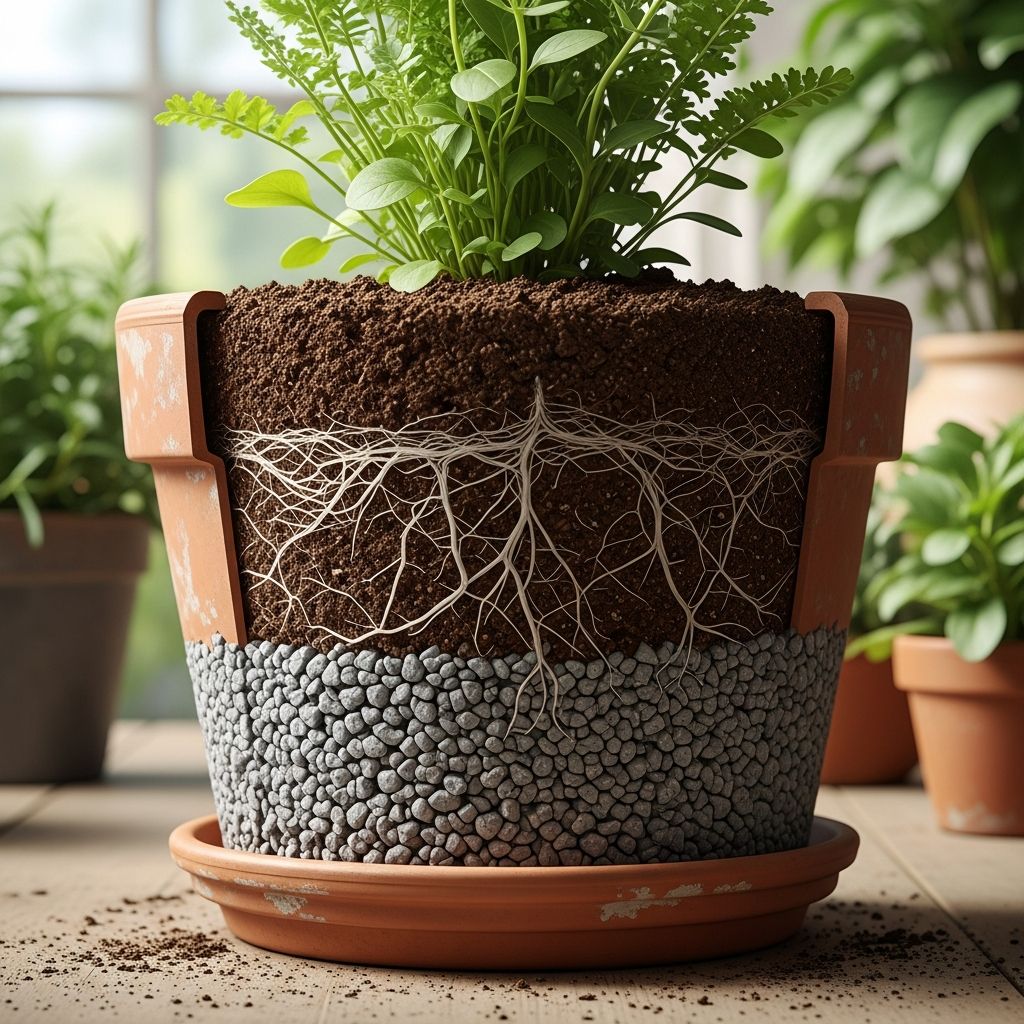
The practice of layering gravel at the base of plant containers has persisted for generations among gardeners seeking better drainage. However, scientific principles of soil hydrology reveal this approach as ineffective and potentially damaging to plant health. Instead of enhancing water flow, gravel elevates moisture levels near roots, fostering conditions ripe for root decay.
Origins of the Gravel Drainage Belief
Gardeners have long assumed that coarse materials like gravel or broken pottery shards create a superior pathway for excess water to escape pots. This intuition stems from observing water percolate quickly through loose stones in natural settings or open ground. In reality, container dynamics differ sharply due to confined spaces and capillary forces at play within potting media.
The misconception likely arose from early horticultural traditions where drainage layers mimicked landscape features like French drains. Yet, in bounded pots, these layers fail to deliver the promised benefits and introduce complications instead.
How Water Behaves in Containers
Water movement in pots relies on principles of perched water tables and capillary action. Potting soil, composed of fine particles, retains moisture via surface tension in microscopic pores until fully saturated. Only then does surplus water drain freely.
- Capillary rise: Water climbs against gravity through soil pores, equalizing moisture across layers.
- Perched water table: A saturated zone forms at the pot’s base, regardless of added gravel, as water transitions reluctantly from fine soil to coarser gravel.
- Layer interface: The boundary between soil and gravel acts as a barrier, trapping water higher up.
Experiments demonstrate that pots with gravel hold more standing water near roots than those filled entirely with soil, contradicting the myth.
Consequences for Plant Roots
Elevating the saturated zone through gravel reduces aerated root space, compelling roots to inhabit wetter conditions. This promotes anaerobic bacteria growth, leading to root rot—a frequent killer of potted specimens.
| Pot Type | Root Zone Volume | Water Retention Risk | Plant Health Outcome |
|---|---|---|---|
| Full soil | Maximum | Lower perched table | Healthy growth |
| Gravel base | Reduced | Higher perched table | Root stress, rot |
Plants in gravel-layered pots exhibit stunted development, yellowing foliage, and higher mortality rates, as confirmed by controlled trials.
Scientific Evidence Against Gravel Layers
Horticultural research consistently refutes the gravel method. Soil scientists note that water prefers finer textures, pooling at layer transitions rather than draining efficiently.
- Studies show gravel displaces usable soil volume without accelerating outflow.
- Extension specialists advocate uniform high-quality potting mixes over multi-layer setups.
Practical tests, such as side-by-side pot comparisons, reveal identical or worse saturation in gravel pots after watering cycles.
Optimal Strategies for Container Drainage
Focus on vessel design, media selection, and maintenance for superior results.
Selecting the Right Pots
Prioritize containers with ample bottom holes to permit free egress of excess moisture. Taller pots outperform shallow ones by extending the drainage column, minimizing perched water.
Choosing Potting Media
Opt for commercial mixes blending peat, perlite, or vermiculite for inherent drainage and aeration. Avoid garden soil, which compacts and retains excessive water.
- Perlite-enhanced mixes: 30-50% for air pockets.
- Coco coir blends: Sustainable, with balanced retention.
Preventing Soil Loss
Cover drainage holes with breathable barriers like landscape fabric, mesh screens, or curved pot shards (concave side up). These allow water passage while retaining media.
Handling Pots Without Drainage Holes
Cached indoor or decorative pots pose unique challenges. Avoid gravel here, as it conceals pooling water, inviting unseen rot.
- Employ self-watering inserts with reservoirs.
- Pot within a pot: Place a drained inner container atop a water-catching layer.
- Monitor diligently, emptying saucers promptly.
For succulents or cacti, elevate plants in smaller drained pots inside larger undecorated ones.
Enhancing Pots with Top Dressings
Decorative pebbles or mulch on the soil surface offer aesthetic appeal and moisture conservation without drainage interference. These toppings suppress weeds, regulate evaporation, and deter pests.
Watering Best Practices
Deliver water evenly until it emerges from holes, then cease. Frequency depends on plant species, light, and season—feel soil dryness an inch deep before rewatering.
- Drought-tolerant plants: Infrequent deep soaks.
- Tropicals: Consistent moisture without saturation.
Employ moisture meters for precision in challenging environments.
Common Mistakes to Avoid
Beyond gravel, pitfalls include overpotting, neglecting hole coverage, and using heavy soils.
| Mistake | Impact | Solution |
|---|---|---|
| Oversized pots | Prolonged wetness | Match root ball size |
| No hole covers | Soil washout | Fabric or shards |
| Garden soil use | Compaction | Potting mix only |
Real-World Testing and Observations
Gardeners replicating experiments report thriving plants in gravel-free setups. One trial with tomatoes showed 25% greater yields sans gravel, attributing success to expanded root aeration.
Alternatives for Special Cases
For hydroponic or semi-hydro systems, gravel serves as inert support above water levels—but never as a base layer in soil-based pots.
FAQs
Does gravel prevent soil from clogging drain holes?
No, use fabric or screens instead; gravel doesn’t address this and worsens hydrology.
Can I use sand instead of gravel?
Sand mixes into soil better but still creates perched tables in layers; uniform mixes are preferable.
What about Styrofoam peanuts?
They lighten pots and provide some drainage but risk breakdown; stable alternatives like fabric outperform.
Is the myth universal across plant types?
Yes, all potted plants suffer from reduced root volume and excess moisture.
How do I repot from a gravel setup?
Gently remove plant, rinse roots, and transplant into full potting mix in a drained pot.
Conclusion: Empower Your Plants Properly
Abandoning gravel unlocks healthier container gardens through science-driven choices. Uniform soil, proper pots, and vigilant care yield vibrant results year-round.
References
- Does Gravel in Pots Increase Drainage – The Latest Science — GardenMyths.com. 2019-05-15. https://www.gardenmyths.com/gravel-pots-containers-drainage/
- Myth Busting: Gravel in Containers — Horticulture Magazine. 2022-04-12. https://www.hortmag.com/container-gardening/myth-busting-gravel-containers
- Container planting: intuition vs. reality — The Garden Professors (Washington State University Extension). 2018-05-20. https://gardenprofessors.com/container-planting-intuition-vs-reality/
- Science-Based Horticulture Extension Resources — Dr. Linda Chalker-Scott, Washington State University. 2023-01-10. https://gardenprofessors.com/
Similar Articles



Read full bio of Sneha Tete