Grow Avocado Plants From Seeds: 3 Proven Methods
Transform kitchen avocado pits into thriving indoor plants with simple, effective techniques for beginners and enthusiasts alike.
Grow Avocado Plants from Seeds
Avocado plants offer a rewarding way to bring tropical vibes into your home. Starting from a simple pit saved from your next meal, you can nurture a tall, leafy specimen that purifies air and adds visual interest. This guide explores proven techniques to sprout seeds reliably, transplant them successfully, and maintain vigorous growth over time.
Why Cultivate Avocados Indoors
These plants thrive as houseplants in most climates, reaching heights of 6 to 10 feet indoors with proper care. They feature glossy, elongated leaves and an upright growth habit that suits bright corners or shelves. Beyond aesthetics, avocados contribute to better indoor air quality by filtering common pollutants.
Success rates improve with fresh seeds from ripe fruits, typically available year-round in grocery stores. Expect visible sprouting in 4 to 8 weeks, followed by steady development into a mature plant.
Selecting and Preparing Your Seeds
Choose avocados that are soft to the touch but not overripe. Carefully extract the pit by halving the fruit and twisting it out, avoiding knife contact with the seed surface to prevent damage.
Wash the pit under lukewarm running water with a soft brush to remove all fruit residue, which can cause rot. Identify the orientation: the broader, flatter end is the bottom where roots emerge, while the pointed top produces the sprout.
Optional: Peel away the thin brown skin using fingernails after a brief soak in warm water. This step accelerates germination, especially for thicker coatings.
Sprouting Techniques: Proven Methods
Several approaches yield high success rates. Select based on your available time and materials.
Damp Paper Towel Method
This no-fuss technique outperforms traditional water suspension by reducing rot risk and confirming viability early.
- Wrap the cleaned seed in a single layer of moist—but not soggy—paper towel or cloth.
- Place inside an unsealed plastic bag or container to retain humidity.
- Store in a dark, warm spot (around 70°F or 21°C), like a kitchen cabinet.
- Check weekly: Remoisten if dry, and look for a 3-inch root after 4-6 weeks.
Advantages include simplicity and high germination rates from grocery store fruits.
Water Suspension Approach
A classic visual method to observe progress daily.
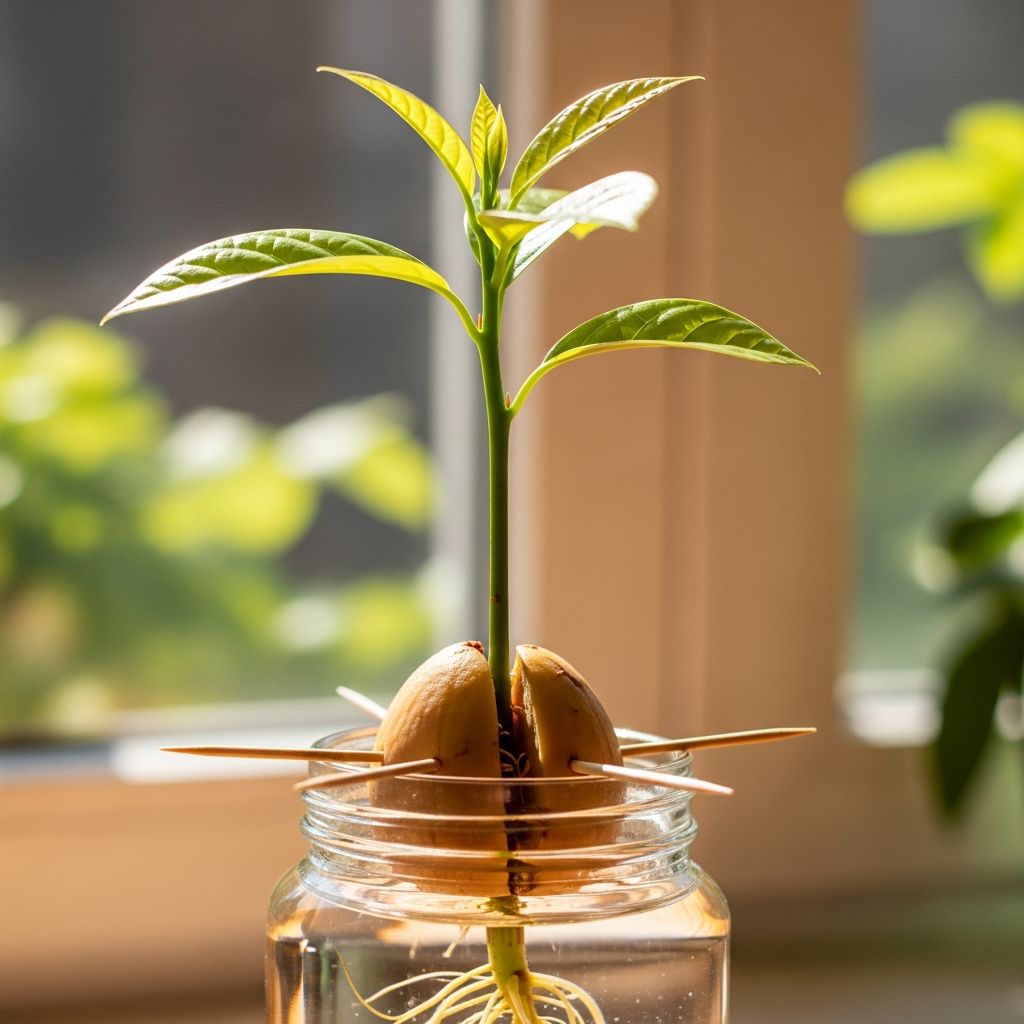
- Insert three toothpicks evenly around the seed’s equator, angling downward.
- Suspend over a jar of water so the bottom quarter submerges.
- Position on a warm, bright windowsill; refresh water weekly.
Roots appear first, followed by a shoot. Transition to soil once roots reach 2 inches.
Direct Soil Planting
For hands-off starters, plant immediately after cleaning.
- Fill a pot with drainage gravel and moist potting mix.
- Position seed with bottom down, top 1 inch exposed.
- Water gently and keep in indirect light.
Sprouting takes slightly longer but skips intermediate steps.
Transplanting Sprouted Seeds
Once roots extend 2-3 inches and a shoot emerges, move to a permanent pot.
- Select an 8-inch diameter container with drainage holes and saucer.
- Add a base layer of gravel for excess water flow, then indoor potting soil amended with perlite for aeration.
- Hold the seed centrally, roots downward (or as grown), burying halfway while leaving the upper portion above soil.
- Water with room-temperature liquid until evenly moist; allow surface to dry between sessions.
Place in bright, indirect light away from drafts. Initial growth focuses on roots, with leaves forming soon after.
Daily Care Essentials
Consistent routines ensure longevity.
Light and Temperature
Provide 6-8 hours of indirect sunlight daily, such as near east or west windows. Ideal range: 65-75°F daytime, above 55°F at night. Avoid direct sun to prevent leaf scorch.
Watering and Humidity
Check soil weekly: Water when the top inch feels dry. Use distilled or rainwater to minimize mineral buildup. Boost humidity by misting leaves or using a pebble tray with water.
Feeding Schedule
Apply a balanced, diluted liquid fertilizer monthly during spring through fall. Skip winter when growth slows. Top-dress with compost annually for nutrients.
Pruning for Fuller Growth
Encourage bushiness by pinching tips.
- Once the stem reaches 12 inches, snip above a leaf node at 8-10 inches.
- Repeat every 6 inches of new growth to promote branching.
- Remove yellowed lower leaves to direct energy upward.
This technique yields a denser plant rather than a leggy stem.
Common Challenges and Fixes
| Issue | Symptoms | Solution |
|---|---|---|
| Brown Tips | Crisp edges on leaves | Increase humidity; trim affected parts |
| Yellow Leaves | Dropping foliage | Reduce watering; check for root rot |
| No Growth | Stalled sprout | Warm location, fresh water/soil |
| Pests | Spider mites, scale | Wipe leaves with soapy water; isolate |
Root rot from overwatering is frequent: Ensure pots drain freely and never let roots sit in standing water.
Repotting and Maturing
Upgrade every 1-2 years or when roots circle the pot base.
- Choose a pot 2 inches larger.
- Gently remove, trim circling roots, and replant in fresh mix.
- Water sparingly post-transplant to aid recovery.
Mature plants may reach ceiling height; consider topping or outdoor summer placement in mild zones.
Fruit Production Realities
Home-grown avocados rarely fruit indoors due to specific pollination needs and chilling hours. Grafted varieties from nurseries offer better odds, but seed plants excel as ornamentals.
Advanced Tips for Thriving Plants
- Rotate pots biweekly for even light exposure.
- Supplement winter light with grow lamps for 12 hours daily.
- Propagate by air-layering mature branches for clones.
Frequently Asked Questions
How long until my avocado seed sprouts?
Typically 4-6 weeks for roots, 8-12 weeks for shoots using damp towel or water methods.
Can I grow it outdoors?
In USDA zones 9-11, yes; protect from frost elsewhere.
Why are leaves curling?
Often low humidity or underwatering; mist regularly and maintain even soil moisture.
Should I remove the seed coat?
Optional but recommended for faster sprouting on tough skins.
Will it bear fruit like the parent?
Unlikely indoors; focus on foliage beauty.
With patience, your avocado pit evolves into a striking houseplant. Experiment with multiple seeds for variety, and enjoy the journey from kitchen scrap to green companion.
References
- How to Grow an Avocado from Seed (Easy Method) — Empress of Dirt. 2023-05-15. https://empressofdirt.net/grow-avocado-seed-easy/
- Grow an avocado plant from a seed — Mud & Bloom. 2022-11-20. https://www.mudandbloom.com/blog/grow-an-avocado-plant
- Growing Avocado Plants From Seed — Instructables. 2021-03-10. https://www.instructables.com/Growing-Avocado-Plants-From-Seed/
- How to Grow an Avocado from Seed — YouTube (Video Transcript). 2023-08-12. https://www.youtube.com/watch?v=FCIBbSJiDMI
Similar Articles




Read full bio of medha deb