Mastering Asparagus Cultivation in Elevated Garden Beds
Unlock the secrets to a bountiful, long-lasting asparagus harvest using raised beds for superior drainage, soil control, and ease of maintenance.
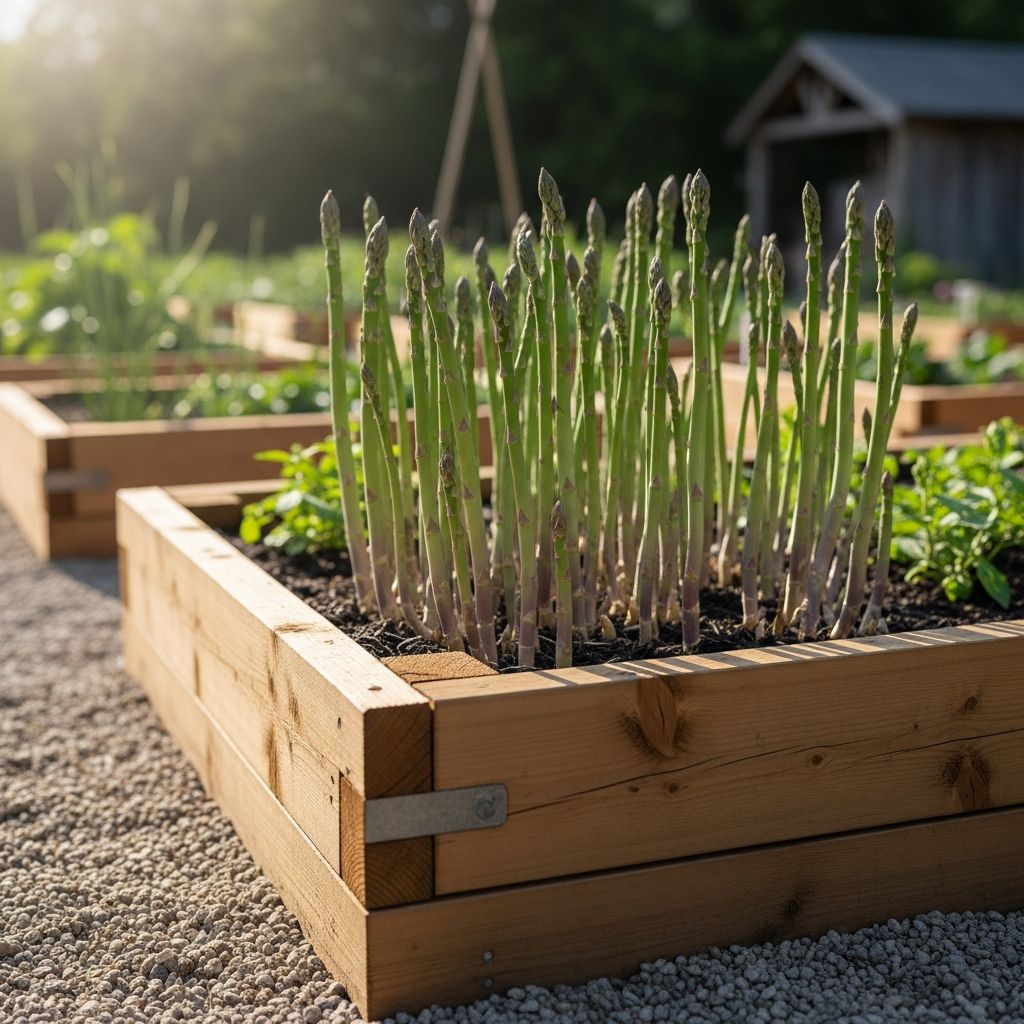
Asparagus stands out as a premier perennial crop, delivering tender spears annually for up to 30 years when properly established. Elevated garden beds simplify this process by offering impeccable drainage, customizable soil mixes, and effortless access, making them ideal for home growers. This guide explores every phase of asparagus production in raised structures, drawing on proven methods for maximum productivity.
Why Choose Raised Beds for Asparagus?
Raised beds transform asparagus growing by addressing common pitfalls like poor drainage and weed invasion. Asparagus thrives in loose, fertile soil with pH levels between 6.5 and 7.0, conditions easily achieved in controlled raised environments. Unlike in-ground planting, which demands extensive trenching in clay-heavy soils, raised beds allow precise soil blending from the outset.
Key advantages include:
- Superior Drainage: Prevents root rot in wet climates, crucial for deep-rooted asparagus.
- Weed Suppression: Mulch layers and contained soil minimize competition.
- Extended Lifespan: Beds support 15-30 years of harvests with minimal disturbance.
- Ergonomic Access: No kneeling required for maintenance or picking.
In regions with heavy soils, raised beds mimic the sandy loam preferred by asparagus, boosting spear quality and quantity.
Selecting the Perfect Location and Bed Dimensions
Position your raised bed in full sun, at least 6-8 hours daily, away from trees or shrubs that could shade or compete for nutrients. South-facing spots in northern hemispheres maximize growth. Avoid low-lying areas prone to frost pockets, as asparagus ferns need winter protection.
Optimal bed size balances yield and manageability. For 10-20 plants, aim for 4×8 feet or 2×10 feet, providing 1-foot spacing per crown. Depth matters: 12-18 inches accommodates the 6-8 inch planting depth plus root expansion. A 12-inch bed filled halfway initially allows gradual soil addition as ferns emerge.
| Bed Configuration | Plants Supported | Dimensions (L x W x H) | Harvest Potential (Year 3+) |
|---|---|---|---|
| Small | 10 crowns | 4x4x1 ft | 5-10 lbs/year |
| Medium | 20 crowns | 2x10x1 ft | 10-20 lbs/year |
| Large | 32 crowns | 4x8x1.5 ft | 20-40 lbs/year |
Construct beds with untreated lumber like cedar or cinder blocks to avoid chemical leaching into edible crops.
Preparing Nutrient-Rich Soil Mix
Asparagus demands fertile, well-aerated soil. Start with a blend of 50% topsoil, 30% compost, and 20% organic amendments like peat or biochar for optimal structure. Test pH and adjust to 6.5-7.0 using lime if needed; asparagus dislikes acidic conditions.
Enrich with:
- Well-rotted manure or compost for nitrogen.
- Biochar or perlite for drainage.
- Avoid fresh manure, which can burn roots.
Fill the bed partially—6 inches initially for 12-inch deep beds—to facilitate crown planting. This method skips laborious in-ground trenching.
Acquiring and Selecting Quality Asparagus Crowns
Purchase one-year-old crowns from reputable nurseries in early spring, dormant and stored moist. Opt for all-male hybrids like ‘Jersey Knight’ or ‘Jersey Giant’ for higher yields, as females divert energy to seeds. Each crown yields 1 foot of row space.
Inspect for plump roots and firm buds. Plant promptly or heel-in in moist sand if delayed. Timing: After last frost, soil temperature above 50°F (zones 4-9).
Step-by-Step Planting Process
Planting in raised beds streamlines the traditional trench method. Here’s a detailed walkthrough:
- Prepare the Base: Add 6 inches of soil mix to the bed bottom.
- Create Furrows: Dig shallow trenches or individual holes 6-8 inches deep, spaced 12-18 inches apart in rows 18 inches apart.
- Form Mounds: Mound 2-4 inches of soil in trench centers.
- Position Crowns: Spread roots over mounds like starfish, buds up. Crown nub faces upward.
- Cover Initially: Add 2 inches soil over roots, leaving buds visible.
- Fill Gradually: As spears grow 4-6 inches, add soil to reach 6 inches total depth. Mulch with 2-4 inches straw or wood chips.
For precision, plant individually in holes rather than continuous trenches. Water deeply post-planting to settle soil.
Seasonal Care and Maintenance Routines
Spring and Summer: Fostering Growth
Water consistently to 1 inch weekly, more in heat. Fertilize sparingly with balanced 10-10-10 in spring. Weed meticulously first year; mulch suppresses thereafter. Allow ferns to mature fully, reaching 4-6 feet, storing energy in crowns.
Fall and Winter: Protecting the Perennials
Cut ferns to ground after frost blackens them. Mulch heavily (6 inches) for insulation in cold zones. In zones 4 and below, 2-foot deep beds aid freeze protection if well-drained.
Pest and Disease Management
Common issues: Asparagus beetles (handpick), cutworms (collars). Rotate unlikely due to permanence; promote health with compost teas. Fusarium wilt rare in raised beds with good drainage.
Harvesting for Optimal Yields
Patience yields rewards: No harvest year 1, light snapping of thin spears year 2, full harvest year 3+ for 6-8 weeks. Cut spears at soil level when 6-8 inches tall, pencil-thick. Stop when thinning indicates energy reserve needs.
Expect 0.5-1 lb per crown annually once mature. Overharvesting weakens plants.
Long-Term Strategies for Perpetual Harvests
Asparagus beds endure 20+ years with care. Divide overcrowded crowns every 10-15 years. Top-dress annually with compost. Monitor for decline; renovate by thinning and replenishing soil.
Companion plant with tomatoes or parsley for pest deterrence; avoid onions or potatoes.
Troubleshooting Common Asparagus Challenges in Raised Beds
- Thin Spears: Improve fertility or extend non-harvest period.
- No Emergence: Check planting depth; too deep suffocates.
- Yellowing Ferns: Excess water or nutrient deficiency.
- Winter Kill: Increase mulch depth in harsh climates.
Frequently Asked Questions (FAQs)
What depth should a raised bed be for asparagus?
A 12-18 inch deep bed works best, allowing 6-8 inch planting depth with room for roots.
Can I plant asparagus in a 2-foot tall raised bed in cold zones?
Yes, provided excellent drainage; the height aids winter survival.
How late can I plant asparagus crowns?
In zone 4, up to May 1 post-frost; aim for soil at 50°F.
Should I let fern tops poke through soil initially?
Yes, gradually add soil as they grow to final 6-inch depth.
Are all-male asparagus varieties better?
Yes, they produce more spears without seed energy loss.
References
- How to Plant Asparagus in a Raised Bed — My Frugal Home. 2023-04-15. https://www.myfrugalhome.com/how-to-plant-asparagus-in-a-raised-bed/
- How to Plant Asparagus in Raised Beds — University of Wisconsin Extension (via YouTube transcript). 2022-05-10. https://www.youtube.com/watch?v=2WCL8GucZ6Y
- How to grow Asparagus | RHS Guide — Royal Horticultural Society. 2024-01-20. https://www.rhs.org.uk/vegetables/asparagus/grow-your-own
- Growing Asparagus in home gardens — University of Minnesota Extension. 2023-06-12. https://extension.umn.edu/vegetables/growing-asparagus
- Asparagus Growing Guide — Hoss Tools. 2024-03-05. https://growhoss.com/blogs/growing-guides/asparagus-growing-guide
- How Do I Grow Asparagus? | Planting & Harvesting Guide — joe gardener. 2023-11-18. https://joegardener.com/how-do-i-grow-asparagus/
Similar Articles








Read full bio of medha deb