Growing Citrus Trees: Complete Guide
Master the art of cultivating vibrant citrus trees for bountiful harvests of oranges, lemons, and more in your backyard or containers.
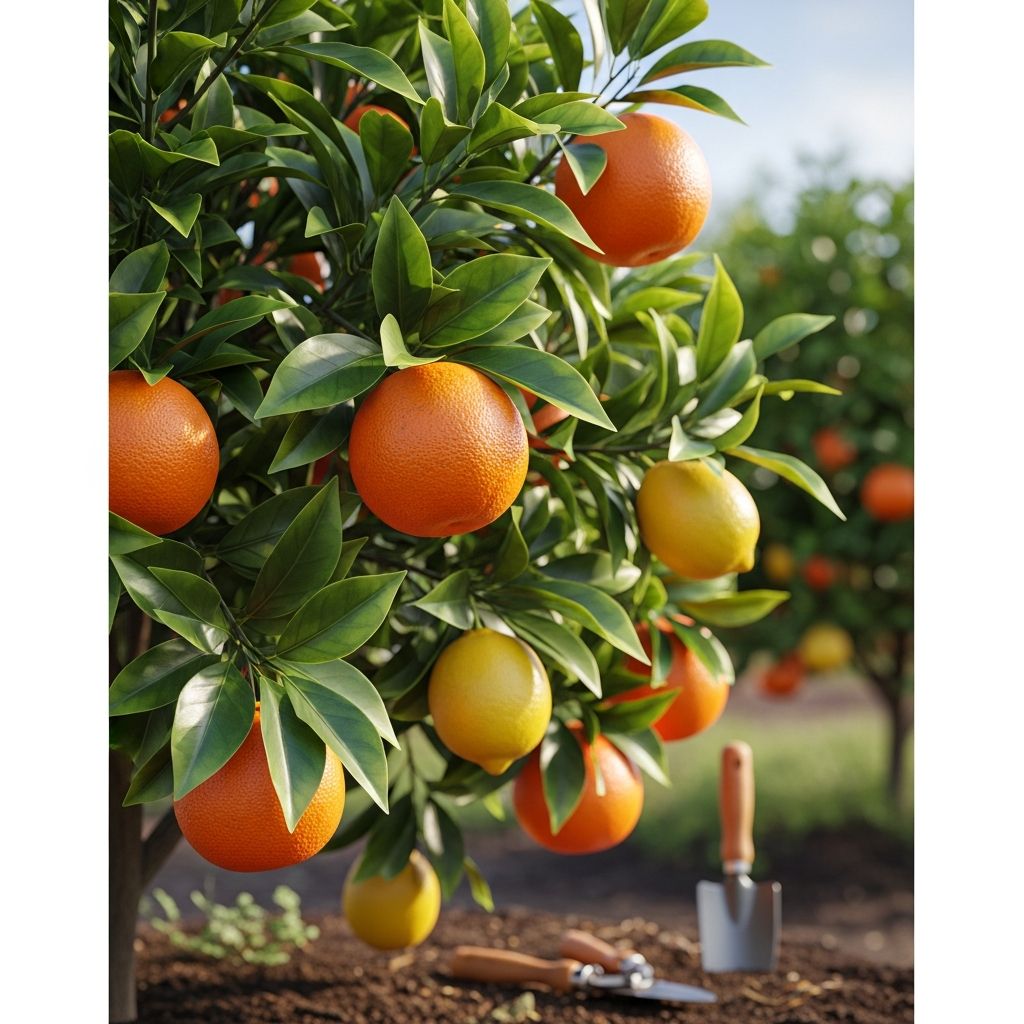
Citrus trees offer gardeners the joy of homegrown oranges, lemons, limes, and grapefruits with their bright fruits and fragrant blossoms. These evergreen plants thrive in warm climates but can be adapted to various settings with proper care. This guide provides step-by-step instructions drawn from reliable horticultural practices to help you establish and maintain thriving citrus trees, whether in the ground or containers.
Choosing the Right Citrus Varieties
Selecting appropriate varieties sets the foundation for success. Citrus trees come in standard, semi-dwarf, and dwarf sizes, with semi-dwarf and dwarf options ideal for smaller spaces or pots. Popular choices include Valencia oranges for juicing, Eureka lemons for cooking, and Meyer lemons for milder flavor. Consider your local climate: most citrus prefer USDA zones 9-11 but can be protected in cooler areas.
Match varieties to your needs—sweet oranges for eating, tangy limes for beverages, or grapefruits for breakfast. Semi-dwarf trees grow to 8-12 feet, perfect for patios, while full-sized ones reach 20 feet or more. Source trees from reputable nurseries to ensure they are disease-free, checking for a healthy graft union where the scion meets the rootstock.
Ideal Site Selection and Preparation
Citrus trees demand full sun, requiring at least 6-8 hours of direct sunlight daily for optimal fruiting. South-facing spots are best to maximize exposure. Ensure good air circulation to prevent fungal issues, spacing trees 6-8 feet from structures or other plants.
Test soil drainage by digging a hole, filling it with water, and observing if it drains within a few hours. Citrus roots rot in waterlogged soil, so amend heavy clay with organic matter if needed, though native soil often suffices. For in-ground planting, choose elevated areas to avoid frost pockets.
- Sunlight: 6-8 hours direct sun daily.
- Spacing: 8-12 feet apart for mature trees.
- Soil pH: 6.0-7.5, well-draining.
Planting Citrus Trees Step-by-Step
Plant in spring after the last frost for best establishment. Dig a hole twice as wide as the root ball but no deeper than the container height to prevent burying the graft union.
- Remove the tree from its pot and gently loosen circling roots with your fingers or a knife to encourage outward growth.
- Position the tree so the root ball top aligns with or slightly above ground level; the graft union should sit 4-6 inches above soil.
- Backfill with native soil, tamping lightly to eliminate air pockets without compacting too hard.
- Create a watering berm around the planting hole to direct moisture to roots.
- Water deeply immediately after planting, saturating the root ball.
For container growing, select pots at least 3-5 gallons initially, upgrading every 2 years up to 15-20 gallons. Use well-draining potting mix and ensure saucers don’t hold standing water.
Watering Strategies for Healthy Roots
Newly planted citrus need consistent moisture for the first year—water twice weekly, adjusting for rainfall. Probe the top 3-6 inches of soil; water when dry. Deep watering promotes strong roots, but allow soil to dry slightly between sessions to avoid root rot.
Mature trees require about 1 inch of water weekly, more in hot weather. Mulch around the base with 2-3 inches of organic material to retain moisture and suppress weeds, keeping it away from the trunk. In containers, check daily and water when the top inch feels dry.
| Growth Stage | Watering Frequency | Amount |
|---|---|---|
| Newly Planted | 2-3 times/week | Deep soak to wet root ball |
| Established | Once/week | 1 inch equivalent |
| Container | As topsoil dries | Until water drains out |
Fertilizing for Vigorous Growth and Fruit
Citrus are heavy feeders, especially nitrogen-hungry. Apply a balanced citrus fertilizer (e.g., 3-1-1 or 8-3-9 ratio) three times yearly: early spring, early summer, and fall. Avoid late-season feeding to prevent tender growth vulnerable to frost.
For young trees, use 1/2 cup ammonium nitrate or equivalent after 6-8 inches of new growth. Potted trees benefit from liquid feeds every 4-6 weeks. Incorporate micronutrients like iron, zinc, and manganese, common deficiencies in citrus.
- Spring: High-nitrogen for foliage.
- Summer: Balanced for fruit set.
- Fall: Light potassium boost.
Pruning Techniques to Shape and Stimulate
Prune lightly in late winter or early spring to remove dead, diseased, or crossing branches. Thin dense areas for light penetration and air flow, shaping into an open vase form. Pinch tips on young trees to encourage bushiness.
Never remove more than 25% of canopy at once. For potted trees, annual tip pruning keeps them compact. Remove suckers below the graft union promptly.
Pest and Disease Management
Common pests include aphids, scale, and spider mites. Inspect undersides of leaves; hose off minor infestations or use insecticidal soap. Citrus leaf miner causes wavy leaves—remove affected tips.
Diseases like root rot from overwatering or greening (HLB) require vigilance. Promote health with proper spacing and sanitation. In severe cases, consult extension services.
Protecting from Cold and Frost
In marginal climates, cover trees with frost cloth during freezes or use heat sources. Plant against south-facing walls for warmth reflection. Dwarf varieties in pots can be moved indoors.
Harvesting and Enjoying Your Bounty
Fruits ripen variably: oranges in winter, lemons year-round. Harvest when fully colored and slightly soft, twisting off with a stem piece. Regular picking encourages more production.
Container Growing Tips for Small Spaces
Patio citrus thrive in pots with dwarf rootstocks. Repot every 2-3 years, pruning roots if pot-bound. Winter indoors in cold areas, providing bright light.
Frequently Asked Questions (FAQs)
Can citrus trees grow in pots?
Yes, semi-dwarf and dwarf varieties excel in containers with proper drainage and care.
How often should I fertilize?
Three times per year for in-ground; more frequently for pots.
What causes yellow leaves?
Often iron deficiency or overwatering—adjust soil pH and watering.
When to prune citrus trees?
Late winter before new growth.
Do citrus need full sun?
Absolutely, 6-8 hours minimum for fruiting.
References
- A Guide to Planting Citrus Plants & Trees — Plants Express. Accessed 2026. https://plantsexpress.com/blogs/how-to-guides/a-guide-to-planting-citrus-plants-trees
- Citrus Tree Growing Guide for Beginners — Four Winds Growers. Accessed 2026. https://www.fourwindsgrowers.com/a/blog/citrus-tree-growing-guide-for-beginners
- Planting – Citrus Research and Education Center — University of Florida IFAS (crec.ifas.ufl.edu). Accessed 2026. https://crec.ifas.ufl.edu/home-citrus/getting-ready/
- Citrus – Aggie Horticulture — Texas A&M University (aggie-horticulture.tamu.edu). Accessed 2026. https://aggie-horticulture.tamu.edu/fruit-nut/fact-sheets/citrus/
- How to Plant Citrus Trees — The Tree Center. Accessed 2026. https://www.thetreecenter.com/guides/plant-citrus-trees/
- Planting and Care of Young Citrus Trees — UC ANR Master Gardeners (ucanr.edu). Accessed 2026. https://ucanr.edu/site/uc-master-gardeners-ventura-county/planting-and-care-young-citrus-trees
Similar Articles







Read full bio of Sneha Tete