Container Dogwood Mastery: Pot-Growing Guide
Unlock the secrets to thriving dogwood trees in pots: expert tips on containers, soil, care, and overcoming challenges for stunning results.
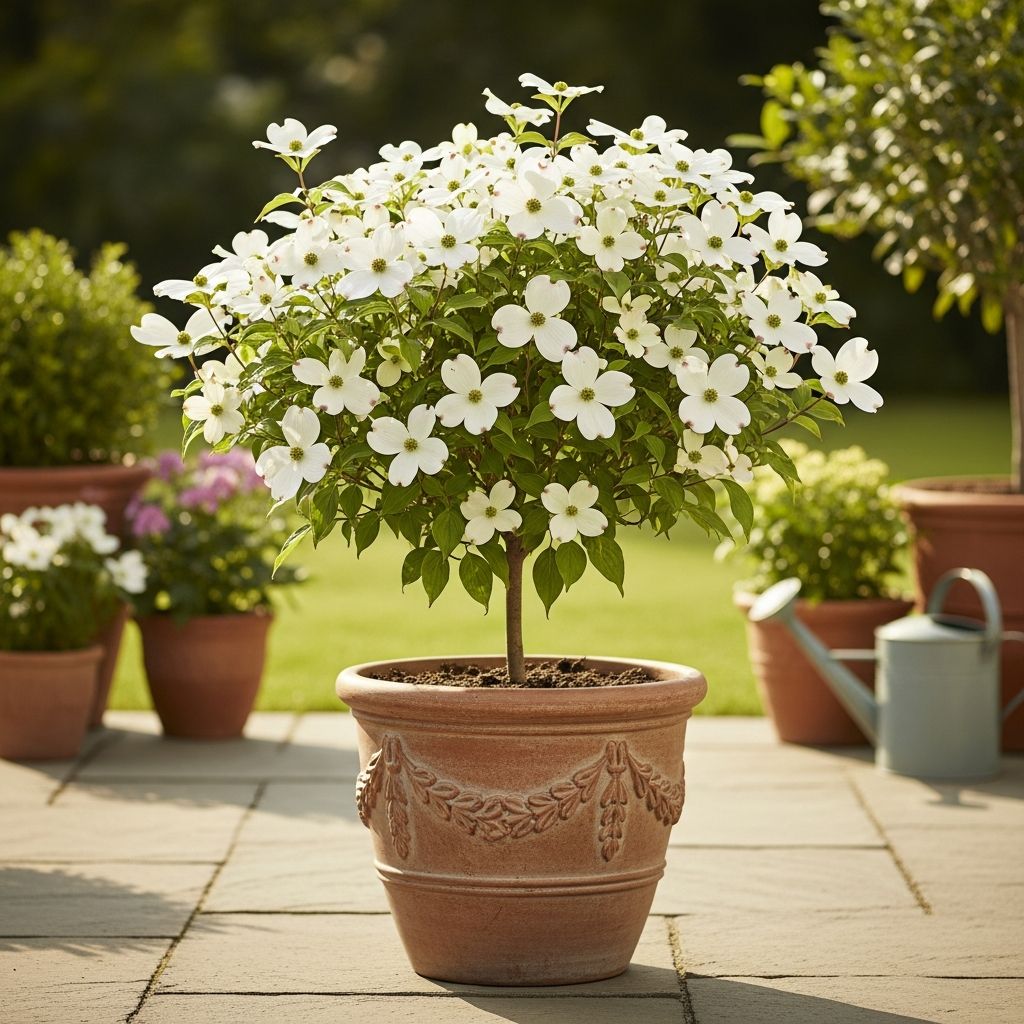
Dogwood trees, celebrated for their striking spring blossoms, elegant fall foliage, and textured winter bark, offer year-round beauty. While traditionally planted in landscapes, these versatile plants can flourish in containers with careful attention to their specific needs. This guide draws on horticultural expertise to help you cultivate thriving potted dogwoods, even in compact urban settings.
Why Choose Dogwoods for Container Gardening?
Dogwoods adapt remarkably well to pots when provided with optimal conditions, bringing ornamental value to patios, decks, and balconies. Their compact cultivars limit mature size, making them ideal for small spaces. Varieties like dwarf flowering dogwoods or red twig types provide vivid colors without overwhelming containers. However, their dense, fibrous root systems demand spacious pots and meticulous care to prevent stress.
- Space-saving beauty: Perfect for apartments or courtyards.
- Seasonal interest: Flowers in spring, berries in summer, colorful leaves in autumn, and architectural stems in winter.
- Ecological perks: Attract pollinators and support wildlife.
Success hinges on mimicking their native woodland habitat: moist, well-drained, acidic soil in partial shade.
Selecting the Perfect Dogwood Variety for Pots
Not all dogwoods suit container life. Prioritize dwarf or slow-growing cultivars to avoid rapid outgrowing of pots. Flowering dogwoods (Cornus florida) and pagoda dogwoods (Cornus alternifolia) excel, while Cornus kousa offers disease resistance. Red-osier dogwood (Cornus sericea) provides vibrant winter stems in shrub forms.
| Variety | Mature Height in Pot | Key Features |
|---|---|---|
| Cornus florida ‘Compacta’ | 4-6 feet | Abundant white flowers, compact habit. |
| Cornus kousa ‘Little Rocket’ | 5-7 feet | Strawberry-like fruits, upright form. |
| Cornus sericea ‘Kelseyi’ | 3-4 feet | Bright red stems, dwarf shrub. |
Acquire healthy nursery stock with white, non-circling roots. Avoid root-bound plants, as they struggle to establish.
Choosing and Preparing the Ideal Container
The pot is foundational. Dogwoods’ extensive roots require vessels at least 24 inches wide and deep to accommodate growth and insulate against temperature swings. Opt for stability with heavy-based designs to withstand wind.
- Material options: Plastic or fiberglass for insulation in cold climates; terracotta for breathability in mild areas.
- Drainage essential: Multiple large holes prevent root rot. Elevate pots on feet for airflow.
- Shape matters: Broad, shallow planters encourage lateral root spread over deep, narrow ones.
Before planting, clean pots thoroughly and line the base with mesh to retain soil while allowing drainage.
Crafting the Optimal Soil Mix
Dogwoods thrive in loose, acidic, organic-rich substrates that retain moisture yet drain swiftly. Commercial potting mixes amended with pine bark, peat moss, and compost replicate their forest floor preferences.
DIY Recipe (for a 25-gallon pot):
- 50% pine bark fines (for structure and acidity).
- 30% peat moss or coconut coir (moisture retention).
- 20% compost or perlite (nutrients and aeration).
Aim for pH 5.5-6.5. Test irrigation water annually; add lime only if deficient. Top with 2-3 inches of mulch like shredded bark to conserve moisture and moderate soil temperature.
Step-by-Step Planting Instructions
Plant in early spring or fall for best establishment. Follow these steps for robust starts:
- Water the dogwood thoroughly in its nursery pot to hydrate roots.
- Gently remove, tease apart circling roots, and soak in water for 5 minutes.
- Fill pot one-third with soil mix; position plant so root flare sits 2-4 inches above soil surface.
- Backfill loosely, firming gently to eliminate air pockets.
- Water deeply until excess drains, then mulch surface.
Correct depth prevents girdling roots and decline.
Essential Watering and Irrigation Strategies
Containers dry faster than ground soil, so dogwoods need consistent moisture without saturation. Water deeply 2-3 times weekly in growing season, adjusting for weather. Use finger test or moisture meter: aim for damp, not soggy, 1-2 inches deep.
- Growing season: Frequent, thorough soaks promote deep roots.
- Dormancy: Reduce to prevent drying; check weekly.
- Winter protection: Group pots, insulate with bubble wrap if freezing.
Overhead irrigation suits established plants; sub-irrigation excels for young ones, maintaining even moisture.
Fertilization for Vigorous Growth
Dogwoods prefer low, steady nutrients mimicking understory conditions. Apply balanced, slow-release fertilizer (10-10-10) in early spring at half-strength. Avoid excess nitrogen to prevent weak growth.
| Season | Fertilizer Type | Application Rate |
|---|---|---|
| Spring | Balanced granular | 1 tbsp per sq ft |
| Summer | Foliar liquid | Diluted monthly |
| Fall/Winter | None | Rest period |
Foliar symptoms like chlorosis signal root issues or pH imbalance—inspect roots first.
Light, Temperature, and Location Tips
Position in partial shade: morning sun, afternoon protection. Full sun scorches leaves; deep shade reduces blooms. Ideal temperatures: 60-75°F day, above 40°F night. Shelter from harsh winds.
Containers heat roots excessively in sun—light colors reflect heat. In cold zones, move to unheated garages during extremes.
Pruning, Root Maintenance, and Repotting
Prune lightly post-bloom to shape and remove deadwood. Every 2-3 years, lift to prune circling roots and repot into larger containers (increase by 4-6 inches). Spring is best.
- Inspect for pests like borers or scale; treat organically.
- Monitor for anthracnose; ensure air circulation.
Seasonal Care Calendar
| Season | Key Tasks |
|---|---|
| Spring | Fertilize, prune, increase watering. |
| Summer | Shade cloth if hot, deep water. |
| Fall | Reduce fertilizer, mulch heavily. |
| Winter | Protect from freeze, minimal water. |
Overcoming Common Container Challenges
Root-bound plants yellow; repot promptly. Poor drainage causes rot—amend aggressively. Nutrient lockout from pH drift—test regularly. Healthy systems yield success.
Frequently Asked Questions
How often should I water potted dogwoods?
2-3 times weekly deeply during growth; less in dormancy. Check soil moisture regularly.
Can dogwoods survive winter in pots?
Yes, with insulation and protection from deep freezes. Use hardy varieties.
What if leaves turn yellow?
Often root or pH issues. Inspect roots, adjust soil acidity.
How large can potted dogwoods grow?
Dwarf types stay 4-8 feet; repot to manage size.
Are dogwoods toxic?
Berries mildly toxic to pets/humans; stems safe.
References
- Growing Dogwoods In Pots – How To Grow Dogwoods In A Container — Gardening Know How. 2023. https://www.gardeningknowhow.com/ornamental/trees/dogwood/dogwoods-in-container.htm
- Growing Dogwoods in Pots — Plant Addicts. 2024. https://plantaddicts.com/growing-dogwoods-in-pots/
- Growing Dogwood In Pots? These Are Horticulturists’ 7 Key Tips — Horticulture.co.uk. 2023. https://horticulture.co.uk/dogwood/containers/
- The Art of Growing Dogwoods in Containers — Tennessee State University / UT Extension / USDA. 2010 (authoritative nursery guide). https://www.tnstate.edu/faculty/ablalock/documents/The%20Art%20of%20Growing%20Dogwoods%20in%20Containers.pdf
- Growing Dogwoods — University of Georgia CAES. 2022. https://fieldreport.caes.uga.edu/publications/C900/growing-dogwoods/
- Growing Flowering Dogwood Trees — University of Maryland Extension. 2024. https://extension.umd.edu/resource/growing-flowering-dogwood-trees
Similar Articles








Read full bio of medha deb