Growing Hemlock Trees From Seed: Complete Guide
Master the art of cultivating hemlock trees from seeds with our detailed guide on preparation, planting, and long-term success.
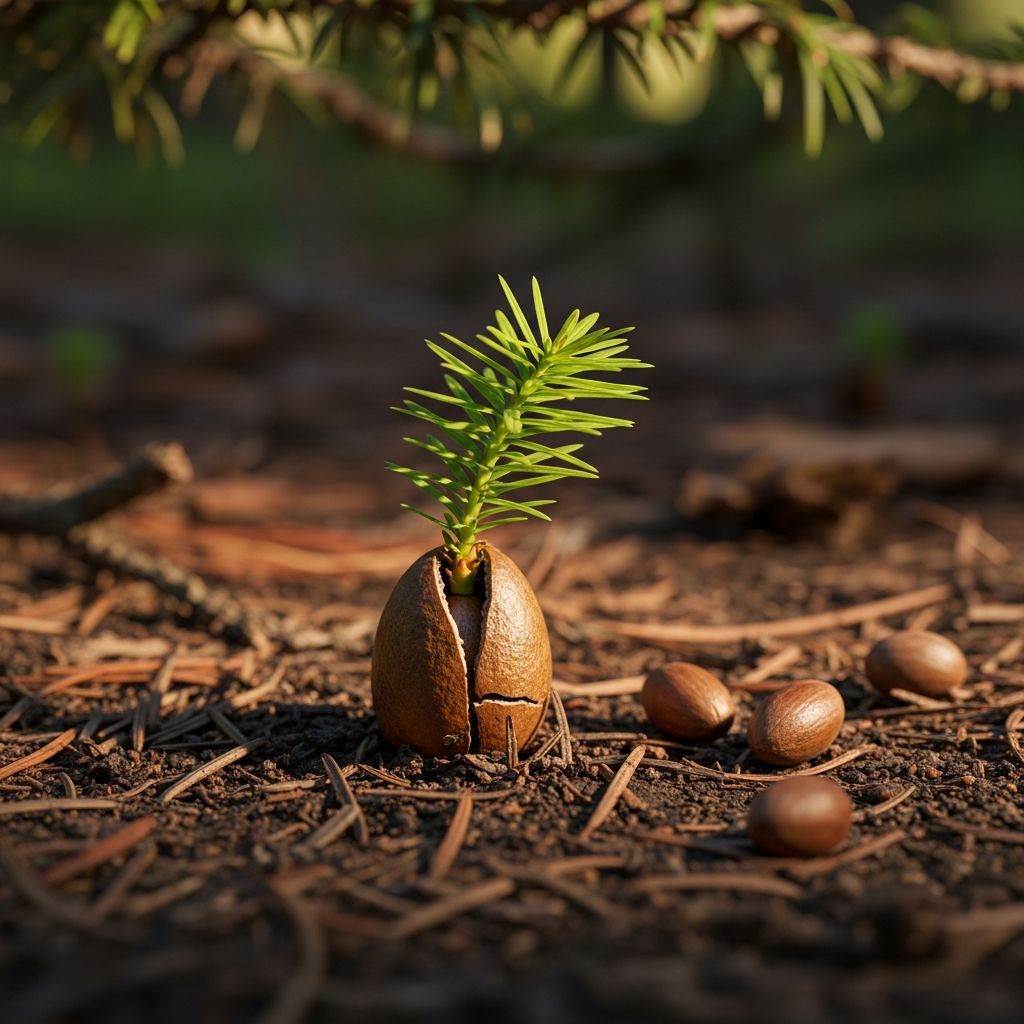
Growing Hemlock Trees from Seed: A Complete Guide
Hemlock trees (Tsuga spp.), prized for their graceful, feathery foliage and towering presence, can be successfully propagated from seeds with proper techniques. These evergreens thrive in shaded, moist environments and add year-round beauty to gardens and natural landscapes. This guide provides an original, comprehensive approach to starting hemlocks from seed, drawing on established horticultural practices for optimal results.
Understanding Hemlock Trees and Their Appeal
Hemlock trees, particularly Eastern hemlock (Tsuga canadensis) and its relatives, are slow-growing conifers that can reach maturity over centuries, living up to 900 years or more. They feature soft, needle-like leaves and dense, pyramidal forms, making them ideal for privacy screens, woodland gardens, or erosion control along slopes. Native to North America, hemlocks prefer cool, humid climates and are hardy in USDA Zones 3-7. Unlike faster-growing pines, hemlocks develop gradually, rewarding patient gardeners with elegant, shade-tolerant specimens that support wildlife.
Propagation from seed allows enthusiasts to produce multiple plants economically, selecting for desirable traits like dwarf varieties or disease resistance. While nursery stock is available, home-grown hemlocks offer a deeper connection to the propagation process and potential cost savings for large-scale planting.
Gathering and Selecting Quality Seeds
Begin by sourcing viable hemlock seeds from mature, healthy trees. Collect cones in late summer to early fall when they turn brown and open naturally. Eastern hemlock cones are small (about 1 inch long), egg-shaped, and hang from branch tips. Harvest only from vigorous parent trees to ensure genetic quality.
- Inspect cones for plumpness and lack of insect damage.
- Extract seeds by shaking cones over a tray or tumbling them in a bag.
- Air-dry seeds for 1-2 weeks in a shaded, ventilated area to prevent mold.
Store cleaned seeds in airtight containers with silica packets in a refrigerator at 34-41°F until sowing. Viability testing involves floating seeds in water: sinkers are viable, floaters often are not. Aim for fresh seeds, as hemlock viability drops after one year without treatment.
Seed Stratification: Mimicking Winter for Germination
Hemlock seeds require cold, moist stratification to break dormancy, simulating winter conditions. This process takes 1-4 months at 34-41°F.
- Soak seeds in room-temperature water for 24 hours.
- Mix with damp sphagnum moss or sand in a plastic bag (1:4 ratio).
- Seal and refrigerate, checking weekly for mold; rinse if needed.
- After 10-12 weeks (or up to 60 days at 59°F for some), seeds are ready when white radicles emerge.
For bulk production, sow stratified seeds directly into prepared beds. Unstratified seeds may germinate with light exposure, but stratification boosts rates significantly.
Preparing the Ideal Growing Medium and Site
Hemlocks demand acidic (pH 5.0-6.0), well-drained, organic-rich soil. Avoid heavy clay or alkaline sites, which cause root rot.
| Soil Component | Ideal Proportion | Benefits |
|---|---|---|
| Pine bark fines or peat moss | 40-50% | Acidity and drainage |
| Loam or sandy soil | 30-40% | Nutrient retention |
| Perlite or vermiculite | 20% | Aeration |
Create raised beds (4×48 feet) in full sun initially, oriented north-south for even light. Till in 2-4 inches of pine bark, avoiding sand to prevent compaction. Test soil and amend with dolomitic lime if pH exceeds 6.5; broadcast phosphorus and potash as tests indicate.
Fumigate beds pre-planting to control pathogens, then cover with 30-50% shade cloth post-sowing, especially below 2000 feet elevation.
Sowing and Germination Techniques
Sow in early spring (March) at 40-50 seeds per square foot in prepared beds. Lightly rake seeds into the surface; they need light for germination.
- Press seeds firmly but avoid burying deeply.
- Water gently to settle soil; maintain consistent moisture.
- Germination occurs in 45-60 days at 59-60°F.
Protect from birds with netting and rodents with early winter sowing for natural stratification. For container starts, use 4-inch pots with drainage holes, thinning to strongest seedlings.
Seedling Care in the First Year
Young hemlock seedlings are fragile, susceptible to sun scorch and frost heaving. Provide 50% shade the first year, frequent irrigation, and mulch to regulate temperature.
Side-dress with low-nitrogen fertilizer (50 lbs/acre actual N) in February-March and June, avoiding foliage contact. Water deeply during droughts; hemlocks mimic riverbank species, needing even moisture without waterlogging.
Monitor for heaving: mulch heavily and avoid fall planting in frost-prone areas. Prune damaged roots on transplants to balance top growth.
Transplanting to Liner Beds or Field
After 1-2 years in seed beds, move 1-1 or 2-0 seedlings to liner rows or transplant beds for root development. Space 6-12 inches apart under irrigation and partial shade.
Plant in spring or fall; dip roots in anti-desiccant like Terrasorb. Never plant too deeply—hemlocks are sensitive to root coverage. Use smaller cultivation blades to avoid piling soil.
Grow liners 1-2 more years before field planting at 20-30 feet apart for full-sized trees or 3-6 feet for dwarfs.
Long-Term Maintenance for Mature Trees
Established hemlocks are low-maintenance but benefit from:
- Watering: Supplemental during dry spells, especially first two years.
- Fertilizing: Acidifying slow-release in spring for pale foliage.
- Mulching: 2-3 inches, kept from trunk.
- Pruning: Light shaping in late winter; shear sides for density, protect leaders until 6 feet.
Site in partial shade (dappled light or morning sun); full sun works in cool, moist northern areas. Thin overcrowded stands to favor dominant trees.
Common Challenges and Solutions
Hemlocks face pests like woolly adelgid (invasive in some regions) and diseases like root rot. Scout regularly; use horticultural oil for adelgids.
| Problem | Symptoms | Solution |
|---|---|---|
| Drought stress | Needle browning | Drip irrigation, mulch |
| Root rot | Wilting, decline | Improve drainage, fungicide |
| Sun scorch | Yellowing foliage | Provide shade cloth |
| Frost heaving | Uprooted seedlings | Mulch deeply, spring plant |
For production, expect 5-6 years to 6-foot harvestable trees.
Advanced Propagation for Nurseries
Commercial growers use shelterwood systems: thin overstories to 70-80% closure, scarify soil, direct-seed 0.5 lbs/acre, then remove canopy once seedlings hit 3-5 feet. Incorporate yellow birch for mixed stands. This even-age management sustains vigor.
Landscaping with Home-Grown Hemlocks
Use dwarfs like ‘Loowit’ for hedges, full-sized for screens. They excel under natural shade, forming dense hedges unmatched by other evergreens. Pair with acid-loving plants like rhododendrons.
Frequently Asked Questions (FAQs)
Can hemlocks grow in full sun?
Yes, in cool climates with consistent moisture, but partial shade prevents scorch.
How long until hemlocks produce cones?
Typically 20-30 years, though some cultivars sooner.
Are hemlocks deer-resistant?
Moderately; foliage is less palatable than broadleaves.
Best time to transplant seedlings?
Spring or fall, avoiding summer heat.
Do hemlocks tolerate urban pollution?
Fairly well in shaded, moist sites.
References
- The Hemlock Guide — Plant Detectives. Accessed 2026. https://plantdetectives.com/pages/the-hemlock-guide
- Hemlock Production — Department of Plant Sciences, University of Tennessee. 2021-10. https://plantsciences.tennessee.edu/wp-content/uploads/sites/25/2021/10/Prod-Hemlock.pdf
- Hemlock Tree Care: Tips For Growing Hemlock Trees — Gardening Know How. Accessed 2026. https://www.gardeningknowhow.com/ornamental/trees/hemlock/growing-hemlock-trees.htm
- Chapter 39 – Hemlock-Hardwood Type — Wisconsin Department of Natural Resources. Accessed 2026. https://dnr.wisconsin.gov/sites/default/files/topic/ForestManagement/24315_39.pdf
- EASTERN HEMLOCK Plant Guide — USDA Plants Database. Accessed 2026. https://plants.usda.gov/DocumentLibrary/plantguide/pdf/pg_tsca.pdf
Similar Articles








Read full bio of medha deb