Growing Pumpkins and Gourds
Master the art of cultivating vibrant pumpkins and decorative gourds with expert tips on soil, planting, care, and harvest for bountiful yields.
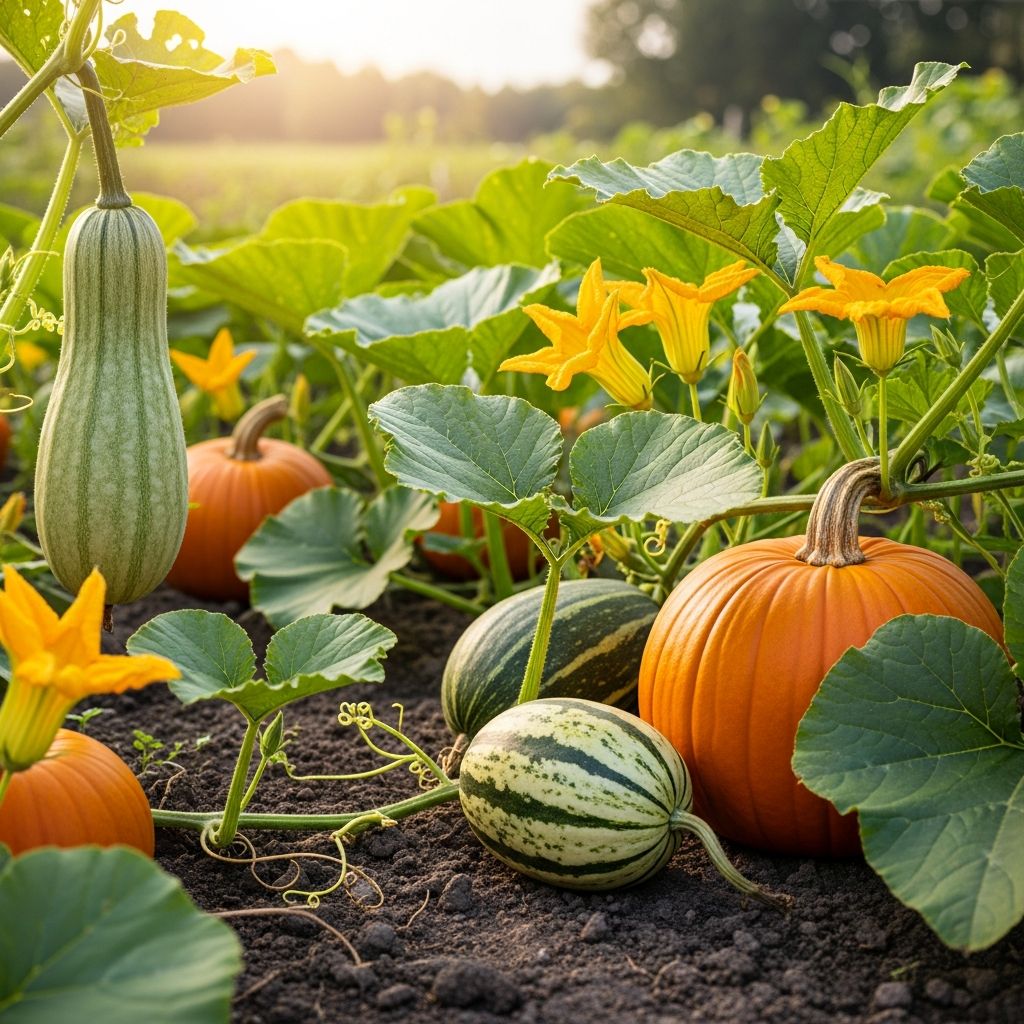
Pumpkins and gourds thrive as warm-season crops that reward patient gardeners with impressive vines, colorful fruits, and seasonal decorations. These vining plants require ample space, rich soil, and consistent care to produce robust yields. This guide draws from established agricultural practices to help you cultivate them effectively from seed to harvest.
Understanding Pumpkins and Gourds
Pumpkins belong to the Cucurbita pepo family, alongside many gourds, squashes, and summer varieties. While pumpkins are often grown for their large, edible fruits ideal for pies, carving, or storage, gourds serve decorative purposes with unique shapes and colors that dry into lasting ornaments. Both share similar growth habits: long vines that spread widely, large leaves for shade, and bright yellow flowers that develop into fruits.
Key differences include fruit size and use. Pumpkins can weigh from a few pounds to over 100 for giant varieties, whereas gourds remain smaller and ornamental. Cross-pollination between compatible types like pumpkins, squashes, and gourds affects only saved seeds, not the current harvest’s quality or taste.
Selecting the Perfect Site
Choose a location with full sun exposure—at least 6-8 hours daily—to promote vigorous growth and fruit development. Pumpkins and gourds prefer flat or gently sloping ground to avoid water pooling, which can lead to root rot.
- Sunlight: Essential for photosynthesis and sugar production in fruits.
- Space: Vines can extend 10-20 feet; plan for rows or hills spaced 4-6 feet apart.
- Wind protection: Shelter from strong winds prevents vine breakage and pollination issues.
Avoid low-lying areas prone to frost pockets, as these plants are highly sensitive to cold.
Preparing Nutrient-Rich Soil
Fertile, well-drained soil is crucial, with a pH range of 5.8-6.8. Test your soil to identify needs; amend with organic matter like compost to improve structure, drainage, and nutrient retention.
| Soil Type | Ideal Amendments | Benefits |
|---|---|---|
| Sandy | Compost, aged manure | Enhances water retention |
| Clay | Organic matter, gypsum | Improves drainage |
| Loamy | Balanced fertilizer | Optimal for vine spread |
Incorporate 1-2 inches of compost into the top 6-12 inches of soil before planting. For heavy soils, create raised hills 8-12 inches high and 3-4 feet wide to promote drainage and warm the soil faster.
Timing Your Planting Perfectly
Plant after the last frost when soil temperatures reach 65-70°F at a 3-inch depth. In most regions, this falls mid-May to early June for direct seeding, or start indoors 3-4 weeks earlier.
- Direct Seeding: Preferred for deeper roots; sow 2-3 seeds per spot, 1/2-1 inch deep, thinning to the strongest seedling.
- Transplants: Use 2-3 week-old seedlings with 1-2 true leaves; handle roots gently to avoid disturbance.
For earlier harvests, lay black plastic mulch a week prior to warm soil and plant through slits.
Planting Techniques for Success
Create hills or rows based on variety: bush types need less space (2-3 feet apart), while vining ones require 4-6 feet between plants and 6-8 feet between rows.
- Dig holes or form mounds in prepared soil.
- Sow 3-4 seeds per hill, covering lightly.
- Water gently to settle soil; thin to 2 plants per hill after emergence.
- For transplants, space 2-3 feet apart in rows.
Row covers protect young plants from pests and frost, removing them once flowers appear for bee pollination.
Watering and Irrigation Essentials
Provide consistent moisture, especially during fruit set and swelling—about 1-2 inches per week. Deep, infrequent watering encourages strong roots; drip irrigation or soaker hoses minimize leaf wetness to prevent diseases.
- Dry spells lead to blossom-end rot.
- Overwatering causes cracking or rot.
- Mulch with straw or landscape fabric to retain moisture and suppress weeds.
Fertilizing for Vigorous Growth
Base applications on soil tests. At planting, use a balanced fertilizer (e.g., 10-10-10). Side-dress with nitrogen when vines run, then switch to phosphorus-potassium for fruiting.
Avoid fresh manure near harvest to prevent contamination; opt for well-rotted compost instead.
Pruning, Training, and Vine Management
Train vines along fences or paths to save space. Prune excess leaves for airflow, but retain enough for shade. Remove early flowers on small varieties to focus energy on fewer, larger fruits.
Combating Pests and Diseases
Common threats include squash bugs, vine borers, powdery mildew, and cucumber beetles. Monitor daily; hand-pick pests, use row covers early, and apply organic sprays like neem oil.
| Pest/Disease | Symptoms | Control Methods |
|---|---|---|
| Squash Vine Borer | Wilting vines, sawdust-like frass | Row covers, BT sprays |
| Powdery Mildew | White powder on leaves | Improve air circulation, fungicides |
| Squash Bugs | Yellowing leaves, eggs under leaves | Handpick, traps |
Rotate crops annually to break pest cycles.
Encouraging Pollination and Fruit Set
Bees are vital; plant flowers nearby to attract them. Hand-pollinate if needed by transferring pollen from male to female flowers (distinguished by tiny fruit base).
Harvesting at Peak Ripeness
Harvest when rind hardens, color deepens, and stems dry—typically 90-120 days from planting. Cut with 2-3 inches of stem using pruners; cure in sun for 7-10 days to toughen skin for storage.
- Pumpkins: Tap for hollow sound.
- Gourds: Dry fully indoors for crafts.
Store in cool, dry areas at 50-55°F for months.
Variety Selection Table
| Variety Type | Days to Maturity | Size/Use | Best For |
|---|---|---|---|
| Jack-o-Lantern Pumpkins | 90-110 | 10-20 lbs, carving | Halloween |
| Pie Pumpkins | 85-100 | 3-8 lbs, cooking | Baking |
| Giant Pumpkins | 110-130 | 50+ lbs, contests | Shows |
| Decorative Gourds | 95-120 | Small, varied shapes | Ornaments |
Troubleshooting Common Issues
- No Fruit: Poor pollination; ensure bees or hand-pollinate.
- Small Fruits: Insufficient water/nutrients; check spacing.
- Rotting Fruits: Blossom-end rot from uneven watering; mulch consistently.
FAQs
Can I grow pumpkins in containers?
Large pots (20+ gallons) work for bush varieties with trellising; ensure excellent drainage.
Do gourds need different care than pumpkins?
No, they share requirements but gourds dry better for decoration.
How do I save seeds?
Harvest ripe fruits, ferment pulp, dry seeds; note cross-pollination effects.
What’s the best mulch?
Straw or black plastic for warmth and weed control.
Advanced Tips for Bountiful Yields
Experiment with companion planting: radishes deter beetles, nasturtiums attract pollinators. For giants, select Atlantic Giant seeds and provide extra nitrogen. Track weather via local extension services for precise timing.
With dedication, your pumpkin patch can yield dozens of fruits, transforming your garden into a fall spectacle.
References
- Pumpkin and Gourd Growing Guide — Holmes Seed Company. 2023. https://www.holmesseed.com/growers-guidebook/growing-guides/pumpkin-and-gourd-growing-guide/
- Pumpkins, Squashes and Gourds: How to Grow It — South Dakota State University Extension. 2024. https://extension.sdstate.edu/pumpkins-squashes-and-gourds-how-grow-it
- How to Grow Pumpkins in Your Garden — Utah State University Extension. 2023. https://extension.usu.edu/yardandgarden/research/pumpkins-in-the-garden
- Plant a Pumpkin Patch: Your Step-by-Step Guide — GrowVeg.com. 2022. https://www.growveg.com/guides/plant-a-pumpkin-patch-your-step-by-step-guide/
- Pumpkin Planting & Growing — Bonnie Plants. 2024. https://bonnieplants.com/blogs/how-to-grow/growing-pumpkins
Similar Articles




Read full bio of Sneha Tete