Removing Stone Veneer: A Practical DIY Weekend Guide
Learn effective techniques and safety measures for DIY stone veneer removal projects
A Practical Guide to Removing Stone Veneer from Interior Walls
Stone veneer removal is a manageable weekend project for homeowners willing to invest time and effort, though it requires careful planning and the proper equipment. Whether you’re updating a fireplace, refreshing an accent wall, or preparing a surface for new finishes, understanding the removal process will help you complete the work efficiently and safely.
Preparing Your Workspace and Safety Measures
Before beginning any removal work, thorough preparation is essential. Start by clearing the room of movable items and covering anything that cannot be removed with plastic sheeting and drop cloths. Stone and mortar chips will scatter during the removal process, so protective coverings should extend several feet beyond your work area.
Personal protective equipment (PPE) is non-negotiable when removing stone veneer. The work generates significant dust and flying debris, making the following precautions critical:
- Wear long sleeves, long pants, and closed-toe work boots to protect your skin from sharp fragments
- Use a dust mask or respirator to prevent inhalation of fine particles that can damage your lungs
- Protect your eyes with safety goggles to guard against stone chips and mortar dust
- Wear heavy-duty work gloves to protect your hands from cuts and chemical exposure
- Consider ear protection if you plan to use power tools, as they generate significant noise
Laying down tarps or plastic sheeting on the floor creates a contained work zone and simplifies cleanup. This surface protection also prevents damage to underlying flooring materials.
Essential Tools for the Removal Process
The tools you’ll need depend on how firmly the veneer adheres to the substrate and the extent of mortar bonding. A basic toolkit will suffice for many projects, though more challenging installations may require upgraded equipment.
Manual Tool Options
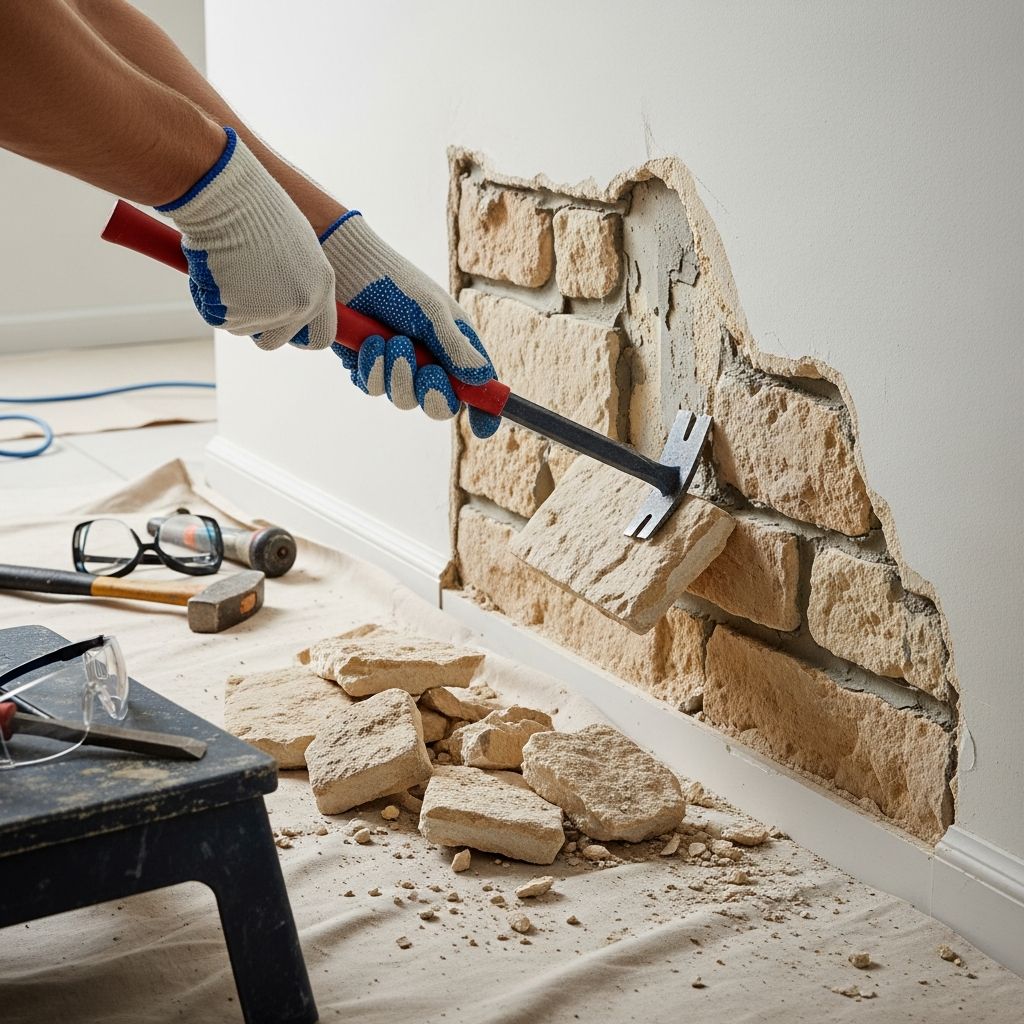
Start with fundamental hand tools before investing in power equipment. A hammer combined with a wide chisel or flat pry bar forms the foundation of most removal projects. The technique involves wedging the chisel under mortar joints and striking it with the hammer to dislodge the veneer pieces. A pry bar offers increased leverage compared to a chisel, making it particularly effective for stubborn sections.
For residual mortar cleanup, a rigid putty knife or paint scraper helps remove dried adhesive and ensures the wall surface is properly prepared for new finishes. These hand tools are inexpensive and give you maximum control over the removal process.
Power Tool Alternatives
If manual methods prove insufficient, an angle grinder can accelerate the work by grinding away remaining mortar. This approach generates considerably more dust than hand tools, so increased ventilation and a properly fitted dust mask become even more important. The grinder essentially sands the surface smooth rather than prying pieces off.
Wrecking bars and pry bars of varying lengths provide leverage for larger installations. Longer bars offer greater mechanical advantage but are heavier and more fatiguing to use over extended periods.
Chemical Removal Methods
Muriatic acid, a hydrochloric acid derivative, dissolves mortar bonds when other methods fail. This approach requires extreme caution, as the chemical is highly corrosive and can burn skin on contact. Acid-resistant gloves, proper ventilation, and careful dilution are absolutely essential when choosing this option.
The process involves wetting the wall with water first, applying the diluted acid solution, and allowing it several minutes to work before rinsing thoroughly. Multiple applications may be necessary, with rinsing between each cycle. An abrasive pad or chisel can help remove remaining debris.
Step-by-Step Removal Techniques
Initial Attack Strategy
Position yourself comfortably and begin working from the bottom of your installation, using your chosen tool to attack the mortar joints rather than the stone itself. The mortar typically fails before the stone, so focusing your efforts there yields faster results. Strike your chisel at a slight angle to maximize the force transferring to the joint.
Adapting Your Approach
Removal techniques may vary depending on how the veneer was installed. Some sections separate from the mortar bed easily when struck, while others remain firmly attached. Be prepared to switch approaches if your initial method encounters resistance. Sometimes removing the stone face first and then attacking the mortar bed works best, while other areas respond better to prying everything away as a unit.
Debris Management
As pieces separate, place them on a tarp for later disposal. Consider the weight of stone veneer when planning debris removal—renting an appropriately sized dumpster based on weight capacity rather than volume is crucial, as stone is surprisingly heavy. Organizing debris collection from the start makes final cleanup significantly easier.
Finishing and Wall Preparation
Once all veneer pieces are removed, your work isn’t complete. Thorough mortar removal and wall preparation determines how well new finishes adhere. Use your chisel, scraper, or grinder to eliminate all protruding mortar, leaving a smooth substrate.
After mechanical removal is complete, wash the wall thoroughly with water to eliminate all dust and debris. Vacuum the work area completely and allow surfaces to dry fully before applying paint, new veneer, or other finishes. This preparation step, while tedious, prevents future adhesion problems and ensures professional-quality results.
Specialized Considerations for Different Installations
Fireplace Stone Removal
Fireplaces often feature stone veneer bonded with exceptionally strong mortar due to heat exposure. The removal process may require more aggressive techniques and patience. Work carefully to avoid damaging the fireplace structure or surrounding walls.
Adhesive-Backed Veneer Systems
Some modern veneer products use adhesive backing rather than traditional mortar. These installations require rigid putty knives and scrapers to clear adhesive residue. The removal process typically proceeds faster than traditional mortar-based systems, though residue cleanup remains important.
Cost Considerations and Equipment Rental
Before beginning your project, assess whether you have access to all necessary tools. Power tools can often be rented from equipment rental centers at reasonable daily or weekly rates. Calculate the cost of rental against tool purchase price, particularly if you don’t anticipate future use.
Dumpster rental represents another significant cost, especially for large installations. Obtain weight-based quotes rather than volume-only estimates, as stone’s density means smaller volumes carry substantial weight.
Common Questions About Stone Veneer Removal
How long does removal typically take?
Timeline depends on veneer size, installation method, and how many people are working. A professional crew with adequate equipment completes full house exteriors in approximately four days with multiple workers. Smaller interior walls may take only a weekend.
Can I save the substrate wall underneath?
Careful removal protects the underlying wall, whether it’s original brick, drywall, or another material. Use controlled striking motions rather than excessive force to minimize damage to the base surface.
What should I do with removed stone?
While some salvage yards accept stone for recycling, most removed veneer goes to landfills. Check local waste management options before beginning your project.
Is this a one-person project?
Though physically possible for one person, having a helper significantly improves safety and productivity. A second person can manage debris collection, provide spotting when using ladders or lifts, and offer physical assistance with heavy sections.
References
- Removing Stone Veneer — Erth Coverings. 2024. https://erthcoverings.com/news/article/removing-stone-veneer
- Demo Day! Tips, Tools, and Techniques to Remove Stone Veneer — Top Homeowner (YouTube). 2023. https://www.youtube.com/watch?v=zXxR9uw1stE
- Removing stone veneer — House Repair Talk Community Forum. 2024. https://www.houserepairtalk.com/threads/removing-stone-veneer.1977/
- How to Remove Stacked Stone Veneer (A Step-by-Step Guide) — Top Source Stone. 2024. https://topsourcestone.com/stacked-stone-veneer-removal/
Similar Articles



Read full bio of Sneha Tete