Seamless Guide to Connecting Laminate Countertops
Master the art of joining laminate countertops for a flawless kitchen upgrade with expert DIY techniques and pro tips.
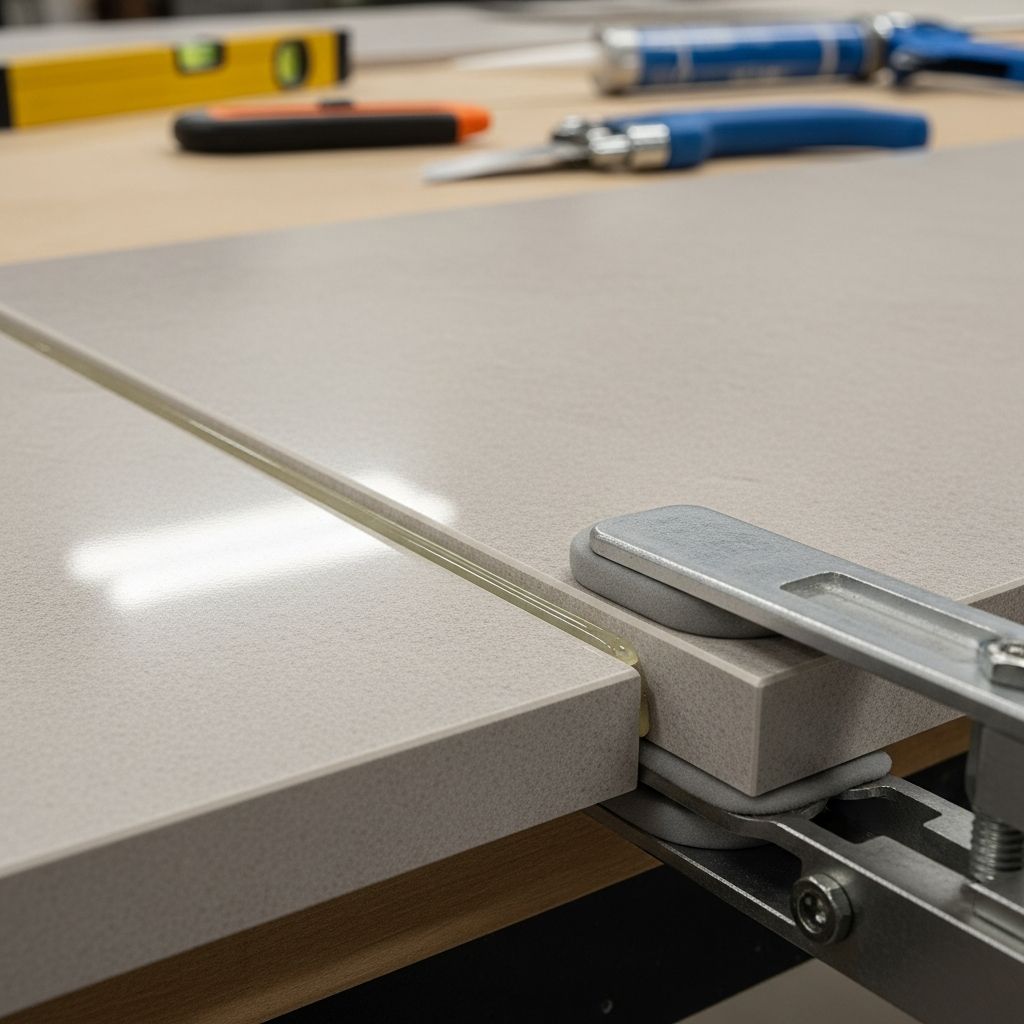
Installing laminate countertops offers an affordable way to refresh your kitchen or bathroom, but achieving a seamless joint between sections requires precision and the right techniques. This guide provides a complete roadmap for connecting laminate pieces, ensuring strength, alignment, and a polished appearance that rivals professional work. Whether you’re handling an L-shaped layout or a full run of cabinets, proper joining prevents gaps, movement, and wear over time.
Essential Tools and Materials for Success
Before starting, gather everything needed to avoid interruptions. Quality tools ensure clean cuts and tight fits, while specific materials like adhesives and fasteners create durable bonds.
- Cutting tools: Fine-tooth handsaw (10-12 points per inch), jigsaw for cutouts, drill with bits for pilot holes.
- Fastening hardware: Miter bolts or dual-action fasteners, 1-1/4-inch drywall screws, build-up strips (3/4-inch plywood or solid wood).
- Adhesives and sealants: Laminate-specific glue, silicone caulk for joints, contact cement for end caps.
- Alignment aids: Clamps, carpenter’s square, scriber-compass for wall fitting, level (4-foot minimum).
- Finishing supplies: Sandpaper (various grits), masking tape, wood blocks for tapping, heat-conductive aluminum tape for rangetops.
- Safety gear: Dust mask, safety glasses, gloves, ear protection.
Pro tip: Order countertops with pre-machined T-slots on the underside for miter bolts, simplifying the joining process.
Preparing Your Workspace and Cabinets
A level foundation is critical; uneven cabinets lead to gaps or stress on joints. Inspect and shim cabinets as needed using a long level across the top edges.
- Remove old countertops: Disconnect plumbing and electricity, detach from walls and cabinets, then lift out.
- Check cabinet alignment: Ensure fronts are flush and tops are level. Install build-up strips on cabinet sides where countertops meet, pre-drilling holes for screws. Leave space for sink installations on base cabinets.
- Measure precisely: Account for 1-1/2-inch overhangs on front and sides. Measure at the back wall multiple times for accuracy.
Clean surfaces thoroughly to remove debris, grease, or old adhesive, promoting strong bonds.
Accurate Measuring and Cutting Techniques
Measurements dictate fit; errors here amplify during joining. Work on a flat, protected surface with the countertop upside down.
| Step | Action | Tips for Precision |
|---|---|---|
| 1. Initial Layout | Mark lengths allowing overhangs; note joint positions. | Use pencil and masking tape on laminate to prevent scratches. |
| 2. Cutting Straight Edges | Apply masking tape over cut line; use fine-tooth saw, cutting into the surface. | Support the board to avoid vibration; sand edges smooth. |
| 3. Miter Joints | Pre-cut 45-degree miters if not factory-done; test fit dry. | Ensure matching pattern direction for seamless visuals. |
| 4. Sink/Rangetop Cutouts | Trace rim, cut 1/4-inch inside line with jigsaw; drill pilot holes at corners. | File edges chip-free; apply aluminum tape around rangetop openings. |
For non-factory cuts, protect laminate with tape and use sharp blades to minimize chipping.
Building Up Edges for a Professional Look
Build-up strips create the thick edge profile typical of high-end counters. Select strips matching countertop depth (usually 1-1/2 inches total).
- Glue strips along the front perimeter, clamping until dry.
- On joint areas, attach strips to cabinet sides first, pre-drilling for 1-1/4-inch screws.
- For sink bases, position strips away from the opening to allow clearance.
Secure with screws from below after placement, using shims if cabinets aren’t perfectly level.
Mastering the Miter Joint Assembly
Miter joints form the cornerstone of multi-section installs, especially for corners. This step demands patience for invisible seams.
- Dry fit sections: Align miters, insert bolts loosely into T-slots.
- Apply adhesive: Run a bead of color-matched sealant or glue into the miter edge; use shims to maintain 1/16-inch gap for squeeze-out.
- Clamp and align: Tighten bolts gradually, tapping high spots with wood block and hammer to level.
- Final cure: Allow 60 minutes minimum before moving; wipe excess adhesive immediately.
Flex sections slightly to ensure flush alignment, massaging into place.
Applying End Caps and Backsplashes
Exposed ends need end caps for durability and aesthetics; backsplashes protect walls.
- End Caps: Apply contact cement to both surfaces, air-dry to tacky, then press together. Iron from the center outward, filing edges.
- Backsplashes: Cut to length plus extra, attach with silicone, scribing to walls for fit.
Use J-roller for even pressure on end caps, ensuring no bubbles.
Fitting to Walls and Final Securing
Scribing contours countertops to irregular walls, eliminating gaps.
- Position on cabinets; set scriber-compass to widest wall gap.
- Trace line along back edge; cut and sand to match.
- Reinstall, level, and secure with screws through build-up strips or brackets. Caulk perimeter.
For dishwasher areas, apply foam tape to underside for vibration dampening.
Common Pitfalls and Pro Troubleshooting
Avoid these errors for lasting results:
- Chipping: Always cut into laminate; use sharp tools.
- Gaps in Joints: Dry fit repeatedly; use adhesive properly.
- Uneven Levels: Shim cabinets first; check with level often.
- Over-tightening: Snug bolts gradually to prevent cracking.
If joints don’t align, loosen bolts, realign, and reapply adhesive.
Frequently Asked Questions (FAQs)
Can I join laminate countertops without miter bolts?
Yes, but bolts provide the strongest hold. Alternatives like biscuits or pocket screws work for straight joints, but miters require mechanical fasteners.
How long should adhesive dry before use?
Minimum 60 minutes for miter glue; full cure in 24 hours. Avoid heavy use until then.
Do I need a professional for sink cutouts?
No, with a template and jigsaw, DIY is feasible. Cut undersized and file to fit precisely.
What if my cabinets aren’t level?
Shim undersides and use adjustable brackets. Build-up strips help bridge minor discrepancies.
Is laminate joining suitable for beginners?
With care, yes. Practice cuts on scrap; measure twice, cut once.
Maintenance for Long-Lasting Joints
After installation, clean with mild soap; avoid abrasives near seams. Re-caulk annually to prevent moisture ingress. Laminate withstands daily use but inspect joints yearly for loosening.
This process transforms basic cabinets into a cohesive workspace. With attention to detail, your joined countertops will endure years of service.
References
- Laminate Installation Guide — CustomCraft Countertops. Accessed 2026. https://www.customcraftcountertops.com/CountertopsWebsite/web/cms/docs/LaminateInstallGuide.pdf
- How to Install a Preformed Countertop — Formica Corporation. Accessed 2026. https://www.formica.com/en-us/articles/inspiration/how-to-install-a-preformed-countertop
- How to Install Laminate Countertops — Lowe’s (YouTube Transcript). 2014-01-16. https://www.youtube.com/watch?v=QEgui5vszNw
- Laminate Countertop How-To-Install Guide — Home Depot. Accessed 2026. https://images.thdstatic.com/catalog/pdfImages/c2/c299ea6f-6c42-476c-9395-487ece008317.pdf
- How to Install Laminate Countertops — Home Depot Guide. Accessed 2026. https://www.homedepot.com/c/ah/how-to-install-laminate-countertops/9ba683603be9fa5395fab9037215f88
Similar Articles








Read full bio of medha deb