Identifying Apple Trees: Expert Steps For Accurate ID
Master the art of apple tree identification through visual cues, timing, and advanced genetic methods for backyard growers.
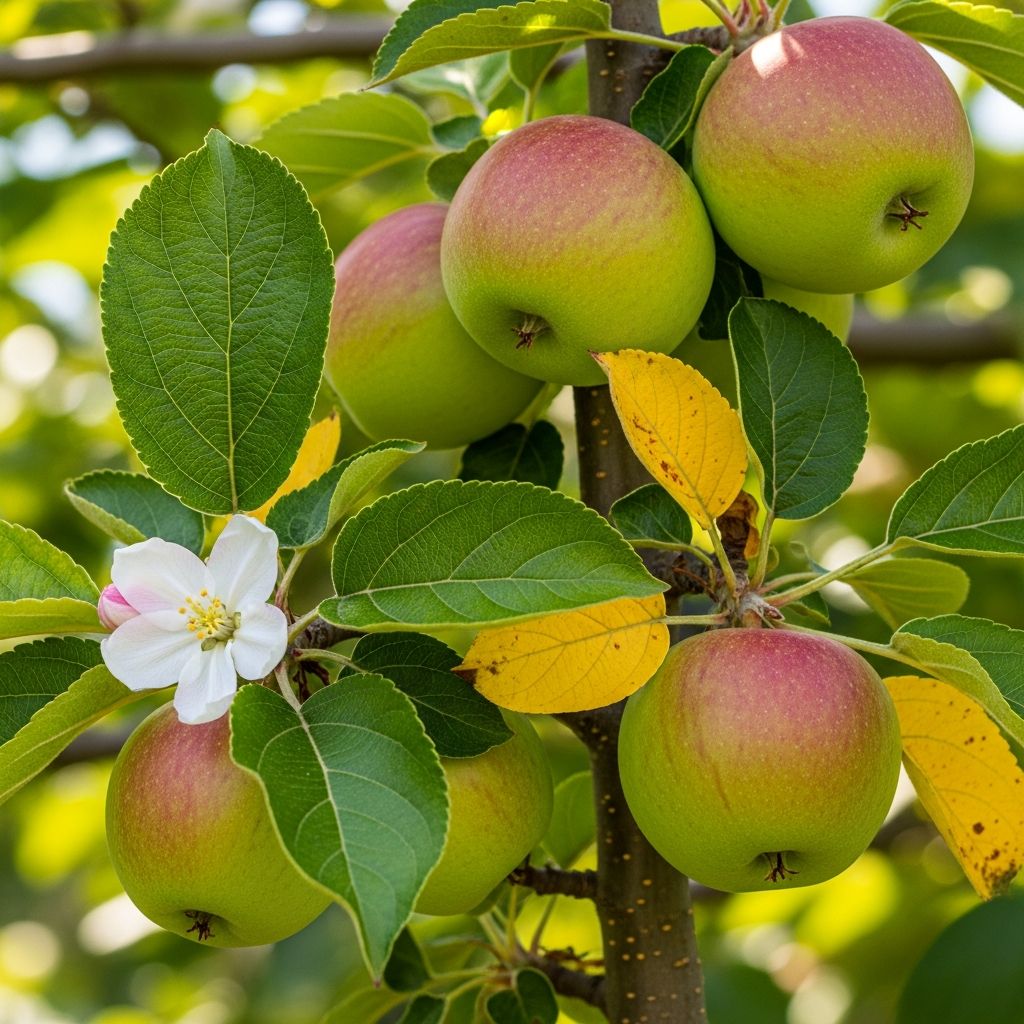
Guide to Identifying Apple Trees
Apple trees grace many landscapes, from commercial orchards to backyard gardens, but pinpointing their exact variety often proves challenging due to thousands of cultivars worldwide. This guide equips you with systematic methods to distinguish apple trees, drawing on observable traits, historical context, and modern science. Whether you’re managing an inherited property or nurturing a mystery sapling, these techniques will help you uncover your tree’s identity.
Understanding Apple Tree Basics
Apple trees (Malus domestica) belong to the Rosaceae family and hybridize easily, resulting in diverse forms. Cultivated varieties number over 7,500 globally, each with unique flavors, ripening schedules, and appearances. Wild seedlings differ from named cultivars, complicating identification without records. Start by assessing if your tree is a deliberate planting or volunteer growth, as this influences reliability of visual cues.
Key factors include geographic origin, climate adaptability, and propagation method. Grafted trees feature a distinct swell at the rootstock-scion union, while seedlings grow true to unpredictable genetics. Document everything with photos, notes on location, and seasonal changes for accurate analysis.
Observing Fruit Characteristics
The apple itself offers the most immediate clues. Examine color, shape, size, skin texture, and taste upon ripening.
- Color: Ranges from green (e.g., Granny Smith) to red (e.g., Honeycrisp) or yellow (e.g., Golden Delicious). Stripes, blushes, or uniform hues narrow options.
- Shape: Conical like SweeTango, squat like McIntosh, or round. Note the apex—crowned, flat, or russeted.
- Skin Features: Look for lenticels (dots), bloom (waxy coating that rubs off), or russeting (brown rough patches).
- Size and Taste: Small tart fruits suggest early ripeners; large sweet ones indicate mid-to-late season types.
Harvest timing is crucial: early apples ripen in late August (e.g., Zestar), while late ones like Haralson mature in October. Compare samples at local orchards or stores for matches.
Analyzing Leaves and Growth Habits
Beyond fruit, foliage and structure provide year-round insights. Apple leaves are oval, serrated, 2-6 inches long, with prominent veins. Variations in glossiness or hairiness hint at cultivars.
| Feature | Common Traits | Variety Examples |
|---|---|---|
| Leaf Shape | Elliptical, pointed tip | Most cultivars |
| Leaf Margin | Finely toothed | Honeycrisp (coarse) |
| Tree Form | Upright, spreading, weeping | Haralson (gnarled, old) |
| Bark | Gray, scaly ridges | Mature trees |
Tree age matters: young trees (under 10 years) likely represent modern varieties like Honeycrisp; ancient, wide-trunked specimens suggest heirlooms. Check for graft unions low on the trunk.
Tracking Bloom and Ripening Seasons
Phenology—timing of blooms and fruit drop—distinguishes varieties. Most apple trees flower in spring with white-pink blossoms. Note exact dates relative to local climate.
- Early bloomers: Risk frost but yield August fruit.
- Mid-season: September harvest.
- Late bloomers: October-November, hardier to cold.
Record first bloom, peak fruit maturity, and storage life. Cross-reference with regional databases for matches.
Leveraging Digital Tools and Databases
Online platforms streamline preliminary identification. Input fruit photos, descriptions, and location for probable matches.
- University of Minnesota varieties list: Details UMN releases like Haralson.
- Orange Pippin or FruitID: Interactive cultivar directories with images.
- MyFruitTree: Public database with reference panels.
Apps like PlantSnap or iNaturalist use AI for leaf/fruit scans, though accuracy varies for rare types. Combine with personal observations for best results.
Professional and Lab-Based Confirmation
For certainty, bypass visuals with DNA fingerprinting. Labs compare leaf samples against vast genotype libraries.
- UC-Davis: Fee-based service for precise cultivar matching.
- MyFruitTree: $50 ‘simple’ test using minimal leaf tissue; identifies against thousands of profiles, flags uniqueness.
Process: Collect 5-10 fresh leaves, dry or freeze, ship per instructions. Results confirm identity, parentage, or seedling status within weeks. Ideal for propagation or preservation.
Common Challenges in Identification
Misidentification arises from sports (mutations), cross-pollination, or environmental stress altering traits. Seedlings produce hybrids unlike parents. Heirloom trees lack labels, especially on old homesteads.
Solve by multi-method approach: visuals first, then databases, experts last. Consult extension services like Iowa State or UMN for free advice.
Preserving and Propagating Identified Trees
Once identified, graft scions onto rootstocks for clones. Nurseries like Raintree offer custom services. Heritage varieties enrich biodiversity; document for community databases.
Care tips: Prune annually, thin fruit, monitor pests. Known varieties guide fertilizer and harvest timing.
Frequently Asked Questions
Can I identify an apple tree without fruit?
Yes, use leaves, bark, tree shape, and bloom time, but accuracy drops without fruit. Wait for next season or test DNA.
How accurate is genetic testing for apples?
Highly accurate against reference panels; matches known cultivars or detects novelties. Costs $50-200.
What if my tree is a seedling?
Seedlings rarely match named varieties; visuals and DNA confirm wild status. Great for breeding experiments.
Are online databases reliable?
Useful for narrowing options but not definitive; pair with photos and local expertise.
How old can apple trees get?
Up to 100+ years; old trees often bear heirloom fruit worth identifying.
Advanced Techniques for Experts
Employ calipers for precise fruit measurements, microscopy for pollen, or CHOISEL software for 31 morphological criteria. Track multi-year data for consistency.
Collaborate with citizen science like MyFruitTree to contribute profiles, aiding conservation.
References
- How can I identify the apple tree variety in my backyard? — Iowa State University Yard and Garden Extension. 2023. https://yardandgarden.extension.iastate.edu/faq/how-can-i-identify-apple-tree-variety-my-backyard
- UMN Extension How to Identify Your Apple Tree — University of Minnesota Extension (YouTube). 2023. https://www.youtube.com/watch?v=1xFw1YmIu-E
- MyFruitTree — University of Washington (nonprofit lab). 2025. https://myfruittree.org/welcome
- What Kind of Apple Tree Do I Have? — Raintree Nursery. 2024. https://raintreenursery.com/blogs/pnw-edible-plant-blog/what-kind-of-apple-tree-do-i-have
- How To: Identify Apple and Pear Varieties — Orchard Notes. 2021-09-11. https://orchardnotes.com/2021/09/11/how-to-identify-apple-and-pear-varieties/
Similar Articles








Read full bio of Sneha Tete