Gas Fireplace Pilot Ignition: 7-Step Guide For Safe Lighting
Unlock safe, efficient warmth: Complete guide to lighting and maintaining your gas fireplace pilot light with expert safety tips.
Mastering Gas Fireplace Pilot Ignition: Your Complete Guide
Gas fireplaces offer convenient, efficient heating for modern homes, but successfully igniting the pilot light is crucial for reliable operation. This essential flame acts as a safety igniter for the main burner, ensuring controlled combustion. Understanding the process empowers homeowners to handle seasonal startups independently while prioritizing safety. Whether dealing with a standing pilot system or electronic ignition, proper technique prevents gas leaks and extends appliance life.
Essential Safety Measures Before Starting
Before approaching any gas appliance, confirm a well-ventilated space to disperse potential fumes. Never attempt ignition in confined areas without fresh air circulation. Inspect for visible damage like cracked logs or corroded components, which could indicate the need for professional service.
- Smell Test: Sniff for gas odors around the unit, floor, and nearby walls. A rotten egg scent signals a leak—evacuate immediately and call emergency services.
- Power Check: For electronic models, verify electrical supply if applicable, but unplug non-essential devices.
- Valve Position: Ensure the main gas shutoff is accessible and in the off position initially.
- Tools Ready: Have long matches, a fireplace lighter, or piezoceramic igniter button prepared.
These precautions align with manufacturer guidelines from leading HVAC experts, reducing accident risks significantly.
Identifying Your Fireplace Ignition System
Gas fireplaces vary by ignition type, affecting startup procedures. Standing pilot systems maintain a constant small flame, while electronic or millivolt versions light on demand for energy savings.
| Ignition Type | Characteristics | Best For |
|---|---|---|
| Standing Pilot | Always-on flame; manual lighting required seasonally | Frequent use; no electricity needed |
| Electronic Spark | Push-button igniter; pilot lights via spark | Convenience; battery or powered |
| Millivolt/Thermocouple | Self-generating power; remote-compatible | Energy efficiency; modern homes |
Locate your model’s control knob—often labeled OFF, PILOT, ON—and any spark button. Consult the owner’s manual for specifics, as valve orientations differ.
Step-by-Step Instructions for Pilot Lighting
Follow these universal steps, adapted for most systems. Always remove glass doors or screens for access, per safety standards.
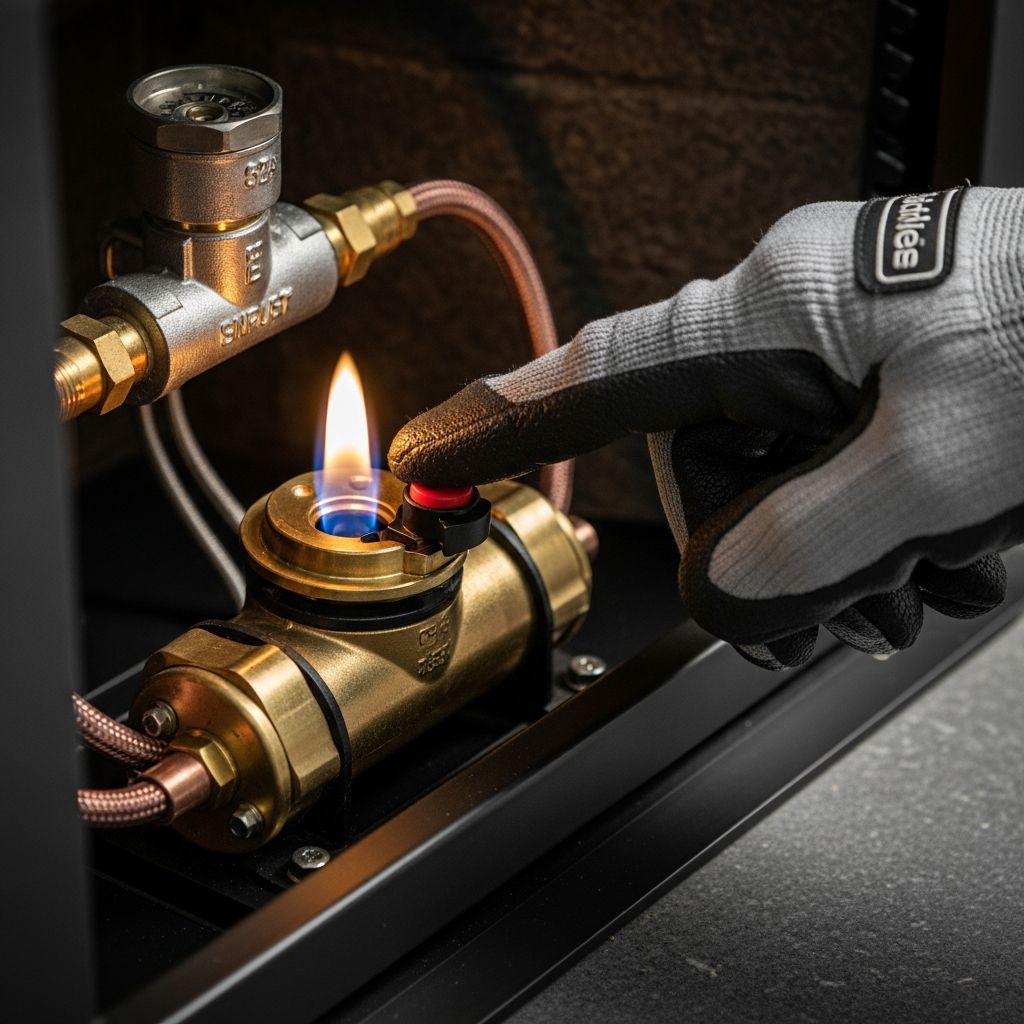
- Access the Controls: Crouch at the fireplace base and remove the lower access panel or louvered cover. Reveal the gas valve assembly, typically black or green with positional markings.
- Shut Off Gas: Rotate the control knob clockwise to OFF. Verify the inline gas valve (often behind logs) is perpendicular to the pipe.
- Depressurize Lines: Wait 5 full minutes for residual gas to clear, preventing flare-ups.
- Select Pilot Mode: Press and turn the knob counterclockwise to PILOT (usually 6 or 12 o’clock position). It depresses about 1/4 inch, releasing gas to the pilot burner.
- Ignite the Flame: While holding the knob in, activate the igniter: click the piezo button repeatedly near the pilot hood until a spark jumps, or apply a long match/lighter to the pilot opening. Expect a small blue flame.
- Hold for Thermocouple Activation: Maintain pressure for 30-60 seconds. This heats the thermocouple—a safety sensor that shuts off gas if the flame fails.
- Release and Test: Slowly release the knob; if the pilot stays lit, turn to ON. For burners, flip the wall switch or use the remote.
Visualize the pilot as two tiny tubes: one for gas, one for the sensor. Persistence with sparking yields success on the first or second try.
Troubleshooting Common Pilot Light Failures
Pilots extinguish prematurely due to drafts, dirt, or component wear. Diagnose systematically.
- No Ignition: Check gas supply; clean pilot orifice with a soft brush. Ensure spark gaps 1/8 inch.
- Pilot Won’t Stay Lit: Faulty thermocouple—replace if it doesn’t heat properly. Test by holding knob longer.
- Weak Flame: Clogged aerator; use compressed air sparingly. Verify proper gas pressure via pro inspection.
- Spark Absence: Battery replacement for electronic igniters; piezo button may need tapping.
If issues persist beyond basic cleaning, summon a certified technician to avoid voiding warranties or risking carbon monoxide buildup.
Seasonal Maintenance for Optimal Performance
Beyond lighting, routine care ensures efficiency. Annually, before first use:
- Vacuum ash and debris from the firebox.
- Inspect logs for cracks; reorder OEM replacements.
- Clean gold-plated parts with microfiber—no abrasives.
- Test remote batteries and wall switch functionality.
For vent-free models, confirm oxygen depletion sensor operation. Schedule pro servicing every 2-3 years, especially in dusty environments. Proper upkeep boosts fuel economy by 10-20% and minimizes emissions.
Advanced Features in Modern Gas Fireplaces
Today’s units integrate smart tech: app-controlled ignition, variable flame heights, and Wi-Fi thermostats. Millivolt systems generate electricity from the pilot flame, powering remotes indefinitely. Transitioning from manual pilots saves up to 30% on gas bills by lighting only when needed.
Remote setups require the pilot lit first, then ON position before remote activation. In power-outage scenarios, battery backups keep electronic pilots functional.
Understanding Gas Types and Fireplace Variations
Propane (LP) pilots burn hotter with yellow tips, needing different orifice sizes than natural gas. Conversion kits adjust for regional fuels. Vent-free fireplaces circulate heat directly, ideal for inserts, while vented models exhaust outdoors for larger flames.
| Feature | Natural Gas | Propane |
|---|---|---|
| Flame Color | Blue, steady | Blue-yellow, lively |
| BTU Output | Higher volume | Concentrated heat |
| Pilot Adjustment | Standard screw | Often pre-set |
Frequently Asked Questions (FAQs)
What if my pilot lights but goes out after releasing the knob?
This indicates a cold thermocouple. Hold for a full 60 seconds next time, or replace the part—a common $20 fix.
Can I light the pilot without the glass door on?
Yes, remove it for access, but reinstall immediately after for safety and efficiency.
How often should I relight the pilot?
Standing pilots: once per season. Electronic: as needed via switch/remote.
Is it safe to use a regular match?
Use long fireplace matches only; short ones risk burns. Lighters are preferable.
What causes sooting on logs?
Imbalanced air-gas mix; clean annually and ensure proper venting.
Environmental and Cost-Saving Benefits
Gas fireplaces emit fewer particulates than wood, aligning with clean air standards. Efficient pilots minimize waste, with modern units achieving 99% combustion efficiency. Pair with smart thermostats for zoned heating, slashing bills in large homes.
In summary, mastering pilot ignition blends simple mechanics with vigilant safety. Regular practice builds confidence, transforming your fireplace into a dependable heat source through winter.
References
- How To Light A Gas Fireplace [With Pictures] — SuperTech HVAC. 2023-05-15. https://www.supertechhvac.com/light-gas-fireplace/
- Lighting your Pilot Light — Bromwell’s. 2022-10-01. https://bromwellsfireplace.com/pilot/
- How To Light Pilot — Hearth and Home USA. 2024-01-12. https://hearthandhomeusa.com/how-to-light-pilot/
- How to light the pilot on a gas fireplace (abbreviated version) — YouTube. 2023-11-20. https://www.youtube.com/watch?v=_Cq19OAt_uk
- Pilot Lighting Instructions for Heat-N-Glo Gas Fireplaces — Sundance Energy Services. 2022-08-10. https://www.sundanceenergy.com/blog/2022/august/pilot-lighting-instructions-for-heat-n-glo-gas-f/
- How To Light A Vent Free Pilot — Maschino’s. 2023-09-05. https://maschinos.com/how-to-light-a-vf-pilot/
Similar Articles







Read full bio of Sneha Tete