Restoring Wicker: Paint Removal Guide And Expert Tips
Expert techniques to safely strip paint from wicker furniture and revive its natural beauty or prepare for a fresh finish.
Restoring Wicker: Paint Removal Guide
Wicker furniture offers timeless charm for patios, porches, and living spaces, but layers of old paint can hide its intricate weave and natural appeal. Removing paint requires careful techniques to avoid fraying or breaking the delicate strands, whether made from rattan, cane, or synthetic materials. This guide explores proven methods to strip paint effectively, clean and repair the surface, and decide on refinishing options for long-lasting beauty.
Understanding Wicker Materials and Paint Challenges
Wicker comes in natural fibers like rattan and cane, which are flexible but fragile when dry, or modern resin weaves built for durability. Paint buildup traps moisture, leading to rot or flaking, especially on outdoor pieces exposed to weather. Aggressive stripping can shred weaves, so prioritize gentle approaches that penetrate crevices without abrasion.
- Natural wicker: Absorbs chemicals easily but risks swelling or splintering.
- Synthetic wicker: Resists strippers better, ideal for harsh methods.
- Common paint issues: Thick layers in tight weaves demand tools that reach deep without force.
Assess your piece first: Test a hidden area for material reaction to any method. For antiques, consult professionals to preserve value.
Essential Tools and Supplies for Safe Stripping
Gather items suited for wicker’s texture to ensure precision and safety. Focus on non-abrasive tools that fit into weaves.
| Category | Items | Purpose |
|---|---|---|
| Cleaning Basics | Soft brushes, microfiber cloths, sugar soap, hot water | Remove dirt and loose paint without scratching |
| Stripping Tools | Toothbrushes, shortened paintbrushes, wooden dowels, nylon scrubbers | Scrub crevices and dislodge paint precisely |
| Chemicals | Citrus-based strippers, denatured alcohol, vinegar solutions | Soften paint safely for natural fibers |
| Protection | Gloves, goggles, drop cloths, ventilation fans | Prevent skin/eye irritation and mess |
| Finishing | Primers, exterior paints, waxes, oils | Seal and protect post-stripping |
These tools minimize damage; for example, a toothbrush excels at pushing into weaves where sponges fail.
Step-by-Step Paint Removal Techniques
Preparation: Cleaning Loose Debris
Start outdoors or in a ventilated space. Brush off dust and flaking paint with a stiff nylon brush—avoid wire brushes that gouge fibers. Wipe with hot, soapy water using sugar soap to dissolve grime. Rinse thoroughly and dry completely to prevent mold.
Method 1: Mechanical Brushing for Light Paint Layers
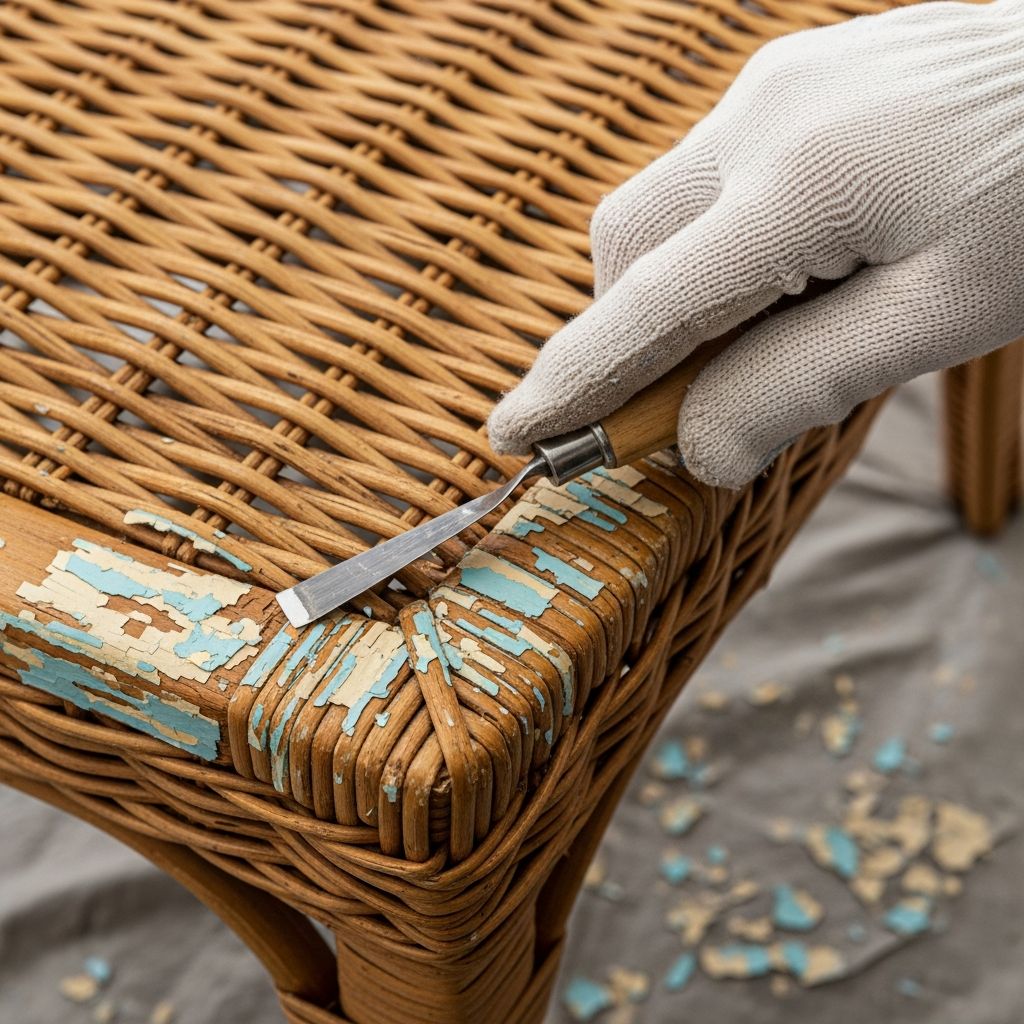
For thin or chipping paint, dry brushing works wonders. Use a toothbrush or cut-down paintbrush (bristles halved for stiffness) to agitate flakes. Dip lightly in warm water or alcohol, scrub in circular motions, and wipe residue. Repeat sections, building pressure gradually. This method suits shabby chic looks without full stripping.
Method 2: Chemical Strippers for Stubborn Coatings
Apply low-VOC, citrus strippers designed for furniture. Brush on thinly, wait 15-30 minutes for bubbling, then scrape gently with plastic tools. For wicker, follow with toothbrush scrubbing to clear crevices. Neutralize with water and soap; avoid methylene chloride products that weaken fibers. Test first—some finishes resist better than others.
Method 3: Natural Solvents for Eco-Friendly Stripping
Mix equal parts vinegar and hot water or use denatured alcohol for mild paint. Soak cloths, wrap sections, and let sit 1-2 hours. Scrub with soft brushes. This gentler option preserves weave integrity, ideal for indoor pieces or antiques.
Progress slowly: Work one section at a time, drying between applications to monitor results. Expect 2-4 hours for a chair.
Repairing Damage After Stripping
Stripping reveals broken strands or loose weaves. Trim frayed ends with scissors, then weave in matching cane or rattan splints using glue and pins. For seats, tighten by soaking in water, reshaping, and drying under tension. Fill gaps with wood filler sanded smooth. These repairs extend life significantly.
- Strengthen weak spots: Apply diluted wood glue, clamp lightly.
- Prevent future cracks: Mist with water monthly to maintain flexibility.
Refinishing Options: From Natural to Painted Finishes
Restoring Natural Beauty
After stripping, sand lightly with 220-grit paper. Apply teak or cane oil with a cloth, wiping excess. Multiple coats build protection. For shellac finishes, brush on diluted coats, buffing between. This highlights weaves authentically.
Painting Without Full Stripping
For quick updates, skip total removal. Clean thoroughly, prime with adhesion primers over varnish. Spray or brush exterior paints in thin layers. Innovative mixes like 50/50 chalk paint and clear wax, applied via toothbrush, lock in old flakes while adding color. Build shades gradually for distressed effects—turquoise base with green accents mimics aged patina.
Seal with wax or polyurethane for wear resistance, curing days before use.
Outdoor Protection Strategies
Weatherproof with UV-resistant paints or oils. Store under cover; refresh annually. Synthetic wicker needs less maintenance but benefits from soap washes.
Troubleshooting Common Issues
- Paint won’t budge: Layer heat gun on low with stripping—never direct flame on fibers.
- Weave damage: Stop, repair immediately to avoid spread.
- Uneven finish: Sand lightly between coats; mix paints consistently.
- Mold spots: Bleach dilute solution, rinse well.
Patience yields professional results; rush jobs lead to rework.
Frequently Asked Questions (FAQs)
What is the safest way to remove paint from antique wicker?
Use mechanical brushing with toothbrushes or natural solvents like vinegar to avoid chemical damage to delicate antiques.
Can I paint over old paint on wicker without stripping?
Yes, clean first, prime for adhesion, then apply wax-paint mixes for a durable, textured finish without full prep.
How do I protect outdoor wicker after refinishing?
Choose exterior-grade products, apply multiple sealant coats, and cover during harsh weather.
What if stripping damages the weave?
Repair with splints and glue; for severe cases, professional reweaving may be needed.
How long does restoration take?
2-6 hours for stripping a chair, plus drying; full projects span days with curing.
Pro Tips for Long-Lasting Wicker
Maintain by dusting weekly, washing seasonally. Avoid direct sun or rain. Rotate pieces for even wear. With care, restored wicker lasts decades.
References
- How to Rescue Shabby Wicker, a new paint formula — Stephie McCarthy, YouTube. 2020-04-09. https://www.youtube.com/watch?v=U1m6CIyUi-g
- How to strip, restore & paint antique cane wicker lounge — Bunnings Workshop Community. Accessed 2026. https://www.workshop.bunnings.com.au/t5/Outdoor/How-to-strip-restore-amp-paint-antique-cane-wicker-lounge-and/td-p/211665
- Can Rattan Furniture Be Stripped of Ugly Paint Jobs?? — Tiki Central Forum. Accessed 2026. https://tikicentral.com/viewtopic.php?topic_id=37236
Similar Articles



Read full bio of medha deb