Wiring Light Fixtures: Green-Yellow Ground Safety Guide
Master safe light fixture wiring using green-yellow ground wires to protect your home from electrical hazards and ensure code compliance.
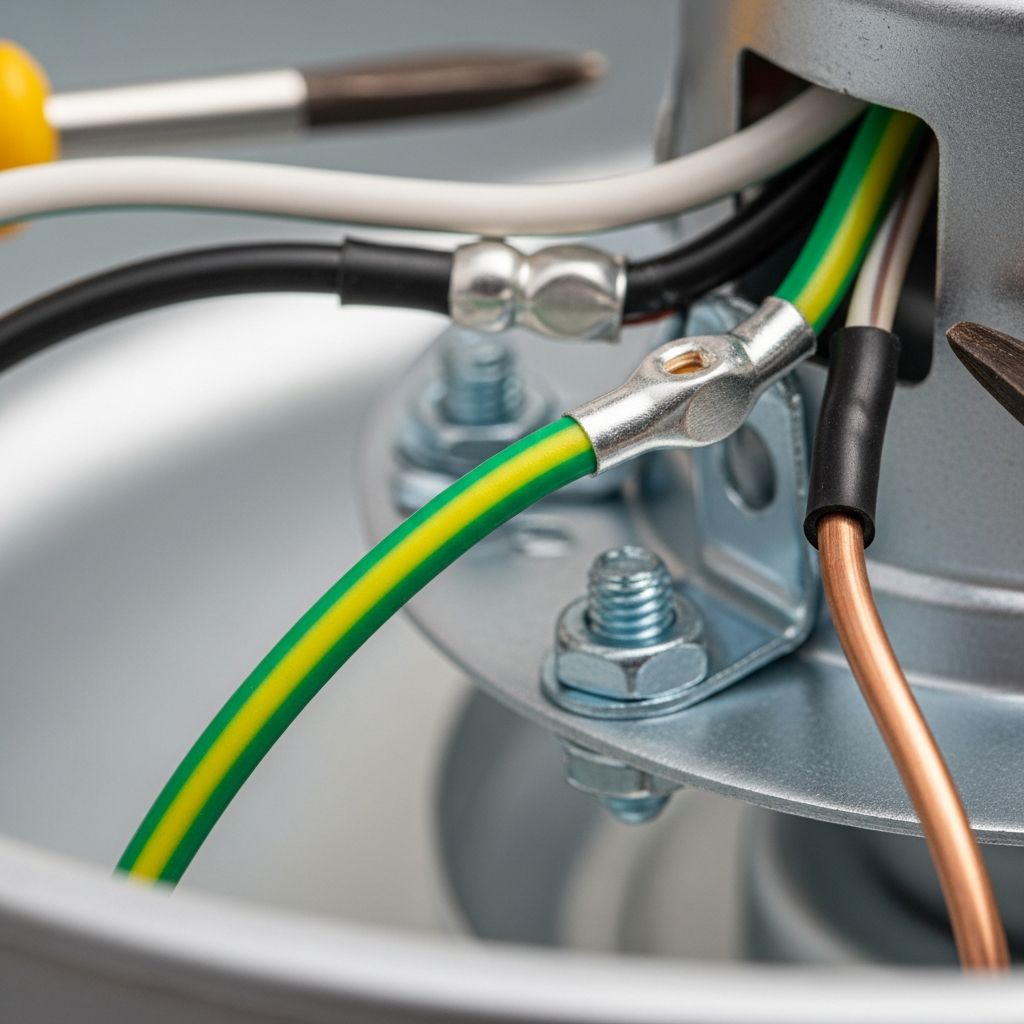
Installing a light fixture in your home requires careful attention to electrical safety, particularly when dealing with the green-yellow striped wire that serves as the equipment grounding conductor. This wire provides a critical path for fault current to safely dissipate, preventing shocks and fires. Understanding its role and proper connection methods ensures compliance with standards like the National Electrical Code (NEC) and protects occupants.
Understanding Grounding Wires in Modern Fixtures
The green-yellow wire, often seen in fixtures from international manufacturers or compliant with IEC standards, indicates the grounding conductor. Unlike the solid green wire common in U.S. setups, this bicolor stripe universally signals ‘protective earth’ to avoid confusion across regions. In residential settings, it connects to the bare copper or green ground in your house wiring, creating a low-resistance path to the grounding electrode system.
Proper grounding minimizes risks during faults, such as when a hot wire contacts the fixture’s metal housing. Without it, voltage could energize accessible parts, leading to electrocution. The NEC mandates grounding for all non-current-carrying metal parts in Article 250, emphasizing its role in fault protection.
Essential Tools and Materials for Safe Installation
Gather these items before starting to streamline the process and uphold safety:
- Non-contact voltage tester for verifying de-energized circuits.
- Insulated screwdrivers and wire strippers to prevent accidental contact.
- Wire nuts, electrical tape, and cable clamps for secure connections.
- Ladder or stable platform for overhead work.
- Replacement wire nuts sized for 12-14 AWG wires common in lighting circuits.
Opt for UL-listed components to meet safety certifications. Insulated tools reduce shock risk, as recommended for all residential wiring tasks.
Pre-Installation Safety Protocols
Safety begins with power isolation. Locate your circuit breaker panel and switch off the relevant breaker. Verify absence of voltage at the fixture box using a non-contact tester—test on a known live circuit first to confirm functionality. This step prevents energized work, a leading cause of injuries.
Inspect the existing box for damage, loose connections, or aluminum wiring, which requires special handling. Ensure the box is securely mounted and rated for the fixture’s weight. If replacing an old fixture, note previous wiring colors: black or red for hot, white for neutral, bare/green for ground.
Step-by-Step Wiring Process
Follow this sequence for reliable results:
- Remove Old Fixture: Disconnect wires by unscrewing wire nuts, then detach mounting hardware. Support the fixture to avoid strain on wires.
- Prepare New Fixture Wires: Strip 3/4 inch of insulation from the fixture’s black (hot), white (neutral), and green-yellow (ground) wires using precision strippers.
- Connect Ground First: Twist the green-yellow wire from the fixture with the bare copper or green house ground wire. Secure with a yellow wire nut and wrap with electrical tape for reinforcement. This priority ensures grounding before energizing.
- Match Hot and Neutral: Join fixture black to house black/red (hot) and white to white (neutral) using appropriately sized wire nuts. Tug gently to test security.
- Mount Fixture: Feed wires into the box, attach the mounting bracket, and secure the fixture canopy. Install bulbs and cover.
- Final Test: Restore power and use the tester again, then flip the switch. Inspect for heat or flicker.
This method aligns with NEC requirements for secure, insulated connections inside junction boxes.
Handling Variations in Wire Colors and Configurations
Fixtures may have different configurations:
| Scenario | House Wire | Fixture Wire | Action |
|---|---|---|---|
| Standard U.S. | Bare copper ground | Green-yellow | Splice directly with wire nut |
| Switch Loop | Black to white (marked) | Black hot | Identify with tester; ground unchanged |
| Multiple Grounds | Bare + green-yellow | Green-yellow | Pig-tail all to box ground screw |
| Dimmer Compatible | Red traveler | Extra black | Cap unused; ground as usual |
Always use a multimeter for ambiguous circuits. Never cap grounds— they must connect to the system.
Compliance with Electrical Codes and Standards
The NEC (NFPA 70) governs U.S. installations, mandating grounding per Article 250 and enclosure of splices in boxes. Local amendments may require permits for fixture swaps. Junction boxes must have covers, and all connections insulated. Non-compliance risks inspection failure or insurance denial.
For green-yellow wires, treat as equivalent to green per NEC 250.119, allowing interchangeability. International fixtures often follow IEC 60446, using green-yellow exclusively for earth.
Common Mistakes and Prevention Strategies
Avoid these pitfalls:
- Reversing Polarity: Causes fixtures to remain hot when off; use tester to confirm.
- Loose Connections: Leads to arcing; twist wires fully before nutting.
- Ignoring Box Fill: NEC limits conductors; derate if exceeded.
- Exposed Splices: Fire hazard; always enclose.
- Overloading Circuits: Lighting on 15A circuits max; check loads.
Regular inspections reveal wear, like frayed insulation.
Troubleshooting Post-Installation Problems
If the light fails:
- No power: Recheck breaker and connections.
- Flickering: Tighten setscrews or replace bulbs.
- Shock on touch: Verify ground continuity with multimeter (near 0 ohms to panel ground).
- Overheating: Inspect for nicks or wrong sizing.
Persistent issues warrant a licensed electrician.
Advanced Tips for Multi-Fixture and Smart Installations
For daisy-chained lights, pig-tail connections preserve continuity. Smart fixtures with low-voltage transformers require separating controls from line voltage. Use GFCI protection in damp locations per NEC 210.8. Whole-home inspections every 10 years catch aging wiring.
Frequently Asked Questions (FAQs)
What if my house lacks a ground wire?
Use GFCI or consult an electrician for upgrades; never bypass.
Can I use green-yellow as neutral?
No—it’s solely for grounding; misusing violates codes.
Is a permit needed for light fixture replacement?
Often not for like-for-like, but check local rules.
How often should I inspect wiring?
Annually visually; professionally every 3-5 years.
What’s the difference between green and green-yellow?
Functional none in NEC; color varies by standard.
Long-Term Maintenance for Electrical Safety
Beyond installation, test GFCIs monthly, replace worn fixtures, and avoid daisy-chaining power strips. Educate household on not overloading circuits. These habits extend system life and prevent hazards.
References
- 9 Essential Tips for Ensuring Safe Residential Electrical Wiring — Alpha Omega Electric. 2023. https://alphaomegaelectric.org/blog/10-tips-for-safe-residential-electrical-wiring/
- A Guide to Residential Wiring Standards and Best Practices — San Joaquin Valley College. 2024. https://www.sjvc.edu/blog/residential-electrical-wiring-standards-best-practices-guide/
- Personal and Home Electrical Safety Tips — PSEG Long Island. 2025. https://www.psegliny.com/safetyandreliability/safetytips/personalandhomesafety
- Residential Electrical Installation Guide for Homeowners — Cassidy Electric. 2024. https://cassadyelectric.com/what-homeowners-need-to-know-about-residential-electrical-installation/
- CPSC Guide to Home Wiring Hazards — U.S. Consumer Product Safety Commission. 2000-01-01. https://www.cpsc.gov/s3fs-public/518.pdf
- Personal and Home Electrical Safety Tips — PSE&G New Jersey. 2025. https://nj.pseg.com/safetyandreliability/safetytips/homesafety
- Home Wiring Safety Tips — Electrical Safety Foundation International. 2024. https://www.esfi.org/home-wiring-safety-tips/
Similar Articles






Read full bio of Sneha Tete