Installing Gypsum Ceiling Boards: Complete DIY Guide
Master the art of ceiling board installation with professional techniques and practical tips
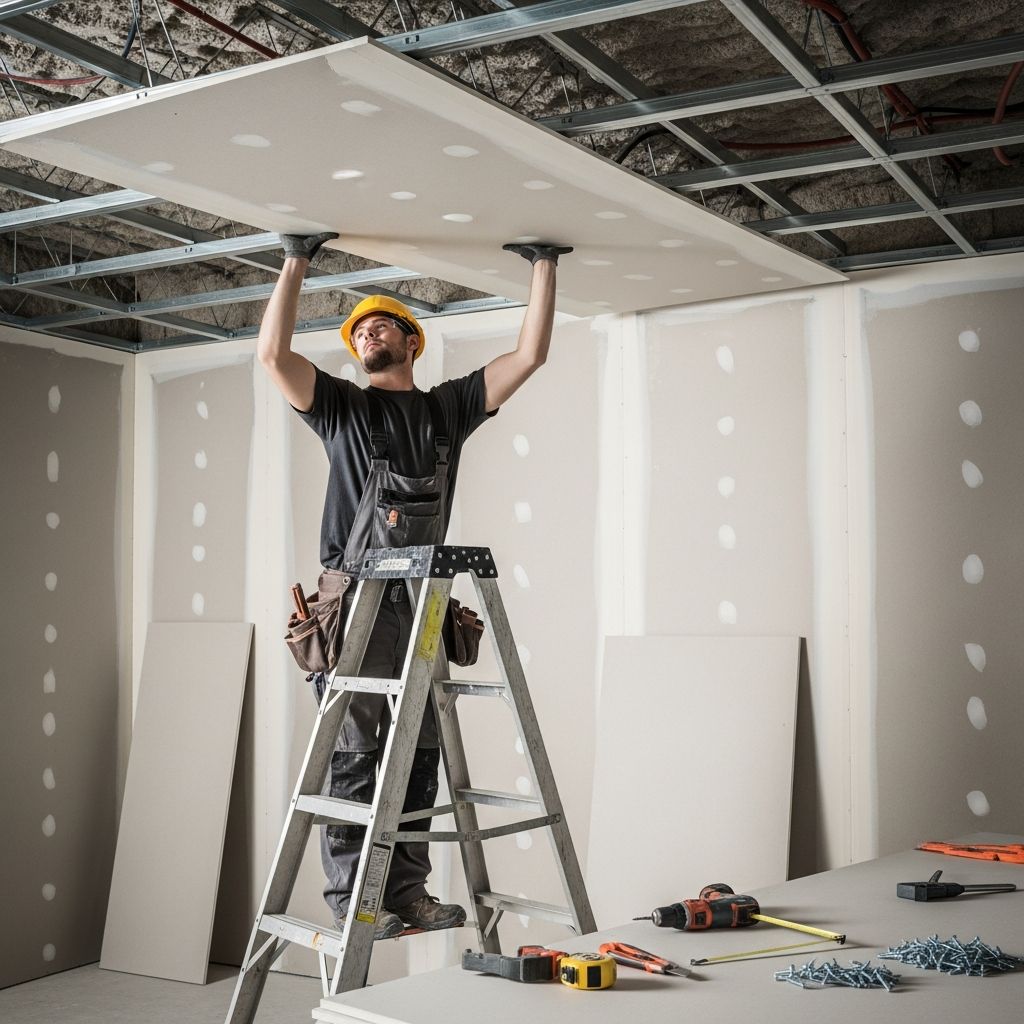
Installing Gypsum Ceiling Boards: A Comprehensive Installation Guide
Gypsum ceiling boards, commonly known as drywall or gypsum board, are essential materials in modern construction and renovation projects. Installing these boards on ceilings presents unique challenges compared to wall installations, requiring careful planning, appropriate tools, and precise execution. This guide provides homeowners and contractors with detailed instructions on successfully completing a ceiling board installation project from start to finish.
Understanding Gypsum Board Fundamentals
Gypsum board consists of a gypsum core sandwiched between two layers of paper, creating a lightweight yet durable material ideal for interior wall and ceiling construction. The material comes in various thicknesses, with common sizes being 1/2-inch and 5/8-inch for most residential applications. When installing on ceilings, thickness selection depends on the spacing of your joists—boards must be adequately supported to prevent sagging and ensure long-term structural integrity.
Understanding the composition and properties of gypsum board helps you appreciate why proper installation techniques matter. The material is fire-resistant, provides sound dampening properties, and offers a smooth surface ready for finishing. However, improper installation can compromise these benefits and lead to visible defects such as sagging, nail pops, and joint separation.
Essential Tools and Materials for Ceiling Installation
Before beginning your installation project, gather all necessary tools and materials to ensure smooth workflow and professional results:
- Gypsum board panels in appropriate thickness
- Drywall screws (1.25-inch for single-layer applications)
- Power drill with screwdriver bit
- T-square and straightedge for accurate cutting
- Utility knife or drywall knife for scoring and cutting
- Measuring tape and pencil for marking
- Drywall lift or support equipment
- Sawhorses or work tables
- Safety equipment including glasses and dust masks
- Joint compound and drywall tape for finishing
- Sandpaper and sanding blocks
Having properly functioning tools prevents frustration and ensures accurate cuts and fastening. Drywall lifts, in particular, are invaluable for ceiling work, as they safely hold panels at ceiling height while you secure them, reducing strain and improving accuracy.
Pre-Installation Planning and Assessment
Successful installation begins long before fastening the first screw. Thoroughly inspect the ceiling structure, including joists and any existing framing. Check for moisture damage, uneven surfaces, or structural issues that may require attention before proceeding. Measure the joist spacing carefully—this dimension directly influences which board thickness you should use.
Create a sketch of your ceiling layout, marking the location of all openings such as light fixtures, vents, and HVAC components. This planning stage prevents costly mistakes and helps you calculate the exact quantity of boards needed. Consider the board orientation; horizontal installation typically works best for ceilings, as it provides better support and creates fewer seams that require finishing.
Prepare your work area by removing furniture, laying drop cloths to protect floors and fixtures, and ensuring adequate ventilation. Gypsum dust can accumulate during cutting operations, so establishing a clean workspace improves both safety and efficiency.
Measuring, Marking, and Cutting Techniques
Accurate measurements are fundamental to successful installation. Measure from the floor to the ceiling at multiple points, as many older homes have uneven ceilings. Mark these measurements on your boards with a pencil, clearly indicating cut lines and openings for fixtures.
When cutting gypsum board, use a T-square or straightedge to guide your utility knife. Score the board’s face paper completely through with firm, even pressure, then snap the board along the cut line. Once snapped, fold the board back slightly and cut through the back paper layer, then smooth any rough edges. This scoring-and-snapping technique produces cleaner cuts than attempting to saw through the entire board.
For openings such as electrical receptacles and switch boxes, carefully measure their locations from both the edge and end of the board, transferring these measurements directly to the face paper. Use a keyhole saw or drywall saw to cut these openings, ensuring precision so that electrical cover plates later conceal the holes completely.
Fastening and Installation Methods
Two primary fastening methods exist for securing gypsum board: screws and nails. Modern building practices favor drywall screws because they provide superior holding power and minimize the occurrence of nail pops—a common issue where nails gradually push through the surface over time.
When using screws, space them 12 to 16 inches apart along framing members, always penetrating fully into the joist or stud. Use a variable-speed power drill with a screwdriver bit, setting the speed appropriately to avoid stripping the screw head or over-driving the fastener. The screw head should create a slight dimple in the board—not puncture the paper or sink excessively deep.
If using nails instead, space them approximately 8 inches apart around the perimeter and along intermediate joists. Dimple all nails to create a slight indentation that will later be covered with joint compound. Press the board firmly against the ceiling before driving fasteners, ensuring tight contact with the framing throughout the board’s surface.
For ceiling installations specifically, maintaining proper support is critical. If your ceiling height exceeds standard 8-foot clearance, take extra precautions to ensure panels remain firmly pressed against joists during installation. Some installers apply a thin bead of gypsum board adhesive to joists before installing the board, providing additional holding power and reducing fastener requirements.
Managing Board Placement and Alignment
Begin installation in a corner and work systematically across the ceiling, ensuring each panel sits at a right angle to the ceiling joists. This orientation distributes weight effectively and simplifies finishing work. Push each board firmly against the ceiling before fastening, maintaining consistent contact with framing members.
As you install successive boards, ensure edges touch without overlapping, creating tight joints that will be easier to finish later. Avoid covering joints with subsequent boards—this practice creates unnecessary bulk and complicates the finishing process. If boards must be cut lengthwise, plan cuts to fall over joists rather than spanning between them.
When covering extensive ceiling areas, maintain consistency by starting each row with boards of the same width. This symmetrical approach improves aesthetics and reduces the number of irregular cuts required. Plan your layout so that cut edges, if necessary, fall in less visible areas such as closets or corners behind fixtures.
Joint Preparation and Finishing Foundation
After securing all boards, the ceiling’s quality depends significantly on proper joint treatment. The tapered edges of adjacent boards create recesses specifically designed for joint compound application. Use all-purpose joint compound, applying a thin bedding coat into these recesses.
Center a strip of drywall tape over each joint and press it firmly into the wet bedding compound using a putty knife held at approximately a 45-degree angle. Apply enough pressure to squeeze compound out slightly from the tape edges, ensuring the tape adheres properly and lies flat. Allow this initial coat to dry completely before applying additional coats, as moisture trapped beneath dry layers can cause problems later.
For ceiling corners, crease tape down the center and apply compound approximately 1.5 inches on both sides of the corner using a specialized 5-inch knife. Press the tape firmly into the corner with adequate pressure to create a solid bond. This foundational work determines the final appearance of your finished ceiling.
Addressing Common Installation Issues
Even with careful installation, problems can arise. Nail pops occur when fasteners gradually push through the board surface, typically caused by structural movement or inadequate dimpling. Address nail pops by driving new fasteners approximately 1 to 2 inches above and below the problematic nail, then dimpling all fasteners while pushing the board close to the stud.
Cracks in gypsum board require careful repair to prevent recurrence. Sand the area approximately 6 inches on each side of the crack, then work all-purpose joint compound deep into the crack itself. Center drywall tape over the crack and press down firmly using a 5-inch knife, covering the tape with compound and feathering the edges well beyond the tape.
Sagging ceilings indicate inadequate support or improper board thickness for the joist spacing. If sagging occurs, support may be added using adjustable posts or specialized framing, though severe sagging may require complete removal and reinstallation with appropriate materials.
Finishing and Surface Preparation
Once joints are taped and compound has dried, subsequent coats extend further beyond the tape on each application, gradually feathering the compound so the final surface is smooth and level with the undamaged board. Typically, three coats are necessary—the initial bedding coat, a second coat extending approximately 10 inches beyond the tape, and a final finish coat extending even further with fine blending.
Sand all joints and fastener dimples after compound dries completely. Sand gently to avoid tearing the paper face, working in smooth, circular motions with appropriate grit sandpaper. Vacuum or sweep dust between coats to prevent it from being trapped in subsequent compound applications.
New gypsum board should not be painted or primed immediately after installation. Allow adequate curing time—typically several days—before applying any finish. When ready, apply primer to seal the joint compound and raw gypsum, then finish with appropriate paint or other surface treatment.
Professional Guidance and Quality Assurance
While many homeowners successfully complete gypsum board installations, professional contractors bring experience and specialized equipment that ensures superior results. If your project involves complex ceiling layouts, multiple levels, or unusual dimensions, consulting professionals prevents costly mistakes and ensures the installation meets building codes and structural requirements.
Quality assurance involves inspecting the installation from multiple angles once lighting is turned on. Surface irregularities, poor joint finishing, and fastener visibility become apparent under direct lighting. Taking time to identify and correct these issues before final finishing produces a professional-grade result suitable for any interior space.
Frequently Asked Questions
What thickness of gypsum board should I use for ceiling installation?
Standard 1/2-inch gypsum board works well for joists spaced 16 inches on center, while 5/8-inch board is recommended for joists spaced 24 inches apart. For specialized applications requiring fire resistance, 5/8-inch fire-rated board provides enhanced protection.
How much do gypsum boards cost?
Pricing varies based on thickness, type, and quantity purchased. Standard 1/2-inch sheets typically cost between $10-$20 per sheet, with fire-rated options commanding premium prices. Bulk purchases often qualify for discounts.
Can I install gypsum board on an uneven ceiling?
Minor ceiling unevenness can be accommodated through careful measurement and proper fastening techniques. Severely uneven ceilings may require shimming or using adjustable fastening systems designed for irregular surfaces.
How long does gypsum board installation take?
Installation speed depends on ceiling size, complexity, and installer experience. A typical bedroom ceiling might take 4-8 hours for an experienced installer, while larger or more complex areas require proportionally more time.
Do I need adhesive in addition to screws?
Adhesive is optional but recommended for overhead applications, as it provides additional holding power and reduces fastener quantity requirements. When using adhesive, allow it to cure fully before removing any temporary supports.
References
- Step-by-Step Guide to Installing Drywall — National Gypsum Company. 2024. https://www.nationalgypsum.com/ngconnects/blog/building-knowledge/step-by-step-guide-to-installing-drywall
- ToughRock Span 24 Ceiling Board Installation Instructions — BuildSite. 2013. https://www.buildsite.com/pdf/gpgypsum/ToughRock-Span-24-Ceiling-Board-Installation-Instructions-2013991.pdf
- The Ultimate Guide to Installing Gypsum Board: A Step-by-Step Approach — Drywall Repair Utah. 2024. https://drywallrepairutah.com/the-ultimate-guide-to-installing-gypsum-board-a-step-by-step-approach/
- CGC Sheetrock® Brand Installation and Finishing Guide — USG Corporation. 2024. https://www.usg.com/content/dam/USG/pdpmovedocuments/cgc-sheetrock-gypsum-panels-installation-guide-en-J371.pdf
- Installation Guide for Walls, Ceilings, and Laminated Applications — Lowe’s. 2024. https://pdf.lowes.com/productdocuments/f03a5c50-b350-44d0-8b4b-a4b05deab054/62260142.pdf
Similar Articles




Read full bio of Sneha Tete