Half-Lap Joints: Complete Guide to Woodworking
Master half-lap joints with our step-by-step guide for strong, reliable connections.
Half-Lap Joints: A Comprehensive Guide to Woodworking Joinery
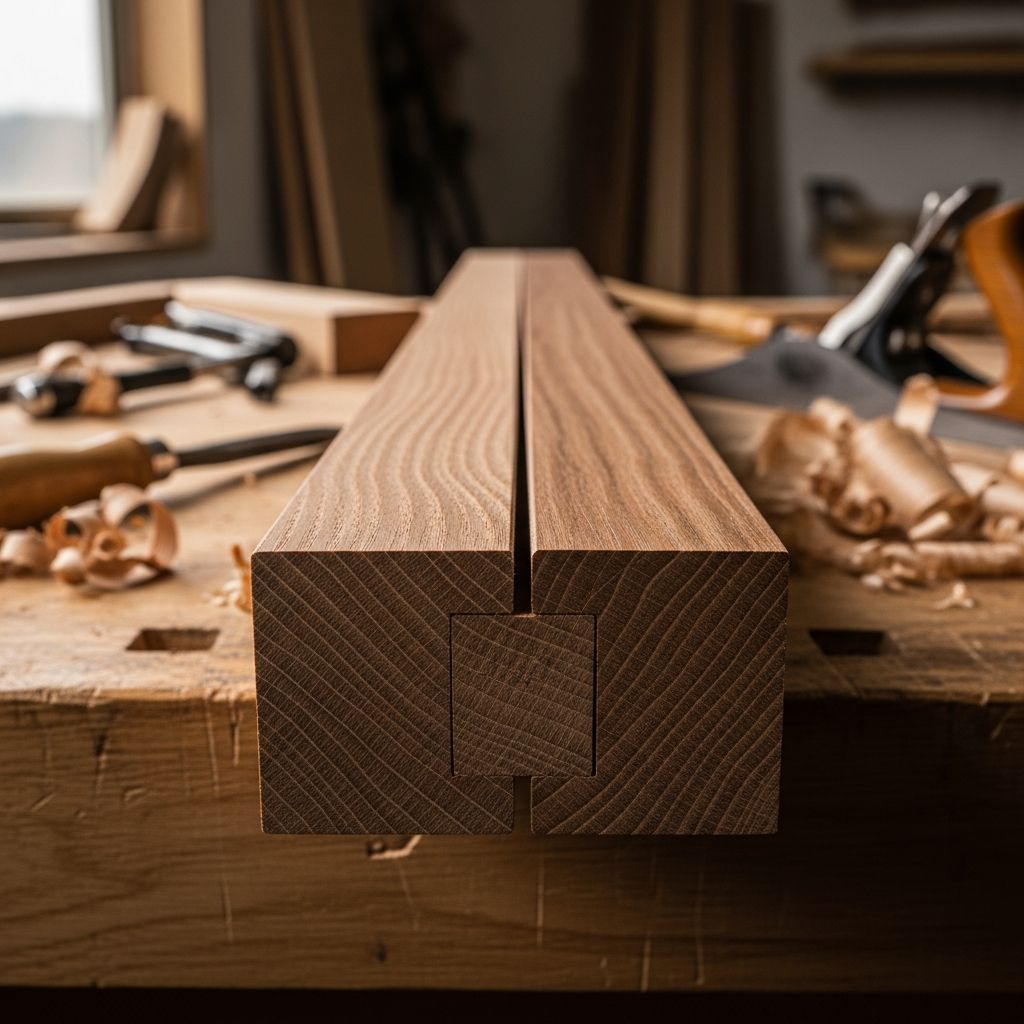
Half-lap joints represent one of the most fundamental and versatile connections in woodworking, offering both strength and visual appeal when executed properly. These joints involve two pieces of wood, each cut away by half their thickness, allowing them to interlock while remaining flush on at least one surface. Whether you’re building furniture, frames, or structural components, mastering half-lap joints will significantly enhance your woodworking capabilities.
Understanding Half-Lap Joint Basics
A half-lap joint is created when two wooden pieces are cut so that each piece is reduced in thickness by exactly half, allowing them to overlap and create a flush surface. The joint derives its strength from the increased gluing surface area and the mechanical interlocking of the two pieces. When constructed correctly, half-lap joints can support considerable loads, making them suitable for applications ranging from decorative boxes to load-bearing framework.
The fundamental advantage of half-lap joints lies in their simplicity and strength-to-weight ratio. Unlike some complex joinery techniques, half-lap joints require basic tools and can be mastered with practice. They also provide excellent aesthetic qualities, as the joint is typically visible and can enhance the design of a piece.
Types of Half-Lap Joints
Half-lap joints come in several variations, each suited to different applications and woodworking scenarios:
End Half-Lap Joints
End half-lap joints occur when two pieces meet at their ends at a 90-degree angle. This configuration is commonly used in frame construction and is one of the most straightforward types to cut. The joint relies on the overlapping surfaces for gluing strength and mechanical support.
Middle Half-Lap Joints
Middle half-lap joints are cut along the length of the wood rather than at the ends. These joints are ideal when you need to join two pieces at points other than their terminations, making them perfect for grid patterns, lattice work, and structural frameworks.
Cross Half-Lap Joints
Cross half-lap joints form an X-pattern when two pieces intersect at their midpoints. This configuration is particularly useful in decorative applications and grid-based designs. The symmetrical nature of cross half-lap joints makes them visually striking and structurally sound when properly constructed.
T Half-Lap Joints
T half-lap joints connect one piece perpendicular to another at a point along its length. These joints are commonly found in furniture construction and framework applications where perpendicular connections are necessary.
Essential Tools and Materials
Successful half-lap joint construction requires specific tools and materials. A quality saw is essential—whether you use a hand saw, table saw, or miter saw depends on your workshop setup and personal preference. For marking, you’ll need a sharp pencil, a combination square, and a marking gauge to ensure accurate measurements and precise cuts.
Chisels are indispensable for removing waste material between saw cuts. A set ranging from ½ inch to 1 inch widths provides versatility for various joint sizes. A mallet helps drive chisels efficiently without hand fatigue. For assembly, you’ll need quality wood glue, clamps to hold pieces during setting, and sandpaper for finishing surfaces and removing rough edges.
Measuring and Marking Half-Lap Joints
Precision in measurement and marking directly determines joint quality. Begin by determining the exact width and thickness of your wood pieces. Since half-lap joints require cutting exactly half the thickness, accurately measuring this dimension is crucial.
Mark the joint location clearly on both pieces using a sharp pencil and combination square. Use a marking gauge set to exactly half the wood thickness to create parallel lines indicating the depth of your cuts. When marking, ensure your lines are dark enough to see clearly during cutting but light enough to sand away after assembly if needed.
For precise layouts, consider creating a template or story stick—a piece of scrap wood marked with your exact measurements. This approach minimizes errors when marking multiple joints and ensures consistency throughout your project.
Step-by-Step Cutting Instructions
Step 1: Set Up Your Work Station
Secure your wood piece firmly in a vise or clamp to prevent movement during cutting. Ensure adequate lighting so you can see your marked lines clearly throughout the cutting process.
Step 2: Make the Initial Cuts
Using your saw, cut along the marked lines at the edges of the joint area. These cuts should be perpendicular to the wood surface and precisely follow your marks. A table saw with a stop block allows repeatable, consistent cuts for multiple joints.
Step 3: Remove Waste Material
After making the perimeter cuts, use a chisel to remove the waste wood between them. Start at one edge and work systematically across the joint area. Strike the chisel with controlled mallet blows rather than heavy impacts to maintain control and prevent wood splitting.
Step 4: Fine-Tune the Fit
Test the fit frequently as you chisel away material. The joint should slide together smoothly without forcing, yet have no gaps once fully seated. A slightly tight fit is preferable to one that’s too loose, as wood naturally swells and contracts with moisture changes.
Dry Assembly and Testing
Before applying glue, always perform a dry assembly test. This step reveals any fitting problems and allows you to verify that all joints align properly. Dry assembly also helps you plan your clamping strategy and identify any areas requiring additional chisel work.
Test each joint individually, then assemble your complete project dry. Make sure everything squares up properly and all components align as intended. This practice prevents surprises when glue is applied and time pressure increases.
Gluing and Clamping Strategies
Apply wood glue sparingly to both mating surfaces of your half-lap joint. Excess glue can be problematic—it creates squeeze-out that complicates cleanup and can weaken joints if not removed properly. A thin, even glue line is stronger than a thick one.
Position clamps carefully to apply even pressure across the entire joint without distorting the wood. Diagonal clamps often work best for angled applications, while straight clamps suit parallel surfaces. Monitor glue squeeze-out and remove excess immediately with a damp cloth.
Allow sufficient curing time before removing clamps—typically 24 hours for standard wood glues, though slower-setting varieties may require longer. Check manufacturer recommendations for your specific adhesive.
Reinforcement Options
While properly constructed half-lap joints need no reinforcement for most applications, certain situations warrant additional support. Dowel pins, when carefully positioned, can increase joint strength by preventing shear forces. However, dowels must be drilled after glue has cured to avoid weakening the joint—premature drilling can create stress concentrations that compromise integrity.
Wooden splines offer another reinforcement option, fitting into grooves cut into joint mating surfaces. Splines add mechanical strength and visual interest. Metal reinforcement plates or brackets provide robust support for structural applications, though they alter the aesthetic character of the joint.
Finishing and Surface Preparation
After glue has fully cured and clamps are removed, sand the joint area flush with surrounding surfaces. Start with medium-grit sandpaper and progress to finer grits for a smooth finish. Pay special attention to areas where wood was chiseled, as these often benefit from extra sanding.
Apply your chosen finish—stain, paint, or polyurethane—following standard finishing practices. Half-lap joints, when visible, become design elements, so finishing quality significantly impacts the final appearance.
Common Mistakes to Avoid
Cutting too deeply into the wood represents a frequent error that compromises joint strength. Double-check depth measurements before cutting, and test cuts on scrap wood first. Uneven cuts create gaps and reduce gluing surface area, weakening the joint substantially.
Insufficient clamping pressure allows joints to shift during glue curing, resulting in misalignment. Conversely, excessive clamping force can crush wood fibers and create permanent deformation. Apply moderate, even pressure across the entire joint.
Neglecting dry assembly testing leads to avoidable problems. Always test-fit before gluing, as this small extra step prevents major corrections after glue application.
Applications and Projects
Half-lap joints suit diverse woodworking applications. Picture frames benefit from the clean lines and strength these joints provide. Shelving units utilize half-lap joints for durable shelf connections. Decorative boxes and storage containers showcase half-lap joints as attractive design features. Structural frameworks for large projects rely on half-lap joints for their proven strength and dependability.
Frequently Asked Questions
Q: How deep should I cut when making a half-lap joint?
A: Cut exactly half the thickness of your wood. Measure your wood thickness, divide by two, and use a marking gauge to mark this depth on your wood pieces before sawing.
Q: Can I use nails or screws to reinforce half-lap joints?
A: While mechanical fasteners can add strength, quality glue lines are usually sufficient for half-lap joints. Fasteners should supplement, not replace, proper gluing practices.
Q: What’s the best wood glue for half-lap joints?
A: Standard yellow wood glue (polyvinyl acetate) works well for most applications. For moisture-resistant applications, consider epoxy or polyurethane-based glues.
Q: How long should I clamp half-lap joints?
A: Most wood glues require 24 hours of clamping for full strength development. Always follow your specific glue manufacturer’s recommendations.
Q: What tools are absolutely necessary for cutting half-lap joints?
A: A saw, sharp chisel, mallet, marking gauge, and combination square are essential. A miter saw or table saw improves accuracy for multiple joints.
References
- Woodworking Joints: Traditional Techniques and Modern Applications — The Furniture Makers Association. 2023-06-15. https://www.furnituremakers.org.uk/
- Wood Adhesives: Selection and Application — Forest Products Laboratory, U.S. Department of Agriculture. 2022-03-20. https://www.fpl.fs.usda.gov/
- Hand Tool Safety and Technique in Woodworking — Occupational Safety and Health Administration. 2023-01-10. https://www.osha.gov/
- Joint Strength Testing and Standards — American Society for Testing and Materials (ASTM International). 2024-02-28. https://www.astm.org/
- Traditional Joinery in Furniture Construction — Society of American Period Furniture Makers. 2023-09-12. https://www.sapfm.org/
Similar Articles








Read full bio of medha deb