Honda Lawnmower Oil Changes: Essential Step-By-Step Guide
Step-by-step instructions to maintain your Honda lawnmower engine with proper oil changes for peak performance and longevity.
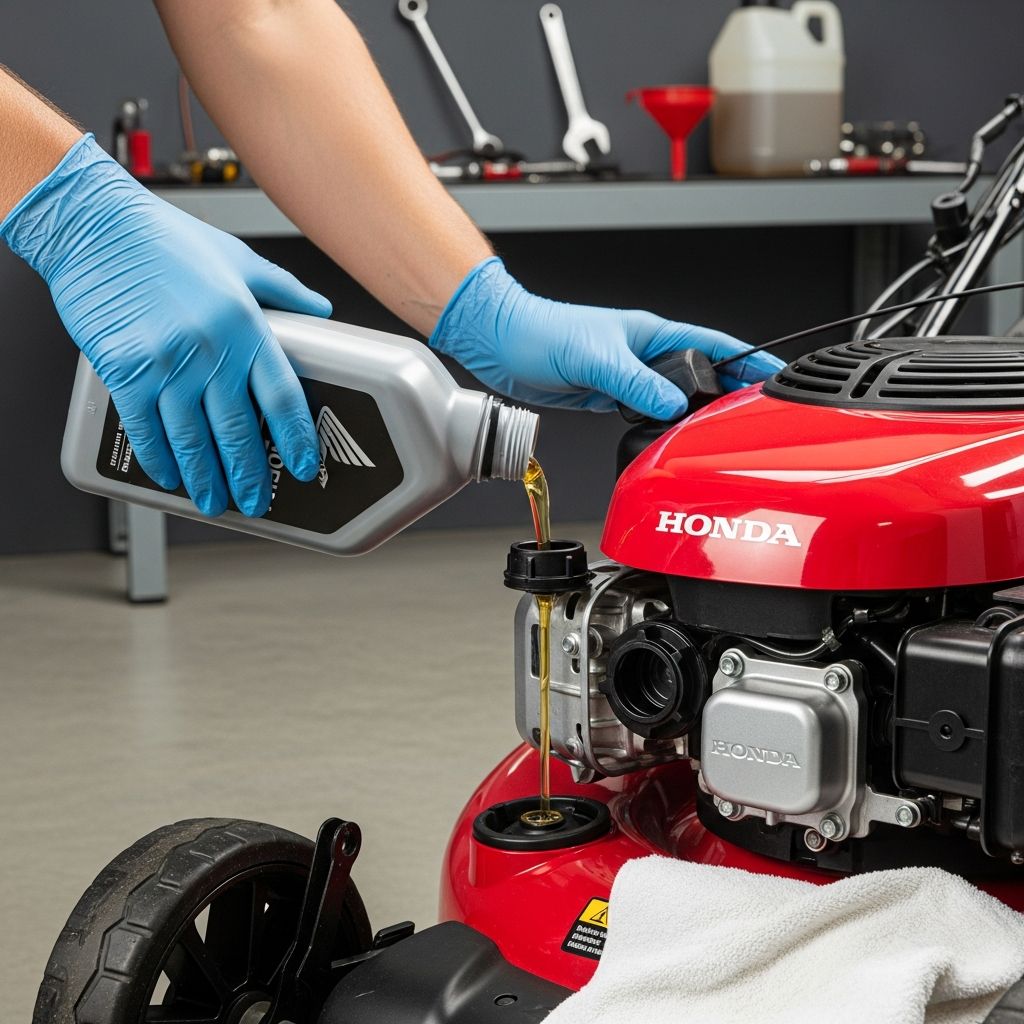
Mastering Honda Lawnmower Oil Changes
Regular oil changes are vital for keeping Honda lawnmower engines operating efficiently and extending their service life. Honda engines, such as the popular GCV series, rely on clean, high-quality oil to lubricate moving parts, reduce friction, and prevent overheating during demanding yard work.
Understanding Engine Oil Fundamentals
Engine oil in small engines like those in Honda lawnmowers serves multiple critical roles. It lubricates components to minimize wear, dissipates heat from combustion, and suspends contaminants to keep internals clean. Over time, oil degrades due to heat, dirt, and combustion byproducts, losing viscosity and protective qualities.
Honda recommends SAE 10W-30 four-stroke automotive detergent oil for most conditions, as specified in official manuals. This viscosity grade ensures proper flow in typical outdoor temperatures, providing robust protection without excessive thickness. For colder climates below 32°F, switching to SAE 5W-30 can improve cold starts, though 10W-30 suits general use across seasons.
Oil capacity varies slightly by model; GCV160 and GCV200 engines typically hold 12.0 to 13.5 ounces (0.35 to 0.40 liters). Always consult your owner’s manual for exact specifications, as overfilling can lead to foaming and pressure issues, while underfilling risks engine damage.
Gathering Essential Tools and Supplies
Performing an oil change requires minimal equipment, making it accessible for homeowners. Key items include:
- SAE 10W-30 oil (at least 14 ounces to account for spillage)
- Drain pan or shallow tray to collect used oil
- Funnel for clean filling
- Gloves and rags or paper towels for cleanup
- Owner’s manual for model-specific details
Optional but helpful: cardboard or newspapers to protect work surfaces from drips. No specialized tools like vacuum pumps are necessary; tilting the mower suffices for thorough drainage.
| Item | Purpose | Tips |
|---|---|---|
| Drain Pan | Catch old oil | Use a low-profile one to fit under mower |
| 10W-30 Oil | Replacement lubricant | Buy from auto parts stores; avoid cheap synthetics unless specified |
| Funnel | Prevent spills during refill | Long-neck style works best for dipstick tube |
| Gloves | Hand protection | Nitrile for oil resistance |
Optimal Timing for Oil Maintenance
Honda advises changing oil after the first 5 hours or month of use for break-in, then every 50 hours or 6 months thereafter. Under heavy loads, high temperatures, or dusty conditions, shorten intervals to every 25 hours. Annual changes suit light residential use, ideally in spring before peak mowing season or fall post-season.
Warm oil drains more completely, expelling more contaminants. Run the engine for 5 minutes beforehand, but allow it to cool slightly to avoid burns.
Preparation Steps for a Safe Oil Change
Work on a level surface in a well-ventilated area, away from flames due to fuel vapors. Park the mower on cardboard to catch drips.
- Run engine 3-5 minutes to warm oil.
- Turn off engine and disconnect spark plug wire to prevent accidental starts.
- Close fuel valve (turn perpendicular to hose) to avoid spills when tilting.
- Allow 2-3 minutes for residual heat to dissipate.
Cleaning the air filter during this process enhances overall maintenance; remove and inspect for debris.
Detailed Oil Drainage Procedure
Locate the oil fill/dipstick tube on the engine side. Newer GCV models feature taller tubes for easier access without full inversion.
- Position drain pan under the fill tube end.
- Remove dipstick and tilt mower toward carburetor side (check manual for direction) at about 45 degrees until oil flows freely.
- Drain until flow slows (3-5 minutes); gently rock to dislodge trapped oil.
- Wipe tube clean and reinstall dipstick loosely.
Expect 10-12 ounces of used oil; warm oil yields more complete drainage than cold. Dispose of used oil responsibly at auto parts stores or recycling centers, as it’s hazardous waste.
Refilling with Fresh Oil
Right the mower on level ground. Insert funnel into fill tube.
- Pour oil slowly, starting with 10 ounces.
- Wait 1-2 minutes for settling, then check level: insert dipstick fully without threading, withdraw, and read against crosshatch marks.
- Add in small increments (1 ounce at a time) until oil reaches upper mark; do not exceed.
- Reinstall dipstick securely.
Final capacity: 12-13.5 oz. Recheck after running engine briefly and cooling, as levels can shift.
Post-Change Verification and Startup
Reconnect spark plug, open fuel valve, and start engine. Idle for 1-2 minutes, monitoring for leaks or unusual noises. Shut off, wait 5 minutes, and recheck oil level—adjust if needed.
Inspect surroundings for spills and clean up. Log the service date and hours for tracking.
Advanced Tips for Long-Term Engine Health
- Filter Integration: Pair oil changes with air filter cleaning/replacement every 50 hours.
- Seasonal Adjustments: Use fresh oil before storage; run engine dry if winterizing.
- Troubleshooting Low Drainage: If only 8 oz drains, oil was cold—warm next time for better results.
- Synthetic Options: High-mileage synthetics offer extended protection but verify compatibility.
Consistent maintenance prevents issues like sludge buildup or bearing failure, potentially saving hundreds in repairs.
Frequently Asked Questions
What type of oil does a Honda lawnmower use?
SAE 10W-30 four-stroke detergent oil is standard; check manual for capacity and alternatives like 5W-30 in cold weather.
How often should I change the oil?
First change at 5 hours, then every 50 hours or 6 months; more frequently under heavy use.
Can I use car oil in my mower?
Yes, conventional 10W-30 automotive oil works fine; avoid two-stroke or motorcycle oils.
What if I overfill the oil?
Drain excess immediately to prevent foaming, smoking, or seal damage.
Do I need to tilt the mower every time?
Yes for thorough drainage without tools; newer models minimize mess.
Common Mistakes to Avoid
Skipping warm-up leads to incomplete drainage. Threading the dipstick when checking skews readings. Ignoring fuel shutoff risks gas leaks. Always verify levels on flat ground post-refill.
References
- OWNER’S MANUAL – Honda — Honda Power Equipment. 2023. https://cdn.powerequipment.honda.com/pe/pdf/manuals/00X31VH7A030.pdf
- How To Do An Oil Change On Most HONDA Lawn Mower Models — YouTube (megalodon1). 2015-06-21. https://www.youtube.com/watch?v=qk1PsuHJ0qs
- How to Change Oil in a Honda Lawn Mower — YouTube (GrowitBuildit). N/A. https://www.youtube.com/watch?v=vBf8IDHg1UA
- Honda HRX217 Lawn Mower Oil Change – GCV200 (Step-by-Step) — YouTube (averagejoevideo). 2023-09-10. https://www.youtube.com/watch?v=dGfF5BuSUA0
- How To Change the Oil on a Honda Lawnmower – Easy Step by Step — YouTube. N/A. https://www.youtube.com/watch?v=AKEugV5K13s
Similar Articles



Read full bio of medha deb