How Ductless Air Conditioners Work: Complete Guide
Complete guide to understanding ductless AC systems, their components, and energy-efficient cooling benefits.
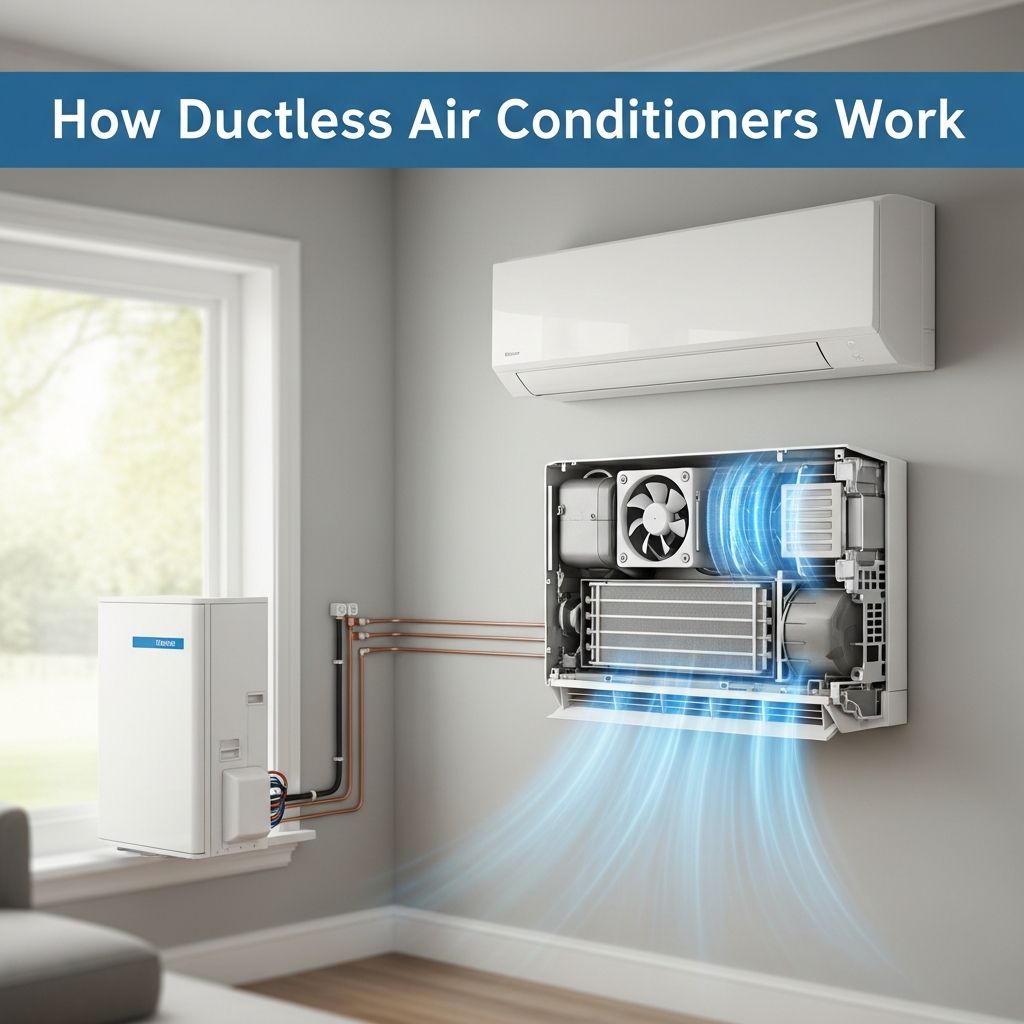
How Ductless Air Conditioners Work: A Complete Guide
Ductless air conditioning systems, commonly known as mini-split systems, have revolutionized the way homeowners approach cooling and heating their homes. Unlike traditional central air conditioning systems that rely on extensive ductwork to distribute cooled air throughout the house, ductless systems operate independently without any ducts. This innovative approach offers homeowners a flexible, energy-efficient, and cost-effective solution for maintaining comfortable indoor temperatures year-round. Whether you’re looking to cool a single room or manage multiple zones in your home, understanding how ductless air conditioners work can help you make an informed decision about your home’s climate control needs.
Understanding Ductless Air Conditioning Systems
A ductless air conditioner is fundamentally a simplified version of a traditional split air conditioning system. The key difference lies in the system’s design and installation approach. In a standard central air conditioning setup, a large indoor unit is typically housed in an attic or closet, connected to numerous ducts that distribute cooled air throughout the home. With ductless systems, the indoor unit is installed directly in the room that needs cooling, eliminating the need for extensive ductwork entirely.
This streamlined design makes ductless air conditioners increasingly popular among homeowners seeking modern HVAC solutions. The systems are particularly advantageous for homes without existing ductwork, room additions, or spaces where installing traditional ducts would be impractical or expensive.
Key Components of a Ductless AC System
Every ductless air conditioning system comprises several essential components that work together seamlessly to provide efficient cooling and heating. Understanding these components helps you appreciate the technology and makes troubleshooting easier if issues arise.
The Outdoor Unit
The outdoor unit serves as the power center of your ductless system. It houses two critical components: the compressor and the condenser. The compressor is responsible for circulating refrigerant throughout the system, creating the pressure differences necessary for heat exchange. The condenser, located in the outdoor unit, releases the heat that has been extracted from your home to the outside environment. This unit handles all the heavy lifting in terms of the refrigeration cycle, converting refrigerant between liquid and gas states as needed.
The Indoor Unit
The indoor air handler is the component you interact with most directly. Located in the room being cooled, this unit contains the evaporator coil, where the actual heat absorption takes place. The indoor unit pulls warm air from your room and passes it over the cold evaporator coils, allowing the refrigerant to absorb heat and humidity from the air. Once the air has been cooled, a fan blows it back into the room, creating your desired comfortable temperature.
Refrigerant Lines
Connecting the indoor and outdoor units are small refrigerant lines and electrical cables. These lines carry the refrigerant between the two units and are significantly smaller than traditional ductwork, requiring only small holes through walls for installation. This minimal invasiveness is one of the major advantages of ductless systems compared to traditional air conditioning installation.
The Role of Refrigerant in Cooling and Heating
Refrigerant is the lifeblood of your ductless air conditioning system. This special fluid circulates continuously between the indoor and outdoor units, absorbing heat in one location and releasing it in another. Understanding how refrigerant works provides insight into why ductless systems are so efficient.
The refrigerant begins as a liquid in the indoor evaporator coil. As warm air from your home passes over this coil, the refrigerant absorbs the heat energy and transforms into a low-pressure gas. This gas travels through the refrigerant lines to the outdoor unit, where the compressor pressurizes it. As the refrigerant becomes pressurized, it heats up further and enters the outdoor condenser coil. In the condenser, the refrigerant releases all the absorbed heat to the outside environment and condenses back into a liquid state. The liquid then returns to the indoor unit through the refrigerant lines, and the cycle begins anew.
For heating mode, the system reverses this process using a component called the reversing valve, which changes the direction of refrigerant flow. This allows the same system to provide both cooling in summer and heating in winter.
How the Cooling Process Works
The cooling cycle of a ductless air conditioner is a elegant dance of thermodynamics and mechanical engineering. Here’s a step-by-step breakdown of how your system keeps your home comfortable:
Heat Absorption
The process begins when the indoor unit pulls warm air from your room. This air is directed over the evaporator coil containing cold refrigerant. As the warm air encounters the frigid coil surface, heat energy transfers from the air to the refrigerant. Simultaneously, moisture in the air condenses on the coil surface, reducing humidity levels in your room. This dual action of cooling and dehumidification creates that refreshing feeling of air-conditioned comfort.
Heat Transport
Once the refrigerant has absorbed heat and transformed into a gas, it travels to the outdoor unit through the refrigerant lines. The compressor in the outdoor unit pressurizes this gas, which causes it to become even hotter. This pressurized hot gas then enters the condenser coil in the outdoor unit.
Heat Rejection
In the outdoor condenser coil, the hot refrigerant gas meets cooling fins and a fan that circulates outside air across the coil. This action causes the refrigerant to cool down and condense back into a liquid. The heat that was extracted from your home is released into the outside air, and the liquid refrigerant returns to the indoor unit to repeat the cycle.
Air Distribution
As the cooled air leaves the evaporator coil, a fan in the indoor unit blows it back into your room. This gentle circulation of cool air throughout the space maintains your desired temperature. Because the unit is located directly in the room being cooled, there’s no loss of cold air through ducts, making the system highly efficient.
Ductless Heating Systems
Many ductless systems are heat pump systems, meaning they can provide both cooling and heating. During winter months, the reversing valve changes the direction of refrigerant flow, essentially running the cycle in reverse. Now the outdoor unit becomes the evaporator, extracting heat energy from the outside air even in cold conditions, while the indoor unit becomes the condenser, releasing that heat into your home. This capability makes ductless systems excellent year-round climate control solutions.
Advantages of Ductless Air Conditioning
Superior Energy Efficiency
One of the most significant advantages of ductless systems is their energy efficiency. Traditional central air conditioning systems lose considerable amounts of cooled air through ductwork leaks. The Environmental Protection Agency estimates that in a typical home, about 20 to 30 percent of air moving through duct systems is lost due to leaks, holes, and poorly connected ducts. Ductless systems eliminate this waste entirely. Additionally, ENERGY STAR-certified ductless air conditioners use up to 60 percent less energy than standard AC units, resulting in substantial savings on your energy bills.
Individual Zone Control
Ductless systems allow you to customize the temperature in each room or zone independently. Unlike central air conditioning that cools your entire home to one temperature, ductless systems let you set different temperatures in different areas. This means you’re not wasting energy cooling unused rooms or spaces, and family members can enjoy their preferred comfort levels in their respective spaces.
Simplified Installation
Installing a ductless system is significantly less invasive than traditional air conditioning installation. Rather than cutting into walls and ceilings to run extensive ductwork, installation typically requires only small holes for refrigerant and electrical lines. This minimal disruption to your home’s structure makes ductless systems ideal for older homes, room additions, or situations where duct installation would be prohibitively expensive.
Quiet Operation
Ductless air conditioners operate much more quietly than traditional HVAC systems. Because there are no ducts to vibrate and rattle, and the compressor is located outside, indoor noise levels are significantly reduced. This creates a more peaceful home environment compared to the whooshing sounds of central air conditioning systems.
Flexibility and Aesthetics
Modern ductless indoor units come in various styles and can be mounted on walls, ceilings, or even installed in floor stands. Many units feature sleek, contemporary designs that complement modern home décor rather than looking like industrial equipment. This aesthetic flexibility makes ductless systems attractive to homeowners who value both functionality and appearance.
Comparison: Ductless vs. Central Air Conditioning
| Feature | Ductless System | Central Air Conditioning |
|---|---|---|
| Installation | Minimal invasiveness, small wall holes required | Extensive ductwork installation, major disruption |
| Energy Efficiency | Up to 60% more efficient, no duct losses | 20-30% air loss through ducts |
| Zone Control | Individual room temperature control | Whole-home temperature only |
| Operating Noise | Quiet operation | Louder due to ductwork vibration |
| Initial Cost | Moderate to high per zone | High for whole home |
| Flexibility | Can add units to specific areas | Covers entire home or requires major modifications |
Frequently Asked Questions
Q: How many indoor units do I need for my home?
A: The number of indoor units depends on the size of your home, the areas you want to cool, and your climate control preferences. You can install a single unit for one room or multiple units for different zones. Each unit can typically cool 300-500 square feet effectively.
Q: Can ductless systems heat my home?
A: Yes, most ductless systems are heat pumps capable of both heating and cooling. The reversing valve allows the system to extract heat from outside air even in cold weather and transfer it indoors, making them effective heating solutions.
Q: How often should I maintain my ductless system?
A: Regular maintenance includes cleaning or replacing filters monthly during use, cleaning the outdoor unit, and having a professional inspect the system annually. Proper maintenance ensures optimal efficiency and extends system lifespan.
Q: Are ductless air conditioners expensive to install?
A: While installation costs vary based on location and system complexity, ductless systems often cost less to install than central air conditioning because they require minimal structural modifications. Over time, energy savings often offset the initial investment.
Q: Can I install a ductless system in an older home?
A: Absolutely. Ductless systems are ideal for older homes without existing ductwork. The minimal installation requirements mean no need for costly duct additions or structural modifications.
Q: How does a ductless system save money?
A: Ductless systems save money through energy efficiency (up to 60% less energy use), zone control (cooling only occupied spaces), and reduced maintenance needs. Many homeowners see payback on their investment within 5-8 years through energy savings alone.
References
- How Does a Ductless AC Work: Thorough Guide for Beginners — Bob’s Repair. https://bobsrepair.com/how-does-a-ductless-ac-work/
- How Do Ductless (Mini-Split) Air Conditioners Work — Cool Today. https://www.cooltoday.com/blog/how-do-ductless-mini-split-air-conditioners-work
- What is Ductless AC & How Does It Work? – Pros & Cons — Hurley and David. https://www.hurleyanddavid.com/blog/what-is-ductless-ac-how-does-it-work/
- Energy Savings and HVAC System Performance — U.S. Environmental Protection Agency. https://www.energystar.gov/
Similar Articles



Read full bio of medha deb