How to Build an Entertainment Center: Complete Guide
Create the perfect entertainment hub with our step-by-step guide to building a custom entertainment center.
How to Build an Entertainment Center: A Complete Guide
An entertainment center serves as the focal point of any living room, providing both functional storage and an attractive display for your television and media devices. Whether you’re looking to create a sleek modern media hub or a traditional built-in solution, building a custom entertainment center allows you to maximize your space and reflect your personal style. This comprehensive guide will walk you through every step of the process, from initial planning to final installation.
Assessing Your Space and Needs
Before you begin any construction or purchasing materials, take time to thoroughly evaluate your space and determine what your entertainment center needs to accomplish. Start by measuring your wall space carefully, noting the dimensions from floor to ceiling and wall to wall. Pay special attention to any architectural features such as windows, doors, outlets, or built-in shelving that might affect your design.
Consider the placement of your television and determine the ideal viewing height and distance from your seating area. Most experts recommend positioning your TV at eye level when seated, typically 42 to 48 inches from the floor to the center of the screen. Additionally, think about what other components you’ll need to accommodate, such as cable boxes, gaming consoles, sound systems, streaming devices, and blu-ray players.
Storage Requirements
Evaluate your storage needs carefully. Consider what items you want to display openly on shelves versus what you’d prefer to keep hidden in cabinets or drawers. Think about storing DVDs, books, decorative items, remote controls, cables, and gaming equipment. Having sufficient storage space will help keep your entertainment area organized and free from clutter.
Choosing a Design Style
Your entertainment center should complement the overall aesthetic of your living room and home. Consider the various design styles available and select one that resonates with your personal taste and existing décor.
Popular Design Styles
Minimalist: Clean lines, minimal ornamentation, and open spaces characterize this modern approach. Minimalist entertainment centers typically feature neutral colors, simple materials, and plenty of negative space.
Industrial: This style incorporates elements like exposed metal, raw wood, and concrete. Industrial entertainment centers often feature metal frames, open shelving, and materials with a weathered or unfinished appearance.
Mid-Century Modern: Combining vintage and contemporary elements, mid-century modern designs feature tapered legs, geometric shapes, and a mix of wood and metal materials.
Traditional: Built-in cabinetry with detailed trim, crown molding, and decorative elements define traditional entertainment centers. This style often incorporates wood tones and more formal design elements.
Material Selection
Choose materials that align with your design style and budget. Solid wood offers durability and warmth, while engineered wood and plywood provide cost-effective alternatives. Metal accents can add an industrial touch, and glass shelving creates a modern, airy feel. Consider the maintenance requirements and longevity of each material option.
Planning Your Layout and Storage
Creating a detailed layout is crucial for a successful entertainment center build. Sketch out your design on paper or use design software to visualize how different elements will work together in your space.
Layout Considerations
Determine the optimal placement of your TV, whether it will be mounted on the wall or placed on a stand. Decide where to incorporate open shelving, closed cabinets, and drawers. Open shelves work well for displaying decorative items and frequently accessed media, while closed storage is ideal for concealing cables, equipment, and items you don’t want visible.
Consider the height of different storage elements. Typically, a base cabinet ranges from 12 to 18 inches tall, while upper shelving or wall-mounted cabinets can extend much higher. Balance storage heights to create visual interest and accommodate both large and small items.
Adding Visual Interest
Incorporate design features that make your entertainment center visually compelling. Built-in fireplaces add warmth and ambiance, while textured accent walls behind the TV create depth. Floating shelves offer a contemporary look, and decorative molding can enhance traditional designs.
Incorporating Multimedia and Technology
Modern entertainment centers must accommodate various technological components and provide excellent cable management. Planning for technology integration during the design phase ensures a clean, professional appearance.
Cable Management
Proper cable management is essential for maintaining a clean aesthetic. Plan for cable runs that hide wires behind the TV, through wall studs, or within the structure of your entertainment center. Include designated spaces or channels for routing cables from your TV to receivers, speakers, and other components. Consider installing power outlets and data ports within or behind your entertainment center for easy access without visible cords.
Speaker and Sound System Integration
If you’re incorporating speakers or a surround sound system, plan mounting locations for speakers on shelves, walls, or integrated into the entertainment center structure. Ensure adequate spacing for sound distribution and consider how to hide wires running to rear or side speakers.
Equipment Accommodation
Verify that your design provides adequate space and ventilation for all components. Ensure cable boxes, receivers, and other electronics have sufficient clearance for heat dissipation and easy access for maintenance. Plan for proper cable connections and power supply locations to support all your devices.
Building the Entertainment Center
Once you’ve completed your planning, it’s time to begin construction. Whether you’re building from scratch or using semi-custom components, follow these steps for a successful project.
Foundation and Base Construction
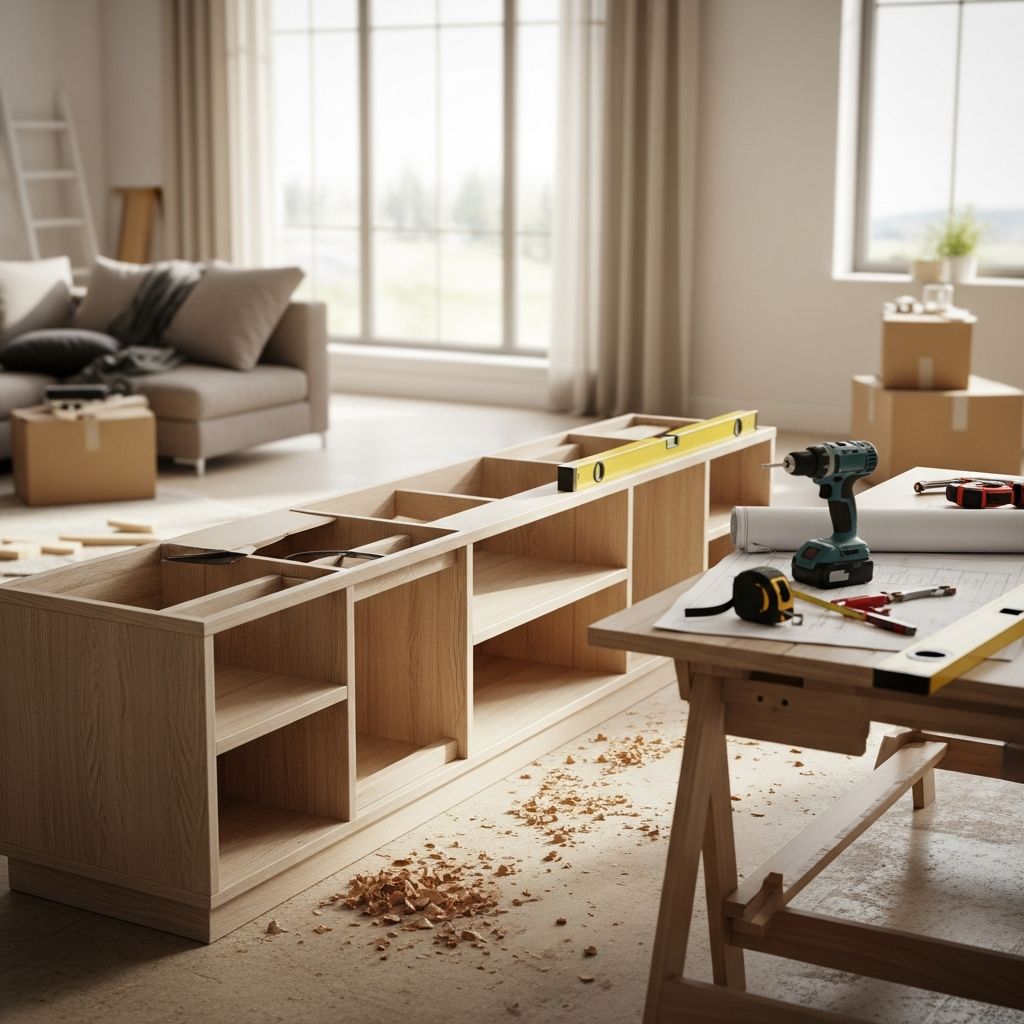
Begin by building your base structure, which will support all other components. Create a level platform using two-by-fours or similar materials, ensuring it’s properly anchored to the wall. This foundation is critical for proper alignment of all subsequent elements. Use a level frequently throughout construction to ensure everything is perfectly plumb and level.
Installing Cabinets
Install base cabinets according to your design plan. Cabinets with doors provide concealment for equipment and storage, while open shelving offers display space. Some designs incorporate a combination of both. Install drawers with quality slides for smooth operation and easy access to stored items. As you install each cabinet, continuously check that everything remains level and properly aligned.
Building the Top Surface
Create a sturdy top surface using quality plywood or solid wood, reinforced with support beams beneath. Use biscuit joints and pocket screws to ensure a strong, flush connection. The top surface should be substantial enough to support your TV and any decorative items you plan to place there.
Adding Shelving and Upper Components
Install upper shelving, floating shelves, or wall-mounted cabinets above the base units. Floating shelves create a contemporary look and can be mounted at various heights to create visual interest. Ensure all shelving is properly supported and securely anchored to wall studs for safety.
Finishing Touches
Add trim pieces such as 1×2 and 1×4 boards to frame the entertainment center and create a finished appearance. Cap the platform with trim to hide the edges of plywood and create clean lines. Paint or stain all exposed wood surfaces according to your design scheme. Install any molding or decorative elements that enhance your chosen style.
Personalizing Your Entertainment Center
Once the structure is complete, personalization transforms your entertainment center into a reflection of your personality and lifestyle.
Styling and Decoration
Arrange decorative items, books, and personal collections on open shelves to create visual interest. Mix decorative objects with storage to achieve balance. Include framed photos, sculptures, plants, or other items that reflect your interests and style.
Lighting Solutions
Incorporate lighting to enhance the appearance of your entertainment center and create ambiance. LED strip lighting behind shelves or around the TV creates a warm glow. Accent lighting highlights decorative items and creates depth. Ensure lighting is dimmable so you can adjust brightness for different activities and times of day.
Arrangement and Organization
Develop an organizational system for your media, books, and other items. Group similar items together and consider organizing by category, color, or frequency of use. Proper organization not only looks better but also makes it easier to find what you need.
Integrating with Your Living Space
Your entertainment center should feel like a natural extension of your living room rather than an isolated focal point.
Design Cohesion
Select colors, materials, and finishes that complement the rest of your living room. Consider the wall color, flooring, and other furniture when choosing your entertainment center’s appearance. The entertainment center should enhance your overall interior design rather than clash with existing elements.
Space and Flow
Ensure your entertainment center is appropriately sized for your space. An oversized unit can make a room feel cramped, while one that’s too small may appear insignificant. Consider furniture placement and traffic flow through the room to maintain a comfortable, functional living space.
Balance and Proportion
Create visual balance by considering the height and width of your entertainment center in relation to your ceiling height and wall dimensions. A wall-spanning unit might feel more cohesive than a smaller, centered unit, or vice versa depending on your room’s proportions.
Frequently Asked Questions
Q: What is the ideal height for mounting a TV in an entertainment center?
A: The center of your TV should be mounted approximately 42 to 48 inches from the floor for comfortable viewing from a seated position. This height reduces neck strain and provides optimal viewing angles from most seating distances.
Q: How can I hide cables and wires in my entertainment center?
A: Plan for cable runs behind the TV, through the wall structure, or within designated channels in your entertainment center. Use cable management systems, conduit, or trim pieces to conceal wires. Install outlets and power supplies strategically to minimize visible cords.
Q: Should I use open or closed storage for my entertainment center?
A: A combination of both works best. Use closed storage for equipment, cables, and items you want hidden, and open shelving for frequently accessed media and decorative displays. This creates visual interest and maintains organization.
Q: What materials are best for building an entertainment center?
A: Solid wood offers durability and warmth, while plywood and engineered wood provide cost-effective alternatives. Metal, glass, and concrete can add industrial or modern touches. Choose materials based on your design style, budget, and maintenance preferences.
Q: How do I ensure my entertainment center is properly anchored and safe?
A: Securely anchor your entertainment center to wall studs using appropriate hardware. Ensure the base is level and stable. For floating shelves, use quality brackets rated for the weight they’ll support. Always follow manufacturer guidelines for all mounting hardware and installations.
Q: Can I modify my entertainment center design later?
A: Yes, modular designs allow for flexibility. Floating shelves can be added or relocated, and some components can be upgraded. However, major structural changes may require professional assistance. Design your entertainment center with potential future modifications in mind.
Q: What’s the best way to organize items in my entertainment center?
A: Group similar items together and consider organizing by category, color, or frequency of use. Use storage boxes or bins for small items and cables. Ensure decorative items are balanced with functional storage to create an aesthetically pleasing arrangement.
References
- Interior Design Society Guidelines on Media Storage Solutions — Interior Design Society. 2024. https://www.interiordesignsociety.org/
- Home Entertainment Setup Standards — Consumer Technology Association. 2024. https://www.cta.tech/
- Ergonomic Viewing Distance and Height Recommendations — American Optometric Association. 2024. https://www.aoa.org/
- Home Furniture Construction Best Practices — Woodworking Institute. 2024. https://www.woodworking.org/
- Cable Management and Electrical Safety Standards — National Fire Protection Association. 2024. https://www.nfpa.org/
Similar Articles






Read full bio of medha deb