Crystal-Clear Showers: A Complete Guide to Cleaning and Reviving Your Showerhead
Restore water pressure, remove buildup, and keep your shower sparkling with this step-by-step showerhead cleaning guide.
How to Clean and Revive Your Showerhead for Better Water Flow
A dull, sputtering shower usually has a simple culprit: a clogged or dirty showerhead. Over time, mineral deposits, soap scum, and bacteria can build up in and around the nozzles, weakening water pressure, creating uneven spray patterns, and even causing unpleasant odors. The good news is that a proper cleaning routine can restore your showerhead to near-new performance without specialized tools or harsh chemicals.
This guide walks you through why showerheads get dirty, how to clean them with and without removing the fixture, what products to avoid, and how to keep them cleaner for longer. Whether you have a classic fixed head, a handheld model, or a luxurious rainfall shower, these tips will help you get more from every shower while extending the life of your hardware.
Why Showerheads Get Clogged and Dirty
Even in a tidy bathroom, a showerhead is constantly exposed to water, air, and product residue. When these elements combine, they leave behind films and crusty deposits that gradually choke water flow and mar the fixture’s finish. Understanding what causes the buildup makes it easier to choose the right cleaning method and frequency.
- Hard water minerals: Calcium, magnesium, and other minerals in hard water crystallize inside the showerhead and around the spray nozzles, forming stubborn limescale that narrows the water channels.
- Soap and product residue: Body wash, shampoo, conditioner, and shaving products can mist onto the showerhead and dry into a filmy coating that traps more dirt.
- Bacteria and biofilm: Moist, warm conditions encourage microbial growth inside the fixture, which can contribute to odor and discoloration over time.
- Corrosion and debris: Tiny particles from old pipes or rust can collect in the showerhead, clogging internal filters and screens.
If your shower stream feels weak, sprays sideways, or looks patchy across the face of the head, buildup is likely to blame. Regular cleaning both removes existing deposits and disrupts the conditions that help them form in the first place.
Signs Your Showerhead Needs a Deep Clean
A routine wipe-down is helpful, but certain clues indicate it’s time for a thorough descale. Paying attention to early warning signs helps you tackle the problem before the deposits become extremely difficult to remove.
- Weaker water pressure: If your shower used to feel strong and now feels like a drizzle, partial blockages in the nozzles or internal channels may be restricting flow.
- Uneven spray pattern: When some jets work normally while others dribble, spit, or spray at odd angles, buildup is interfering with individual nozzles.
- Visible white or green crust: Pale, chalky deposits near the holes or around the base of the head are classic signs of limescale.
- Brown or pink staining: Discoloration can come from mineral-rich water, iron deposits, or biofilm growth, and often appears around joints and seams.
- Persistent odor: A musty or metallic smell when the water first turns on can suggest stagnant water and microbial growth within the fixture.
Showerhead Cleaning Methods at a Glance
There is no single “right” way to clean a showerhead. The best method depends on how severe the buildup is, what the fixture is made of, and whether you are comfortable removing it. The table below summarizes common approaches and when to choose each.
| Method | Best For | Effort Level | Key Advantages | Considerations |
|---|---|---|---|---|
| Gentle nozzle massage and surface wipe | Light buildup, newer showerheads with rubber nozzles | Low | Quick, no tools, good weekly maintenance option | Won’t remove heavy internal scale or deep deposits |
| Bag-and-soak with mild acidic solution (e.g., diluted vinegar) | Moderate limescale on fixed wall-mounted heads | Low to medium | No need to remove head, solution works while you wait | Requires careful protection of finishes and proper dilution |
| Full removal and soaking in cleaning solution | Severe buildup, poor water flow, internal clogs | Medium to high | Thorough access to filters, screens, and internal cavities | Requires tools and re-installation; not ideal for every user |
| Commercial descaling product | Stubborn deposits or when vinegar is not recommended | Medium | Formulated for mineral removal, often faster action | Must follow manufacturer’s directions to protect finishes |
Before You Start: Protecting Fixtures and Finishes
Not all showerheads are built the same. Metal, plastic, and specialty finishes like brass, bronze, nickel, and gold can react differently to cleaners. A little preparation helps you avoid accidental damage while still dealing effectively with buildup.
- Check the manufacturer’s care instructions if available, especially for specialty finishes or high-end fixtures.
- Avoid harsh drain cleaners, undiluted strong acids, and abrasive powders on the showerhead surface; they can strip coatings, pit metal, or cloud plastic.
- When testing a new cleaner, try it first on a small, inconspicuous spot and rinse thoroughly afterward.
- Use soft, non-scratching tools such as microfiber cloths, soft sponges, and old toothbrushes rather than steel wool or stiff wire brushes.
Quick Maintenance Clean: For Light Buildup
If your shower still feels fairly strong and you only notice minor spots or slightly uneven spray, a quick maintenance clean is often enough. This can be done weekly or bi-weekly as part of your regular bathroom routine.
Step-by-step maintenance routine
- Turn off the water and let the fixture cool. Avoid scrubbing a very hot metal showerhead immediately after use.
- Massage the nozzles. If your showerhead has flexible rubber nubs, gently press and rub each one between your fingers to dislodge loose mineral bits.
- Wipe the surface. Dampen a soft cloth with warm water and a small amount of gentle bathroom cleaner or diluted dish soap. Wipe the face and sides of the head to remove soap film and product residue.
- Rinse and flush. Turn on the water for 30–60 seconds to wash away loosened particles and cleaner residue.
- Dry the exterior. Lightly buff with a dry microfiber cloth to discourage new water spots from forming.
This quick routine keeps minor buildup from becoming stubborn scale and reduces the frequency of deeper cleanings.
Deep Cleaning Without Removing the Showerhead
When water pressure noticeably drops or visible crust has formed, a deeper clean is required. If you prefer not to unscrew the fixture, you can soak the showerhead in place using a carefully positioned bag filled with a cleaning solution.
What you’ll need
- Heavy-duty plastic bag large enough to fully surround the showerhead
- Elastic band, twist tie, or string to secure the bag
- A mild descaling solution (often a diluted acidic cleaner appropriate for fixtures)
- Soft toothbrush or small nylon brush
- Microfiber cloth for drying and polishing
How to soak the showerhead in place
- Prepare the solution. Fill the bag with enough diluted cleaner to submerge the showerhead face while leaving room at the top to tie or wrap it.
- Secure the bag. Carefully slip the bag over the showerhead so that the face and nozzles are fully covered by the solution, then tighten the bag against the arm with an elastic band or string.
- Allow time to work. Let the showerhead soak. Light mineral buildup may loosen in under an hour, while heavier deposits require more time. Avoid leaving delicate finishes in contact with any cleaner longer than recommended by the manufacturer.
- Remove and scrub. Take off the bag and dispose of the used solution safely. Use a toothbrush to gently scrub around each nozzle and crevice.
- Flush thoroughly. Run hot water for several minutes to rinse the showerhead’s interior and wash away dissolved minerals and residual cleaner.
- Dry and inspect. Wipe the exterior dry and check the spray pattern. If some jets are still blocked, you can repeat the soak with fresh solution or proceed to a full removal cleaning.
Deep Cleaning by Removing the Showerhead
Removing the showerhead allows you to reach hidden buildup, interior screens, and joints that external soaking cannot fully address. This method is ideal when the water trickles, the spray is badly distorted, or the fixture has not been cleaned in a long time.
Tools and supplies
- Adjustable wrench or appropriate size pliers
- Soft cloth or painter’s tape to protect the finish while loosening fittings
- Bucket or bowl deep enough to fully submerge the head
- Mild descaling solution that is safe for your specific finish
- Old toothbrush, soft brush, or cotton swabs
- Toothpick or small plastic pick for stubborn nozzle clogs
- Thread seal tape (plumber’s tape) for re-installation, if recommended
Step-by-step removal and soak
- Protect the finish. Wrap a cloth or a layer of tape around the nut where the showerhead attaches to the arm so tools do not scratch visible metal.
- Loosen the connection. Using the wrench or pliers, gently turn the nut counterclockwise until you can remove the showerhead by hand. Set aside any washers or seals so they are not lost.
- Inspect the interior. Look for debris trapped in screens or filters. If there is a removable screen, pop it out carefully and rinse under running water.
- Soak in solution. Place the showerhead in a container filled with the cleaning solution, ensuring the entire fixture (or at least the water pathways) is submerged. Let it soak until mineral deposits visibly soften or loosen.
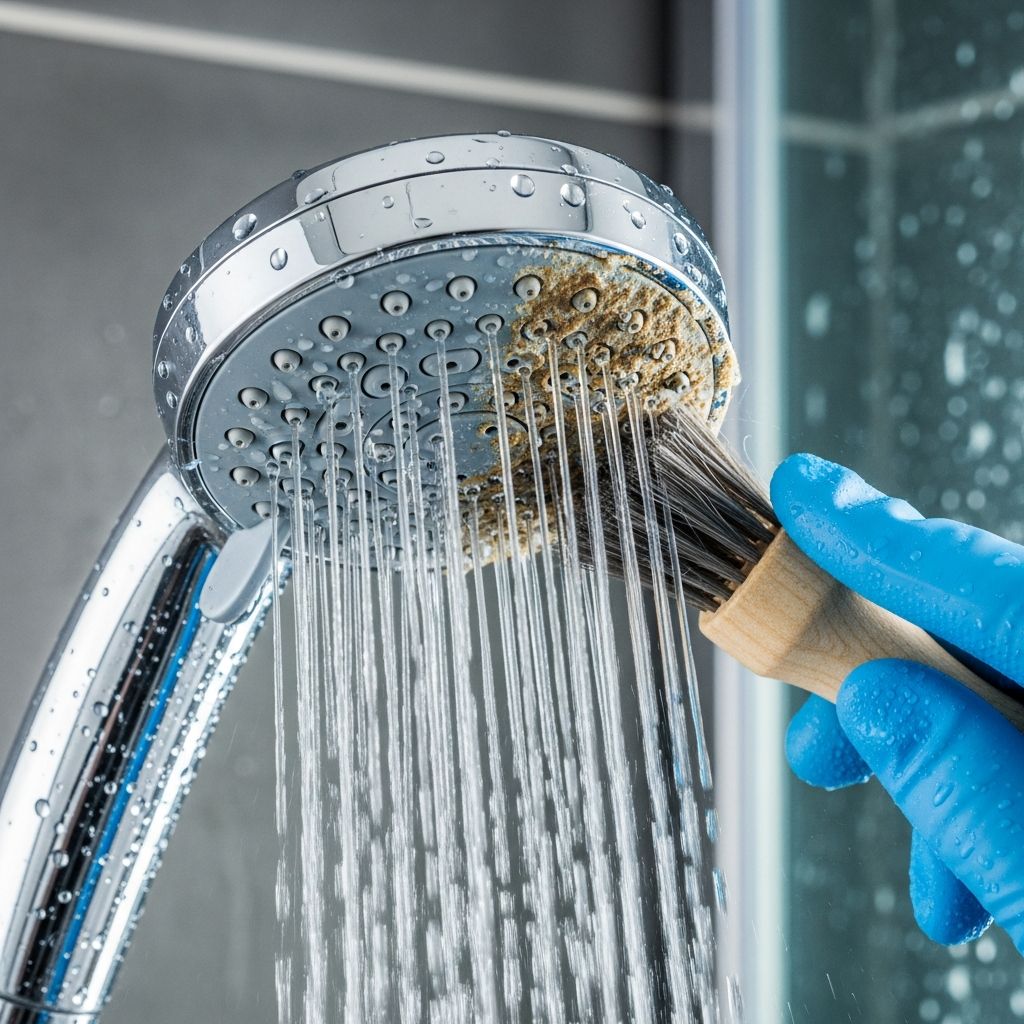
- Scrub gently. After soaking, use a toothbrush and cotton swabs to clean around the nozzles, threads, and internal surfaces. For individual clogged jets, a toothpick or soft plastic pick can carefully clear the opening.
- Rinse thoroughly. Run clean water through and over the showerhead until all traces of cleaner and loosened residue are gone.
- Reassemble parts. Replace any screens or internal pieces exactly as they were. If the old washer appears cracked or compressed, swap it for a new one of the same size.
- Reinstall on the arm. Optionally wrap the arm threads with fresh thread seal tape, then screw the showerhead back on by hand. Tighten slightly with the wrench while keeping the protective cloth in place to avoid scratching.
- Test the flow. Turn on the shower and check for leaks at the joint and for a smooth spray pattern across the head.
Special Considerations for Different Showerhead Types
While the basic cleaning principles are similar, certain showerhead styles benefit from tailored handling. Paying attention to the design helps you avoid accidental damage and reach all the necessary areas.
- Handheld showerheads: Detach the wand from the holder and hose before soaking. Avoid immersing the hose connection or handle if it contains internal mechanisms not meant for submersion. After cleaning, flush water through both the head and hose.
- Rainfall and ceiling-mounted heads: These wide, flat fixtures can hold a lot of water and debris. If removal is difficult, extended in-place soaking with a secure bag and meticulous nozzle scrubbing is especially important.
- Multi-function sprayers: Clean both the fixed outer ring and the rotating inner sections. After re-installation, cycle through all spray settings to ensure each mode works correctly.
- Filter or vitamin-infused heads: Follow the manufacturer’s instructions for replacing cartridges or filters while you clean the exterior and nozzles, and never soak removable filter media in strong cleaners.
How Often to Clean Your Showerhead
Cleaning frequency depends heavily on how hard your water is and how often the shower is used. A guest bathroom used a few times a month will stay cleaner much longer than a busy family shower running multiple times a day.
- Soft water households: A light cleaning every 1–2 months and a deeper descale once or twice a year often suffices.
- Moderately hard water: Aim for light cleaning every few weeks and a more thorough soak or removal at least every 3–4 months.
- Very hard water areas: You may need to perform a quick nozzle massage weekly and a full deep clean every 1–2 months to keep the spray strong.
- Rarely used showers: Even when not used often, occasional flushing and light cleaning prevent stagnant water and dust buildup.
Preventing Future Buildup and Low Pressure
Prevention is often easier than tackling layers of hardened limescale. Small adjustments in daily habits and a bit of plumbing awareness can reduce how quickly your showerhead clogs and help maintain water pressure over time.
- Wipe surfaces after use. Quickly drying the face of the showerhead and surrounding tiles after a shower limits standing water and reduces mineral spotting.
- Use products thoughtfully. Try to point spray products away from the showerhead so less residue drifts onto the nozzles.
- Consider water treatment. If hard water is a persistent issue, whole-home water softeners or point-of-use filters can dramatically cut down on mineral deposits.
- Maintain consistent temperature settings. Extremely hot water encourages faster mineral precipitation; moderate temperature settings may slow buildup.
- Check household pressure and plumbing. If multiple fixtures show low pressure, there may be a broader plumbing issue that cleaning alone cannot fix.
Frequently Asked Questions About Showerhead Cleaning
How do I know if low water pressure is caused by the showerhead or my plumbing?
Start by comparing different fixtures. If only the shower has weak pressure but sinks and other showers are strong, a clogged showerhead is a likely cause. If pressure is low throughout the home, the issue may involve the main supply, pressure regulator, or older pipes, and a professional evaluation can help pinpoint the problem.
Is it safe to use very strong chemical cleaners on my showerhead?
Highly caustic or extremely acidic cleaners can strip protective coatings, discolor metal, and weaken plastic over time. Unless your fixture’s manufacturer specifically recommends a product, it is usually safer to choose milder, bathroom-safe descalers and follow the directions closely, including any time limits for soaking.
What should I do if some nozzles stay clogged even after soaking?
After soaking, gently work on each stubborn nozzle with a soft brush and, if needed, a wooden toothpick or plastic pick. Insert the tip only slightly into the opening to break up deposits without enlarging or damaging the jet. If clogs persist, a second soak or full disassembly and internal cleaning may be necessary.
Can I damage my showerhead by taking it off too often?
Frequent removal is generally safe if you handle the fixture carefully, use the correct tools, and avoid overtightening when reinstalling. The main wear points are the threads and washers, so inspect and replace worn seals as needed to prevent leaks.
When is it better to replace the showerhead instead of cleaning it again?
If the fixture is heavily corroded, the internal components are cracked, or the spray pattern never fully recovers despite repeated thorough cleanings, replacement may be more cost-effective. Upgrading to a modern, efficient showerhead can also improve comfort while reducing water use.
Bringing It All Together
With a little knowledge and a consistent routine, a sluggish, clogged shower can quickly become a satisfying, invigorating experience again. Regular light maintenance, occasional deep cleaning, and a few preventative habits help protect your showerhead from mineral deposits and grime, preserving both its appearance and its performance.
Whether you are caring for a simple fixed head or a complex multi-function rain system, thoughtful cleaning and gentle products go a long way. Set a reminder on your calendar, keep a small bathroom cleaning kit nearby, and treat your showerhead as an essential part of your home’s overall plumbing health.
Similar Articles







Read full bio of medha deb