How to Clean Bluestone Patio: Complete Guide
Master bluestone patio cleaning with professional techniques and safe solutions for lasting beauty.
How to Clean Bluestone Patio: A Complete Guide
A bluestone patio can be one of a homeowner’s most prized outdoor features, providing an elegant and durable surface for entertaining and relaxation. However, when patios are surrounded by trees and shade, they become ideal breeding grounds for mold, mildew, and algae growth. Over time, organic debris and environmental factors can cause discoloration and stubborn stains that diminish the patio’s natural beauty. The good news is that with the right techniques, tools, and cleaning solutions, you can restore your bluestone patio to its original condition and maintain it for years to come.
Understanding Bluestone and Its Characteristics
Bluestone is a popular choice for patios and outdoor surfaces because of its durability and aesthetic appeal. This natural stone is relatively resistant to harsh chemicals compared to softer stones like limestone, which makes it more forgiving during the cleaning process. However, bluestone still requires careful handling to avoid damaging its finish and compromising its longevity. The porous nature of bluestone means it can absorb stains and moisture, making regular cleaning and maintenance essential for preserving its appearance and structural integrity.
Identifying the Sources of Staining
Before you begin cleaning your bluestone patio, it’s important to understand what’s causing the discoloration. The most common culprit is environmental factors, particularly trees and shade structures surrounding the patio. Leaves and organic debris that fall onto the surface decompose over time, leaving behind stubborn stains. Additionally, damp and shaded areas are perfect conditions for mold, mildew, and algae to flourish. These biological growths not only create unsightly dark patches but can also make the surface slippery and potentially hazardous. Understanding the source of the staining will help you choose the most appropriate cleaning method and prevent future problems.
Cleaning Solutions: Choosing the Right Option
When it comes to cleaning bluestone, you have several options, each suited for different types of stains and situations. Selecting the right cleaner is crucial for achieving optimal results while protecting both the stone and surrounding environment.
Muriatic Acid
Muriatic acid is a powerful cleaning solution that can effectively remove stubborn stains and discoloration from bluestone. However, it’s the strongest option available and requires careful handling. When using muriatic acid, you must wear appropriate protective equipment including gloves, safety glasses, and long-sleeved shirts. This solution is best reserved for severe staining situations where milder cleaners have proven ineffective. Due to its strength, muriatic acid may not be suitable for all applications, particularly if you have pets or sensitive vegetation nearby.
Vinegar Solution
Vinegar is a gentle, natural cleaning agent that works particularly well for addressing a specific type of staining called efflorescence. This mineral deposit often appears as white or chalky residue on stone surfaces and can be effectively treated with vinegar. The mild acidity of vinegar makes it safe for both pets and plants, making it an environmentally friendly choice for homeowners concerned about their landscape’s health. However, vinegar’s effectiveness is limited to specific stain types and may not address mold, mildew, or other organic growths.
Bleach-Based Solutions
Bleach is one of the most commonly used cleaners for addressing mold, mildew, and algae on stone surfaces. Its powerful antimicrobial properties make it highly effective at killing organic growths and removing the dark stains they leave behind. The strong smell of bleach indicates that the chemical reaction is actively working to eliminate stains. However, bleach can be harsh on surrounding vegetation and should be used with caution near plant beds and landscaping features.
Multipurpose Outdoor Cleaners
All-purpose stone and masonry cleaners offer a balanced solution that addresses multiple types of stains while being safer for pets, vegetation, and people. These specialized formulations are specifically designed for outdoor stone surfaces and can tackle mold, mildew, algae, dirt, and general discoloration. Many multipurpose cleaners work quickly, with some formulations effective in as little as 30 seconds, making them an efficient choice for most homeowners. These cleaners typically provide a good balance between effectiveness and safety, making them an excellent choice for routine patio maintenance.
Essential Tools and Equipment
Having the right tools makes the cleaning process more efficient and helps protect your patio from damage. Here are the essential items you’ll need:
- Pump Sprayer: A handheld pump sprayer allows you to apply cleaning solution evenly across the patio surface with controlled precision.
- Stiff-Bristled Brush: Use a brush with stiff bristles to gently scrub the stone surface without scratching it. The brush helps the cleaner penetrate stubborn stains.
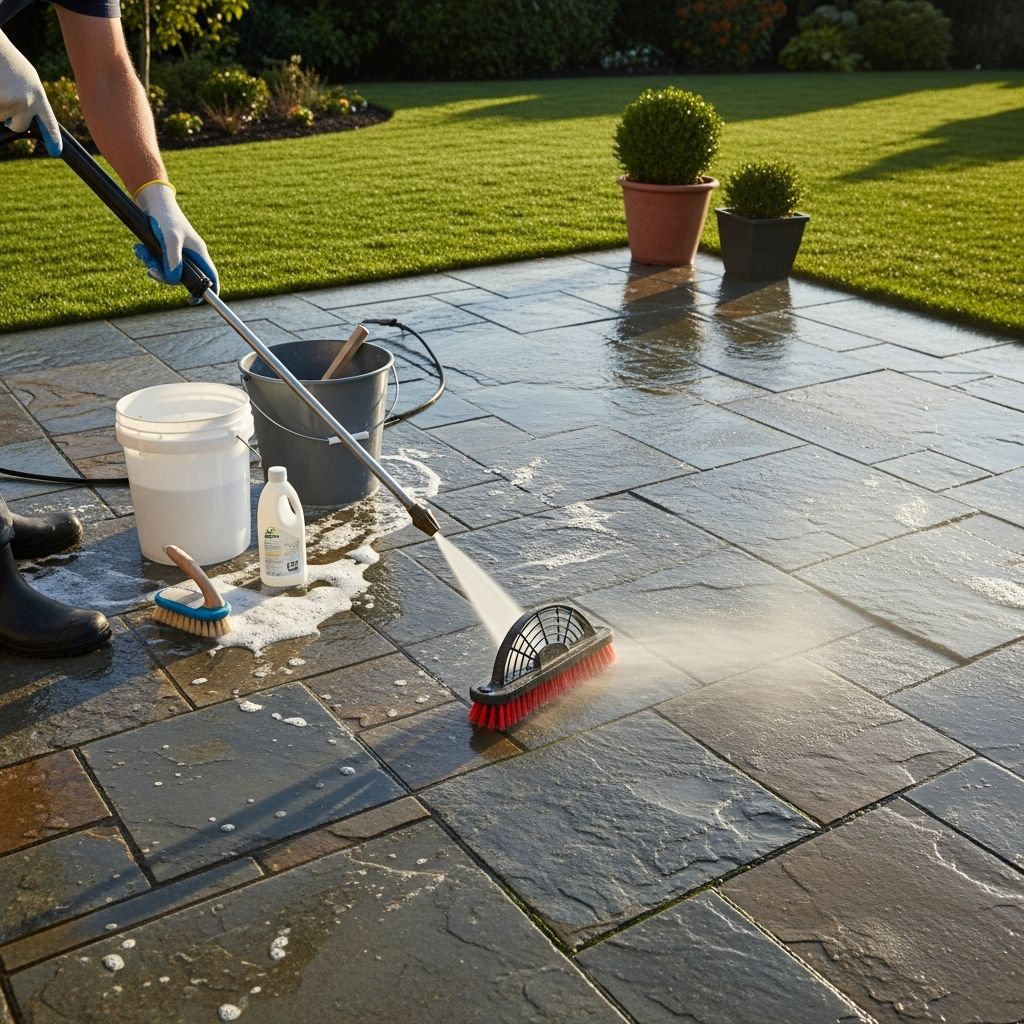
- Power Washer: A pressure washer with adjustable settings is useful for rinsing away cleaning solutions and loosened debris. Use moderate pressure to avoid damaging the stone.
- Surface Cleaning Attachment: This specialized attachment for power washers helps distribute pressure evenly and prevents concentrated jets that could damage the patio surface.
- Garden Hose: For initial wetting and final rinsing of the patio and surrounding areas.
- Protective Equipment: Depending on the cleaner used, you may need gloves, safety glasses, and appropriate clothing.
Step-by-Step Cleaning Instructions
Step 1: Prepare the Area
Before you begin cleaning, remove all patio furniture, potted plants, and other movable items from the surface. This gives you clear access to the entire patio and prevents damage to your belongings. Clear away any loose debris such as leaves, twigs, and dirt using a broom or leaf blower. This preliminary cleanup ensures that the cleaning solution can make direct contact with stains rather than being blocked by surface debris.
Step 2: Pre-Wet the Surface and Surrounding Area
Use a garden hose to thoroughly wet the bluestone patio and the surrounding landscape. This critical step serves multiple purposes: it prepares the stone for the cleaning solution, helps protect nearby vegetation from concentrated cleaner exposure, and dilutes any solution that may splash onto landscaped areas. The moisture also helps prevent the cleaning solution from drying too quickly on the stone, which would reduce its effectiveness.
Step 3: Test the Cleaner on a Discreet Area
Before applying your chosen cleaner to the entire patio, always test it on a small, inconspicuous area first. This test spot helps ensure that the cleaner won’t discolor or damage the bluestone. Some cleaning solutions can occasionally cause unexpected reactions with certain stone finishes, so this precautionary step is essential. Allow the test area to fully dry before proceeding to ensure you’re seeing the final result accurately.
Step 4: Apply the Cleaning Solution
Using your pump sprayer or brush, apply the cleaning solution evenly across the patio surface. Work in manageable sections, typically starting from one end of the patio and progressing systematically toward the other end. Apply enough solution to thoroughly coat the surface without creating puddles that could run off onto landscaping.
Step 5: Allow Dwell Time
Once the cleaner is applied, let it sit for the recommended dwell time specified by the manufacturer. This waiting period is crucial because it allows the chemical components to react with and lift stains from the stone. Dwell times vary depending on the specific product: some work in as little as 30 seconds, while others may require several minutes. Avoid letting the solution dry completely on the stone, as this can reduce effectiveness and potentially leave residue.
Step 6: Scrub Gently
Using a stiff-bristled brush, gently scrub the patio surface in circular motions. You’ll notice the solution actively working, with dirt and stains lifting off the stone. The brush helps the cleaner penetrate deeper into stains and removes loosened debris. Avoid aggressive scrubbing, as this isn’t necessary and could potentially damage the stone finish. Let the cleaner do most of the work while the brush provides gentle assistance.
Step 7: Rinse Thoroughly
Once you’ve scrubbed the desired areas, rinse the patio thoroughly with clean water using a garden hose or power washer. Rinse multiple times if necessary to ensure all cleaning solution residue is completely removed. Residual cleaner can cause buildup and may affect the stone’s appearance or create slippery areas. For power washing, use moderate pressure and keep the nozzle moving to avoid concentrated jets that could damage the patio.
Step 8: Repeat for Stubborn Stains
For particularly stubborn mildew stains or heavily discolored areas, you may need to repeat the cleaning process. Apply the solution again, allow proper dwell time, scrub gently, and rinse thoroughly. Multiple applications are often necessary to completely eradicate deeply embedded stains or extensive mildew growth.
Safety Considerations and Environmental Protection
When cleaning your bluestone patio, safety should be your top priority. Always wear appropriate protective equipment based on the cleaner you’re using. If using strong solutions like muriatic acid, wear heavy-duty gloves, safety glasses, and long sleeves to protect your skin. Ensure good ventilation and avoid breathing fumes directly. Consider the impact of your cleaning activities on pets and vegetation. Many commercial cleaners can be harmful to plants if concentrated solutions contact foliage directly. The pre-wetting and post-rinsing steps discussed earlier help dilute and wash away solutions before they can cause damage. If you have fish ponds or sensitive water features nearby, be mindful of runoff and consider directing water flow away from these areas.
Preventing Future Staining and Maintenance
Once you’ve restored your bluestone patio to its original beauty, maintaining it properly will help prevent rapid re-staining. Regular sweeping removes leaves and debris before they can decompose on the surface. During fall and winter, more frequent cleaning may be necessary in heavily shaded areas surrounded by trees. Consider the drainage around your patio to minimize standing water, which encourages mold and mildew growth. If possible, thin out nearby tree canopies to increase sunlight exposure, as sunny areas are less susceptible to organic growth. Sealing the bluestone with an appropriate stone sealer can provide additional protection against stains and moisture absorption.
Troubleshooting Common Issues
Persistent Mildew After Cleaning
If mildew returns quickly after cleaning, it indicates that moisture conditions are favorable for regrowth. Improve drainage, increase air circulation, and consider using a bleach-based cleaner regularly during humid seasons. More frequent cleaning intervals may be necessary until environmental conditions improve.
Uneven Discoloration After Cleaning
If some areas clean differently than others, it may indicate that your patio has aged unevenly or has different underlying stone qualities. This is normal with natural stone. If the discoloration is significant, consider cleaning the entire patio with the same product and method to achieve uniform appearance.
Cleaner Not Working Effectively
If your chosen cleaner isn’t producing desired results, try a different product or a stronger solution. However, always test on a small area first. The type of stain may also require a different approach—what works for mildew may not work for efflorescence, for example.
Frequently Asked Questions
Q: How often should I clean my bluestone patio?
A: For patios in shaded, damp areas surrounded by trees, quarterly or semi-annual cleaning is recommended. Sunny patios may only need annual cleaning. Regular sweeping and debris removal between deep cleanings helps maintain appearance.
Q: Can I use a pressure washer on bluestone?
A: Yes, but use moderate pressure and a surface cleaning attachment to avoid damage. High-pressure concentrated jets can damage the stone finish. Keep the nozzle moving and maintain adequate distance from the surface.
Q: Is muriatic acid safe for bluestone?
A: Bluestone is resistant to muriatic acid, so it won’t damage the stone. However, it’s a powerful chemical requiring protective equipment and careful handling. It’s best reserved for severe staining situations.
Q: What’s the best cleaner for mildew?
A: Bleach-based solutions are highly effective for mildew removal. Multipurpose outdoor cleaners also work well and are safer for pets and vegetation. Always follow manufacturer’s instructions and safety guidelines.
Q: How can I prevent staining on my patio?
A: Regular sweeping, improving drainage, increasing sunlight exposure, and using stone sealer all help prevent staining. Address any pooling water issues and trim overhanging branches to improve air circulation.
Q: Is it necessary to seal bluestone?
A: While bluestone is durable without sealing, applying an appropriate stone sealer provides additional protection against stains and moisture absorption, especially in areas prone to heavy organic growth.
References
- How to Clean Hardscape — This Old House. https://www.thisoldhouse.com/masonry/89853/how-to-clean-hardscape
- How to Clean a Bluestone Patio | Ask This Old House — This Old House. https://www.youtube.com/watch?v=PVypmzEqNOg
- How To Clean Hardscape | Ask This Old House — This Old House. https://www.youtube.com/watch?v=kmIdOBqxt1g
Similar Articles






Read full bio of medha deb