How to Clean Drains with Baking Soda and Vinegar
Discover the natural way to unclog and freshen your drains using baking soda and vinegar.
Cleaning your drains is an essential part of home maintenance. Over time, hair, soap scum, grease, and food particles can accumulate in your pipes, leading to slow drainage and unpleasant odors. While there are many commercial drain cleaners available, a natural and effective solution is to use baking soda and vinegar. This method is not only environmentally friendly but also cost-effective and safe for most plumbing systems.
Why Use Baking Soda and Vinegar?
Baking soda and vinegar are common household items that can be used to clean and unclog drains. Baking soda, also known as sodium bicarbonate, is a mild abrasive that can help break down organic matter. Vinegar, which is acetic acid, reacts with baking soda to produce carbon dioxide gas, which helps to loosen and dislodge clogs.
Step-by-Step Guide to Cleaning Drains with Baking Soda and Vinegar
Follow these simple steps to clean and unclog your drains using baking soda and vinegar:
Step 1: Boil Water
Start by boiling a pot of water. This will help to soften any grease or soap scum that may be contributing to the clog.
Step 2: Pour Baking Soda
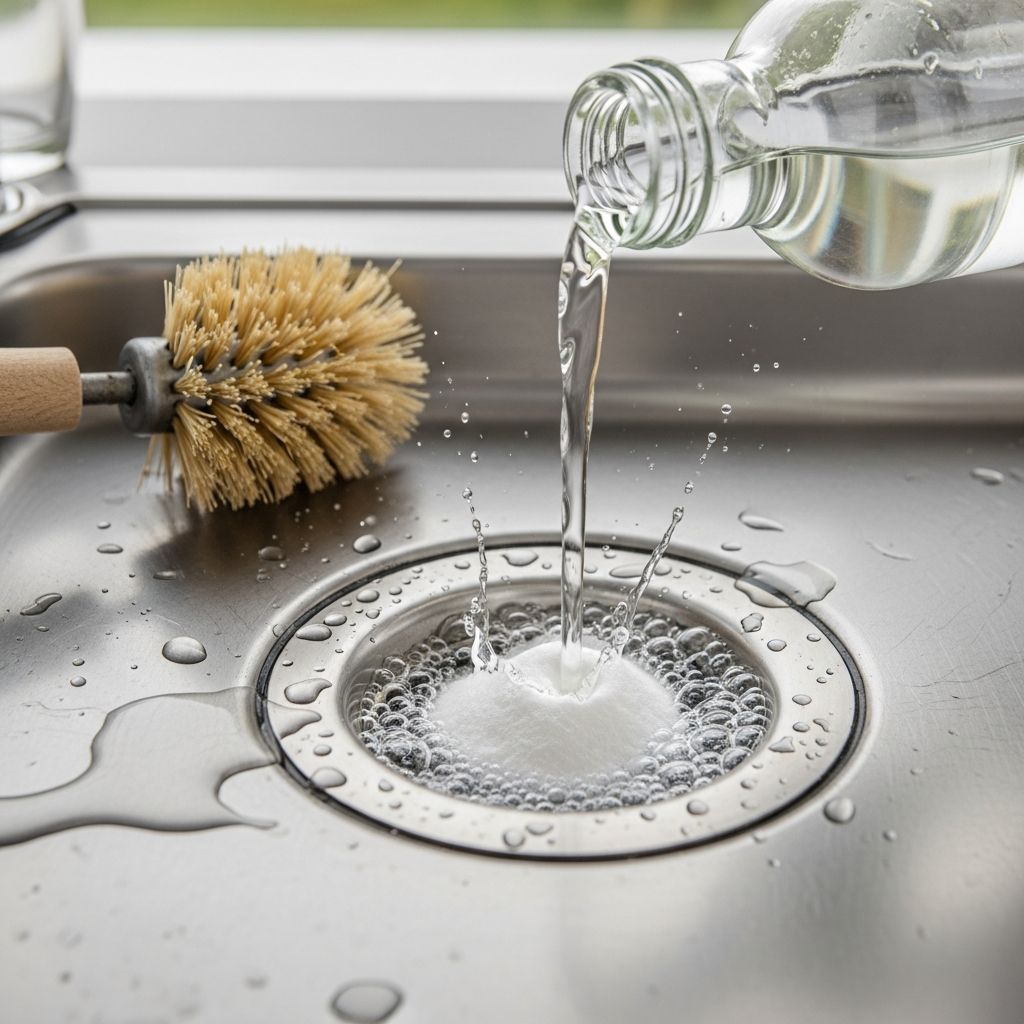
Pour about 1/2 cup of baking soda directly into the drain. If the drain is particularly clogged, you can use up to 1 cup.
Step 3: Add Vinegar
Next, pour 1 cup of white vinegar into the drain. The mixture will start to fizz and bubble, which is a sign that the reaction is working to break down the clog.
Step 4: Cover the Drain
Cover the drain with a plug or a wet cloth to keep the reaction contained. Let it sit for 5 to 10 minutes.
Step 5: Flush with Boiling Water
After the waiting period, pour the boiling water down the drain to flush out the loosened debris. Repeat the process if necessary.
The Science Behind Baking Soda and Vinegar
The effectiveness of baking soda and vinegar in cleaning drains lies in the chemical reaction between the two substances. When baking soda (sodium bicarbonate) and vinegar (acetic acid) are mixed, they produce carbon dioxide gas, water, and sodium acetate. The carbon dioxide gas helps to push through the clog, breaking it up and allowing it to be flushed away.
Benefits of Using Baking Soda and Vinegar
- Environmentally Friendly: Baking soda and vinegar are natural and biodegradable, making them a safer choice for the environment.
- Cost-Effective: Both ingredients are inexpensive and readily available in most households.
- Safe for Plumbing: Unlike harsh chemical drain cleaners, baking soda and vinegar are gentle on pipes and do not cause corrosion.
- Odor Elimination: The combination of baking soda and vinegar can help to eliminate unpleasant odors from drains.
When to Use Stronger Solutions
While baking soda and vinegar are effective for minor clogs and regular maintenance, they may not be sufficient for more stubborn blockages. In such cases, you may need to use a stronger drain cleaner or call a professional plumber. Commercial drain cleaners often contain sodium hydroxide or sodium hypochlorite, which can dissolve tough clogs more quickly.
Tips for Preventing Drain Clogs
- Regular Maintenance: Clean your drains regularly to prevent the buildup of debris.
- Use Drain Strainers: Install drain strainers to catch hair and other particles before they enter the pipes.
- Avoid Pouring Grease: Do not pour grease or oil down the drain, as it can solidify and cause clogs.
- Flush with Hot Water: Periodically flush your drains with hot water to keep them clear.
FAQs
Can I use baking soda and vinegar on all types of drains?
Yes, baking soda and vinegar can be used on most types of drains, including kitchen sinks, bathroom sinks, and showers. However, if you have a septic system, it is best to consult a professional before using any cleaning method.
How often should I clean my drains with baking soda and vinegar?
It is recommended to clean your drains with baking soda and vinegar once a month to prevent clogs and maintain good drainage.
What should I do if the clog persists after using baking soda and vinegar?
If the clog persists, you may need to use a plunger or a drain snake to physically remove the blockage. If these methods do not work, it is best to call a professional plumber.
Are there any risks associated with using baking soda and vinegar?
Baking soda and vinegar are generally safe to use, but it is important to avoid mixing them with other cleaning products, as this can produce harmful fumes. Always ensure the area is well-ventilated when using these ingredients.
Conclusion
Cleaning your drains with baking soda and vinegar is a simple, effective, and natural way to keep your plumbing in good condition. By following the steps outlined in this guide, you can prevent clogs, eliminate odors, and maintain a healthy home environment. For more stubborn clogs, consider using a stronger drain cleaner or seeking professional help.
References
- How to Clean Drains with Baking Soda and Vinegar — Liquid-Plumr. 2023. https://www.liquidplumr.com/diy-plumbing-tips/how-baking-soda-and-vinegar-cleans-drains/
- Baking Soda and Vinegar: The Science Behind the Reaction — American Chemical Society. 2022. https://www.acs.org/content/acs/en/education/whatischemistry/landmarks/baking-soda-and-vinegar.html
- Drain Cleaning Tips and Hacks — Family Handyman. 2023. http://www.familyhandyman.com/project/how-to-clean-drain-with-baking-soda/
Similar Articles





Read full bio of medha deb