How To Clean Marble Countertops: Essential Care Guide
Master the art of cleaning marble countertops with expert tips and techniques.
How to Clean Marble Countertops
Marble countertops are a stunning addition to any kitchen, offering elegance and sophistication that few other materials can match. However, their natural beauty comes with specific care requirements. Unlike granite or quartz countertops, marble is a softer, more porous natural stone that demands a gentle touch and careful attention to maintain its pristine appearance. Understanding the proper cleaning techniques will help you preserve your marble investment for years to come.
Why Marble Requires Special Care
Marble is composed of calcium carbonate, making it particularly vulnerable to acidic substances. Even mild acids like lemon juice, vinegar, and wine can cause permanent etching—those dull, cloudy spots that seem impossible to remove. Additionally, marble’s porous nature means it absorbs liquids quickly, which can lead to stubborn stains if spills aren’t addressed immediately. The key to maintaining beautiful marble countertops is understanding these vulnerabilities and adapting your cleaning and maintenance routines accordingly.
Daily Cleaning Routine for Marble Countertops
Establishing a consistent daily cleaning routine is the foundation of marble countertop maintenance. This simple habit prevents the buildup of dirt and grime that can dull the surface over time and makes deeper cleaning easier.
Wipe Down Your Countertops
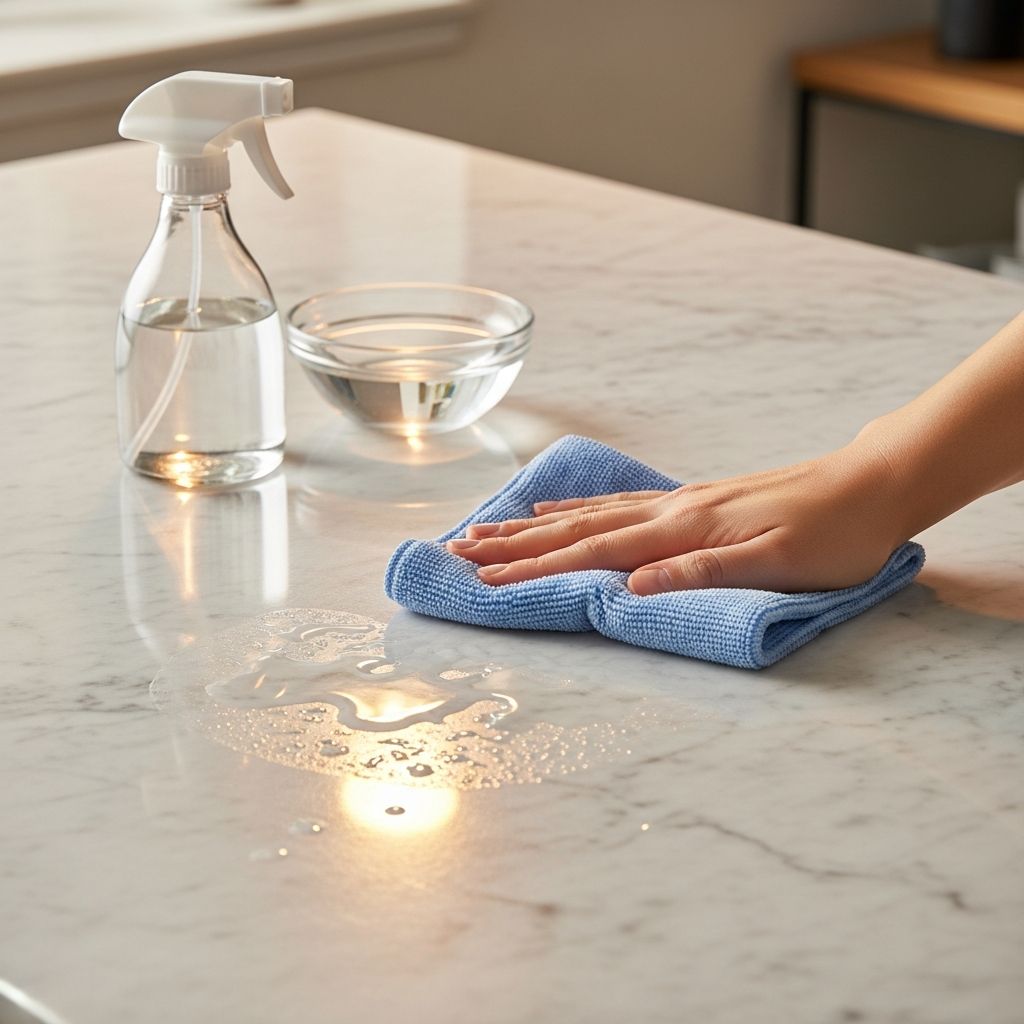
At the end of each day, give your marble countertops a simple wipe down using a soft cloth or microfiber cloth. This removes dust, crumbs, and everyday debris. The material you use matters tremendously—never use abrasive scrubbers or scouring pads, as these can scratch and dull the surface, diminishing the natural shine that makes marble so attractive. A soft microfiber cloth is ideal because it’s gentle yet effective at capturing dust particles.
Blot Spills Immediately
Marble’s porous nature means it absorbs liquids quickly, so addressing spills right away is critical. Whether it’s water, coffee, wine, or cooking oil, use a soft cloth to blot the spill immediately. The key word here is “blot”—avoid scrubbing back and forth, as this spreads the spill and increases the risk of staining. Simply press the cloth gently on the spill to absorb the liquid, then wipe clean with a dry cloth.
Dry the Surface
After wiping down your countertops, always dry the surface to prevent water spots. Use a clean microfiber cloth to gently buff the marble until it’s completely dry. This step restores the shine and prevents mineral deposits from forming, keeping your countertops looking polished and beautiful.
Weekly Maintenance Tasks
While daily cleaning handles surface-level maintenance, weekly tasks address areas you might miss during daily routines and help prevent grime accumulation.
Dust Your Countertops
Dust might seem harmless, but it’s actually fairly abrasive. If your marble sealer isn’t applied well or is wearing down, dust buildup can dull the appearance or even scratch the surface. Use a soft brush or cloth to gently remove dust from all surfaces, including corners and edges.
Clean the Full Surface
During your daily cleaning, you likely focus on visible surfaces. Once a week, lift up appliances, decorative items, and accessories to clean the entire counter surface. This prevents grime accumulation in hidden areas and ensures your entire countertop maintains a consistent appearance.
Safe Cleaning Solutions for Marble
Choosing the right cleaning products is perhaps the most important aspect of marble countertop care. The wrong cleaner can cause irreversible damage.
What to Use
The safest and most effective cleaning solution for marble is surprisingly simple: mild dish soap and warm water. Apply a few drops of dish soap to a soft sponge with warm water, then gently scrub your marble countertops. This basic solution removes dirt and grime without harming the stone. For a more thorough clean, you can use a pH-neutral stone cleaner specifically formulated for marble. When selecting a product, read the label carefully and verify it’s designed for natural stone. If the product suggests testing it in a hidden area first, that’s a red flag—there are many marble-safe products available that don’t require testing.
What to Avoid
Never use harsh, acidic cleaners on marble countertops. This includes products containing lemon, vinegar, or bleach. These substances cause etching—permanent damage that creates dull spots on the surface. Similarly, avoid abrasive cleaners, scouring powders, and products designed for granite or other harder stones. The gentle approach isn’t just recommended for marble; it’s essential.
Monthly Deep Cleaning Care
Once a month, dedicate time to a deeper clean that addresses areas daily and weekly routines might miss.
Perform a Deep Clean
Mix a pH-neutral stone cleaner or mild dish soap with warm water. Use a soft cloth or microfiber mop to clean the entire surface thoroughly. For stubborn spots or buildup, apply the cleaner directly to the area and let it sit for a few minutes before wiping it off. This gives the solution time to break down tough grime without requiring aggressive scrubbing.
Inspect for Stains
Check your countertops carefully for any stains or discoloration. Address stains immediately using a marble-safe stain remover or a homemade poultice made from baking soda and water. Apply the paste to the stain and let it sit for 24 hours before wiping it away. This method works by drawing out the stain as the poultice dries.
Check Your Sealing
Marble countertops require periodic sealing to protect against stains and etching. To determine if your countertops need resealing, perform a simple water test: sprinkle a few drops of water on the surface. If the water beads up, your seal is still effective. If you see the water spreading, creating a dark ring, or leaving a mark, it’s time to reseal.
Annual Maintenance and Professional Care
Once a year, your marble countertops deserve professional-level attention to maintain their long-term beauty and protection.
Professional Deep Cleaning
Consider hiring professionals once yearly for a deep cleaning. They have access to specialized products and equipment that clean more thoroughly than at-home methods, removing deep-seated dirt and grime that regular cleaning might miss. This investment helps preserve the stone’s natural beauty and prevents long-term damage.
Resealing Your Countertops
Depending on your usage patterns and the type of marble you have, resealing once a year is typically necessary, though some sealers may require resealing more frequently. Polished marble may need refinishing once every two to three years, while honed or textured marble typically needs it once every three to five years. Before resealing, ensure your countertop is clean and dry. Professional sealers provide better protection and durability than many DIY options.
Understanding Marble Finishes and Care
The finish of your marble affects how visible damage becomes and how often you need maintenance:
| Marble Finish | Appearance | Visibility of Etching | Refinishing Frequency | Best For |
|---|---|---|---|---|
| Polished | High-gloss, reflective surface | Highly visible | Every 2-3 years | Formal spaces, low-traffic areas |
| Honed | Matte, satin-like finish | Less visible | Every 3-5 years | Kitchens, high-traffic areas |
| Textured | Rough, tactile surface | Least visible | Every 3-5 years | Practical, busy kitchens |
Protective Solutions for Long-Term Care
Beyond traditional sealing, modern protective solutions offer enhanced durability. UV coatings and specialized laminate films can provide longer-lasting protection than conventional sealers. These advanced options can last 4-8 years before needing replacement, significantly extending the time between maintenance sessions. If you’re considering these options, consult with a professional to ensure proper application.
Handling Stubborn Stains and Etching
Despite your best efforts, marble sometimes develops stains or etching. Here’s how to address these issues:
Removing Stains
For fresh stains, blot immediately and clean with mild soap and water. For set-in stains, create a poultice by mixing baking soda with water or marble-specific stain remover. Apply this paste to the stain, cover it with plastic wrap to prevent drying, and let it sit for 24 hours. The poultice draws out the stain as it dries. Remove it carefully and rinse the area thoroughly.
Addressing Etching
Etching appears as dull spots where acid has damaged the marble’s surface. Light etching can sometimes be polished out by professionals. For extensive etching, professional refinishing may be necessary. The best approach is prevention—avoiding acidic substances and addressing spills immediately.
Best Practices Summary
To keep your marble countertops looking beautiful, remember these key practices: use only soft cloths and gentle products, avoid all acidic cleaners, blot spills immediately, dry surfaces after cleaning, dust regularly, reseal as needed, and have professional maintenance at least annually. By following these guidelines, your marble countertops will remain a stunning focal point in your kitchen for decades.
Frequently Asked Questions
Q: Can I use vinegar to clean marble countertops?
A: No, vinegar is acidic and will etch marble, creating permanent dull spots. Stick to mild dish soap and water instead.
Q: How often should I seal my marble countertops?
A: Most marble countertops should be resealed annually, though some may require resealing every few months depending on the sealer used and traffic levels. Use the water droplet test to check if resealing is needed.
Q: What’s the difference between etching and staining?
A: Staining occurs when liquids penetrate the porous stone, while etching is chemical damage from acidic substances that dulls the surface. Both require different treatment approaches.
Q: Is polished or honed marble better for kitchens?
A: Honed or textured marble is more practical for kitchens because etching is less visible. Polished marble shows every mark more clearly and requires more frequent refinishing.
Q: Can I use a razor blade to remove buildup from marble?
A: Yes, a razor blade can carefully remove stubborn buildup without damaging marble if used gently at a low angle. However, avoid using it on areas with sealer or on delicate spots.
Q: What should I do about water spots on marble?
A: Water spots form when mineral-laden water dries on the surface. Always dry your marble with a microfiber cloth immediately after cleaning to prevent these spots from forming.
References
- How to Clean Every Type of Countertop — HGTV. 2023. https://www.youtube.com/watch?v=VyqoyDg1ivU
- Marble Countertop Cleaning & Maintenance Checklist — TuffSkin Surface Protection. 2024. https://www.tuffskin.com/marble-countertop-cleaning-maintenance-checklist/
- How to Care for Your Marble Countertops — Use Natural Stone Organization. 2024. https://usenaturalstone.org/how-to-care-for-your-marble-countertops/
- Jasmine Roth Shares Her Secret To Keeping Marble Countertops — House Digest. 2023. https://www.housedigest.com/1692761/protect-marble-countertops-uv-coating-jasmine-roth-advice-hgtv/
- How Do You Protect Marble Countertops — Francini Marble. 2024. https://francinimarble.com/blog/how-do-you-protect-marble-countertops
Similar Articles








Read full bio of medha deb