How To Clean Scorched And Burnt Pans: 6 Expert Methods
Master the art of cleaning burnt and scorched cookware with proven methods.
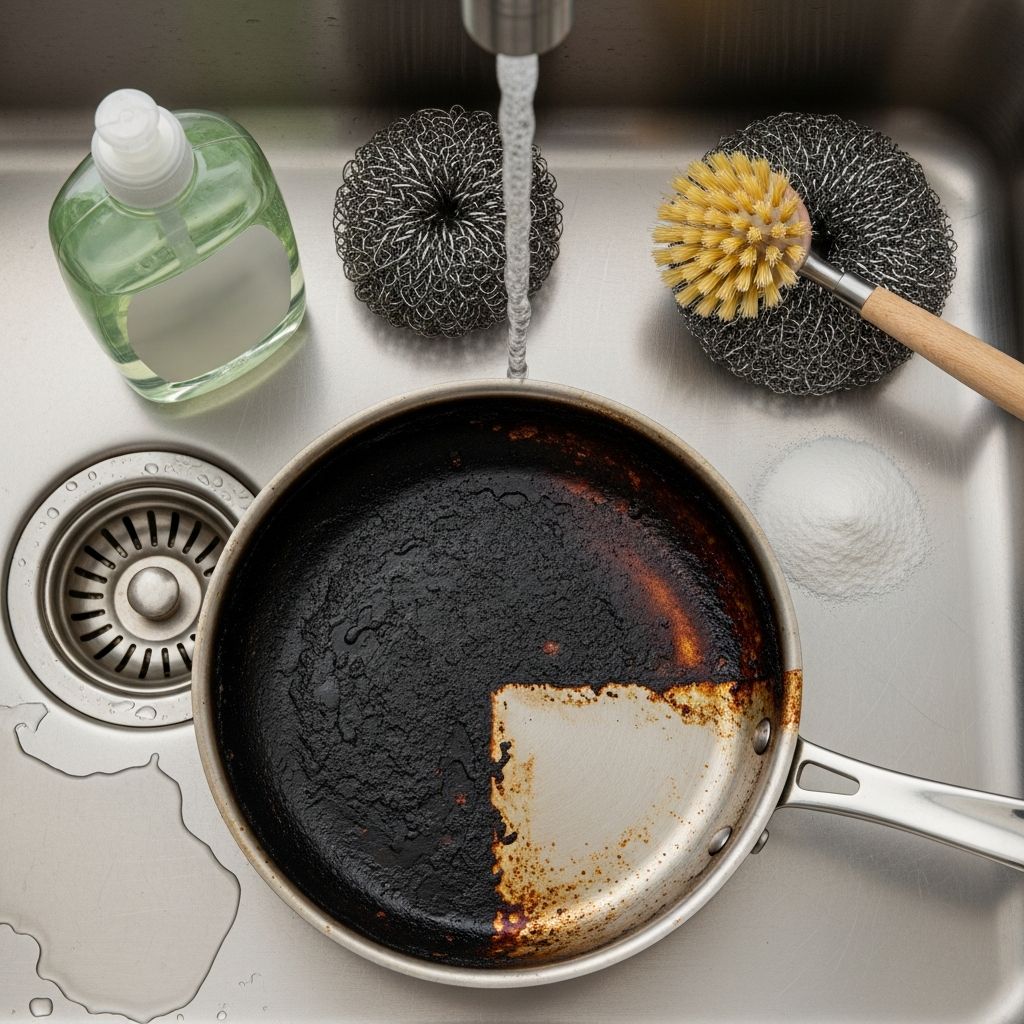
Burnt and scorched pans are a common kitchen challenge that many home cooks face. Whether you’ve accidentally left dinner on the stove too long or had a boiling incident, stubborn burnt-on food can seem impossible to remove. The good news is that you don’t need expensive commercial cleaners or elbow grease to restore your cookware to its former glory. With the right techniques and household ingredients, you can effectively clean even the most severely scorched pans and extend their lifespan for years of cooking to come.
Understanding Burnt and Scorched Cookware
Before diving into cleaning methods, it’s important to understand what happens when pans become burnt or scorched. When food is exposed to high heat for extended periods or comes into direct contact with a hot cooking surface, the proteins and sugars caramelize and bond to the pan’s surface. This creates a layer of burnt residue that can be challenging to remove with standard washing methods. Scorching typically refers to light to moderate burning, while severe burning creates a thick, charred layer that requires more intensive treatment.
Why Proper Cleaning Matters
Cleaning burnt pans promptly is essential for several reasons. First, allowing burnt food to sit on your cookware makes it increasingly difficult to remove as it hardens further. Second, burnt residue can affect the non-stick coating on some pans if left untreated. Finally, proper maintenance extends the life of your cookware and ensures even heat distribution for better cooking results. Investing time in proper cleaning techniques now can save you money on replacing damaged pans later.
Method 1: The Baking Soda and Vinegar Approach
One of the most effective and eco-friendly methods for cleaning burnt pans involves two common household staples: baking soda and vinegar. This combination creates a powerful cleaning reaction that breaks down stubborn burnt-on food.
Steps for Using Baking Soda and Vinegar:
- Fill the burnt pan with water and add one cup of white vinegar
- Bring the mixture to a boil on the stovetop
- Remove from heat and let it cool for a few minutes
- Sprinkle baking soda generously over the burnt areas (the mixture will fizz)
- Allow it to sit for 15-30 minutes to break down the burnt residue
- Scrub gently with a non-abrasive sponge or soft-bristled brush
- Rinse thoroughly with warm water and dry completely
The acidic vinegar works to loosen burnt food while baking soda’s mild abrasive properties help lift stubborn particles away from the pan’s surface. For heavily burnt pans, you may need to repeat this process or let the mixture sit longer.
Method 2: The Baking Soda Paste Technique
For lighter scorch marks and burnt spots, a simple baking soda paste can be remarkably effective without requiring boiling or additional ingredients.
Creating and Applying a Baking Soda Paste:
- Mix three tablespoons of baking soda with one tablespoon of water to create a spreadable paste
- Apply the paste directly to the burnt areas of the pan
- Let the paste sit for 15-20 minutes to allow the alkaline baking soda to break down burnt residue
- Gently scrub the affected areas using a soft cloth or sponge
- Rinse thoroughly with warm water and dry the pan
This method is particularly useful for non-stick pans where you need to avoid aggressive scrubbing. The paste provides gentle yet effective cleaning without compromising the pan’s coating.
Method 3: Boiling Water and Dish Soap
Sometimes the simplest methods are the most effective. Boiling water combined with dish soap can help soften burnt food and make it easier to remove.
Steps for the Boiling Water Method:
- Fill the burnt pan with water and add 2-3 tablespoons of dish soap
- Bring the mixture to a rolling boil
- Let it boil for 10-15 minutes, allowing the heat to break down burnt particles
- Remove from heat and allow it to cool slightly
- Drain the water and gently scrub with a non-abrasive sponge
- For stubborn spots, repeat the process or combine with baking soda
This method works particularly well for pans with burnt food that isn’t heavily charred. The heat and soap combination helps loosen particles so they can be washed away more easily.
Method 4: Salt and Oil Treatment
An old-fashioned but highly effective method involves using salt and oil to create an abrasive paste that gently removes burnt residue.
Applying Salt and Oil:
- Sprinkle kosher salt generously over the burnt areas
- Add enough vegetable or olive oil to create a paste
- Use a paper towel or cloth to vigorously rub the burnt spots in circular motions
- Allow the paste to sit for 10 minutes between scrubbing sessions for stubborn spots
- Wipe away the mixture with paper towels
- Wash the pan thoroughly with dish soap and water
The coarse salt acts as an effective abrasive while oil prevents scratching and helps lift burnt residue. This method is safe for all pan types, including non-stick and stainless steel.
Method 5: Commercial Oven Cleaner for Severe Burns
For severely burnt pans that haven’t responded to other methods, commercial oven cleaner can be a powerful option, though it requires careful handling.
Using Commercial Oven Cleaner Safely:
- Use the product in a well-ventilated area or outdoors
- Wear rubber gloves and avoid skin contact
- Spray the cleaner directly on burnt areas according to product directions
- Allow it to sit for the recommended time (typically 15-30 minutes)
- Scrub with a stiff brush or scrubber
- Rinse extremely thoroughly with water multiple times
- Wash with dish soap and water before using the pan
While this method is highly effective, it should be reserved for stubborn cases due to the chemical nature of the product. Always follow manufacturer instructions carefully and avoid using on non-stick pans that may be damaged by harsh chemicals.
Method 6: The Cream of Tartar and Lemon Juice Method
For a natural approach with mild abrasive properties, cream of tartar combined with lemon juice offers both cleaning power and a fresh scent.
Steps for Cream of Tartar and Lemon:
- Mix two tablespoons of cream of tartar with enough lemon juice to form a paste
- Apply the paste to burnt areas and let sit for 10-15 minutes
- Scrub gently with a soft-bristled brush
- Rinse thoroughly with warm water
- Dry the pan immediately
This method works particularly well for copper-bottomed pans and stainless steel cookware. The acidity of lemon juice combined with cream of tartar’s mild abrasive action provides effective cleaning with a pleasant natural aroma.
Tips for Different Pan Types
Non-Stick Pans:
When cleaning non-stick cookware, avoid using steel wool, harsh scrubbers, or abrasive cleaners that can damage the protective coating. Stick to soft sponges, silicone scrubbers, and gentler methods like baking soda paste or boiling water with soap. If the non-stick coating is already compromised, you may have more flexibility with cleaning methods.
Stainless Steel Pans:
Stainless steel is more durable and can handle more aggressive cleaning methods. Feel free to use baking soda paste, salt and oil treatments, or even light scrubbing with a non-steel brush. To maintain shine, wipe the pan in the direction of the grain after cleaning.
Cast Iron Pans:
Cast iron requires special care to preserve its seasoning. Avoid prolonged soaking and harsh chemicals. Use boiling water and gentle scrubbing, or salt and oil methods. After cleaning, dry thoroughly and apply a thin coat of oil to maintain the seasoning.
Copper-Bottomed Pans:
Use gentle methods to avoid damaging the copper bottom. Cream of tartar and lemon juice work particularly well for these pans. Avoid very abrasive scrubbers or bleach-based products.
Prevention Tips to Avoid Burnt Pans
While knowing how to clean burnt pans is valuable, prevention is always better than cure. Here are practical strategies to minimize burnt cookware incidents:
- Use medium heat instead of high heat when possible; most cooking doesn’t require maximum temperature
- Monitor your cooking and use timers to avoid forgotten pans on the stove
- Ensure adequate liquid in the pan when cooking dishes that require simmering
- Don’t leave pans unattended during boiling or high-heat cooking
- Match your pan size to the burner size for even heat distribution
- Stir food regularly to prevent it from sticking and burning
- Keep burner temperatures appropriate for your cookware type
When to Replace Your Pan
While most burnt pans can be successfully cleaned and restored, sometimes replacement is the better option. Consider replacing a pan if:
- The non-stick coating has been severely damaged beyond repair
- Warping has occurred, affecting heat distribution and cooking quality
- The bottom has developed holes or severe corrosion
- Multiple deep scratches compromise the pan’s integrity
- Handles or rivets are loose or broken
Investing in quality cookware and maintaining it properly can extend its usable life significantly, but all pans eventually reach the end of their service life.
Frequently Asked Questions
Q: How long should I let baking soda and vinegar sit on a burnt pan?
A: For moderate burns, 15-30 minutes is typically sufficient. For severely burnt pans, you may leave the mixture overnight. The key is to avoid letting it dry out; if needed, add more of the mixture during the soaking period.
Q: Can I use steel wool to clean a burnt non-stick pan?
A: No, steel wool will damage the non-stick coating and should only be used on stainless steel or bare metal pans. For non-stick cookware, always use soft sponges or silicone scrubbers.
Q: Is it safe to use oven cleaner on all pan types?
A: Oven cleaner should not be used on non-stick pans, aluminum, or copper-bottomed cookware, as it can damage coatings and finishes. It’s best suited for stainless steel pans with severe burns.
Q: How can I prevent burnt pans in the future?
A: Use medium heat instead of high heat, monitor cooking closely, use timers, maintain appropriate liquid levels, and stir food regularly. These practices prevent most burning incidents.
Q: What should I do if my pan still has stains after cleaning?
A: Light stains that remain after cleaning won’t affect cooking performance. If you want to remove them for appearance, try bar keeper’s friend or a specialized stainless steel cleaner, following product instructions carefully.
Q: Can I soak burnt pans overnight?
A: Yes, soaking overnight can help break down burnt residue, especially with water and vinegar solutions. However, avoid leaving cast iron submerged for extended periods to prevent rust.
References
- Baking Soda: Chemical and Physical Properties — U.S. Department of Commerce, National Institute of Standards and Technology. 2023. https://www.nist.gov/
- Food Safety and Cookware Materials — U.S. Food and Drug Administration. 2024. https://www.fda.gov/food/food-safety-modernization-act-fsma
- Cleaning and Maintenance of Cookware — American Society for Testing and Materials International (ASTM). 2023. https://www.astm.org/
- Non-Stick Cookware and Food Preparation — Environmental Protection Agency. 2024. https://www.epa.gov/
Similar Articles



Read full bio of medha deb