How To Clean Wood Before Staining: Complete Step-By-Step Guide
Master the essential wood preparation techniques for a flawless stain finish.
How to Clean Wood Before Staining: A Complete Guide
Achieving a beautiful, professional-looking stained finish on wood requires more than just applying stain and hoping for the best. The secret to success lies in thorough preparation, with cleaning being the most critical step in the entire process. Many homeowners and DIY enthusiasts overlook the importance of proper surface preparation, only to be disappointed when their staining project produces uneven color, blotchy results, or a finish that doesn’t adhere properly to the wood surface.
Wood surfaces accumulate dust, debris, oils, and other contaminants over time. When you apply stain directly to an uncleaned surface, these particles become trapped beneath the finish, creating an inferior result. The stain may not penetrate evenly, leading to color variations and an unprofessional appearance. Additionally, dirt and debris can prevent the stain from bonding properly with the wood grain, potentially causing premature peeling or fading.
This comprehensive guide walks you through every essential step needed to clean and prepare wood before staining, helping you achieve the flawless, professional finish you’re aiming for.
Why Proper Wood Cleaning Matters
Understanding why wood cleaning is so important helps motivate you to invest the time and effort into this crucial preparation step. Proper cleaning does far more than remove visible dirt—it opens the wood grain and removes substances that could interfere with stain absorption and adhesion.
When wood is left unwashed before staining, several issues can occur. Surface contaminants like dust, pollen, and debris settle into the wood grain and can become visible under the stain, creating a grainy or speckled appearance that mars the finish. Oils and waxes from previous finishes, handling, or environmental exposure form a barrier that prevents the new stain from penetrating evenly. This results in blotchy, uneven coloring where some areas absorb stain while others don’t, creating an inconsistent and unprofessional look.
Step-by-Step Wood Cleaning Process
Assess Your Wood Surface
Before beginning any cleaning process, take time to examine your wood carefully. Determine whether you’re working with new, untreated wood or a previously finished piece. New wood may simply need dust removal, while older pieces might require more intensive cleaning to remove old finishes, accumulated grime, or stubborn stains.
Look for visible dirt, mildew, water stains, or discoloration. Check whether the wood has been sealed or varnished previously—these surfaces require different cleaning approaches than raw wood. This assessment helps you choose the most appropriate cleaning methods for your specific project.
Remove Loose Dust and Debris
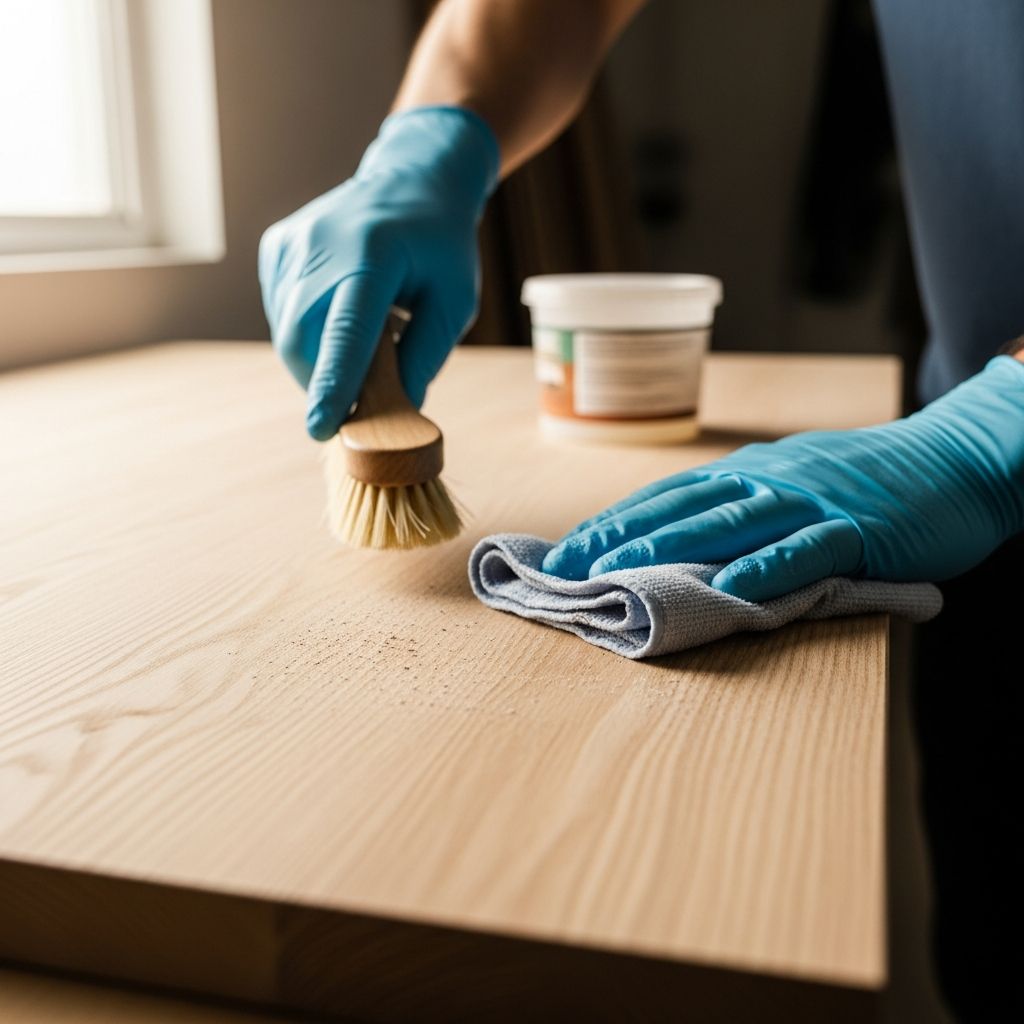
Start with the simplest step: remove all loose dust and debris from the wood surface. Use a soft-bristled brush, vacuum with an upholstery attachment, or clean cloth to gently sweep away surface dust. This initial cleaning prevents you from grinding debris into the wood grain during more intensive cleaning steps.
Pay special attention to crevices, corners, and any decorative details on your wood piece. Dust accumulates in these areas and can compromise your final finish if left behind.
Wipe with Mineral Spirits
Mineral spirits are an essential tool for wood preparation, particularly before staining. This solvent effectively removes embedded dust particles and reveals the wood’s true character, helping you see exactly what you’re working with. Mineral spirits also remove wax buildup and some surface oils without damaging the wood.
To use mineral spirits effectively, apply a liberal amount to a clean cloth and wipe the entire wood surface in the direction of the grain. The mineral spirits will darken the wood temporarily, which is normal. As the surface dries, you may notice that imperfections, stains, or color variations become more visible. This is actually helpful—it shows you exactly what the wood will look like under stain.
Allow the mineral spirits to dry completely, typically 15-30 minutes depending on temperature and humidity. Ensure adequate ventilation when working with mineral spirits, as they produce fumes.
Address Stubborn Stains and Discoloration
If your wood has stubborn stains, water marks, or significant discoloration, you may need to use additional cleaning methods. For water stains or mildew, a mixture of equal parts white vinegar and water can be effective. Apply this solution to the affected area, allow it to sit for several minutes, then scrub gently with a soft-bristled brush and wipe clean.
For tannin stains, oxalic acid cleaners specifically designed for wood can help. These products are particularly useful for removing dark stains from tannin-rich woods or water damage. Follow the product instructions carefully, as oxalic acid is caustic and requires proper safety precautions including gloves and eye protection.
Sand the Surface
Sanding is crucial for creating a smooth surface that allows stain to penetrate evenly. Even new wood has slight imperfections and a rough surface texture. Sanding accomplishes several important goals: it removes any remaining surface contaminants, opens the wood grain to accept stain better, and creates a uniform surface texture.
Begin with medium-grit sandpaper (120-150 grit) for initial sanding, then progress to fine-grit sandpaper (180-220 grit) for finishing. Always sand in the direction of the wood grain, never against it. Sand with even pressure and moderate speed to avoid creating flat spots or low areas in the finish.
Pay particular attention to areas that may have been previously finished or damaged. These areas often require more aggressive initial sanding before progressing to finer grits.
Remove All Sanding Dust
Sanding creates fine dust that must be completely removed before staining. Any remaining dust will interfere with stain absorption and create a rough, uneven finish. This is one of the most critical steps many DIYers overlook.
Use a vacuum with a fine filter attachment to remove the bulk of sanding dust. Follow this with a tack cloth, which is specially designed to capture fine particles that vacuum cannot remove. A tack cloth is slightly sticky and effectively lifts dust from the wood surface without leaving residue. Wipe the entire surface methodically, paying special attention to crevices, edges, and detailed areas.
Some professionals recommend a final wipe with a slightly damp cloth to remove any remaining dust particles, then allowing the wood to dry completely before staining.
Final Preparation Wipe
Once you’ve completed sanding and dust removal, perform a final wipe with mineral spirits on a clean cloth. This last step ensures you’ve removed any residual dust and prepares the wood surface for optimal stain absorption. This final pass helps reveal the wood’s grain pattern and ensures you’re starting with the cleanest possible surface.
Cleaning Different Types of Wood Surfaces
New, Untreated Wood
New wood from the lumber yard or home improvement store typically requires the least intensive cleaning. Mainly, you’ll focus on removing manufacturing dust and debris. Gentle brushing, light sanding with fine-grit paper, thorough dust removal, and a mineral spirits wipe usually suffice for new wood.
Previously Finished Wood
Wood that has been previously stained, varnished, or sealed requires more intensive preparation. You may need to use paint strippers or more aggressive sanding to remove the old finish. Some finishes can be sanded away using progressively finer sandpaper, while others require chemical strippers for effective removal.
Weathered or Outdoor Wood
Exterior wood exposed to weather accumulates mildew, algae, and UV damage. These surfaces benefit from pressure washing or scrubbing with specialized cleaners. After cleaning, allow adequate drying time before sanding and preparing for stain application.
Essential Tools and Materials
Preparing properly for your wood cleaning project requires having the right tools and materials on hand. Here’s what you’ll need:
- Soft-bristled brush for initial dust removal
- Vacuum with upholstery attachment
- Mineral spirits for surface cleaning
- Clean, lint-free cloths or rags
- Medium-grit sandpaper (120-150 grit)
- Fine-grit sandpaper (180-220 grit)
- Sanding block for even pressure distribution
- Tack cloth for dust removal
- Safety equipment including gloves and eye protection
- Adequate ventilation setup
Common Mistakes to Avoid
Skipping the Dust Removal Step
Many DIYers underestimate the importance of thorough dust removal, thinking that a quick wipe will suffice. Sanding dust in particular is incredibly fine and easily becomes embedded in stain, creating a rough, uneven finish. Always use both vacuum and tack cloth methods for complete dust removal.
Sanding with the Grain vs. Against It
Sanding against the wood grain can create scratches and tear-out that become visible under stain. Always sand in the direction of the grain for the smoothest possible finish.
Insufficient Drying Time
Whether you’re using water-based cleaners or mineral spirits, allow adequate drying time before proceeding to the next step. Applying stain to damp wood results in poor penetration and an inferior finish.
Using Dirty or Wet Cloths
Lint and moisture from cloths can compromise your finish. Always use clean, lint-free cloths, and ensure they’re dry before wiping the wood surface.
Frequently Asked Questions
Q: Can I skip cleaning and go straight to sanding?
A: While sanding will remove surface dust and debris, it’s better to do a light cleaning first. This prevents grinding contaminants into the wood grain during sanding and makes your sanding more effective.
Q: How long does wood need to dry after mineral spirits application?
A: Mineral spirits typically dry within 15-30 minutes, but allow extra time in humid conditions or cool temperatures. The wood should feel completely dry to the touch before sanding or staining.
Q: What’s the best way to remove old stain or finish from wood?
A: For thick old finishes, chemical paint strippers are often most effective. For thin finishes, aggressive sanding with medium-grit paper can work. Always follow safety instructions for any chemical products used.
Q: Should I wet sand or dry sand before staining?
A: Dry sanding is recommended before staining. Wet sanding raises the wood grain, which requires additional sanding after drying. Save wet sanding for between coats of polyurethane or other finishes, not before staining.
Q: How can I tell if my wood is clean enough for staining?
A: The wood should feel smooth to the touch with no visible dust or debris. A tack cloth should pick up no particles. The surface should have consistent color with no visible dirt or stains remaining.
Q: Is mineral spirits safe to use indoors?
A: While mineral spirits are less toxic than some solvents, they do produce fumes. Always work in well-ventilated areas, ideally with windows open and fans running to direct fumes outside.
Professional Tips for Best Results
Professional finishers know that investing time in proper preparation yields superior results. Start your project when you’re not rushed—attempting to hurry the preparation stage inevitably results in mistakes that are costly to correct. Allow adequate time between each step, ensuring that moisture is completely dry and that dust has settled before moving forward.
Consider the temperature and humidity where you’re working. Ideal conditions for wood preparation are 50-85°F with humidity between 30-50%. Extreme conditions can affect drying times and your sanding effectiveness.
Test your stain on a sample board using the same wood species and surface preparation. This helps you visualize the final result and identify any issues before committing to staining your actual project.
Remember that the time invested in thorough cleaning and preparation is never wasted. These steps directly determine the quality of your final finish and how long your stain will look beautiful and maintain its appearance.
References
- Essential Steps to Properly Clean and Prep Wood Before Staining for a Flawless Finish — DHGate Smart. Accessed December 04, 2025. https://smart.dhgate.com/essential-steps-to-properly-clean-and-prep-wood-before-staining-for-a-flawless-finish/
Similar Articles






Read full bio of medha deb