How to Drain a Washing Machine That Won’t Drain
Step-by-step guide to fix a non-draining washing machine and restore proper functionality.
A washing machine that won’t drain is one of the most frustrating problems homeowners face. When water gets stuck in your washing machine, it can create foul odors, damage your clothes, and potentially harm the appliance’s mechanical components. The good news is that many drainage issues can be resolved with basic troubleshooting and simple repairs. This comprehensive guide walks you through the process of identifying why your washing machine isn’t draining and provides actionable solutions to get it working again.
Understanding the Problem
Before attempting any repairs, it’s important to understand what causes a washing machine to stop draining. The drainage system in a washing machine is relatively straightforward—water should flow from the tub through the drain hose and into your home’s plumbing system. When this process fails, several components could be responsible. Common culprits include clogged filters, kinked hoses, blocked pumps, and faulty switches. Understanding these potential issues helps you approach the problem systematically and identify the exact cause of your drainage problem.
Safety First: Initial Steps
Before you begin any troubleshooting, safety should be your top priority. Start by unplugging your washing machine from the electrical outlet. This prevents accidental electrocution and ensures the machine won’t cycle unexpectedly while you’re working on it. Next, turn off the water supply to your washing machine by locating the water shutoff valves behind the machine and turning them clockwise. These valves are typically color-coded—blue for cold water and red for hot water.
If your washing machine is full of water, you’ll need to drain it before proceeding. Locate the drain hose at the back of your machine, and carefully pull it down into a bucket or container placed on the floor below the machine’s level. If your machine has an accessible filter at the front, you can also slowly open the filter cap to release water into a shallow pan. Be prepared for spillage and have towels ready to clean up any water that escapes.
Common Causes of Washing Machine Drainage Problems
Understanding the root cause of your drainage issue is essential for finding the right solution. Here are the most common reasons washing machines fail to drain:
Clogged Drain Filter
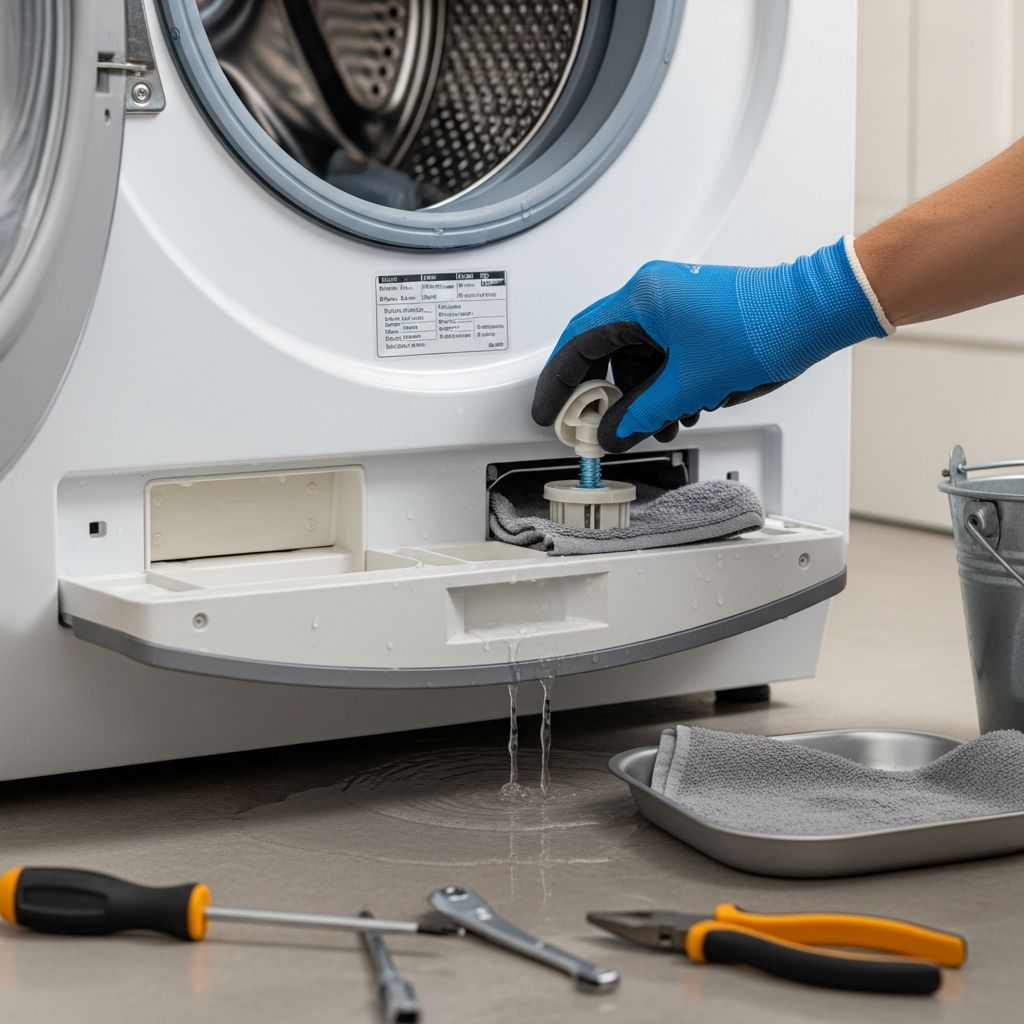
The drain filter is designed to catch small objects like coins, buttons, and lint before they reach the drain hose or pump. Over time, this filter accumulates debris and becomes clogged, preventing water from flowing through. The clogged filter is the most common reason for washing machine drainage problems. If your machine has a front-accessible filter, you can clean it yourself by removing the lower panel and accessing the filter compartment. Place a towel or shallow container underneath to catch excess water, then unscrew the filter cap and pull out the filter. Rinse it thoroughly under running water to remove all accumulated debris.
Blocked or Kinked Drain Hose
The drain hose carries water from your washing machine to your home’s plumbing system. This hose can become kinked, pinched, or blocked by debris, restricting water flow. If you’ve recently moved your washing machine, the hose may have become bent or twisted. To check the drain hose, pull your washing machine away from the wall carefully—avoid pulling it so far that you stretch the hose excessively. Visually inspect the hose for any obvious kinks or damage. If you find kinks, gently straighten them. For blockages inside the hose, disconnect it from both the washing machine and the drain outlet, then flush it with water using a garden hose or let water run through it to clear any obstructions.
Blocked Drain Pump
The drain pump is responsible for actively pushing water out of your washing machine. If debris blocks the pump impeller or housing, water cannot be expelled. Small objects like coins, pieces of metal, or foreign items can jam the pump. To check the pump, locate it (usually at the bottom of the machine) and inspect the pump housing for any visible obstructions. If you can access the pump safely, remove any debris blocking it. However, if the pump appears damaged or if you cannot safely access it, you may need to call a professional technician.
Faulty Lid or Door Switch
Most washing machines have a safety switch inside the lid or door that detects when the door is closed. If this switch is faulty, stuck, or damaged, the machine may not recognize that the door is closed and therefore won’t proceed with the drain cycle. Try opening the door or lid and visually inspecting the switch. If it appears stuck, broken, or damaged, this is likely your problem. Replacing a faulty lid or door switch typically requires a professional technician, as it often involves accessing internal components.
Broken Pump Drive Belt
The drain pump operates via a belt connected to the motor. If this belt becomes loose, frayed, or breaks entirely, the pump won’t function properly. Listen for unusual sounds during the wash cycle—a humming or grinding noise may indicate a belt problem. Inspecting or replacing the pump drive belt is a job best left to professionals, as it requires disassembling the machine.
Excess Detergent and Suds Buildup
Using too much detergent, especially regular detergent in a high-efficiency (HE) machine, can create excessive suds that confuse sensors and block the drain pump. Modern washing machines use less water, so they require less detergent. Excess suds create pressure issues within the drain system, preventing proper drainage. If you suspect this is your problem, run an extra rinse cycle without clothes to clear out excess suds. Consider running a vinegar rinse cycle, as vinegar helps reduce soap buildup. Going forward, only use the recommended amount of detergent, preferably HE detergent designed for modern washers.
Uneven or Overloaded Wash Load
An imbalanced load or an overloaded washing machine can prevent the spin and drain cycles from functioning properly. Heavy items like blankets and rugs can throw off the machine’s balance, causing it to pause automatically to prevent damage. If you hear loud thumping sounds, this often indicates an imbalance. Stop the cycle, redistribute the clothes evenly, and restart. For heavy items, consider washing them separately to ensure proper balance and drainage.
Step-by-Step Troubleshooting Guide
Follow these systematic steps to identify and fix your washing machine drainage problem:
Step 1: Empty the Machine
Remove all wet clothes from the washing machine. Set them aside to dry or rewash them later. This allows you to access the interior components and prevents clothes from getting in your way during troubleshooting.
Step 2: Check the Drain Hose
Pull the washing machine away from the wall and visually inspect the drain hose. Look for kinks, twists, or damage. Also check whether the hose is inserted too deeply into the standpipe, which can cause backflow issues. Straighten any kinks and adjust the hose position if necessary. The end of the hose should extend only 4 to 8 inches into the standpipe.
Step 3: Inspect the U-Bend Pipe
The drain hose typically connects to a U-bend pipe under your sink or in your wall. This U-bend can become clogged with debris, lint, or mineral buildup. If accessible, unscrew the bottom of the U-bend and place a container underneath to catch water. Inspect the interior for blockages and clear any debris you find. Rinse the U-bend with water to ensure it’s clear before reconnecting it.
Step 4: Access and Clean the Drain Filter
For front-loading washers, locate the drain filter access panel at the bottom front of the machine. Remove the panel and place a towel underneath to catch water. Slowly open the filter cap to release any trapped water. Once empty, unscrew the filter completely and rinse it thoroughly under running water. Remove all lint, hair, and debris. While the filter is removed, inspect the filter housing for obstructions and clear any debris you find. Reinstall the filter, making sure it’s secure before replacing the access panel.
Step 5: Test the Drainage
After cleaning the filter and hose, run a short test cycle or a rinse-and-spin cycle without clothes. This helps verify that your fixes have resolved the drainage issue. If water drains properly, congratulations—you’ve fixed the problem. If water still remains, proceed to the next steps or consider calling a professional.
Step 6: Check for Mechanical Failures
If the above steps don’t resolve the problem, the issue may involve mechanical components that require professional attention. Listen carefully during the spin cycle for unusual sounds like humming, grinding, or clicking. These sounds may indicate problems with the pump, belt, or motor. If you suspect mechanical failure, stop using the machine and contact a qualified appliance repair technician.
When to Call a Professional
While many drainage problems can be fixed with basic troubleshooting, some issues require professional expertise. Contact a technician if you encounter any of the following:
– The drain pump appears damaged or doesn’t respond to manual clearing attempts- The pump drive belt is broken, frayed, or loose- The lid or door switch is visibly damaged or stuck- Your washing machine emits unusual sounds during operation- Water still doesn’t drain after cleaning the filter and hose- You suspect electrical or sensor issues affecting the drainage system- Your machine is still under warranty, and attempting repairs yourself could void it
Preventive Maintenance Tips
Regular maintenance can help prevent future drainage problems and extend your washing machine’s lifespan. Check your pockets before washing clothes to remove coins, tissues, and other small objects that could clog the filter or pump. Use the correct amount of detergent, preferably high-efficiency (HE) detergent, to prevent excessive suds. Avoid overloading the machine, as this strains the drainage system and reduces wash quality. Periodically clean the drain filter, especially if you wash items that shed lint. Every few months, run a cleaning cycle using a commercial washing machine cleaner or hot water with vinegar to remove buildup inside the machine. Ensure the drain hose isn’t kinked or pinched, and check that it’s at the correct depth in the standpipe.
Understanding Your Washing Machine’s Drainage System
To troubleshoot effectively, it helps to understand how your washing machine drains. During the spin cycle, the drain pump activates and forces water out through the drain hose. The drain hose carries this water to your home’s plumbing system, typically through a U-bend pipe under the sink. The entire system relies on proper connections, clear pathways, and functional mechanical components. Any blockage or malfunction in this chain prevents proper drainage. By understanding this process, you can identify problems more quickly and communicate them clearly to repair professionals if needed.
Frequently Asked Questions
Q: Why is my washing machine not draining?
A: The most common reasons are a clogged drain filter, blocked drain hose, jammed drain pump, faulty lid switch, or excessive suds from too much detergent. Start by cleaning the filter and inspecting the hose for blockages.
Q: Can I unclog my washing machine drain myself?
A: Yes, many drainage issues can be resolved yourself. Clean the drain filter, straighten kinked hoses, clear blockages, and flush the drain hose with water. However, mechanical problems with the pump, belt, or switches require professional service.
Q: Is it safe to open a washing machine full of water?
A: Not without proper precautions. Always unplug the machine first, turn off the water supply, and drain the water using the drain hose or filter before opening the machine. Use towels to catch spillage.
Q: How often should I clean my washing machine drain filter?
A: Clean the filter monthly, or more frequently if you notice water draining slowly. Regular maintenance prevents blockages and extends your machine’s lifespan.
Q: Can too much detergent cause drainage problems?
A: Yes, excess detergent creates suds buildup that can block sensors and the drain pump. Always use the recommended amount, and use high-efficiency (HE) detergent for modern machines.
Q: What should I do if my washing machine still won’t drain after troubleshooting?
A: If basic troubleshooting doesn’t resolve the issue, the problem likely involves mechanical components like the pump, belt, or switch. Contact a professional appliance repair technician for diagnosis and repair.
Q: How do I prevent future washing machine drainage problems?
A: Check pockets before washing, use the correct amount of detergent, avoid overloading, clean the filter regularly, ensure the drain hose isn’t kinked, and run periodic cleaning cycles.
Q: How deep should the drain hose be inserted into the standpipe?
A: The drain hose should extend only 4 to 8 inches into the standpipe. If inserted too deeply, it can cause backflow issues and prevent proper drainage.
References
- What to do if your washing machine isn’t draining — Domestic and General. Accessed December 2025. https://www.domesticandgeneral.com/blog/washing-machine-tips/what-to-do-if-your-washing-machine-is-not-draining
- Top 7 Reasons Your Washing Machine Won’t Drain — ByNext. Accessed December 2025. https://bynext.co/blog/top-7-reasons-your-washing-machine-wont-drain/
- Washing Machine Not Draining? Fix It Now — American Home Shield. Accessed December 2025. https://www.ahs.com/home-matters/quick-tips/steps-to-drain-water-out-a-washing-machine/
Similar Articles








Read full bio of medha deb