How to Drain a Water Heater: Complete Guide
Master the essential maintenance task of draining your water heater to extend its lifespan and improve efficiency.
How to Drain a Water Heater: A Comprehensive Maintenance Guide
Draining your water heater is one of the most important maintenance tasks you can perform to keep your home’s hot water system running efficiently and effectively. Over time, sediment and mineral deposits accumulate at the bottom of your water heater tank, reducing its efficiency, increasing energy costs, and potentially damaging the unit. By draining and flushing your water heater annually, you can remove these harmful deposits, extend the lifespan of your equipment, and maintain optimal performance. This comprehensive guide walks you through the entire process, from preparation to completion.
Why You Should Drain Your Water Heater Regularly
Understanding the importance of regular water heater maintenance is the first step toward becoming a responsible homeowner. As water heats in your tank, minerals and sediment naturally settle to the bottom. This sediment buildup causes several problems: it reduces heating efficiency, forces your heater to work harder and use more energy, creates annoying noises in the tank, and can eventually cause corrosion and leaks that lead to expensive repairs or complete replacement.
By draining your water heater once a year, typically in the fall before winter heating season, you remove these accumulated deposits and restore efficiency. Many experts recommend this annual maintenance task as part of a comprehensive home care routine. The process is relatively simple, takes only a few hours, and can save you thousands of dollars in premature replacement costs.
Tools and Materials You’ll Need
Before you begin draining your water heater, gather the following items to ensure a smooth, safe process:
- Garden hose (long enough to reach a drain or outdoor location)
- Bucket or large container (for catching water)
- Screwdriver or adjustable wrench (to open the drain valve)
- Towels or rags (to catch spills and wipe connections)
- Gloves (to protect against hot water)
- Pump (optional, if you don’t have a floor drain)
- Flashlight (to see the drain valve clearly)
Safety Precautions Before You Start
Water heaters contain extremely hot water—often between 120 and 140 degrees Fahrenheit—so safety must be your top priority. Follow these essential precautions before beginning the draining process:
- Turn off the power supply: For electric water heaters, switch off the circuit breaker. For gas heaters, turn the thermostat to the pilot setting or use the gas shutoff valve.
- Allow the water to cool: Wait at least two to four hours, or preferably overnight, for the water in the tank to cool to a safe temperature.
- Wear protective gear: Use gloves and consider wearing safety glasses to protect against unexpected splashes.
- Ensure proper ventilation: If you have a gas water heater, make sure the area is well-ventilated.
- Have a fire extinguisher nearby: Just in case, keep one accessible in the vicinity of your water heater.
Step-by-Step Instructions for Draining Your Water Heater
Follow these detailed steps to properly drain and flush your water heater:
Step 1: Turn Off the Power Supply
The first critical step is to disable the heating element to prevent the water heater from turning on with an empty tank, which can cause serious damage. For electric water heaters, locate your home’s electrical panel and switch off the circuit breaker dedicated to the water heater. For gas water heaters, turn the thermostat dial to the lowest setting or to the pilot-only mode. If your heater has a separate gas shutoff valve, turn it to the off position. Always allow several hours for the water temperature to drop before proceeding.
Step 2: Shut Off the Cold Water Supply
Locate the cold water inlet valve at the top of your water heater. This valve controls the flow of fresh water into the tank. Turn the valve handle perpendicular to the pipe—typically 90 degrees—to shut off the water supply. If you cannot find this valve, you can shut off the main water supply to your entire house, though this is not necessary if you can isolate just the water heater supply.
Step 3: Relieve Tank Pressure
This is a crucial step that many homeowners overlook. When you close the water inlet valve, the tank can develop a partial vacuum that prevents water from draining properly. To allow air into the system, you have two options: Open the temperature and pressure relief valve (TPR valve) at the top of the water heater, or open one or two hot water faucets anywhere in your home to allow air to enter the system. Choose whichever method is most convenient for your situation.
Step 4: Attach the Drain Hose
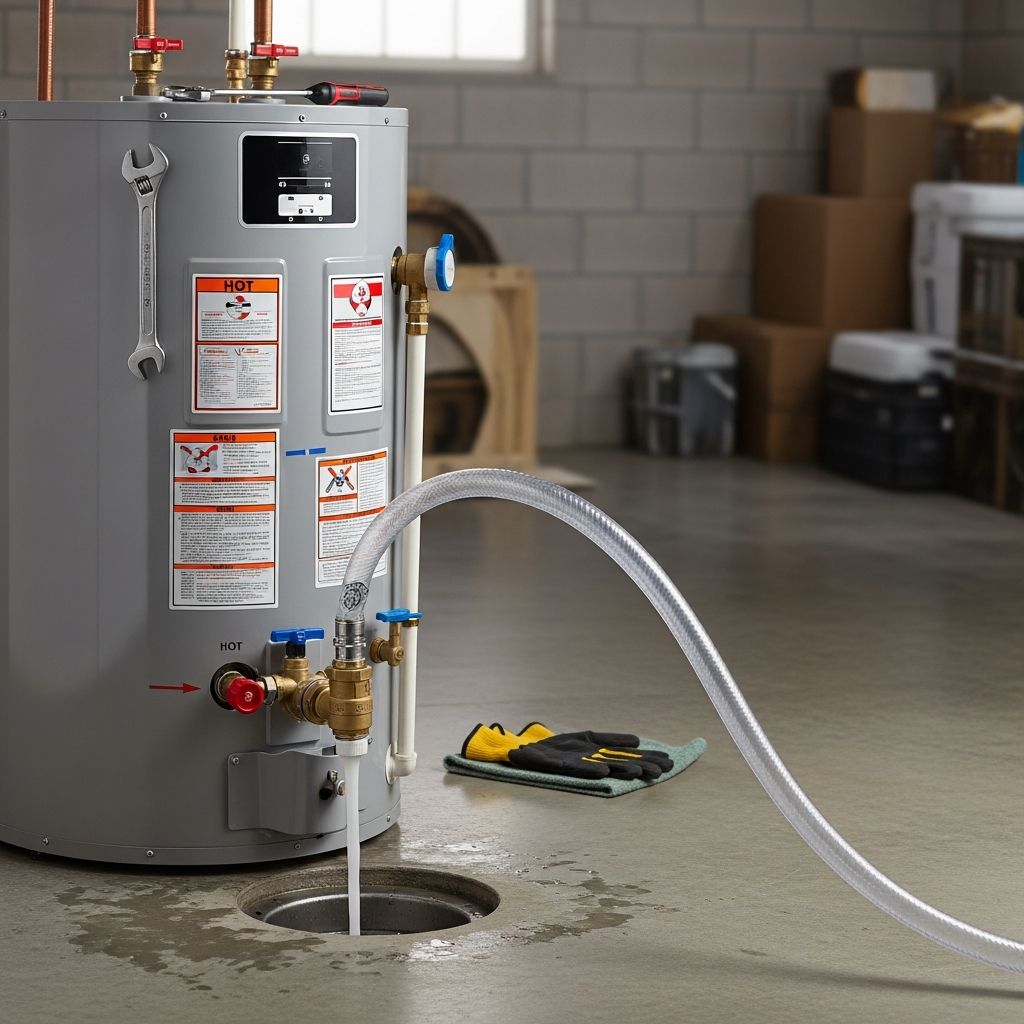
Locate the drain valve at the very bottom of your water heater tank. Attach one end of your garden hose to the drain valve connector. Direct the other end of the hose to an appropriate drainage location—a floor drain, outdoor area, or large bucket or container. Make sure the hose is secure and properly positioned before opening the valve to prevent water from spraying unexpectedly.
Step 5: Open the Drain Valve
Using a screwdriver or wrench, turn the drain valve counterclockwise about 90 degrees to open it fully. Water will begin flowing out through the hose. This process may take 30 minutes to several hours depending on your tank size, so be patient. The water may be quite hot initially, so keep hands and feet clear of the hose and drainage area.
Step 6: Flush Out Remaining Sediment
Once the tank has completely drained, you can flush out stubborn sediment deposits. Turn the cold water supply back on briefly—for just 10 to 20 seconds—to stir up any remaining sediment at the bottom of the tank. Then immediately turn it back off and let the water drain again. Repeat this process two or three times until the water flowing from the hose runs clear with no visible sediment or cloudiness. The white specks and particles you observe are the mineral deposits being flushed from your tank.
Step 7: Close the Drain Valve
Once the water runs clear and you’re satisfied that most sediment has been removed, close the drain valve by turning it clockwise until it’s tight. Do not overtighten, as this can damage the valve. Remove the hose from the drain valve and set it aside.
Step 8: Refill the Tank
Open the cold water supply valve completely to begin refilling your water tank. As the tank fills, water should flow from the hot water faucet you opened earlier. Leave this faucet open until water flows steadily and continuously—this indicates the tank is full and air has been purged from the lines. After several minutes, when you see steady water flow, close the hot water faucet.
Step 9: Close the Relief Valve
If you opened the temperature and pressure relief valve to allow air into the system during draining, close it now by turning it clockwise until snug.
Step 10: Restore Power and Check for Leaks
Restore power to your water heater by switching the circuit breaker back on (for electric units) or returning the gas thermostat to your desired temperature setting (for gas units). Allow 30 minutes for the water heater to begin heating the water. Check the drain valve and surrounding connections for any leaks. If you notice water dripping from the drain valve, you may need to tighten it slightly or eventually have it replaced if it continues to leak.
Two Methods for Draining Your Water Heater
There are two primary methods for draining water heaters, and you can choose one or combine both for optimal results:
| Draining Method | Description | Best For |
|---|---|---|
| Gravity Drain | Shut off water supply, open drain valve, and let water flow out naturally without additional pressure | Initial draining; removing most water from tank |
| Pressure Flush | Leave water supply on and use incoming water pressure to force out water and stir sediment | Flushing sediment; second and third flushes |
Troubleshooting Common Issues
You may encounter some challenges during the draining process. Here’s how to address them:
The Drain Valve Won’t Open: If the valve is stuck, try using a wrench for better leverage. Apply steady pressure rather than forcing it suddenly. You can also apply a penetrating oil and wait a few minutes before trying again. If it remains stuck, contact a professional plumber.
Water Drains Very Slowly: This typically indicates sediment is clogging the valve. Ensure you’ve opened a hot water faucet inside the house to allow air into the system. Try closing and opening the valve several times to dislodge debris. If the problem persists, use the pressure flush method to stir up sediment.
Heavy Sediment Buildup: If you see excessive sediment coming from the hose, perform multiple flush cycles—up to three or more if necessary. This indicates your water heater hasn’t been drained in a while, and thorough flushing is needed to restore efficiency.
Leaking Drain Valve After Closing: If the valve continues to drip after you’ve tightened it, it may need replacement. Contact a plumber to install a new drain valve.
How Often Should You Drain Your Water Heater?
Most manufacturers and plumbing experts recommend draining your water heater at least once per year. However, if you have particularly hard water with high mineral content, you may need to drain it more frequently—possibly twice yearly. Regular draining is especially important in areas with hard water, where sediment accumulates faster. By maintaining this schedule, you’ll keep your water heater operating at peak efficiency and extend its lifespan significantly.
Signs Your Water Heater Needs Draining
Watch for these indicators that your water heater requires immediate draining:
- Rumbling, popping, or crackling noises coming from the tank
- Reduced hot water supply or pressure
- Hot water that appears rusty or discolored
- Increased energy bills without explanation
- Water heater taking longer than usual to heat water
- Visible corrosion or rust on the tank exterior
Frequently Asked Questions
Q: Can I drain my water heater myself, or do I need to hire a professional?
A: Most homeowners can safely drain their own water heater by following proper safety precautions and step-by-step instructions. However, if you’re uncomfortable working with plumbing systems or your water heater has unusual features, consulting a professional plumber is always a safe choice.
Q: How long does it take to drain a water heater?
A: The complete process typically takes 1 to 3 hours, depending on your tank size, sediment buildup, and drainage method. The actual draining may take 30 minutes to an hour, with additional time for flushing cycles.
Q: What should I do with the water that comes out?
A: Direct the hose to a floor drain, outdoor area, storm drain, or large container. Do not direct hot water onto plants or in areas where it could cause damage. Let the water cool before disposing of it if using containers.
Q: Is it necessary to turn off the gas or electricity before draining?
A: Yes, absolutely. Never allow your water heater to operate with an empty tank, as this can damage the heating element and create safety hazards. Always turn off power before beginning the draining process.
Q: What if my water heater has a tankless system?
A: Tankless water heaters don’t require draining in the traditional sense, though they do require flushing to remove scale buildup. Consult your manufacturer’s instructions or contact a professional for proper maintenance of tankless systems.
Q: Can I drain my water heater during winter?
A: Yes, you can drain your water heater anytime, though fall is typically recommended to prepare for winter heating season. However, if you experience performance issues at any time of year, don’t hesitate to drain and flush your system.
Q: What happens if I don’t drain my water heater?
A: Without regular draining, sediment accumulates, reducing efficiency and increasing energy costs. The buildup can cause corrosion, leaks, strange noises, and eventually lead to complete tank failure requiring expensive replacement.
References
- How to Drain a Water Heater for Beginners: A Step-by-Step Guide — YouTube. 2024. https://www.youtube.com/watch?v=TeQbvyZtDk4
- How Do You Drain a Water Heater? — Jon Wayne Services. 2024. https://jonwayne.com/articles/how-to-drain-water-heater
- Draining and Flushing an Electric Water Heater — This Old House. 2024. https://www.thisoldhouse.com/plumbing/21016872/draining-flushing-an-electric-water-heater
Similar Articles



Read full bio of Sneha Tete