How to Fish Wire Through Wall: Complete DIY Guide
Master the art of fishing electrical wire through walls without damage using proven techniques and tools.
How to Fish Wire Through Wall: A Complete DIY Guide
Running new electrical wires through finished walls and ceilings can be a challenging task for homeowners and DIY enthusiasts. Whether you’re adding new outlets, upgrading your home’s electrical system, or installing new fixtures, the process of fishing wire through existing walls without causing damage requires knowledge of specialized tools and techniques. This comprehensive guide will walk you through everything you need to know about fishing wire through walls, from understanding the essential tools to mastering the step-by-step process.
Understanding Electrical Wire Fishing
Electrical wire fishing is the process of routing new wires through walls, ceilings, and other enclosed spaces without tearing apart drywall or causing unnecessary damage to your home’s structure. This technique is essential when you’re working with finished walls where you cannot simply open up the wall cavity. Professional electricians have developed specialized methods and tools over decades to make this process efficient and safe.
The primary challenge of fishing wire through walls is navigating the obstacles within the wall cavity, including studs, insulation, pipes, and existing wiring. Without the proper tools and understanding of wall structure, you could damage hidden utilities or create dangerous electrical situations. Learning the correct methods ensures both safety and aesthetic results.
Essential Tools for Fishing Wire Through Walls
Flex Bits: The Foundation of Wire Fishing
A flex bit, also known as a flexible drill bit or fishtape extension, is perhaps the most important tool in your wire fishing arsenal. This specialized tool consists of a drill bit mounted on a flexible shaft, allowing you to reach areas that standard rigid drill bits cannot access. The flexibility of the shaft enables you to navigate around obstacles and navigate through wall cavities with precision.
Flex bits come in various lengths and diameters, typically ranging from 6 feet to 25 feet or more. The longer the flex bit, the greater the distance you can drill through walls and between floors. When selecting a flex bit, consider the diameter of the shaft—thicker shafts are more durable but less flexible, while thinner shafts are more flexible but may be prone to bending under pressure.
Using a flex bit requires a drill with variable speed control. Start at a low speed and gradually increase the RPM as you work through the wall. The flexible shaft will naturally curve around obstacles, but you need to maintain steady pressure and control to guide it properly. Most professionals recommend using a cordless drill with good torque control for the best results.
Glow Sticks: The Electrician’s Tool of Choice
Glow sticks represent another essential tool that most professional electricians consider indispensable for fishing wire through walls. These flexible, hollow tubes glow brightly, making them visible in dark wall cavities and attic spaces. The glow stick’s visibility is crucial when you’re trying to locate the hole you’ve drilled or guide wire through tight spaces.
Most glow sticks are designed to be threaded together, allowing you to create custom lengths for your specific project. This modularity means you don’t need to purchase multiple different lengths—you can simply connect the sections as needed. A typical glow stick section measures about 3-4 feet, and you can combine multiple sections to reach across floors or through long wall runs.
The standard diameter of glow sticks is approximately half an inch, making them compatible with most fishing operations. The rigid yet slightly flexible nature of the glow stick allows it to maintain its shape while still maneuvering through wall cavities. Additionally, glow sticks are reusable and relatively inexpensive, making them a cost-effective addition to your tool collection.
Common End Attachments
Glow sticks and other fishing tools typically come with various end attachments designed for different purposes:
- Loop ends: These circular hooks are designed for tying on wires, strings, or fish tape. You can secure your electrical wire to the loop, allowing the glow stick to pull it through the wall cavity. The loop design prevents the wire from slipping off during the pulling process.
- Hook ends: These curved hooks are ideal for grabbing and securing wires or fishing tape from the opposite side of the wall. If you’ve already threaded a fish tape through, you can use the hook end to grab it and attach your new wire.
- Magnetic ends: Some fishing tools feature magnetic ends that can help locate metal components or grab magnetic fish tape more easily.
- Combination ends: Many glow sticks come with multiple end options that you can switch depending on your needs.
Additional Tools and Materials
Beyond flex bits and glow sticks, several other tools and materials will make your wire fishing project more successful:
Fish tape: Also called electrical tape or fishing wire, this tool is a thin, flat metal ribbon that can navigate through walls and help guide heavier wires. Fish tape is particularly useful for longer runs and can be pushed or pulled through walls more easily than rigid tools.
Stud finder: Electronic stud finders help you locate wall studs, allowing you to plan your drilling points and avoid damaging structural elements. Knowing where studs are located helps you determine the best path for your wires.
Drywall saw: For some projects, you may need to cut small access holes in drywall. A drywall saw allows for precise, clean cuts that can be patched afterward.
Flashlight or headlamp: Adequate lighting is essential when working inside wall cavities. A hands-free headlamp allows you to see what you’re doing while keeping both hands free for manipulating tools.
Safety equipment: Always wear safety glasses to protect your eyes from dust and debris. Consider wearing gloves to protect your hands from fiberglass insulation and rough wall materials.
Step-by-Step Process for Fishing Wire Through Walls
Planning Your Route
Before you begin any drilling or fishing work, carefully plan the route for your electrical wire. Identify the starting point and endpoint for your wire run. Use a stud finder to locate wall studs and other structural elements. Mark the locations where you’ll need to drill holes, typically at the base of the wall or in inconspicuous areas.
Consider existing utilities in the wall, including plumbing, HVAC ducts, and existing electrical wiring. Knowing what’s already in the wall helps you avoid costly and dangerous mistakes. If you’re unsure about what’s behind your walls, consider using an inspection camera before proceeding.
Drilling Initial Access Holes
Once you’ve planned your route, drill small pilot holes at your starting and ending points. These holes should be slightly larger than your flex bit or glow stick. Use a standard drill bit first to create a pilot hole, then expand it as needed.
Start with a slow drill speed and gradually increase it as you work. Maintain steady, even pressure without forcing the bit. If you encounter significant resistance, stop and reassess—you may have hit a stud or other obstruction that requires rerouting.
Using the Flex Bit for Initial Exploration
Insert your flex bit into the pilot hole and begin drilling slowly. The flexible shaft will naturally bend around obstacles in the wall cavity. Maintain control by keeping your hand steady and watching the drill carefully. If you feel resistance increasing dramatically, you may have hit an obstruction—gently retract and adjust your angle.
As you work the flex bit through the wall, you’re creating a pilot path that will guide your glow stick and eventual wire. The flex bit should eventually exit through your pre-drilled hole on the other side of the wall.
Threading the Glow Stick
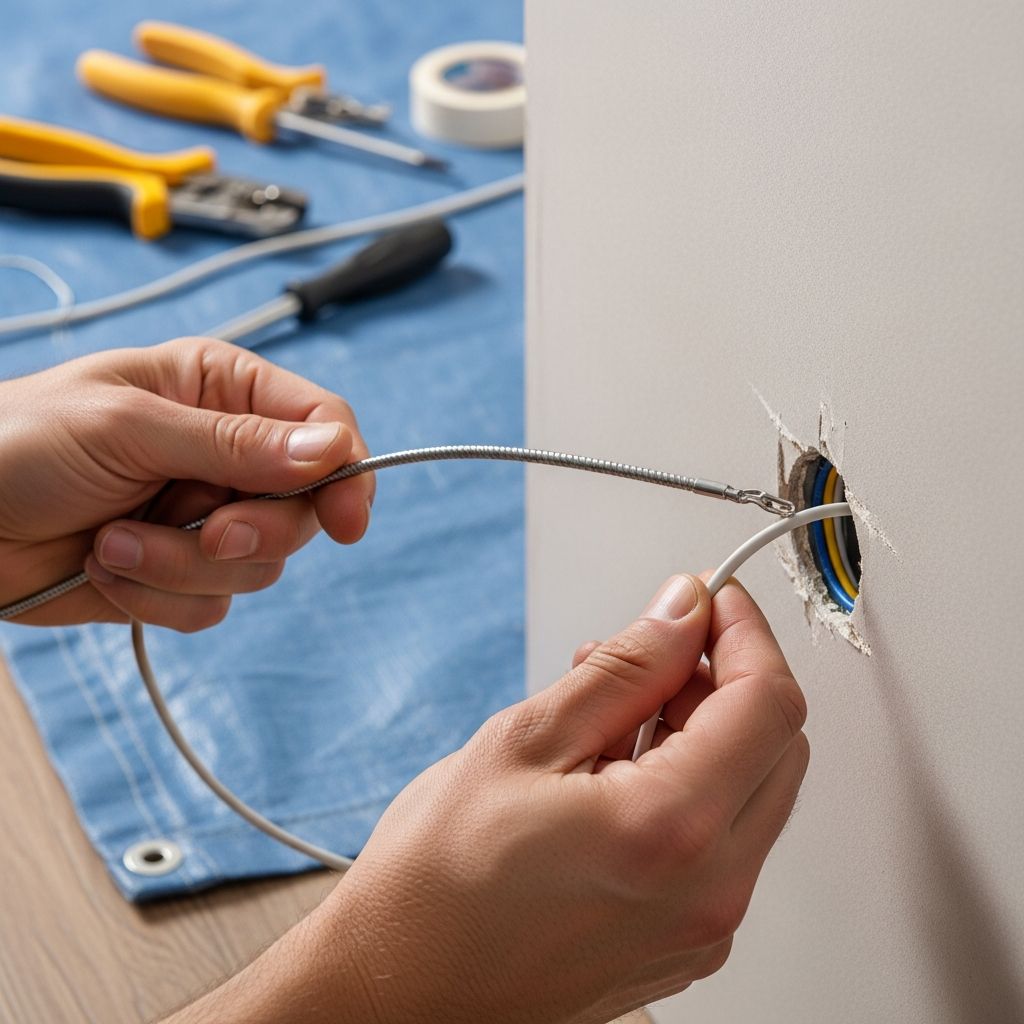
Once you’ve successfully navigated through the wall with your flex bit, you have a clear path for your glow stick. From one end, thread the glow stick sections together to reach from your starting point to your endpoint. The glow will help you see the stick’s position inside the wall cavity.
Connect the sections firmly to ensure they don’t separate inside the wall. Push the glow stick assembly through the wall slowly and steadily. If you encounter resistance, don’t force it—gently work it back and forth, maintaining steady pressure until it moves through.
Attaching and Pulling Wire
Once your glow stick is positioned through the wall, attach your electrical wire to the appropriate end (usually the loop end). Ensure the wire is firmly secured so it won’t slip during pulling. From the opposite end of the wall, carefully pull the glow stick assembly, which will draw your wire behind it through the wall cavity.
Pull smoothly and steadily, avoiding jerky movements that could dislodge the wire. If you feel significant resistance, stop and investigate rather than forcing the issue. Sometimes you need to slightly retract and adjust the angle for easier movement.
Common Challenges and Solutions
Encountering Obstacles
Wall cavities frequently contain unexpected obstacles like fire blocking, insulation bundles, or other wiring. If your glow stick or flex bit gets stuck, don’t panic. Gently work it back and forth in small motions to navigate around the obstacle. You may need to try a slightly different angle or path.
Long Distance Runs
For runs longer than your glow stick’s maximum length, you have several options. Thread multiple glow sticks together to extend your reach, or use fish tape in combination with glow sticks. You might also consider drilling intermediate access holes to break the run into shorter segments.
Tight Spaces
In areas with limited space, such as between studs or in shallow walls, standard glow sticks may not fit. Thinner fishing wire or specialized narrow glow sticks designed for tight spaces can be the solution. Always verify that you have adequate space before committing to a particular path.
Safety Considerations
Safety should always be your paramount concern when fishing wire through walls. Before beginning work, turn off power to any circuits in the area where you’re working. Use a circuit tester to verify that power is off. Never assume that a wire is dead—always test it.
Wear appropriate personal protective equipment, including safety glasses and gloves. Be aware of the location of pipes and ductwork to avoid creating hazardous situations. If you’re unsure about what’s in your walls or uncomfortable with any aspect of the project, consult with a licensed electrician.
Ensure that any new wiring you install meets local electrical codes and is properly secured, supported, and protected according to regulations. Improper wire installation can create fire hazards or shock risks.
Professional Tips and Best Practices
Professional electricians have refined these techniques over decades of experience. Here are their proven best practices:
- Lubrication: Some professionals apply a light coating of lubricant to glow sticks to help them slide more easily through walls. Ensure any lubricant used is non-conductive and appropriate for electrical work.
- Multiple tools: Keep several different glow stick lengths and flex bits on hand. Having options available allows you to adapt to various situations quickly.
- Team approach: When possible, work with a partner. One person can manage the glow stick on one side of the wall while the other guides it from the opposite side, improving control and communication.
- Test runs: Before committing to running expensive electrical wire, sometimes electricians run a test string or fish tape first to ensure the path is clear and workable.
- Documentation: Mark and document the paths where you’ve run wires. This information is valuable for future work and helps prevent accidentally drilling into existing wires.
Frequently Asked Questions
Q: Can I fish wire through walls without a flex bit?
A: While it’s technically possible to use other methods like fish tape or fishing string alone, a flex bit makes the process significantly easier and more reliable. The flex bit allows you to create a clear pilot path that makes subsequent steps much smoother. Professional electricians consider flex bits essential for this reason.
Q: How long does a typical wire fishing project take?
A: The time required depends on the distance, wall complexity, and your experience level. A simple single-room run might take 30 minutes to an hour, while longer runs between floors or through multiple walls could take several hours. Professionals typically work faster than DIY homeowners due to their experience and familiarity with common wall configurations.
Q: What’s the maximum distance I can fish wire through a wall?
A: Standard glow sticks are available in sections up to 25 feet or more. By threading multiple sections together, you can reach distances well beyond 50 feet. For exceptionally long runs, you may need to drill intermediate access holes to break the project into manageable sections.
Q: Is it legal to do this work myself, or do I need a licensed electrician?
A: This depends on your local electrical codes and regulations. Many jurisdictions allow homeowners to perform electrical work in their own homes, but some require a licensed electrician for all electrical work. Check with your local building department or electrical inspector before starting your project. Even if DIY is permitted, consider hiring a professional if you’re uncomfortable with any aspect of the work.
Q: What type of wire should I use for fishing through walls?
A: The wire gauge and type depend on what electrical load it will carry and local codes. Common options include 12 AWG or 14 AWG copper wire for standard household circuits. Always use UL-approved wire and consult the National Electrical Code or your local equivalent for specific requirements.
Q: Can I damage existing wiring while fishing new wire?
A: Yes, this is a real risk. This is why careful planning, knowing what’s in your walls, and using proper techniques are essential. Work slowly and carefully, and consider having a professional inspection of your walls before beginning if you’re uncertain about what’s inside.
Q: What should I do if my glow stick gets stuck in the wall?
A: Stay calm and avoid forcing it, as this could damage the wall or break the glow stick inside it. Gently work it back and forth in small motions, gradually working it either forward or backward. If it remains stuck after gentle attempts, you may need to drill additional access holes to retrieve it or try a different route entirely.
References
- How to Fish Wire Through a Wall — Family Handyman. 2017-07-09. https://www.familyhandyman.com/electrical/wiring/fishing-electrical-wire-through-walls
- National Electrical Code (NEC) — National Fire Protection Association (NFPA). 2023. https://www.nfpa.org/codes-and-standards/all-codes-and-standards/list-of-codes-and-standards/detail?code=70
- Residential Wiring to the NEC — International Association of Electrical Inspectors (IAEI). 2023. https://www.iaei.org/
- Electrical Wiring: Residential — International Code Council (ICC). 2023. https://www.iccsafe.org/codes-standards/codes/irc/
- Safe Electrical Practices for Home Improvement — U.S. Consumer Product Safety Commission (CPSC). 2024. https://www.cpsc.gov/
Similar Articles


Read full bio of Sneha Tete