How To Get Blood Out Of Clothes: Step-By-Step Guide
Master effective techniques to remove blood stains from any fabric with proven methods.
How to Get Blood Out of Clothes
Blood stains can be stubborn and concerning, but with the right approach and timing, they don’t have to be permanent. Whether you’ve experienced a minor cut, nosebleed, or other accident that resulted in blood on your favorite garment, knowing the proper removal techniques can save your clothing from permanent damage. The key to successful stain removal lies in acting quickly and using the appropriate cleaning methods for your specific situation.
Why Act Fast on Blood Stains?
Time is your greatest ally when dealing with blood stains. Fresh blood is significantly easier to remove than dried blood because the protein molecules haven’t fully bonded to the fabric fibers yet. The longer blood sits on fabric, the more it sets in, making removal increasingly difficult. Understanding this principle will help you prioritize your response and increase your chances of complete stain removal.
How to Get Fresh Blood Out of Clothes
Fresh blood stains are your best-case scenario for complete removal. If you notice blood on your clothes immediately, you have a significant advantage. Fresh blood responds well to cold water treatment and common household items, making this the ideal time to take action.
What You’ll Need
- Bar soap
- Hydrogen peroxide
- Fabric-safe bleach (chlorine or non-chlorine)
- Laundry pre-treater
- Enzyme-containing liquid laundry detergent
- Cold water
Step-by-Step Instructions for Fresh Blood Removal
Step 1: Soak the stain in cold water immediately
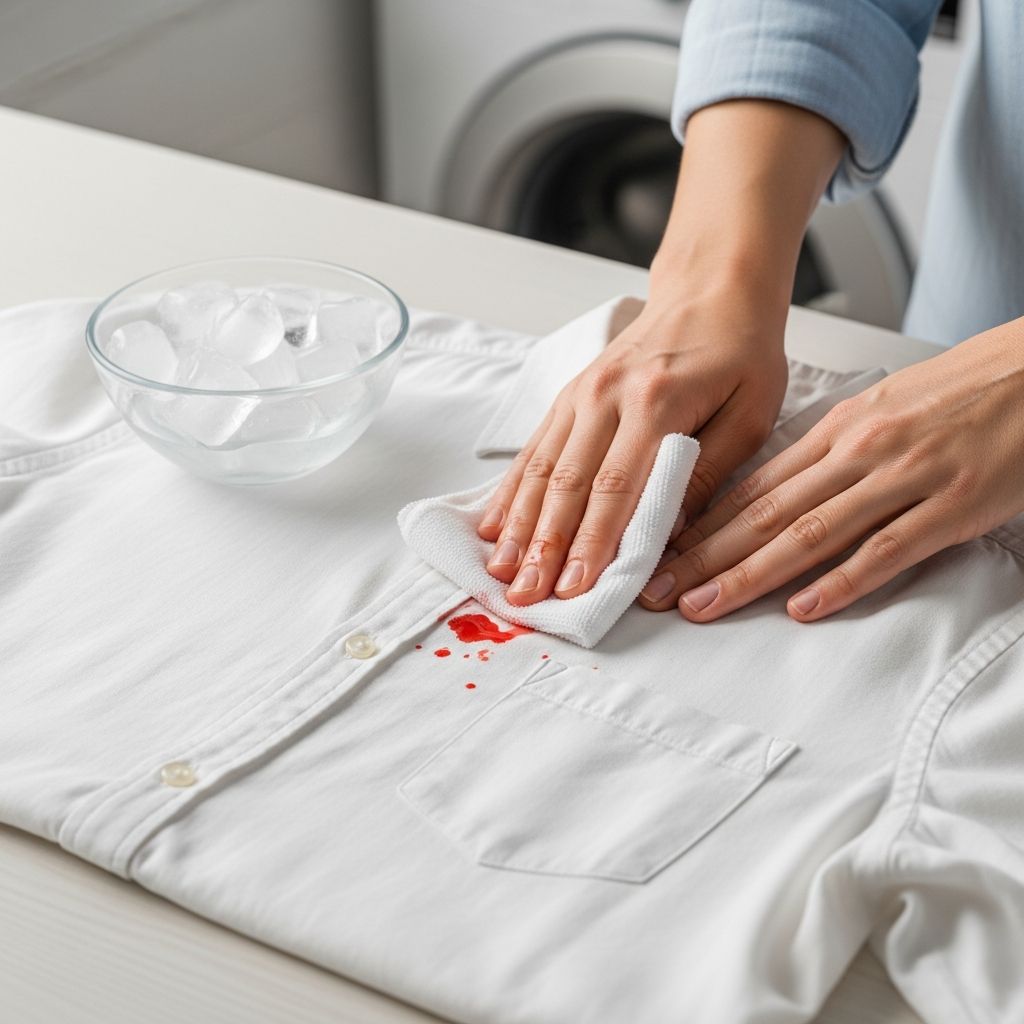
As soon as you notice blood on your clothing, place the affected area under cold running water. This is crucial—cold water helps flush out fresh blood before it can set into the fabric. Let the water run through the stain for several minutes, working from the back of the fabric when possible. This technique helps push the blood out rather than deeper into the fibers.
Step 2: Treat with hydrogen peroxide or bar soap
Once you’ve rinsed the area with cold water, apply hydrogen peroxide to a clean cloth and blot the stain gently. Hydrogen peroxide works by breaking down the protein in blood, making it an excellent choice for fresh stains. For very heavy stains on colorfast fabrics, you can carefully apply hydrogen peroxide directly to the stain or soak the area in a small bowl of the solution. Alternatively, rub bar soap directly into the stain while it’s still wet, working it into the fabric with your fingers or a soft brush.
Step 3: Scrub with soap and cold water
Continue scrubbing the stained garment by hand with bar soap and cold water. Use circular motions and gentle pressure to work the soap into the fabric. This manual scrubbing helps lift the blood particles away from the fibers. Always remember to use cold water, never hot, as heat can set the stain permanently.
Step 4: Apply laundry pre-treater or enzyme detergent
After the initial soap and water treatment, apply a laundry pre-treater directly to the stain, or rub in an enzyme-containing liquid laundry detergent. Enzyme-based detergents are specifically formulated to break down protein stains like blood, making them highly effective for this purpose. Allow the product to sit on the stain for the time recommended on the product label.
Step 5: Machine wash in warm water with fabric-safe bleach
Place the garment in your washing machine and wash it in warm water with a fabric-safe bleach. Check your garment’s care label first to ensure it can tolerate bleach. If your fabric cannot handle chlorine or non-chlorine bleach, consider using an alternative stain treater. Always spot-test any new product on an inconspicuous area of the garment first.
Step 6: Check before drying
Before placing the garment in the dryer, examine the stain carefully. The heat from the dryer can set any remaining stain permanently. If traces of blood remain, repeat the treatment steps before drying.
How to Get Dried Blood Out of Clothes
Discovered a blood stain that’s been there for a while? Don’t worry—dried blood isn’t necessarily permanent. It simply requires more patience and heavier-duty stain removers. The process for removing set-in blood stains differs slightly from fresh stain removal because the blood has already begun bonding with the fabric fibers.
What You’ll Need
- Stain-removing laundry soaker
- Bar soap
- Fabric-safe bleach
- Enzyme-containing liquid laundry detergent
- Ammonia
- Laundry pre-treater
- Cold water
Step-by-Step Instructions for Dried Blood Removal
Step 1: Presoak the garment
Begin by preparing a soaking solution. Mix cold water with one to two teaspoons of liquid laundry detergent or a specialized stain-removing product like enzyme-based soakers. Submerge the stained garment in this mixture and allow it to soak for several hours, or ideally overnight. This extended soaking helps rehydrate the dried blood and allows the cleaning agents to penetrate the fabric thoroughly.
Step 2: Pretreat with laundry pre-treater or bar soap
After the initial soak, remove the garment and treat the stain directly with a laundry pre-treater, or rub bar soap into the affected area. Work the soap into the fabric gently but firmly, creating a lather that will help break down the remaining blood particles.
Step 3: Launder in warm water with fabric-safe bleach
Place the pretreated garment in your washing machine and wash it in warm water with fabric-safe bleach. This combination helps remove any remaining stain.
Step 4: Reassess and repeat if necessary
If the stain remains after the initial treatment, don’t give up. Repeat the presoaking step, this time for an even longer period. For stubborn stains, try a more powerful soaking solution: combine one quart of cold water with one teaspoon of laundry detergent and one tablespoon of ammonia. Allow the garment to soak in this solution for several hours, depending on the severity of the stain. Ammonia is a powerful protein dissolver but should be used carefully and never mixed with bleach, as this creates toxic fumes.
Step 5: Final pretreatment and laundering
Once the extended soak is complete, pretreat the stain again and launder the garment. Most dried blood stains should respond to this intensive approach.
Alternative Methods and Household Remedies
Beyond the primary methods, several household items have been used to tackle blood stains. While these alternatives aren’t always as effective as the recommended methods, they can be helpful in certain situations.
Salt for Fresh Blood Stains
Salt may help absorb some fresh blood if you act quickly, but it’s not effective for set-in stains. If using salt, sprinkle it directly on the fresh stain to absorb moisture, then rinse immediately with cold water. This method works best as a first-aid measure before applying more robust treatments.
Baking Soda Paste
A baking soda paste made with two parts baking soda and one part water can help remove blood stains, particularly when other methods haven’t been successful. Apply the paste directly to the stain and allow it to sit for approximately 30 minutes before rinsing with cold water and laundering. This method is gentle on fabrics and can be a good alternative if bleach or enzyme products aren’t suitable.
Distilled White Vinegar
Some people find success using distilled white vinegar on blood stains, especially fresh ones. Apply vinegar to a cloth and blot the stain, or soak the affected area in a vinegar and water solution. The acidity can help break down blood proteins, though hydrogen peroxide is generally more effective.
Toothpaste: A Method to Avoid
While toothpaste can technically treat blood stains, it’s not a recommended method. Toothpaste cannot be used on unwashable fabrics, may further stain the garment, and can leave an unpleasant smell. Stick with proven methods instead of experimenting with toothpaste.
Dawn Dish Soap
Dawn dish soap can be effective for fresh blood stains, particularly because it’s powerful at breaking down proteins. However, for set-in stains, enzyme-based laundry detergent specifically formulated for protein stains is a better choice. Dawn works best as a preliminary treatment for fresh blood rather than as a primary solution for dried stains.
Important Tips and Special Considerations
Never use hot water: This is perhaps the most critical rule for blood stain removal. Hot water causes blood proteins to bond more firmly to fabric fibers, setting the stain permanently. Always use cold water throughout the removal process. If you’ve already accidentally washed a blood stain in hot water, you can still try the removal methods described above, but complete removal may not be possible.
Period blood removal: Period blood can be removed using the same methods and products as any other blood stain. There’s no need for special treatment—follow the standard fresh or dried blood removal procedures depending on how long the stain has been present.
Treating denim: When removing blood stains from jeans, turn the jeans inside out to apply stain remover directly to the stained area. This approach helps the cleaning agents penetrate the thick denim fabric more effectively.
Spot testing: Always test any new cleaning product or stain remover on an inconspicuous area of your garment first—such as an inside seam or hem—to ensure it won’t damage or discolor the fabric.
Don’t use the dryer: Refrain from putting the garment in the dryer until you’re completely certain the stain is gone. Heat from the dryer can permanently set any remaining traces of blood.
Comparison of Common Blood Stain Removal Methods
| Method | Best For | Effectiveness | Safety |
|---|---|---|---|
| Hydrogen Peroxide | Fresh and light dried stains | Very High | Generally safe; test first |
| Enzyme Detergent | Both fresh and dried stains | Very High | Safe for most fabrics |
| Bar Soap + Cold Water | Fresh stains | High | Very safe |
| Ammonia Soak | Stubborn dried stains | High | Strong odor; never mix with bleach |
| Salt | Very fresh stains only | Low to Medium | Very safe |
| Baking Soda Paste | Mild to moderate stains | Medium | Very safe |
Frequently Asked Questions
Q: Can blood stains be removed after they’ve been dried for weeks?
A: Yes, even old dried blood stains can often be removed with patience and persistent treatment. However, the longer a stain sets, the more difficult it becomes to remove completely. Use the extended presoak method with ammonia solutions for the best results with very old stains, and be prepared to repeat treatments multiple times.
Q: Is it safe to mix ammonia with bleach?
A: No, never mix ammonia with bleach. This combination creates toxic chloramine gas, which is dangerous to breathe. If using ammonia for soaking, ensure the garment is thoroughly rinsed before washing with bleach, or use only one treatment method at a time.
Q: What should I do if a blood stain has already been through the dryer?
A: If heat has set a blood stain, removal becomes much more challenging but not necessarily impossible. Try the dried blood removal methods, focusing on the ammonia soak technique for stubborn, heat-set stains. However, be aware that complete removal may not be achievable.
Q: Can I use these methods on delicate fabrics like silk or wool?
A: Check your garment’s care label first. For delicate fabrics, use milder methods like cold water rinsing and bar soap before trying hydrogen peroxide or bleach. Consider having delicate garments professionally cleaned if the stain is particularly stubborn.
Q: How quickly do I need to treat a blood stain?
A: The sooner you treat a blood stain, the better your chances of complete removal. Ideally, treat it within minutes of the stain occurring. However, even stains that have been sitting for hours can still respond well to proper treatment if you act as soon as you notice them.
Q: Are commercial stain removers better than household methods?
A: Commercial stain removers specifically formulated for protein stains, like enzyme-based products, can be very effective. However, simple household methods using cold water, bar soap, and hydrogen peroxide often work just as well, especially for fresh stains. The best approach often combines both methods.
References
- How to Get Blood Out of Clothes — Good Housekeeping. 2024. https://www.goodhousekeeping.com/home/cleaning/a69237759/get-blood-out-of-clothes/
- Effective Methods to Erase Blood Stains from Any Fabric Safely and Easily — DHgate. 2024. https://smart.dhgate.com/effective-methods-to-erase-blood-stains-from-any-fabric-safely-and-easily/
Similar Articles




Read full bio of medha deb