How to Get Gum Out of Clothes: Complete Removal Guide
Learn proven methods to remove gum from any fabric without causing damage to your clothes.
How to Get Gum Out of Clothes: A Complete Removal Guide
Discovering gum stuck to your favorite piece of clothing can be frustrating and stressful. Whether it’s a child’s accident or an unfortunate encounter, gum can bond firmly to fabric fibers, making removal seem impossible without damaging the garment. The good news is that gum removal doesn’t have to be complicated or expensive. With the right techniques and common household items, you can successfully remove gum from virtually any type of fabric and restore your clothing to its original condition.
Understanding how gum works is the first step toward removing it effectively. Gum is composed of a mixture of sticky resins and rubbery substances that allow it to adhere strongly to fabric fibers. However, this bond can be broken using simple methods that don’t require specialized chemical cleaners or professional intervention. Whether you choose to freeze the gum, use natural solvents, or apply household items, the key is patience and knowing which method works best for your specific fabric type.
Why Gum Sticks to Fabric
Gum adheres to clothing because its sticky resin components bond with fabric fibers at a molecular level. The longer gum remains on fabric, the more firmly it sets in. This is why immediate action is often beneficial, though even dried gum can be removed with the proper technique. The composition of different gum types may vary slightly, but all share the characteristic of becoming harder and more brittle when frozen, which is why the freezing method is so universally effective.
The Ice Freezing Method: The Most Effective Approach
The ice freezing method stands as the most popular and effective way to remove gum from clothing. This technique works by taking advantage of gum’s physical properties—when frozen, gum becomes hard and loses its stickiness, making it significantly easier to remove without damaging the underlying fabric.
Step-by-Step Ice Removal Process
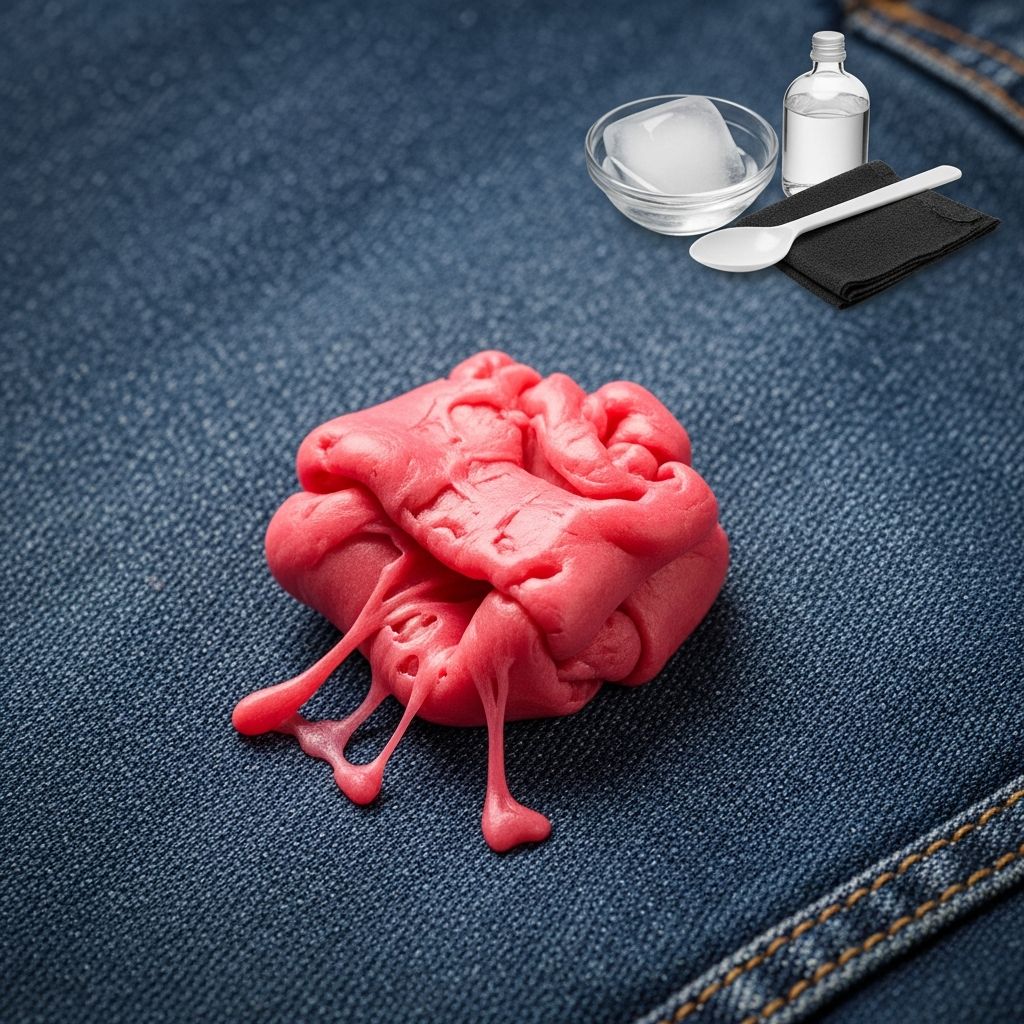
Step 1: Apply Ice Directly Press an ice cube directly onto the gum. Since the ice will melt as you hold it in place, you’ll need multiple cubes throughout the process. Keep applying fresh ice cubes until the gum becomes completely hardened and brittle. For best results, allow at least 30 minutes of continuous freezing to ensure the gum reaches its maximum hardness throughout its entire thickness.
Step 2: Scrape Away the Hardened Gum Once the gum is frozen solid, gently scrape it away using a plastic spoon, butter knife, or plastic scraper. Work carefully to avoid applying too much pressure, which could damage or distort the fabric. The gum should come away in chunks or flakes. If small pieces remain, continue applying ice and scraping until all residue is removed.
Step 3: Clean the Remaining Residue After removing the main bulk of the gum, you may notice a slight sticky residue remaining on the fabric. This can be treated with a pre-treatment stain remover, enzyme detergent, or liquid laundry soap. Apply the treatment directly to the affected area and let it sit for several minutes before proceeding to the washing step.
Step 4: Wash the Garment Machine wash the item in the warmest water recommended on the care label, using detergent and a color-safe stain remover if needed. This final wash ensures that any remaining gum particles and cleaning agents are completely removed from the fabric.
Alternative Methods Using Household Items
While ice freezing is the most effective method, several other household items can successfully remove gum from clothing when you don’t have ice available or prefer alternative approaches.
Peanut Butter Method
Peanut butter contains natural oils that help break down gum’s sticky components, making it easier to remove from fabric. To use this method, apply a generous amount of peanut butter directly to the gum and let it sit for three to five minutes. The oils will penetrate and loosen the gum’s bond with the fabric. Gently rub or scrape the gum away, and repeat the process if necessary. After removing all visible gum, treat the oily residue with a degreasing dish soap before laundering the garment normally.
White Vinegar Solution
White vinegar acts as a natural solvent that can dissolve the sticky residue left by gum. Apply white vinegar directly to the affected area and let it soak for a few minutes. Use a soft brush or cloth to gently rub away the loosened gum. The acidity in vinegar helps break down the adhesive properties of the gum without harming most fabrics. This method works particularly well for washable cotton and synthetic blends.
Rubbing Alcohol and Hairspray
Both rubbing alcohol and hairspray contain solvents that can effectively break down gum. Apply either solution to the gum and let it sit briefly, then gently rub or scrape away the loosened gum. These methods work quickly and are especially useful for delicate fabrics. However, always test these solutions on a small, inconspicuous area of the fabric first to ensure they won’t cause discoloration or damage.
Baking Soda Scrub
Baking soda’s mild abrasive texture can help lift gum from fabric when combined with a small amount of water to create a paste. Apply the paste directly to the gum and gently scrub with a soft brush. The texture of the baking soda helps dislodge the gum while remaining gentle enough not to damage most fabrics. This method is particularly useful for textured fabrics where small particles of gum might remain trapped.
Removing Gum from Specific Fabric Types
Different fabrics require different care levels when removing gum, as some are more delicate than others. Understanding the specific needs of your garment ensures successful removal without unintended damage.
Leather and Suede
Leather and suede require special care due to their delicate nature. Begin with the ice freezing method, pressing ice cubes onto the gum until it hardens completely. Gently scrape away the frozen gum using a plastic spoon or knife, being careful not to scratch the leather surface. Keep a towel handy to absorb water from melting ice. If the garment is suede, check the care label first—if it says “Dry clean only,” take it to a professional dry cleaner rather than attempting home treatment. For suede items labeled as safe for home laundering, follow the ice method and then consult the care instructions for any remaining residue.
Wool and Wool Blends
Wool requires gentle handling to prevent damage or shrinkage. The ice freezing method can be used on wool blends, but work carefully and avoid excessive scraping. Test any alternative methods like vinegar or alcohol on an inconspicuous area first. For pure wool items, professional dry cleaning is often the safest option if home methods prove unsuccessful.
Carpets and Upholstery
Gum on carpets and upholstery can be removed using the ice method, but additional steps prevent water damage. After scraping away the frozen gum, follow up with steam cleaning to eliminate any residue and prevent water spots. Allow all surfaces to air-dry completely to prevent mildew growth. This two-step approach ensures both gum and any cleaning solution residue are thoroughly removed.
Removing Gum from Pants Pockets and Dryer Drums
Gum can find its way into challenging locations that require special techniques for complete removal.
Pants Pockets
Gum in pants pockets requires extra ice due to the fabric layers involved. Freeze the gum in small portions and scrape after each freezing cycle. This method allows you to gradually pull the pocket lining outward, giving you better access to all the gum throughout the pocket. Continue the process until no gum remains.
Clothing Dryer
If gum has ended up in your dryer drum, use the freeze-and-scrape technique carefully to avoid leaving chunks that could stain future loads. Work methodically, removing pieces as they freeze. After scraping away all visible gum, wipe the interior of the dryer with a clean, wet towel to ensure complete removal. Finally, tumble dry some clean towels for a few minutes to completely dry the drum and remove any moisture.
Professional Tips and Best Practices
Following these professional recommendations ensures the best possible outcome when removing gum from your clothing:
- Use enough ice to completely freeze the gum—it may feel cold, but if it’s not fully frozen, it won’t scrape off as easily
- Avoid scraping too hard, as this can distort the fabric’s appearance and potentially damage fibers
- If gum doesn’t come off easily, apply more ice rather than using force
- Always test alternative methods on a small, hidden area first to check for discoloration
- Keep a towel handy when using ice to absorb water from melting cubes
- For delicate fabrics, consider professional dry cleaning as the safest option
- Act relatively quickly—while dried gum can be removed, fresh gum often responds more readily to treatment
Comparison of Gum Removal Methods
| Method | Effectiveness | Speed | Cost | Fabric Safety | Best For |
|---|---|---|---|---|---|
| Ice Freezing | Excellent | 30+ minutes | Free | Very Safe | Most fabrics |
| Peanut Butter | Very Good | 5-10 minutes | Free | Safe | Durable fabrics |
| White Vinegar | Good | 5-15 minutes | Free | Very Safe | Cotton, synthetics |
| Rubbing Alcohol | Very Good | 5-10 minutes | Low | Test First | Delicate fabrics |
| Baking Soda Paste | Good | 10-15 minutes | Free | Very Safe | Textured fabrics |
Frequently Asked Questions
Q: How long does it take to remove gum using the ice method?
A: The ice freezing method typically requires 30 minutes of continuous application to fully harden the gum. After freezing, scraping takes an additional 5-10 minutes, depending on the size of the gum spot and remaining residue.
Q: Can I use the ice method on delicate fabrics?
A: Yes, the ice method is very safe for delicate fabrics because it doesn’t involve chemicals or aggressive scrubbing. However, use gentle scraping techniques and avoid applying excessive pressure that could damage the fabric.
Q: What should I do if gum gets stuck in my dryer?
A: Use the freeze-and-scrape method carefully to remove gum from the dryer drum. Work methodically to avoid leaving fragments that could stain future loads. Afterward, wipe the drum with a damp cloth and run an empty dryer cycle with clean towels to dry it completely.
Q: Is peanut butter safe to use on all clothing?
A: Peanut butter works well on most durable fabrics, but the natural oils can leave a residue. Always follow peanut butter treatment with a degreasing soap and warm wash to remove oil residue before the garment dries.
Q: When should I take clothing to a professional dry cleaner?
A: Take garments to a professional dry cleaner if they’re labeled “Dry clean only,” made of delicate materials like pure silk or wool, or if home removal methods haven’t completely eliminated the gum after several attempts.
Q: Can I prevent gum from sticking to clothing?
A: While prevention isn’t always possible, encouraging proper gum disposal, monitoring children’s gum use, and keeping gum away from clothing are the best preventative measures. Treating gum removal quickly also prevents it from setting more firmly into fabric fibers.
Q: Does the type of gum matter when removing it?
A: Most gum types respond similarly to freezing and other removal methods. However, sugar-free gum sometimes behaves slightly differently than traditional gum. If one method doesn’t work well, try an alternative approach.
References
- How to Get Gum Out of Clothes — Clorox. Accessed December 3, 2025. https://www.clorox.com/learn/how-to-get-gum-out-of-clothes/
- How to Remove Gum from Clothes Using Items You Already Have — Princess Laundry. December 16, 2024. https://princess-laundry.cleancloud.site/blog/how-to-remove-gum-from-clothes-using-items-you-already-have
Similar Articles





Read full bio of Sneha Tete