How to Get Rid of Carpenter Ants: Complete Guide
Learn effective methods to eliminate carpenter ants and protect your home from structural damage.
How to Get Rid of Carpenter Ants: A Comprehensive Guide
Carpenter ants represent one of the most destructive pest problems homeowners face across North America. Unlike common household ants that are mere nuisances, carpenter ants tunnel through wood to create their nests, potentially causing significant structural damage to your home over time. These large insects can be particularly problematic when they go undetected for extended periods, as they work continuously to expand their colonies within your home’s wooden structures. Understanding how to identify, locate, and eliminate carpenter ants is essential for protecting your property investment.
Understanding Carpenter Ants: Biology and Behavior
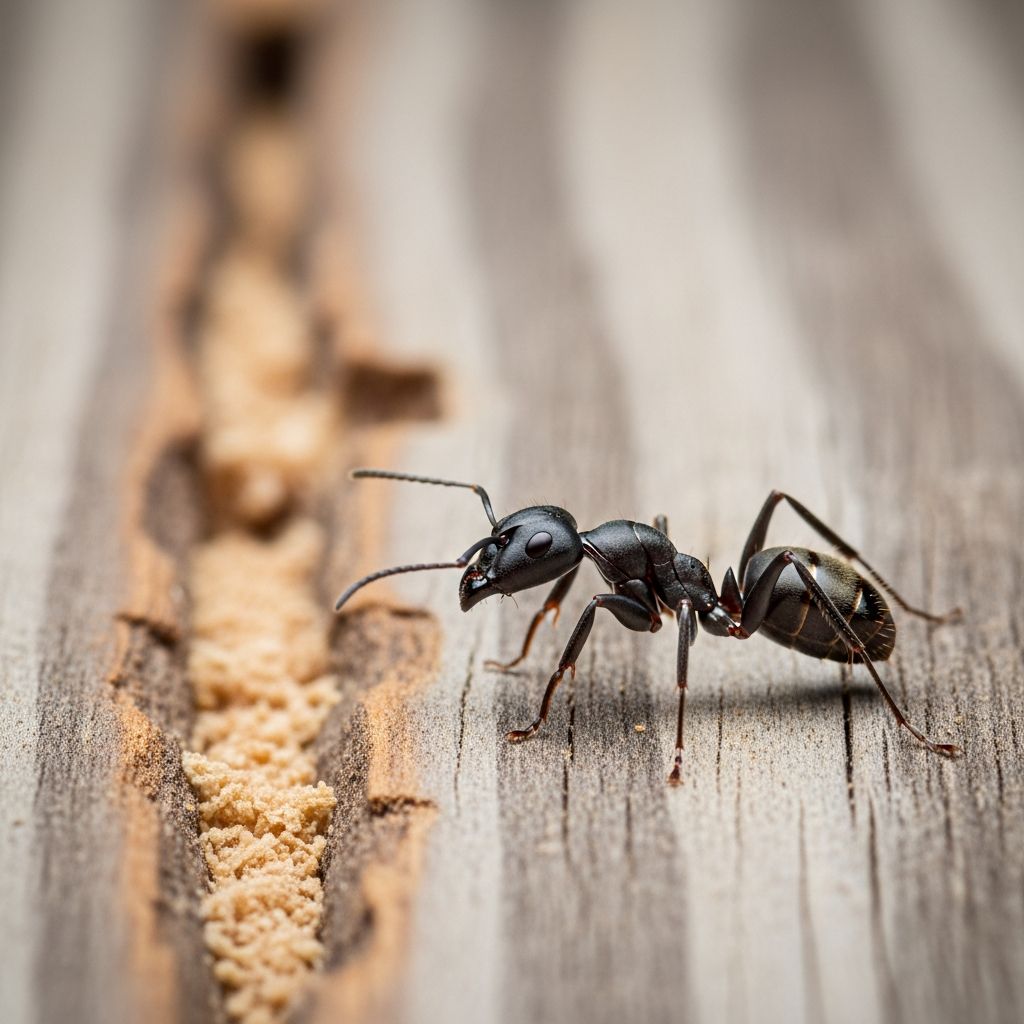
Carpenter ants derive their name from their remarkable ability to excavate wood and create intricate tunnel systems known as galleries. These large ants, typically ranging from black to reddish-brown in color, are among the largest ant species found in North American homes. Unlike termites that consume wood as a food source, carpenter ants do not eat wood; instead, they hollow it out to create nesting spaces where they lay eggs, care for larvae, and establish their colonies.
In nature, carpenter ants prefer to nest in dead or decaying wood, including dead trees, logs, dead branches, and stumps. However, when these ants find their way into your home, they actively seek out water-damaged and moist wooden materials. A bathroom leak that has caused wood degradation behind walls or a poorly maintained roof that allows water infiltration creates ideal conditions for carpenter ant colonies to establish themselves. Once a parent colony is established, these ants expand to create satellite colonies throughout your home’s structure.
Identifying Carpenter Ants vs. Other Pests
One of the most critical steps in addressing a carpenter ant problem is proper identification. Many homeowners confuse carpenter ants with termites, particularly when they observe winged carpenter ants. However, distinguishing between these pests is relatively straightforward once you know what to look for.
Key Identification Features
Physical Characteristics: Carpenter ants possess a distinctly narrow waist or middle body segment known as the thorax. Their antennae feature an elbow-like angle, distinguishing them from other ant species. If winged carpenter ants are present, the front pair of wings is noticeably longer than the rear pair, with relatively few veins visible on the wings.
Termite Comparison: Termites leave behind mud-like material as waste from consuming wood, which accumulates in and around their nests. In contrast, carpenter ant colonies leave only smooth, coarse wood shavings or sawdust. Additionally, the tunnels created by termites appear rough and jagged, while those created by carpenter ants look smooth and polished. When uncertain, professional pest control inspection can definitively identify the pest species affecting your home.
Signs of Carpenter Ant Infestation
Early detection of carpenter ant activity significantly increases your ability to address the problem before extensive damage occurs. Homeowners should watch for several telltale signs indicating the presence of carpenter ants.
Common Indicators of Infestation
Rustling Sounds: When you place your ear against an infested wooden area, you may hear faint rustling noises caused by ants moving through tunnels. As colonies grow larger, these sounds become more pronounced and easier to detect.
Worker Ant Sightings: You will likely observe individual worker ants foraging for food before discovering the nest itself. These large ants are often spotted trailing along walls, baseboards, and wooden structures, particularly during nighttime hours when carpenter ants are most active.
Winged Swarmers: In spring, you may notice groups of winged carpenter ants, known as swarmers, emerging from nests. This swarming behavior indicates that a mature colony has been established for at least two years. Observing swarmers is a strong sign that an established nest exists somewhere in or around your home.
Wood Damage and Frass: Look for small, clean holes in wooden structures, walls, and trim. Near these entry points, you will typically find small piles of coarse sawdust, referred to as frass, which the ants push out from their tunnels as they excavate.
High-Risk Areas for Carpenter Ant Nesting
Carpenter ants most commonly establish nests in damp, decaying wood, making certain areas of your home particularly vulnerable:
- Bathrooms, especially behind walls and under sinks
- Areas surrounding windows and door frames
- Kitchens, particularly near water pipes and around flooring
- Crawl spaces with moisture problems
- Sheds and garages where water accumulation occurs
- Exterior wood siding and wooden utility structures
Threats to Your Home’s Structure
The risk level of carpenter ant infestation varies by geographic location. The black carpenter ant species prevalent in the Northern United States is more likely to establish indoor nests compared to southern carpenter ant species. While carpenter ants do not pose direct health threats—they do not spread disease, and their bites are rarely delivered and never dangerous—the structural damage they cause can be catastrophic.
Carpenter ants do not work as quickly or cause as much damage as termites, and they must leave their nests to forage for food, making them somewhat easier to spot. However, when carpenter ants establish colonies in wall voids and remain undetected for extended periods, they can hollow out significant portions of wood, compromising the structural integrity of your home. This can lead to costly repairs and potential safety hazards if wooden support beams become severely weakened.
Methods for Getting Rid of Carpenter Ants
Successfully eliminating carpenter ants requires a strategic approach combining nest location, targeted treatment, and sometimes professional intervention. Several effective methods exist for addressing carpenter ant infestations at different severity levels.
Finding the Nest
Locating the nest is often the most challenging and critical step in eliminating carpenter ants. Since carpenter ants are nocturnal, checking for their activity during evening and nighttime hours significantly increases your chances of spotting them. Observe ant trails and follow them to identify entry points into your home. You can also use carpenter ant-specific bait to lure ants out of their nests, revealing active pathways and tunneling areas. Listening carefully for rustling sounds within walls and wooden structures can help pinpoint nest locations. Additionally, drilling small holes into suspected areas and listening or observing for ant activity may help you reach hidden colonies.
Insecticide Treatment
Pyrethroid-based insecticidal sprays and boric acid dust can be applied directly into nests and tunnels where carpenter ants are active. These chemicals are effective at killing ants on contact and eliminating colonies when properly applied. However, care must be taken to avoid applying insecticides in electrical areas or near sources that could cause ignition. For maximum effectiveness, treatments should target the nest itself rather than just the worker ants visible in your home.
Bait Application
Carpenter ant-specific poisoned baits can be placed along ant trails and near entry points. Baits work by allowing worker ants to consume the poison and carry it back to the nest, where it spreads throughout the colony. This method takes several weeks to work effectively, as the poison must reach and kill the queen and substantial portions of the colony. If ants ignore one type of bait, switching between sweet and protein-based bait options often improves effectiveness. Patience is essential when using baits, as complete colony elimination takes time.
Desiccant Dust Treatment
Diatomaceous earth and other desiccant dusts can be applied to affected areas to dehydrate and kill carpenter ants. These fine powders work by absorbing the protective oils from the ant’s exoskeleton, causing death through dehydration. However, care must be taken to avoid inhaling the fine dust particles, and protective equipment should be worn during application.
Professional Pest Control Services
While DIY carpenter ant removal is possible, it is often difficult and may not completely eliminate established colonies. Professional pest control treatment is frequently the best choice for severe infestations, as licensed technicians possess specialized equipment and expertise to access hidden nests while causing minimal structural damage to your home. Professional services typically cost between $250 and $500 for carpenter ant treatment, reflecting the complexity and potential structural concerns involved.
Professional pest control companies offer comprehensive treatments that include thorough inspections to locate all nests, targeted application of industry-strength treatments, and follow-up monitoring to ensure complete colony elimination. Many companies offer specialized carpenter ant treatment plans as part of their pest control services.
Distinguishing Between Carpenter Ant and Termite Damage
Understanding the differences between carpenter ant and termite damage helps you determine the severity of your infestation and appropriate response. Termites produce mud-like waste material from consuming wood, which accumulates in and around their nests. Carpenter ants leave only wood shavings as debris. Termite tunnels have a rough, jagged appearance, while carpenter ant tunnels are smooth and polished. When uncertain about the type of pest or extent of damage, contacting a professional pest control service for a thorough inspection provides definitive identification and a targeted treatment plan.
Prevention and Long-Term Management
Preventing carpenter ant infestations is more effective than treating established colonies. Reduce moisture in and around your home by fixing leaks promptly, ensuring proper drainage, and maintaining gutters. Remove dead trees, stumps, and wood piles near your home. Seal cracks and crevices in foundations, windows, and door frames to prevent ant entry. Regular inspections of wooden structures, particularly in bathrooms and kitchens, help catch infestations early before significant damage occurs.
Frequently Asked Questions
Q: How do I know if I have carpenter ants or regular ants?
A: Carpenter ants are significantly larger than common household ants and have a narrow waist with elbowed antennae. Look for piles of coarse sawdust and smooth, clean holes in wood. If you see winged ants in spring, this is a strong indicator of carpenter ants.
Q: Can carpenter ants cause structural damage to my home?
A: Yes, carpenter ants can cause significant structural damage by hollowing out wood to create nests. While they work slower than termites and cause less damage, undetected colonies can still compromise the structural integrity of your home over time.
Q: Are carpenter ants dangerous to humans?
A: carpenter ants do not spread disease and pose no direct health threat to humans. While they can bite, they do so rarely and the bites are not dangerous.
Q: How long does it take to eliminate a carpenter ant colony?
A: The timeline depends on the treatment method used. Bait treatments typically take several weeks to eliminate the colony completely, while professional treatments with insecticides and targeted nest removal may require follow-up visits over 1-2 months.
Q: Where are carpenter ants most likely to nest in my home?
A: Carpenter ants prefer moist, decaying wood, so they commonly nest in bathrooms, kitchens near water pipes, crawl spaces, areas around windows and doors, and any locations with water damage or high humidity.
Q: Should I hire a professional or try DIY treatment?
A: DIY treatment is possible but challenging, especially for established colonies or multiple nests. Professional pest control services have specialized equipment and expertise to locate hidden nests and eliminate colonies while minimizing structural damage, making them the better choice for most homeowners.
References
- How to Get Rid of Carpenter Ants — This Old House. 2025. https://www.thisoldhouse.com/pest-control/how-to-get-rid-of-carpenter-ants
- What Are Carpenter Ants? — Joshua’s Pest Control. 2025. https://joshuaspestcontrol.com/blog/what-are-carpenter-ants/
- How Much Does an Ant Exterminator Cost? (2025) — This Old House. 2025. https://www.thisoldhouse.com/pest-control/ant-exterminator-cost
- What Do Termites Look Like? Identification Guide — This Old House. 2025. https://www.thisoldhouse.com/pest-control/what-do-termites-look-like
Similar Articles




Read full bio of medha deb