Smooth Polyurethane Finish: Expert Guide For Flawless Results
Master the art of applying polyurethane for a flawless, professional wood finish.
How to Get a Smooth Polyurethane Finish
Achieving a smooth, professional-looking polyurethane finish is one of the most sought-after goals for DIY woodworkers and home improvement enthusiasts. Whether you’re refinishing furniture, cabinets, or wood floors, the difference between a mediocre finish and a spectacular one often comes down to proper technique, preparation, and attention to detail. Polyurethane is an excellent choice for wood finishing because it provides durability, water resistance, and a beautiful appearance when applied correctly. However, many people struggle to achieve that glass-like, smooth finish they desire.
The key to success lies in understanding that a smooth polyurethane finish isn’t just about the final coat—it requires careful preparation, proper application methods, and knowledge of how to handle common issues that arise during the finishing process. This comprehensive guide will walk you through every step needed to transform your wood projects into showpieces with flawless polyurethane finishes.
Preparation: The Foundation for Success
Before you even open a can of polyurethane, proper preparation is absolutely critical. Many people rush through this stage, only to be disappointed with their final results. The surface you’re working with will directly influence how smooth your polyurethane finish turns out.
Start by examining your wood surface carefully. If you’re working with bare wood, you’ll need to sand it thoroughly, beginning with a coarser grit sandpaper (80-120 grit) to remove any imperfections, old finishes, or rough spots. Progress to progressively finer grits, finishing with 150-220 grit paper. This creates a smooth substrate that polyurethane can adhere to properly.
If you’re refinishing a previously finished piece, you may need to strip the old finish completely or sand through it, depending on its condition. Any loose, peeling, or bubbling finish must be removed. The wood should feel smooth to the touch, and any raised grain should be sanded down.
Essential Preparation Steps:
- Clean the surface thoroughly with a tack cloth to remove all dust and debris
- Fill any gaps, holes, or imperfections with appropriate wood filler
- Allow wood filler to dry completely, then sand smooth
- Wipe down the entire surface again with a tack cloth immediately before applying finish
- Remove any pet hair or lint from the work area
- Ensure adequate lighting to see what you’re doing
- Check that the temperature and humidity are within the manufacturer’s recommended ranges
Choosing the Right Polyurethane Product
Not all polyurethane finishes are created equal. Understanding the differences between various types will help you select the best option for your specific project.
Oil-Based Polyurethane: This traditional option provides a warm, amber tone to the wood and typically offers excellent durability. Oil-based products dry more slowly, which can be an advantage or disadvantage depending on your circumstances. The slower drying time allows for self-leveling, which helps create smooth finishes. However, it requires solvent cleanup and produces strong fumes.
Water-Based Polyurethane: These modern finishes dry quickly, emit fewer fumes, and clean up with soap and water. They maintain the natural color of the wood without the amber tone. Water-based polyurethane can be slightly trickier to apply smoothly because it dries faster, but it’s an excellent choice if you’re concerned about environmental impact or ventilation.
Polyurethane Sheen Options: Polyurethane comes in various sheens—matte, satin, semi-gloss, and high-gloss. For the smoothest appearance, many professionals prefer satin or semi-gloss finishes, as they can better hide minor imperfections while still showing off the wood grain.
Application Techniques for Smooth Results
How you apply polyurethane dramatically affects the final outcome. There are several methods to choose from, each with its own advantages and challenges.
Brush Application
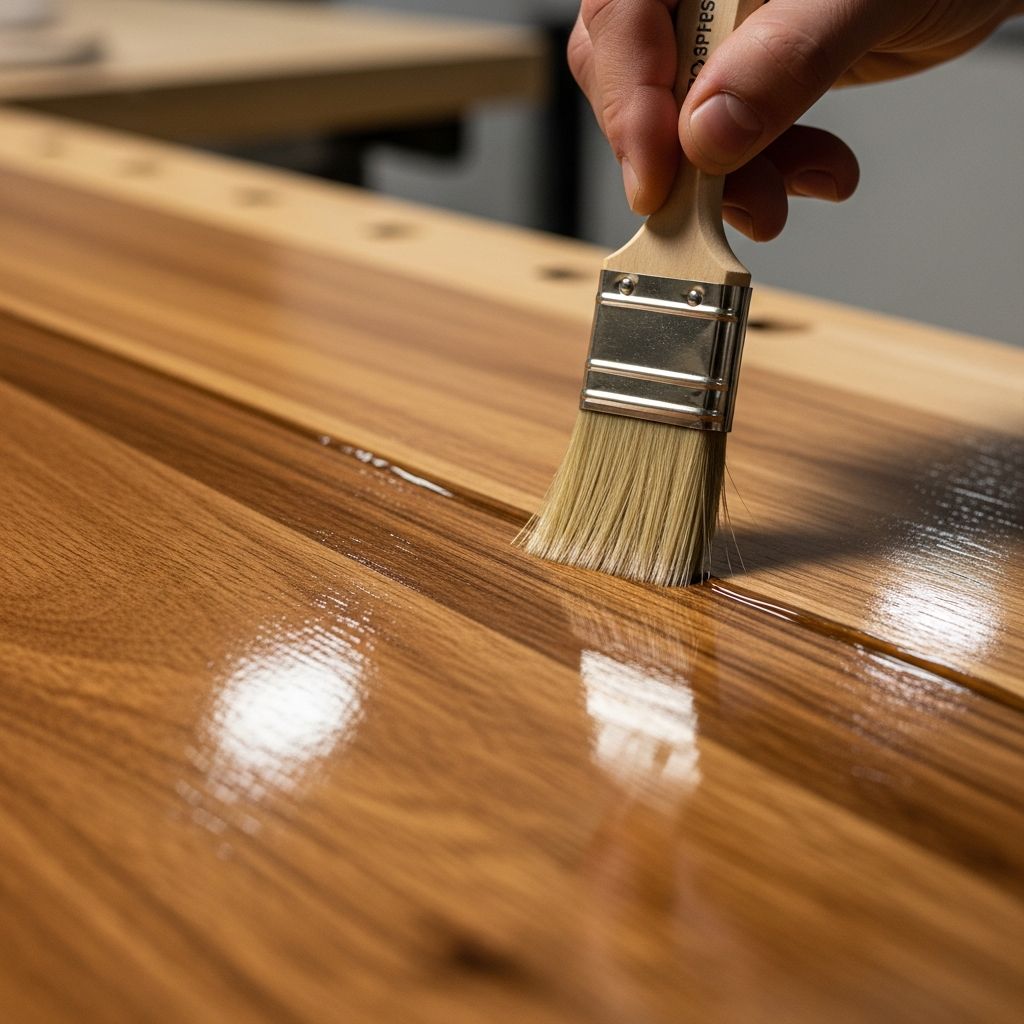
Using a high-quality brush is the most common method for applying polyurethane. The key is investing in a good brush—cheap brushes shed bristles and create an uneven finish. Look for natural bristle brushes for oil-based polyurethane and synthetic bristle brushes for water-based products.
- Use long, smooth strokes following the wood grain
- Avoid overworking the finish—too much brushing creates bubbles and streaks
- Apply thin, even coats rather than one thick coat
- Allow adequate drying time between coats as specified by the manufacturer
- Sand lightly between coats with 220-grit sandpaper to promote adhesion
- Never brush across an edge that’s already drying—work wet edge to wet edge
Roller Application
Paint rollers with fine nap can create exceptionally smooth finishes on large, flat surfaces like tabletops or floor sections. This method works best on items where you can maintain a wet edge across the entire surface.
- Use a high-density foam roller with a thin nap (3/16 inch)
- Apply in overlapping strokes to avoid lap marks
- Maintain even pressure throughout the application
- This method is ideal for large, flat surfaces
Spray Application
Spraying polyurethane creates the smoothest possible finish because it minimizes brush marks and allows for perfect self-leveling. However, it requires appropriate equipment and skill.
- HVLP (High Volume Low Pressure) sprayers work well for polyurethane
- Requires proper ventilation and equipment setup
- Produces a more uniform finish than brushing
- Demands practice to avoid runs and drips
- Best reserved for experienced users or professional applicators
Sanding Between Coats: The Secret Weapon
One of the most important steps many DIYers overlook is sanding between coats. This step is absolutely crucial for achieving that glass-smooth final finish.
After each coat has dried completely, sand the surface lightly with 220-grit sandpaper. This accomplishes several things: it removes dust particles and any imperfections on the surface, it scuffs the finish enough for the next coat to adhere properly, and it prepares a smooth base for subsequent applications.
Sand gently and evenly—you’re not trying to remove the coat, just smooth it out and dull the surface slightly. Use a sanding block to ensure even pressure. Always sand in the direction of the wood grain, and wipe away all dust with a tack cloth before applying the next coat.
Between-Coat Sanding Guidelines:
- Allow complete drying time before sanding
- Use 220-grit sandpaper or finer
- Sand lightly with even pressure
- Always follow the wood grain direction
- Remove all dust before applying the next coat
- Don’t skip this step—it makes a dramatic difference
Number of Coats and Build
The number of polyurethane coats you apply depends on your project and desired level of protection and appearance. Most projects benefit from at least two to three coats of polyurethane.
For furniture and decorative pieces, two to three coats typically provide an adequate finish. For high-traffic areas like floors or tabletops that will receive significant use, four to six coats may be necessary for durability and that ultra-smooth appearance.
Each coat builds on the previous one, creating depth and protection. However, more coats only help if each one is applied properly and sanded appropriately between applications.
Troubleshooting Common Polyurethane Problems
Even experienced finishers encounter challenges when applying polyurethane. Understanding how to address these issues will help you salvage your project.
Dust Particles in the Finish
This is perhaps the most common problem. Dust particles settling on wet polyurethane create an imperfect finish. Prevention is easier than correction. Minimize dust by vacuuming the work area, waiting several hours before applying finish to allow dust to settle, and using a tack cloth before each application. If dust does settle in your finish, allow it to dry, then sand it out and reapply the coat.
Brush Marks and Streaks
Brush marks indicate that the polyurethane isn’t self-leveling properly, often due to applying it too thickly or overworking it. Apply thinner coats and use lighter brush strokes. Water-based polyurethane can be particularly prone to this because it dries faster. Some finishers add a light sanding between coats to eliminate these marks completely.
Bubbles and Foam
Shaking or stirring polyurethane too vigorously introduces air bubbles. Instead of shaking, stir gently. Don’t overwork the finish with excessive brushing. Allow bubbles to pop naturally as the finish cures, or wait for them to settle before applying the next coat.
Uneven Color or Sheen
This usually results from uneven application or inadequate sanding between coats. Ensure you’re applying coats uniformly and sanding properly between applications. Allow adequate drying time before evaluating the final result.
Sticky or Tacky Finish
If your polyurethane remains sticky long after it should have dried, the environment may be too humid, or you may not have allowed adequate drying time. Some water-based polyurethanes can feel slightly sticky even when dry due to their formulation. Ensure proper ventilation and humidity control, and give the finish the full recommended curing time before use.
Environmental Conditions Matter
Temperature and humidity significantly affect how polyurethane cures and how smooth your finish will be. Most manufacturers recommend applying polyurethane when temperatures are between 60-85°F and humidity is below 85 percent.
Cold temperatures slow drying and can prevent proper curing. Excessive humidity can cause water-based polyurethane to become cloudy and can interfere with proper adhesion. Too much heat accelerates drying, which can result in brush marks and prevent proper self-leveling.
If you’re finishing a room or large project, control the environment as much as possible. Close windows and doors during application and drying, use air conditioning or heating as needed, and avoid applying finish on extremely humid or cold days.
Final Finishing Touches
After your final coat has cured completely, you can further enhance the smoothness by rubbing out the finish. Many professionals use 0000 steel wool or very fine abrasive pads to lightly burnish the final coat, creating an even more refined appearance.
Apply a furniture wax over the cured polyurethane if desired. This adds protection and can enhance the feel of the finish. Allow polyurethane to cure fully—typically 24-48 hours for water-based and 48-72 hours for oil-based—before heavy use.
Frequently Asked Questions
Q: How long does polyurethane take to dry between coats?
A: Drying times vary by product type. Water-based polyurethane typically dries in 2-4 hours, while oil-based versions require 8-24 hours. Always check your specific product’s label for exact timing before applying additional coats.
Q: Can I apply polyurethane over stain?
A: Yes, polyurethane can be applied over wood stain once the stain has dried completely. Allow the stain at least 24 hours to cure before applying polyurethane to ensure proper adhesion and finish quality.
Q: Should I sand between every coat of polyurethane?
A: Yes, sanding between coats is highly recommended. It removes dust particles, imperfections, and creates a slightly roughed surface for better adhesion of the next coat, resulting in a much smoother final finish.
Q: Is oil-based or water-based polyurethane better for smoothness?
A: Oil-based polyurethane typically produces a slightly smoother finish due to its slower drying and superior self-leveling properties. However, water-based options work well too and have environmental advantages.
Q: What grit sandpaper should I use between coats?
A: Use 220-grit sandpaper or finer between coats. This is fine enough to smooth the surface without removing the polyurethane, yet coarse enough to scuff it adequately for next-coat adhesion.
Q: How can I remove dust from polyurethane before it dries?
A: The best approach is prevention. Use tack cloths before application, work in a clean environment, and allow dust to settle before finishing. Once dust is in wet polyurethane, it’s difficult to remove without damaging the finish.
Q: Can I apply polyurethane in humidity?
A: High humidity (above 85 percent) can negatively affect polyurethane application and curing. It’s best to avoid finishing in humid conditions, but if necessary, use water-based polyurethane and ensure excellent ventilation.
References
- Wood Finishing Guide — The Woodworking Institute. 2024. https://www.woodworking.org
- Polyurethane Coating Application Standards — American Coatings Association. 2023. https://www.paint.org
- Environmental and Health Considerations for Wood Finishes — U.S. Environmental Protection Agency. 2024. https://www.epa.gov
- Best Practices in Professional Wood Finishing — National Association of Home Builders. 2023. https://www.nahb.org
- Temperature and Humidity Effects on Coating Performance — Surface Coatings Association International. 2024. https://www.coatingstech.org
Similar Articles



Read full bio of Sneha Tete