Growing Oriental Poppies: Complete Guide
Unlock the secrets to cultivating vibrant Oriental poppies with our expert guide on planting, care, and propagation for stunning garden displays.
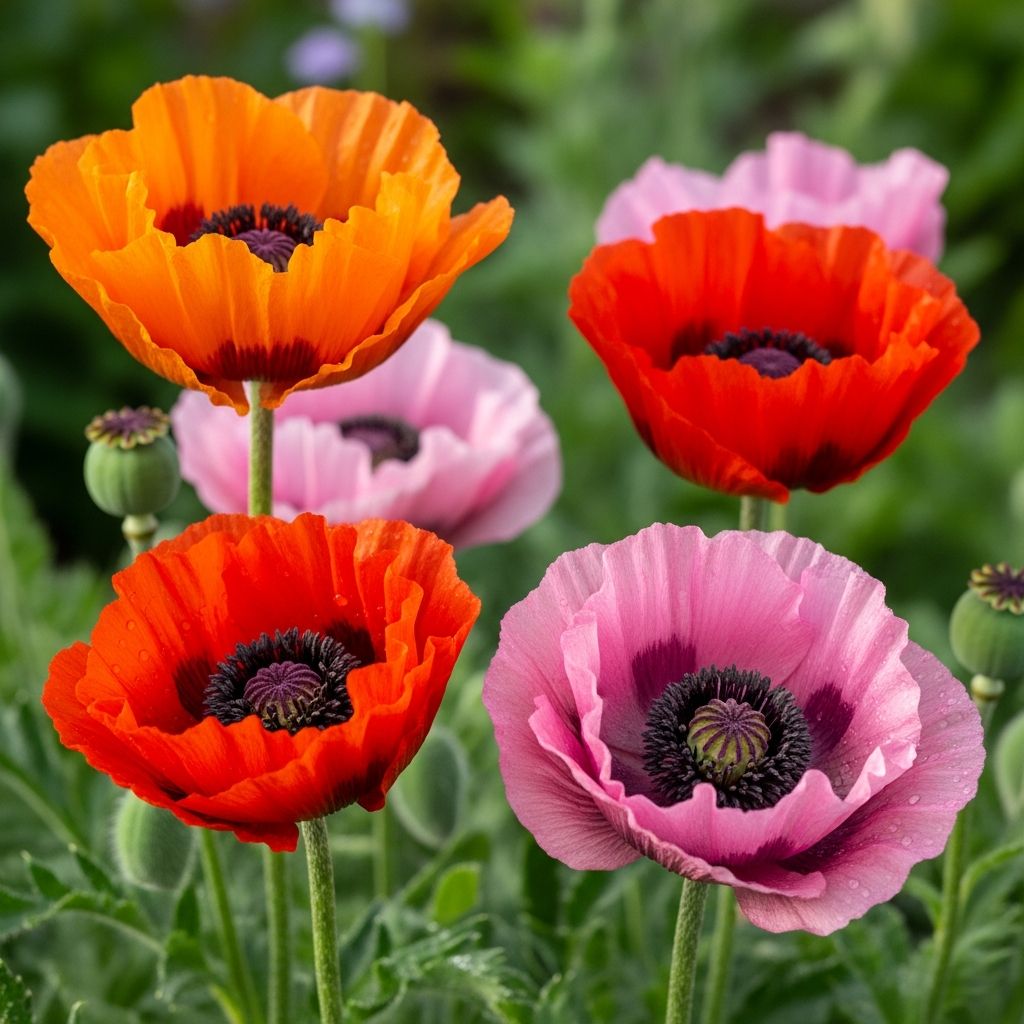
Oriental poppies, scientifically known as Papaver orientale, are hardy perennials renowned for their large, tissue-paper-like flowers in shades of red, pink, orange, and white. These plants add dramatic flair to gardens, blooming profusely in late spring to early summer before entering dormancy. With proper site selection and minimal care, they return year after year, reaching heights of 2 to 3 feet. This guide provides everything needed to cultivate these resilient beauties successfully.
Understanding Oriental Poppy Basics
Native to regions like Turkey and the Caucasus, Oriental poppies have adapted well to temperate climates, thriving in USDA zones 3-7 or 8 depending on variety. They feature thick taproots that store energy, enabling drought tolerance once established. Flowers emerge on sturdy stems above gray-green foliage, attracting pollinators like bees and butterflies. Unlike annual poppies, these perennials die back after blooming, making them ideal companions for later-flowering plants that hide their unsightly foliage.
- Height: 24-36 inches
- Spread: 18-24 inches
- Bloom time: Late May to June
- Flower size: Up to 6 inches across
- Hardiness: Cold-tolerant to zone 3
Selecting the Perfect Garden Location
Full sun is essential for Oriental poppies, requiring at least 6-8 hours of direct sunlight daily to produce robust stems and vivid blooms. In hotter climates, morning sun with afternoon shade prevents scorching. Avoid shaded spots, as they lead to leggy growth and few flowers.
These plants tolerate various soils, including clay, but excel in locations with excellent drainage. Wet areas cause root rot, so test by observing if water puddles after rain. Raised beds or amended heavy soils work well for challenging sites.
| Condition | Ideal | Avoid |
|---|---|---|
| Sunlight | Full sun (6+ hours) | Deep shade |
| Soil Drainage | Well-drained | Waterlogged |
| Wind Exposure | Protected | High winds |
Preparing Your Soil for Success
Well-drained, fertile soil is key. Loosen the ground to 12-15 inches deep and incorporate organic matter like compost or aged manure to boost nutrients and aeration. For clay-heavy soils, blend in coarse sand or grit to enhance percolation.
Aim for a neutral pH of 6.5-7.5. Test your soil and amend if needed with lime for acidity or sulfur for alkalinity. This preparation ensures taproots penetrate deeply without obstruction.
Planting Oriental Poppies Step-by-Step
The best times to plant are early spring or fall, allowing roots to establish before extreme weather. Bare-root plants are cost-effective and vigorous starters.
- Dig holes 18-24 inches apart, wide enough to spread roots without crowding.
- Position the crown (where roots meet the stem) 1-2 inches below soil level. Too deep risks rot; too shallow exposes it to drying.
- Backfill gently, firm the soil, and water thoroughly to eliminate air pockets.
- Apply 2-3 inches of organic mulch like bark or straw to conserve moisture and deter weeds.
For seeds, direct sow in late fall or early spring on prepared beds. Tiny seeds need light to germinate, so press lightly into soil without covering. Winter sowing mimics natural stratification for better results.
Watering and Moisture Management
Newly planted poppies demand consistent moisture to develop roots—water deeply weekly if rainfall is insufficient. Once established, they handle dry spells admirably, needing only supplemental water during prolonged droughts.
Avoid overhead watering to prevent fungal issues; target the base instead. Mulch helps maintain even soil moisture, reducing evaporation.
Fertilizing for Vibrant Blooms
Apply a balanced, slow-release fertilizer (like 10-10-10) in early spring as growth resumes. Excess nitrogen favors leaves over flowers, so use sparingly. Compost top-dressing provides gentle nutrition without overload.
Avoid late-season feeding, as it disrupts dormancy. Healthy plants from good soil rarely need more.
Pruning, Deadheading, and After-Bloom Care
Deadhead faded flowers to encourage reblooming and prevent unwanted seedlings. Cut stems to the base. As foliage yellows post-bloom, trim to ground level. New basal leaves may emerge; protect with mulch for winter.
Seed pods are ornamental—leave some for drying in arrangements.
Overcoming Common Growing Challenges
Pests: Aphids and slugs occasionally appear; hand-pick or use insecticidal soap. Deer may nibble young shoots—use repellents.
Diseases: Root rot from poor drainage is primary; ensure proper site prep. Powdery mildew in humid areas calls for good air circulation.
No Blooms: Often due to insufficient sun, deep planting, or excess nitrogen. Relocate or divide if crowded.
Propagation Techniques for More Plants
Division is most reliable in late summer or early fall when dormant. Dig clumps, separate sections with roots and buds, replant at proper depth, and water well.
Seeds offer variety but may not match parent color. Collect ripe pods, sow fresh for best germination.
Companion Planting Ideas
Pair with daylilies, irises, or catmint to mask dieback. Their bold presence suits cottage or wildflower gardens. Avoid overcrowding to maintain airflow.
Winter Protection and Longevity
In cold zones, mulch heavily after ground freezes. Established plants self-perpetuate, living 10+ years with division every 3-4 years to rejuvenate.
FAQs
Can Oriental poppies grow in partial shade?
They prefer full sun but tolerate light afternoon shade in hot areas. Less light means fewer flowers.
Why do my poppies have no flowers?
Check sun exposure, planting depth, and fertilizer. Young plants may take a year to bloom.
Are Oriental poppies invasive?
No, they self-seed mildly but are easily controlled by deadheading.
How do I transplant mature poppies?
Dig in dormancy, keep rootball intact, replant immediately.
Do they attract pollinators?
Yes, bees love the nectar-rich blooms.
References
- How To Grow Oriental Poppy (Papaver)? [Growing Guide] — DutchGrown. 2023. https://www.dutchgrown.com/blogs/the-dutchgrown-blog/growing-guide-how-to-grow-papaver-oriental-poppy
- Beginners Can Grow Gorgeous Oriental Poppies! — Flower Patch Farmhouse. 2022. https://www.flowerpatchfarmhouse.com/oriental-poppies/
- Planting Oriental Poppies, Bare-root Roses and Sweet Peas — YouTube (Gardening Channel). 2021. https://www.youtube.com/watch?v=wt8Phg-O-Qg
- Fall Planting Oriental Poppies — High Country Gardens. 2023. https://www.highcountrygardens.com/blogs/perennials/plant-profile-oriental-poppies-with-companion-plants
- How to Grow: Poppies — Three Acre Farm. 2020-01-16. https://www.threeacrefarm.net/blog/2020/1/16/how-to-grow-poppies
- Propagating Oriental Poppies – How and When — YouTube (Gardening Tips). 2022. https://www.youtube.com/watch?v=yW71VcmZL68
Similar Articles






Read full bio of Sneha Tete