How To Identify and Repair a Sinking Foundation
Learn the warning signs of a sinking foundation and discover proven repair methods.
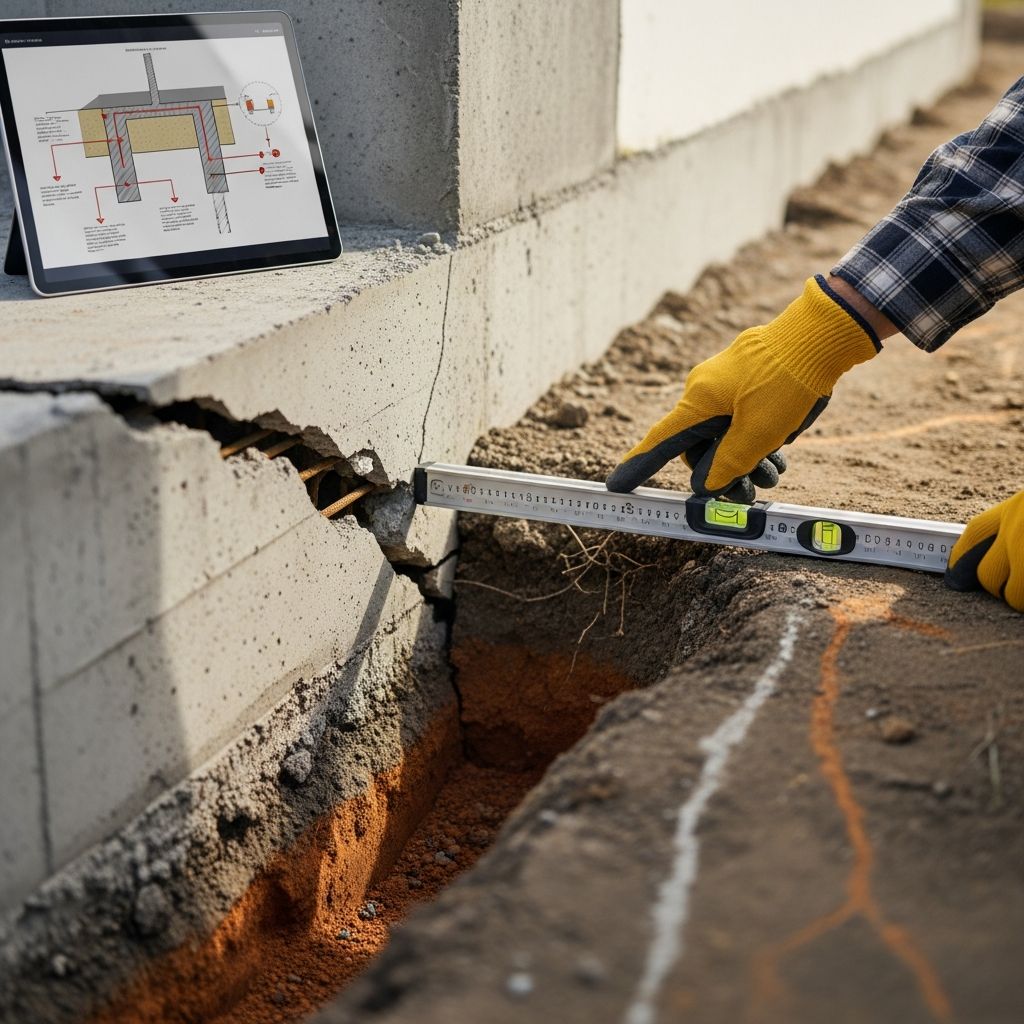
Foundation sinking is a serious structural issue that can compromise the integrity of your entire home. Whether caused by natural weather patterns, poor construction practices, or soil composition problems, a sinking foundation requires prompt attention and professional assessment. Understanding the warning signs and available repair options can help you protect your property and prevent costly damage down the line.
What Causes a Foundation To Sink?
Foundations can sink for several interconnected reasons. The primary culprits involve changes in the weather, poor home construction practices that don’t meet current building codes, and soil composition issues beneath your property. Understanding these causes is essential for both prevention and selecting the right repair solution.
Weather-Related Causes
Extreme weather conditions represent one of the most common reasons foundations sink. Floods, droughts, and extreme temperature fluctuations can all cause significant foundation problems. In regions with freeze-thaw cycles, damp soil surrounding your foundation can freeze and expand, pushing your foundation upward in a process called frost heave. When this ice eventually melts, the foundation settles back down but often becomes misaligned or damaged. This repeated expansion and contraction cycle can cause cracks, bowing walls, and other structural issues over time. Conversely, droughts cause soil to contract and pull away from the foundation, leaving voids that allow settlement and shifting.
Soil Composition and Preparation Issues
The soil beneath your foundation plays a critical role in its stability. If soil wasn’t properly compacted during construction, it can settle over time under the weight of the foundation, causing the structure to sink unevenly. Clay-based soils are particularly problematic because they swell when wet and shrink when dry, leading to uneven pressure on the foundation. Sandy or loose soil allows settling and compression, while previously marshy areas or sites with high underground water levels can experience soil consolidation that destabilizes the foundation.
Water Damage and Drainage Issues
Inadequate drainage systems around your home can result in water pooling near the foundation, which softens the soil and leads to settlement issues. Underground drainage failures, broken pipes, and excessive rainfall or flooding can wash away supporting soil, particularly on sloped sites where downhill erosion destabilizes the foundation over years. When water flows into the soil around your foundation, it creates hydrostatic pressure—a leading cause of cracks and water leaks.
Additional Contributing Factors
Other factors can also contribute to foundation sinking. Tree roots growing near your foundation can expand and push against it while simultaneously absorbing moisture from soil, causing it to shrink and settle. Poor construction practices such as insufficient foundation depth, undersized footings, or low-quality concrete allow sinking and cracking to occur more readily.
Warning Signs of a Sinking Foundation
Early detection of foundation problems is crucial for preventing extensive damage. Several visible warning signs indicate that your foundation may be sinking or settling unevenly.
Cracks in Walls and Floors
One of the most telltale signs of a sinking foundation is the presence of cracks. You should be particularly concerned about cracks wider than 1/8 inch or those running at 45-degree angles, as these indicate structural stress rather than simple cosmetic issues. Cracks can appear in both interior drywall and exterior brick or concrete, and they often widen over time if the underlying foundation problem isn’t addressed.
Gaps Between Walls and Fixtures
When a foundation settles unevenly, gaps often develop between walls and fixtures like windows, cabinets, or baseboards. These gaps indicate that different parts of your home are settling at different rates, putting stress on the entire structure. As one section sinks faster than another, the framing separates from previously flush surfaces.
Misaligned Doors and Windows
Foundation movement causes door frames and window casings to become misaligned, resulting in doors and windows that stick or won’t close properly. This occurs because the building materials like concrete, steel, and wood cannot flex to accommodate the shifts in structure. If you notice this issue, it’s important to address the underlying foundation problem to prevent further damage.
Bowing or Bulging Walls
Bowing or bulging walls, particularly in basement or crawl spaces, are a clear indication of foundation stress. This can be caused by excess hydrostatic pressure from saturated soil or poor construction practices that didn’t allow for proper pressure relief.
Moisture and Mold Issues
Excess moisture in your foundation can create the perfect breeding ground for mold and mildew. If you notice mold growth in your basement or crawl space, it could indicate poor drainage or foundation leaks, both of which require immediate attention and likely signal underlying foundation settlement problems.
Foundation Sinking Repair Methods
Once you’ve identified a sinking foundation, several repair options are available depending on the severity and specific conditions of your property. A professional foundation repair specialist can assess your situation and recommend the best solution based on your unique circumstances.
Underpinning Solutions: Foundation Piers
Underpinning is the process of strengthening and reinforcing an existing foundation, typically by extending its depth and breadth. The most effective underpinning solutions involve installing various types of piers that reach down to more stable soil layers.
Push Piers
Push piers are steel posts driven into the ground around your home to provide additional support and stability. These hydraulically operated piers work by pushing against the foundation to lift and level settled concrete slabs. Push piers are particularly effective for homes that have settled significantly and need substantial leveling.
Helical Piers
Helical piers function like giant screws twisted into the ground to reach stable soil layers. They’re installed by rotating them into the earth, then secured to the foundation. This method works particularly well in areas where digging would be difficult or where soil conditions require reaching deeper stable layers.
Slab Piers
If your home has a concrete slab foundation, slab piers may be the solution. These specialized piers are installed beneath the slab to lift and stabilize areas of settlement. Slab piers are typically installed at strategic locations around the perimeter of the slab, providing targeted support where it’s needed most.
Steel and Pressurized Piers
Steel piers are driven down to more stable subsurface layers to support and stabilize sinking sections. Pressurized concrete or composite piers can be installed underneath to lift and level out sinking foundations. For substantial uneven sinking, professionals may need to carefully jack up and support the house to level it on steel beams and piers.
Grout Stabilization
Grout stabilization involves filling voids beneath the foundation with grout to stabilize loose or shifting soil. This process helps compact the soil and provides additional support to prevent further settlement.
Mud-Jacking and Poly-Jacking
Mud-jacking and poly-jacking are methods used to lift and level settled concrete slabs. These techniques involve injecting material beneath the concrete to raise it back to its original position or to a more level state.
Non-Underpinning Foundation Repair Options
For some situations, non-underpinning solutions may be appropriate and cost-effective alternatives.
Resin Injections
Resin injections represent a fairly new, non-invasive solution for repairing cracks and voids in concrete foundations. A high-strength epoxy resin is injected into cracks, where it expands to fill the void and bond with the surrounding concrete. This effectively seals the crack and restores the structural integrity of the foundation without the need for excavation, avoiding further damage. However, this treatment cannot be used unless the foundation is completely dry, as the resin won’t bond to damp concrete properly. Additionally, resin injections don’t perform well below the water table or in freeze-and-thaw areas.
Drainage Improvements
Installing perimeter drainage pipes, catch basins, or trenches to route water away from foundations is essential for preventing further settlement. Proper drainage management often prevents future foundation problems from developing.
Excavation and Compaction
For isolated sinking areas, contractors may dig down to pack in more solid base material. This targeted approach works well when only specific sections of the foundation have settled problematically.
When to Call a Professional
Foundation repair is not a DIY project. If you notice any warning signs of a sinking foundation—particularly cracks wider than 1/8 inch, misaligned doors and windows, or visible gaps between walls and fixtures—you should contact a structural engineer or professional foundation repair specialist immediately. These professionals can conduct a thorough assessment of your foundation’s condition, identify the underlying causes, and recommend appropriate repair solutions based on your specific situation.
Frequently Asked Questions
Q: How can I tell if my foundation is sinking or just settling normally?
A: Normal settling typically shows fine, hairline cracks that don’t grow over time. Concerning signs include cracks wider than 1/8 inch, cracks at 45-degree angles, misaligned doors and windows, visible gaps, or bowing walls. These indicate problematic settlement requiring professional evaluation.
Q: Can a sinking foundation be prevented?
A: Yes, proper foundation construction with adequate soil compaction, appropriate foundation depth, good drainage systems, and proper site preparation can prevent many foundation problems. Regular maintenance of drainage systems and addressing water issues promptly also help prevent foundation sinking.
Q: How much does foundation repair typically cost?
A: Foundation repair costs vary widely depending on the cause, severity, and repair method used. Minor repairs might cost a few thousand dollars, while major underpinning projects can exceed $10,000 or more. Professional assessment is necessary to determine accurate costs for your specific situation.
Q: How long does foundation repair take?
A: Timeline depends on the repair method and extent of the problem. Minor repairs might take days, while major underpinning projects could take weeks. Your contractor should provide a timeline estimate after assessing your foundation.
Q: Will my homeowner’s insurance cover foundation repair?
A: Most standard homeowner’s insurance doesn’t cover foundation settling caused by poor construction or soil conditions. However, damage from specific events like earthquakes or flooding may be covered under additional policies. Check your specific policy and consider foundation-specific coverage.
Q: Is a sinking foundation a deal-breaker for buying a home?
A: Not necessarily. If the foundation problem has been professionally repaired and stabilized, it may not significantly impact the home’s value. However, an active sinking foundation or extensive damage could be a serious concern that requires negotiation or further inspection.
References
- 6 Signs Your Foundation Is Sinking & How To Fix It — LEVEL Engineering. 2024. https://levelengineering.com/b/foundations/understanding-foundation-sinking/
- Can a Structural Engineer Stop My House From Sinking? — Stonewall Engineering. 2024. https://www.stonewalleng.com/can-a-structural-engineer-stop-my-house-from-sinking/
- How To Identify and Repair a Sinking Foundation — This Old House. 2024. https://www.thisoldhouse.com/foundations/house-foundation-sinking
- Why Do Foundations Sink and How Are They Repaired? — AccuLevel. 2024. https://acculevel.com/why-do-foundations-sink-and-how-are-they-repaired/
- How to Fix a Sinking Foundation: Underpinning — Dalinghhaus Construction. 2024. https://www.dalinghausconstruction.com/blog/how-to-fix-a-sinking-foundation-underpinning/
Similar Articles




Read full bio of Sneha Tete