How To Install A Bathroom Vent Fan In 7 Easy Steps
Master bathroom vent fan installation with our comprehensive step-by-step guide for homeowners.
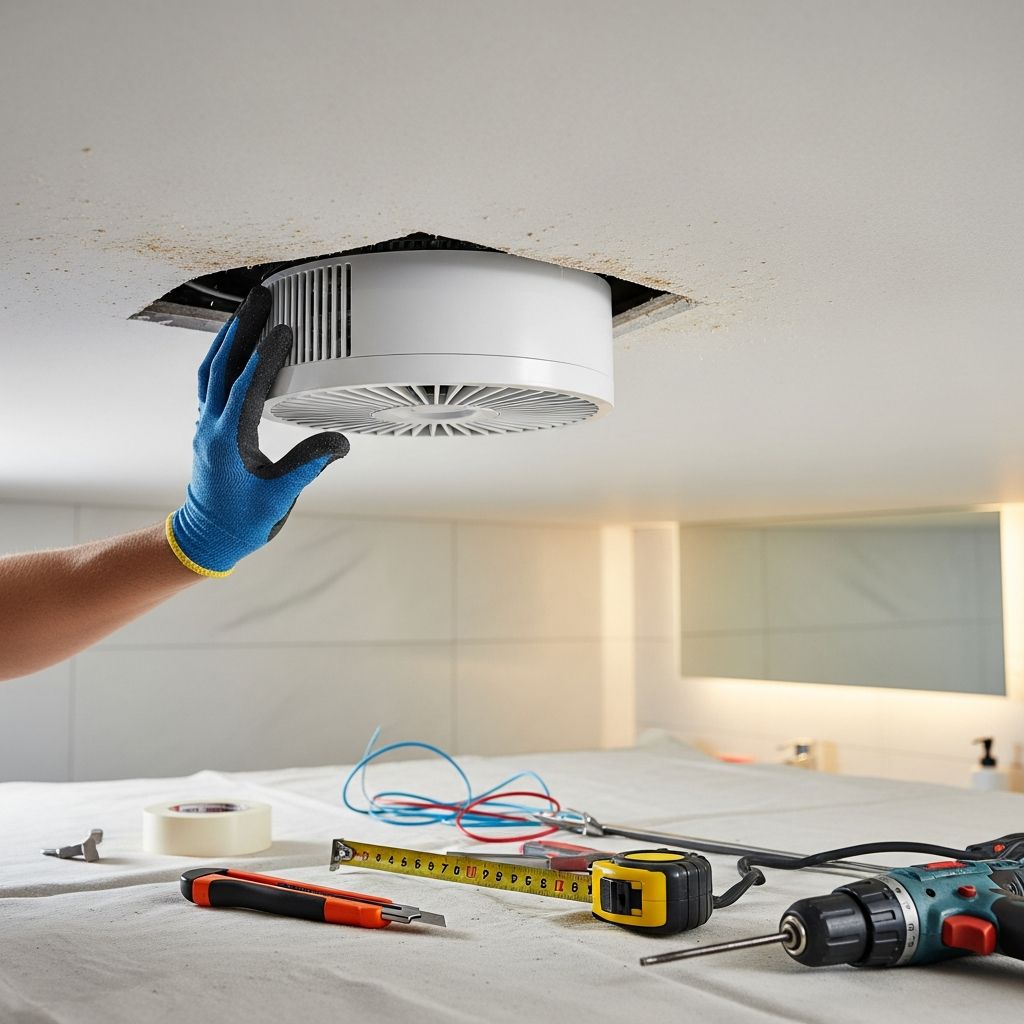
How to Install a Bathroom Vent Fan
Proper bathroom ventilation is essential for maintaining a healthy home environment and preventing moisture-related damage. A bathroom exhaust fan removes excess humidity, odors, and airborne contaminants, protecting your walls, ceiling, and insulation from costly water damage and mold growth. Installing a bathroom vent fan may seem like a complex project, but with the right guidance and tools, most homeowners can complete this task successfully. This comprehensive guide walks you through every step of the installation process, from selecting the right fan to properly venting it to the outside.
Understanding Bathroom Exhaust Fans
Before beginning your installation, it’s important to understand what a bathroom exhaust fan does and why proper installation matters. An exhaust fan draws moist air from your bathroom and vents it directly outdoors, preventing humidity from accumulating inside your home. This ventilation is critical in bathrooms because showers and baths generate significant moisture that can lead to structural damage, mold growth, and poor indoor air quality if not properly managed.
When selecting a bathroom exhaust fan, consider the size of your bathroom and the fan’s airflow capacity, measured in cubic feet per minute (CFM). The larger your bathroom, the higher the CFM rating you’ll need. Most bathroom fans range from 50 to 150 CFM, with larger bathrooms requiring fans at the higher end of this spectrum.
Tools and Materials You’ll Need
Gathering the right tools and materials before you start will make the installation process smoother and more efficient. Here’s what you’ll need:
– Bathroom exhaust fan unit with damper- Flexible or rigid ductwork (4-6 inches in diameter, depending on fan size)- Duct clamps or mechanical fasteners- Mastic sealant or UL-approved metal tape- Roof vent cap with flashing- Hole saw or drywall saw- Screwdrivers (Phillips and flathead)- Drill with bits- Caulking gun- Roofing cement- Roofing nails- Safety glasses and work gloves- Ladder- Flashlight or headlamp
Step 1: Plan Your Installation Location
The first critical step in installing a bathroom exhaust fan is selecting the optimal location in your ceiling. For best performance, position the fan as close to the source of moisture as possible, typically near or above the bathtub or shower area. However, you should also consider the path the ductwork will take to reach the exterior wall or roof.
When planning your installation, aim for the shortest possible duct run with the fewest bends and elbows. Each bend in the ductwork creates friction and resistance that reduces airflow efficiency. Ideally, the duct should run as straight as possible from the fan to the exterior termination point. If possible, plan for a duct run of less than 25 feet, as longer runs significantly reduce fan efficiency.
Check the ceiling structure before marking your cutting line. Avoid cutting through ceiling joists if possible, as this can compromise the structural integrity of your home. If you must cut near a joist, plan to install blocking or use appropriately rated mounting brackets to support the fan housing.
Step 2: Install the Fan Housing in the Ceiling
Once you’ve determined the ideal location, cut an opening in the drywall that is just large enough to accommodate the fan housing. The opening should be no larger than necessary to ensure a tight seal between the fan and the ceiling material.
Install the fan housing in accordance with the manufacturer’s instructions. Most bathroom exhaust fans are designed to mount either directly to ceiling joists or using suspension brackets. If you’re mounting directly to a joist, use wood screws to secure the fan flange to the joist on both sides. The flange should be level with or slightly below the bottom of the joist so that the finished ceiling will sit flush against it.
After the fan housing is installed, air seal the gap between the housing and the drywall using caulk or mastic sealant. This seal prevents air leakage and ensures that the fan pulls air only from the bathroom rather than drawing conditioned air from other areas of your home. Apply the caulk generously around all edges where the fan housing meets the drywall.
Step 3: Connect the Ductwork to the Fan
Proper ductwork connection is crucial for efficient fan performance. Select ductwork that matches the diameter specified by the fan manufacturer, typically 4 to 6 inches in diameter. Connect the exhaust duct to the fan port using mechanical fasteners or a pipe clamp, then seal the connection with mastic or UL-approved metal tape.
For optimal performance, use smooth-surfaced ductwork such as galvanized sheet metal or PVC pipe. If you must use flexible aluminum duct, stretch it tightly to avoid sagging and to minimize friction that reduces airflow. The duct should be the same diameter as the exit opening on the fan housing to prevent turbulence and airflow restriction.
It’s especially important that the first three feet of ductwork extending from the fan’s exhaust port remain straight and unsupported by bends or elbows. A 90-degree elbow installed immediately adjacent to the fan exhaust port can significantly reduce airflow, potentially cutting efficiency by 30 percent or more. If you must turn the duct to reach an exterior wall or roof, wait until at least three feet of straight duct has extended from the fan.
Step 4: Route the Ductwork to the Exterior
After connecting the duct to the fan, carefully route it through your attic or wall cavities toward the exterior of your home. Maintain as straight a path as possible, supporting the duct with appropriate hangers or clamps every few feet to prevent sagging. A sagging duct can collect condensation and lint, reducing efficiency and potentially causing water damage.
The duct must be vented directly to the outside, never into an attic, crawlspace, or the space between floors. Venting into these areas will trap moisture and create conditions ideal for mold growth and structural decay. The exhaust must exit completely outside the home’s thermal envelope to be effective.
Plan your duct route to avoid obstacles and to keep the path as direct as possible. If you must make bends in the ductwork, use gentle, sweeping curves rather than sharp 90-degree angles, as these are less restrictive to airflow.
Step 5: Install the Roof or Wall Vent Cap
The final step in the installation process is installing the exterior vent cap. For most installations, the vent will terminate through the roof, though some homes may have venting through a side wall. If venting through the roof, you’ll need to drill a pilot hole from inside the attic so you can locate it from outside.
From the roof exterior, use a hole saw to cut an opening that is slightly larger than the vent cap’s flange, typically about 5 inches in diameter. Position the hole between roof rafters to avoid cutting through structural components. Once the hole is cut, slide the duct connector into the opening and align the vent cap flange.
Before permanently securing the vent cap, trace around its outline on the roof shingles. Following the manufacturer’s guidelines, carefully trim the shingles as directed, ensuring that the shingles will overlap the cap’s flange after installation. The shingles should overlap the flange to shed water properly and prevent leaks.
Secure the vent cap in place using roofing nails driven through the nail holes in the flange. Apply roofing cement around the base of the cap and over the nail heads to create a weathertight seal. Seal the shingles to the top and sides of the roof cap with additional roofing cement to ensure complete protection against water infiltration.
Step 6: Connect Electrical Wiring
Before connecting electrical wiring, turn off the power at the breaker panel and test the circuit to ensure it’s de-energized. Most bathroom exhaust fans require a dedicated 120-volt circuit with appropriate amperage, typically 15 or 20 amps, depending on the fan model.
Connect the black (hot) wire from the circuit to the black wire on the fan, the white (neutral) wire to the white wire on the fan, and the green or bare copper (ground) wire to the green or bare wire on the fan. Use wire connectors rated for the wire gauges you’re working with, and wrap the connections with electrical tape for additional security. Secure the wiring inside the fan housing before attaching the cover plate.
Step 7: Install the Grille and Trim
Once all the mechanical work is complete and the ceiling drywall is finished, it’s time to install the grille or trim ring. Most bathroom exhaust fans include a decorative trim ring or grille that covers the gap between the fan housing and the drywall.
Position the grille centered on the fan housing and secure it according to the manufacturer’s instructions. Some grilles snap into place, while others require fasteners. Ensure that the grille is level and securely attached so it won’t shift or fall over time.
Testing Your Installation
After installation is complete, test the fan to ensure it’s operating correctly. Turn on the fan and listen for proper motor operation. The fan should run smoothly and quietly. Hold a tissue near the grille to confirm that air is being drawn into the fan, or hold your hand near the roof vent cap to feel exhaust air being expelled (you may need a ladder to safely do this).
Check for any air leaks around the ductwork connections and where the duct passes through walls or the attic. Seal any leaks with mastic or duct tape. If the fan seems to be operating weakly, check for blockages in the ductwork or improper duct connections that may be restricting airflow.
Maintenance Tips for Long-Term Performance
To keep your bathroom exhaust fan operating efficiently, perform regular maintenance:
– Clean the grille monthly by vacuuming or brushing away dust and lint- Check ductwork annually for blockages, kinks, or sagging- Inspect the roof vent cap to ensure the damper opens and closes freely- Replace the damper if it becomes stuck or damaged- Have the entire system professionally inspected every 2-3 years
Frequently Asked Questions
Q: How long does a bathroom exhaust fan installation typically take?
A: For a straightforward installation with accessible routing to the exterior, most homeowners can complete the project in 3-5 hours. More complex installations with longer duct runs or roof penetration may take a full day or require professional installation.
Q: Can I vent my bathroom exhaust fan into the attic instead of outside?
A: No. Venting into the attic, crawlspace, or any interior space is not recommended and violates building codes in most jurisdictions. Moisture will accumulate in these spaces, leading to mold growth, wood rot, and structural damage. The fan must vent directly to the outside.
Q: What is the ideal CFM rating for my bathroom fan?
A: As a general rule, multiply your bathroom square footage by 1.07. For example, a 100-square-foot bathroom would need a fan with at least 107 CFM. Most building codes require a minimum of 50 CFM, but larger bathrooms benefit from higher ratings.
Q: Do I need to use flex duct or can I use rigid ductwork?
A: Rigid ductwork is preferred because it provides better airflow and is less prone to sagging and condensation buildup. However, flex duct is acceptable if it’s stretched tight and supported properly. Never use dryer vent hose or ductwork with an internal spiral, as these create excessive friction.
Q: How often should I run my bathroom exhaust fan?
A: Run the fan during and for at least 20-30 minutes after each shower or bath. Some homeowners install timers or humidity sensors to automatically run the fan when moisture levels rise above a certain threshold.
Q: What should I do if my exhaust fan isn’t pulling strong?
A: Check for obstructions in the ductwork or a blocked damper at the roof vent cap. Clean the grille and inspect duct connections to ensure there are no air leaks. If these steps don’t resolve the issue, the motor may be failing and the unit may need replacement.
References
- Bathroom Exhaust Fans — Building America Solution Center, Pacific Northwest National Laboratory. Accessed 2025. https://basc.pnnl.gov/resource-guides/bathroom-exhaust-fans
Similar Articles



Read full bio of Sneha Tete