How To Install Baseboards In 10 Steps, With Pro Tips
Master baseboard installation with expert tips, tools, and techniques for flawless results.
How to Install Baseboards in 10 Steps
Installing baseboards is one of the most impactful finishing touches you can add to a room. Whether you’re renovating an entire home or just refreshing a single space, properly installed baseboards create clean lines, protect your walls, and enhance your interior design. This comprehensive guide walks you through every stage of the baseboard installation process, from gathering materials to applying the final coat of paint.
Tools and Materials Needed for Baseboard Installation
Before you begin any baseboard installation project, gathering the right tools and materials is essential for success. Having everything prepared beforehand ensures a smooth workflow and prevents unnecessary trips to the hardware store.
Essential Tools for Installing Baseboards
The following tools are necessary for professional baseboard installation:
– Block plane- Caulking gun- Compass or scribe tool- Compound miter saw- Level (4-foot recommended)- Nail gun or hammer- Nail set- Pencil- Sandpaper (fine grit)- Stud finder- Tape measure
Required Materials To Install
Ensure you have these materials on hand before starting your project:
– Baseboards (measure your room and add 10 percent for waste)- Caulk- Finish nails (8d and 4d)- Paint or stain (if finishing baseboards after installation)- Painter’s tape- Wood filler- Wood glue
Preparing for Baseboard Installation
Proper preparation is the foundation of a successful baseboard installation. Taking time to plan and measure correctly prevents costly mistakes and ensures your baseboards look polished and professional.
Choosing the Right Baseboard Materials
For homeowners creating baseboards from scratch, expert craftsmen recommend a base that is at least 6 inches high and 1/2-inch to 3/4-inch thick, topped with a separate, deeply profiled cap molding. This creates visual interest and allows the baseboard to make a significant design statement in your room. Pre-made baseboards are also available in various styles and materials, including solid wood, medium-density fiberboard (MDF), and composite options.
Measuring and Planning Baseboards
Accurate measurements are critical for a polished final result. Begin by measuring each wall where baseboards will be installed. Round up to the nearest whole-foot dimension divisible by two to determine the amount of material needed. It’s wise to add an extra 10 percent to account for waste and mistakes during cutting and installation. Sketch a rough layout of the room, noting the length of each wall and any obstacles like doors, windows, or built-in fixtures. This planning step helps you understand how many pieces you’ll need and where joints will occur.
Marking and Cutting Baseboards
Accurate measurements and precise cuts lead to a more professional-looking baseboard installation. This ensures a smooth installation process and minimizes the need for adjustments later.
Measuring Wall Lengths
Carefully measure the length of each wall section where your baseboards will be installed. Measure from corner to corner, accounting for any wall irregularities. For outside corners, add a few inches to allow for miter cuts. Number each wall section on your sketch and write corresponding numbers on the back of the cut baseboards to keep everything organized. This labeling system prevents confusion during installation and ensures each piece goes exactly where it belongs.
Making Precise Cuts
Using a compound miter saw ensures clean, accurate cuts. For straight cuts, mark your measurement clearly with a pencil and align the blade carefully. For miter cuts at corners, set your saw to a 45-degree angle. Always cut on the correct side of the line to ensure your pieces fit properly. Make test cuts on scrap wood first to verify your saw is calibrated correctly before cutting expensive baseboard material.
Installing Baseboards: Step-by-Step Guide
With your baseboards cut and ready, you can begin the installation process. Following these steps carefully ensures a secure, level installation that will last for years.
Setting the Baseboard Height
Determining the correct height for your baseboards is crucial for a professional appearance. Use a 4-foot level to find the highest point of your floor. This will be your reference point for maintaining a consistent height throughout the room. Mark this height on the wall and use a chalk line to snap a level line around the room’s perimeter. This line will guide the top edge of your baseboards, ensuring they remain level even if the floor isn’t perfectly level. This technique prevents visible gaps and ensures your baseboards appear straight to the eye.
Locating Wall Studs
Before nailing baseboards to the wall, you need to locate the studs for secure fastening. Use a stud finder to mark stud locations on the wall. Mark these locations with a pencil so you can see them as you work. Studs are typically spaced 16 inches apart, which helps you estimate locations if your stud finder malfunctions. Fastening baseboards into studs ensures they’ll remain secure and won’t shift over time as the home settles.
Attaching Baseboards to the Wall
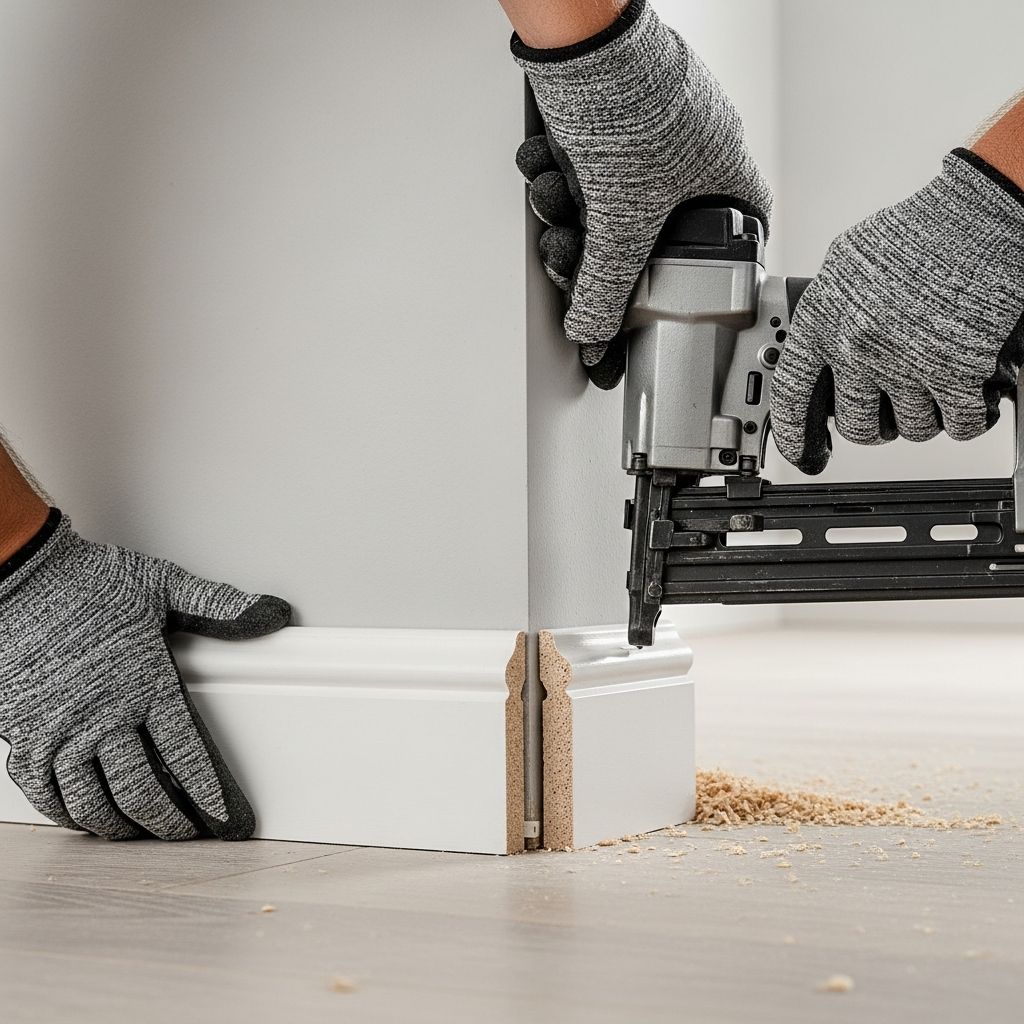
When attaching baseboards, use 8d finish nails, driving them at a slight downward angle near the top and bottom edges of the board. Space nails approximately 16 inches apart, or every stud, for maximum holding power. Drive nails through the thicker portions of the baseboard when possible to avoid splitting the wood. For a cleaner finish, use a nail set to drive the nail heads just below the wood surface. This attachment method provides a secure hold while allowing for easy removal if needed in the future.
Dealing with Corners
Corner joints require special attention for a polished appearance. For inside corners, simply butt the baseboard ends together and nail them to the wall. Outside corners require more finesse. Miter the ends of both pieces at 45 degrees, ensuring they fit snugly together. For added strength, use wood glue and biscuit joints to reinforce the connection. Remember to dry-fit all pieces before final installation to ensure a perfect fit. If miters don’t fit perfectly, a coped joint can provide an even tighter fit at inside corners.
Installing Cap Molding
Cap molding adds visual interest and protects the top edge of your baseboard. To install cap molding, apply a thin bead of construction adhesive to the back of the molding. Place it on top of the baseboard, ensuring it sits flush against the wall. Secure the molding with 8d finish nails driven at a slight downward angle through the molding’s thicker parts and into the studs. For inside corners, cope the joints for a tight fit. For outside corners, use mitered joints, gluing them together for added strength. This layered approach creates a more sophisticated look than a single-piece baseboard.
Baseboard Finishing Touches
The final steps in baseboard installation involve the small details that make a big difference in the overall appearance. These finishing touches transform your installation from functional to finished.
Filling Nail Holes in Baseboards
Use wood filler to fill all nail holes and any small gaps between the baseboard and the wall. Choose a filler that matches your baseboard color or can be painted over. Once the filler is dry, sand the filled areas smooth with fine-grit sandpaper to create a seamless surface. This step is essential for a professional appearance, especially if you’re staining your baseboards rather than painting them.
Caulking and Painting Baseboards
Apply a thin bead of caulk along the top edge of the baseboard where it meets the wall and along any visible seams. To apply caulk effectively, start in a corner, placing the nozzle on the baseboard’s top edge against the wall. Hold the nozzle about 1/4-inch back from the corner to avoid excess buildup. Squeeze the caulking gun while moving along the baseboard in a smooth, continuous motion. Work in sections, moving from corner to corner. For larger gaps, slow down to allow more caulk to fill the void. Smooth the caulk with a damp finger or caulk tool for a clean finish. Once the caulk is dry, stain or paint your baseboards as desired. Use painter’s tape to protect the wall and floor for a crisp, professional look.
Common Baseboard Installation Challenges
Even experienced installers encounter challenges during baseboard installation. Understanding how to address these common issues ensures your project stays on track.
Uneven Floors
Many homes have uneven floors that can make baseboard installation tricky. Always use your level to find the highest point and reference that height around the room. This prevents visible gaps and ensures your baseboards appear level even if the floor beneath isn’t perfectly flat.
Irregular Wall Surfaces
Walls aren’t always perfectly straight or plumb. Use a compass or scribe tool to trace wall irregularities onto your baseboard, then carefully cut along the scribed line to ensure a tight fit against the wall. This technique takes extra time but results in a professional appearance.
Existing Trim Considerations
If you’re installing baseboards in a room with existing trim, you may need to remove or modify the existing material. Take time to carefully remove old baseboards without damaging the wall, then prepare the surface for new installation.
Frequently Asked Questions About Baseboard Installation
Q: How high should baseboards be installed?
A: Standard baseboard height is typically between 4 and 10 inches, with 6 inches being common for modern homes. However, always reference the highest point of your floor to ensure consistent height throughout the room.
Q: What type of nails should I use for baseboard installation?
A: Use 8d finish nails for most baseboard installations, as they provide adequate holding power while remaining thin enough for a clean appearance. Space nails approximately 16 inches apart or at every stud location.
Q: Can I install baseboards on top of existing baseboards?
A: Yes, you can install new baseboards over existing ones if they’re in good condition, though it’s better to remove old baseboards first to ensure a smooth, level installation surface.
Q: How do I handle baseboard joints at doorways?
A: At doorways, plan your cuts so that joints don’t occur directly in the middle of the opening. Miter or butt joints strategically placed reduce visibility and improve appearance.
Q: Should I paint or stain baseboards before or after installation?
A: You can do either, but painting or staining after installation allows you to hide nail holes, fill gaps, and touch up the final product for a seamless appearance.
Q: How long does baseboard installation typically take?
A: For an average-sized room, plan for 4-8 hours depending on complexity, the number of corners, and your experience level. Larger spaces or rooms with many obstacles will take proportionally longer.
References
- How To Install Baseboards in 10 Steps — This Old House. 2024. https://www.thisoldhouse.com/walls/21016410/how-to-install-baseboards
- How To Caulk Baseboards — This Old House. 2024. https://www.thisoldhouse.com/walls/22215445/how-to-caulk-baseboards
- All About Moldings — This Old House. 2024. https://www.thisoldhouse.com/molding/21081487/all-about-moldings
Similar Articles








Read full bio of Sneha Tete