How To Install Carpeting: Step-By-Step Guide
Master carpet installation with our comprehensive guide covering tools, techniques, and professional methods.
How To Install Carpeting: A Complete Step-by-Step Guide
Installing carpet can dramatically transform a room, adding warmth, comfort, and style while protecting your subfloor. Whether you’re looking to refresh a single room or tackle a whole-house project, learning how to install carpeting yourself can save significant money on professional labor costs. While carpet installation is a labor-intensive project requiring specialized tools and techniques, homeowners with patience and attention to detail can successfully complete the job. This comprehensive guide will walk you through every step of the carpet installation process, from preparing your subfloor through completing the final finishing touches.
Understanding Your Project Timeline and Scope
Before you begin, it’s important to understand the scope and time commitment involved in carpet installation. Most homeowners can complete a standard carpet installation project in 1 to 2 days, depending on the room size, complexity of the layout, and your experience level. Larger rooms with multiple seams or challenging layouts may require additional time. It’s essential to set realistic expectations and prepare your schedule accordingly. Consider starting your project on a day when you’ll have uninterrupted time to work through the process without rushing.
Essential Tools and Materials You’ll Need
Successful carpet installation requires specific tools and materials. Having everything on hand before you begin will streamline the process and prevent delays. Here are the essential items you’ll need:
Critical Tools and Supplies
–
Tack strips and stapler:
Tack strips are thin pieces of wood with angled pins that grip the carpet and hold it firmly in place around the room’s perimeter. These strips are nailed directly to the subfloor just before installation. A stapler is essential for securing carpet padding to the subfloor, ensuring it stays in place during carpet stretching and installation.-Power stretcher and knee kicker:
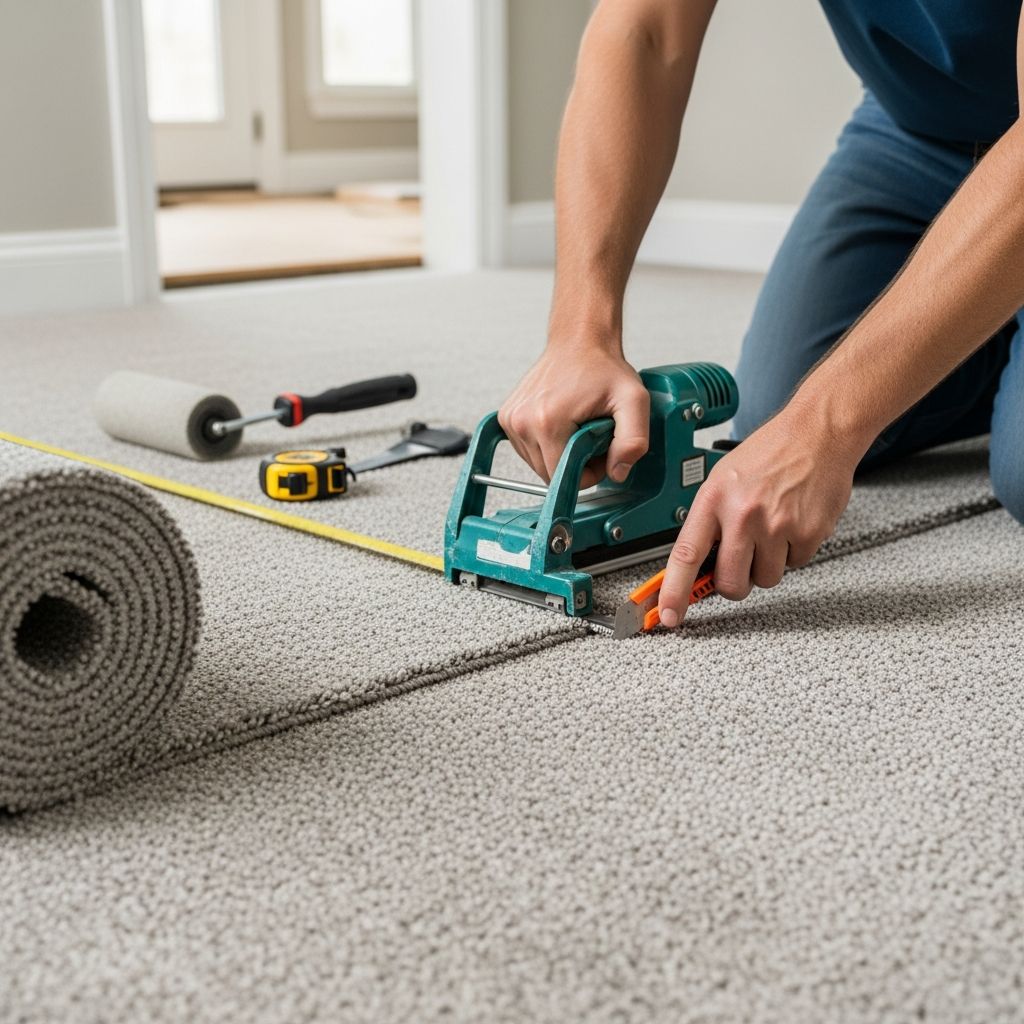
A power stretcher is absolutely necessary for installing carpet in large rooms measuring 10 by 10 feet or larger, as it provides the mechanical advantage needed to pull carpet tight and eliminate wrinkles and bumps. A knee kicker, a smaller manual tool, helps force the carpet into position against walls and works in conjunction with the power stretcher.-Carpet-edging tool and utility knife:
These tools are used for trimming carpet flush with baseboard molding. The carpet-edging tool provides a straight, clean edge when used with a brand-new blade. Always keep fresh blades on hand, changing them frequently as they dull quickly when cutting carpet.-Wide-blade carpet chisel:
This tool helps force carpet edges into the space beneath baseboard molding without scratching or denting the trim.-Seaming equipment:
For rooms requiring carpet seams, you’ll need heat-activated seam tape, a hot seaming iron, and seaming weights to press and adhere the seams together properly.-Additional supplies:
You’ll also need a hammer, small handsaw or wood snips, carpet padding, and a measuring tape.Step 1: Prepare Your Subfloor
Proper subfloor preparation is the foundation for successful carpet installation. Begin by removing any existing carpet, padding, tack strips, adhesive, and debris from your floor. This is crucial because old materials can create bumps, lumps, and uneven surfaces that will show through your new carpet and cause premature wear.
Cleaning and Inspection
Once you’ve removed all existing flooring materials, thoroughly sweep and vacuum the subfloor to eliminate all dirt, dust, and residue. Inspect the subfloor carefully for cracks, dips, or structural issues. The subfloor must be level and structurally sound to provide a proper foundation for your new carpet. If you’ve recently poured concrete, allow it to cure completely before proceeding with installation. Remove any doors from the room to make the installation process easier and safer.
Step 2: Install Tack Strips
Tack strips are essential components that hold your carpet securely in place around the room’s perimeter. These strips consist of thin wood with angled pins pointing upward at approximately a 45-degree angle.
Installing Tack Strips Around the Room
Using a hammer and nails, secure tack strips around the entire perimeter of the room. Cut the 1-inch-wide strips to length using a small handsaw or specialized wood snips. Position each tack strip approximately 1/2 inch away from the baseboard molding to create space for slipping the carpet underneath once installation is complete. This small gap is critical for the finished appearance of your carpet. Avoid placing tack strips in doorways where people are likely to step on them through the carpet, which could cause injury or discomfort. For doorway thresholds, you’ll use binder bars with screws instead.
Step 3: Install Carpet Padding
Carpet padding serves multiple important functions, including providing cushioning, extending carpet life, and improving insulation and sound dampening. Proper padding installation is essential for optimal performance.
Laying and Securing Padding
Roll out the carpet padding across the entire floor, ensuring it covers all areas where carpet will be installed. For wood subfloors, use a staple gun to secure the padding to the subfloor, making sure the padding extends right up to the edge of the tack strips without covering them. Staple the padding at regular intervals along the perimeter and across the floor. For concrete subfloors, you can secure padding with specialized tape or construction adhesive instead of staples. If you have seams where padding sections meet, staple or tape them together securely to prevent shifting. Trim away any excess padding around the edges of the room with a utility knife for a clean installation.
Step 4: Stretch the Carpet
Stretching the carpet properly is one of the most critical steps in installation. This process removes wrinkles, eliminates slack, and ensures the carpet will wear evenly and maintain its appearance over time.
Initial Positioning with the Knee Kicker
Unroll the carpeting flat onto the padding, ensuring it’s oriented correctly if it has a particular pattern or texture. Begin by using a knee kicker to force the carpet into position against one wall. Place the knee kicker a few inches away from the wall and strike it with your knee repeatedly, moving along the wall. Continue until you’ve pulled out all visible wrinkles and slack in that section. Press the carpet firmly down onto the tack strip pins with your hands as you work.
Using the Power Stretcher
Once one wall is partially secured, switch to a lever-activated power stretcher or wall-stretcher to pull the carpet tight to the tack strip. This tool provides the mechanical advantage needed to create proper tension throughout the carpet. Position the stretcher to pull toward the opposite wall, working methodically to remove wrinkles. For large rooms or thick carpet, you may need to attach an extension pole to the stretcher, allowing it to push against the opposite wall for additional leverage. Check to ensure oversized carpet laps up onto each wall by at least a few inches before proceeding to trimming.
Step 5: Trim the Edges
Once your carpet is properly stretched and secured along one wall, you’ll trim away the excess material flush with the baseboard molding.
Using the Carpet-Edging Tool
Use a specialized carpet-edging tool to trim the carpet flush with the baseboard molding. Keep the metal shoe of the tool pressed tightly against the carpeting while maintaining tension against the baseboard. This ensures a clean, straight cut. If you don’t have a carpet-edging tool, you can trim with a utility knife, but you must use a brand-new blade and change it frequently as it dulls quickly. A dull blade will create ragged edges and pull the carpet rather than cut cleanly.
Step 6: Push Edges Under the Baseboard
After trimming the edges, use a wide-blade carpet chisel to force the edge of the carpeting into the space beneath the baseboard molding. This creates a finished appearance and keeps the carpet edges secure. Work carefully to avoid scratching or denting the baseboard. Use gentle, firm pressure rather than forceful strikes that could damage the trim.
Step 7: Stretch and Finish the Remaining Walls
Now that one wall is complete, move across the room to the opposite wall and repeat the entire process: force out wrinkles with the knee kicker, pull the carpet taut with the stretcher, trim the excess carpeting, and push the edges under the baseboard. Continue this process for the remaining two walls, ensuring consistent tension throughout the carpet.
Step 8: Seaming Carpeted Areas
In many rooms, seams are necessary to join separate sections of carpet or to connect seams required by the room layout.
Preparing and Sealing Seams
Lift and fold back one edge of the carpeting. Slide heat-activated seam tape halfway underneath the edge of the carpet that’s flat on the floor. Run the tape along the entire seam, ensuring it’s positioned correctly halfway under the carpeting on both sides. Lay the folded-back piece flat and check for a tight fit along the seam. Starting at one wall, slip a hot seaming iron into the seam and slowly glide it between the two carpet pieces. This activates the adhesive on the seam tape, bonding the carpet sections together. Ask a helper to follow closely behind with a seaming weight, firmly pressing down on the carpet to adhere both edges to the tape as you work. You may need to periodically use the knee kicker to close up any gaps in the seam as you progress.
Frequently Asked Questions
Q: What is the typical timeline for installing carpet in a room?
A: Most carpet installation projects can be completed in 1 to 2 days, depending on room size and complexity. Larger rooms with seams may take longer. Plan your schedule accordingly to avoid rushing through critical steps.
Q: Can I install carpet without specialized tools like a power stretcher?
A: While possible in very small rooms, a power stretcher is essential for rooms 10 by 10 feet or larger. Professional-quality tools ensure proper carpet tension and a finished appearance that lasts longer.
Q: How far should tack strips be from the baseboard?
A: Tack strips should be positioned approximately 1/2 inch away from the baseboard molding to allow space for tucking the carpet edge underneath without creating gaps or damage.
Q: What’s the best way to handle carpet seams?
A: Use heat-activated seam tape, a hot seaming iron, and seaming weights to create strong, durable seams. Proper technique prevents gapping and ensures longevity. A helper makes this process significantly easier.
Q: Should I remove doors before starting installation?
A: Yes, removing doors makes the installation process much safer and easier, allowing you to work more freely and preventing damage to door frames and hinges.
Q: What type of padding should I use with my carpet?
A: Padding thickness and density depend on your carpet type and traffic level. Consult your carpet manufacturer’s recommendations, as using inappropriate padding can void warranty protection.
Q: How can I ensure my carpet doesn’t develop wrinkles over time?
A: Proper stretching during installation is crucial. Use the power stretcher to achieve appropriate tension, and ensure padding is installed correctly to prevent shifting that causes wrinkles.
Final Touches
Once all carpet has been stretched, trimmed, and seamed, complete your project by reinstalling any doors you removed and cleaning up debris. Take a moment to inspect your work, checking for tight seams, secure edges, and smooth surfaces free of wrinkles or bumps. Proper carpet installation creates a beautiful, durable floor that will provide years of comfort and style.
References
- How To Install Carpeting — This Old House. 2024. https://www.thisoldhouse.com/flooring/21016430/how-to-install-carpeting
- How to Install Carpet Yourself: 3 DIY-Friendly Options — Flooring Inc. 2024. https://www.flooringinc.com/blog/how-to-install-carpet
- How to Install Wall-To-Wall Carpeting — This Old House (Video). 2024. https://www.youtube.com/watch?v=l2rImkgys6w
- How To Measure for Carpet Replacement — This Old House. 2024. https://www.thisoldhouse.com/flooring/how-to-measure-for-carpet-replacement
- What Does Carpet Installation Cost? — This Old House. 2024. https://www.thisoldhouse.com/flooring/carpet-installation-cost
Similar Articles




Read full bio of Sneha Tete